
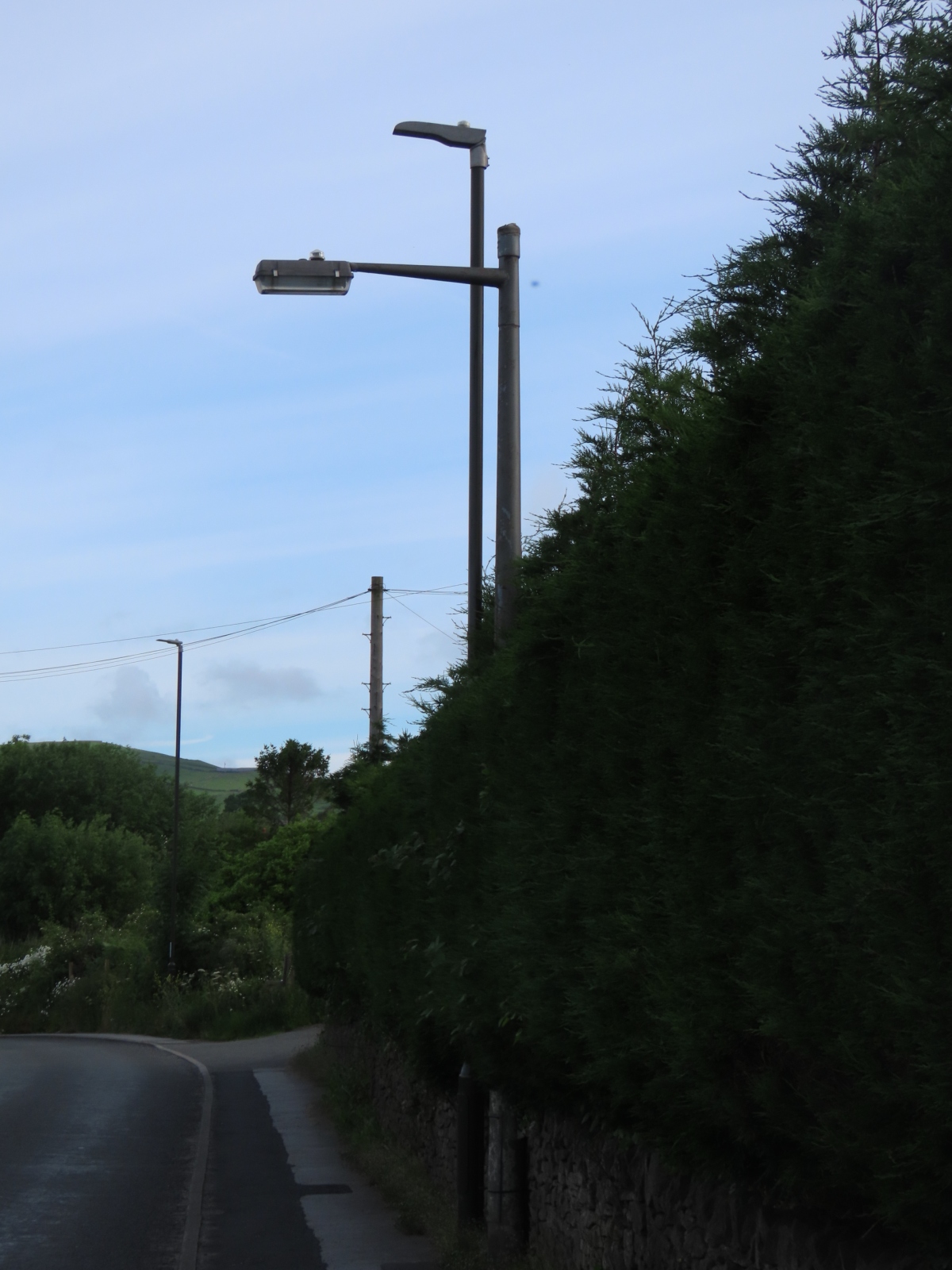
136. Hayfield Road, Bridgeholm Green, Chinley, Buxworth and Brownside, Wash, High Peak On the section of road between the turn for the village of Wash and Charley Lane (not a person in this context!) are several 'Adastra' sectional columns made by Poles Ltd (formerly of Birmingham). The columns are likely be around 50 years old (as of 2009), if not older, and yet are still in excellent condition, with virtually no visible corrosion whatsoever. Today, the lanterns are fitted with top-entry 55 Watt SOX Simplex Gemini lanterns (although, curiously, one supports a 90 Watt SOX (low pressure sodium) Thorn Alpha 4; the reason for this being that at the time, only these stock lantenrs fitted the brackets after the top-entry connection was removed); however, the original lanterns appear to have been 60 - 85 W SO/H / SOI/H (the precursor to 35 - 55 Watt SOX) open-type lanterns, as seen with this image featuring a pole-mounted example...what a shame that they are long gone!


The lock on this particular column's door has failed at some point; a stainless steel band now holds the door in place:

By 2026, these aged columns had been disconnected, and their electricity services transferred into new 6 m tubular steel columns alongside, in preparation for their removal. The column pictured above contained a secret in its base that dated back to when it was installed - namely, the lamp control gear for the first lantern that it supported was still installed (albeit, long since abandoned). Unlike conventional columns that feature a wooden backboard for the attachment of control gear components and switchgear, these columns employ lengths of steel strut bolted together to create a basic frame, which then hooks into place on the inside of the column base. Presumably, when the Geminis were fitted, the removal of these old components was deemed too difficult (I can concur - the fixing bolts were seized), and so they were left in place. The smashed remains of a Bakelite service cut-out are at the lowest portion of the frame, with a boxy capacitor placed below a large open coil leak transformer.
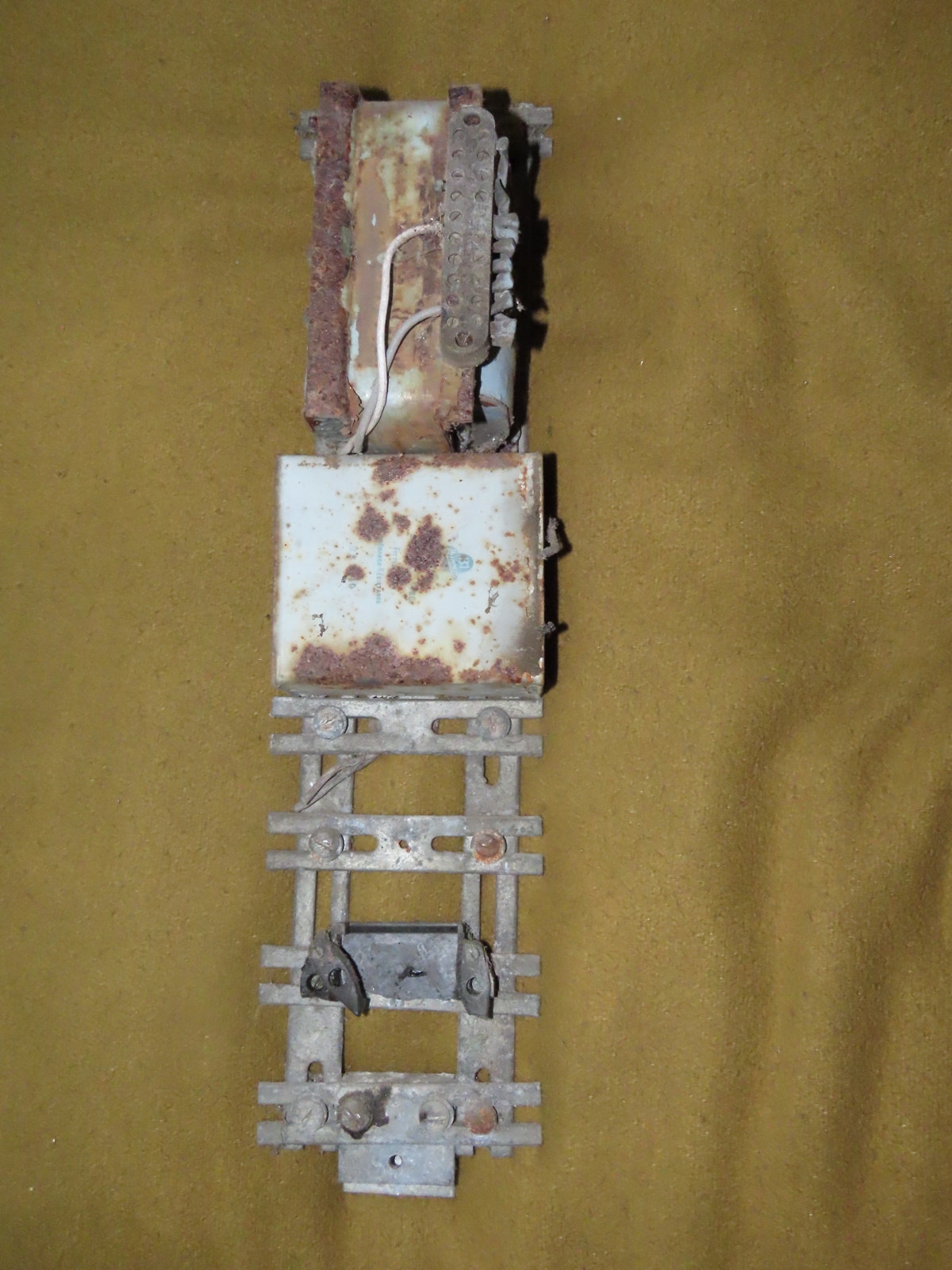
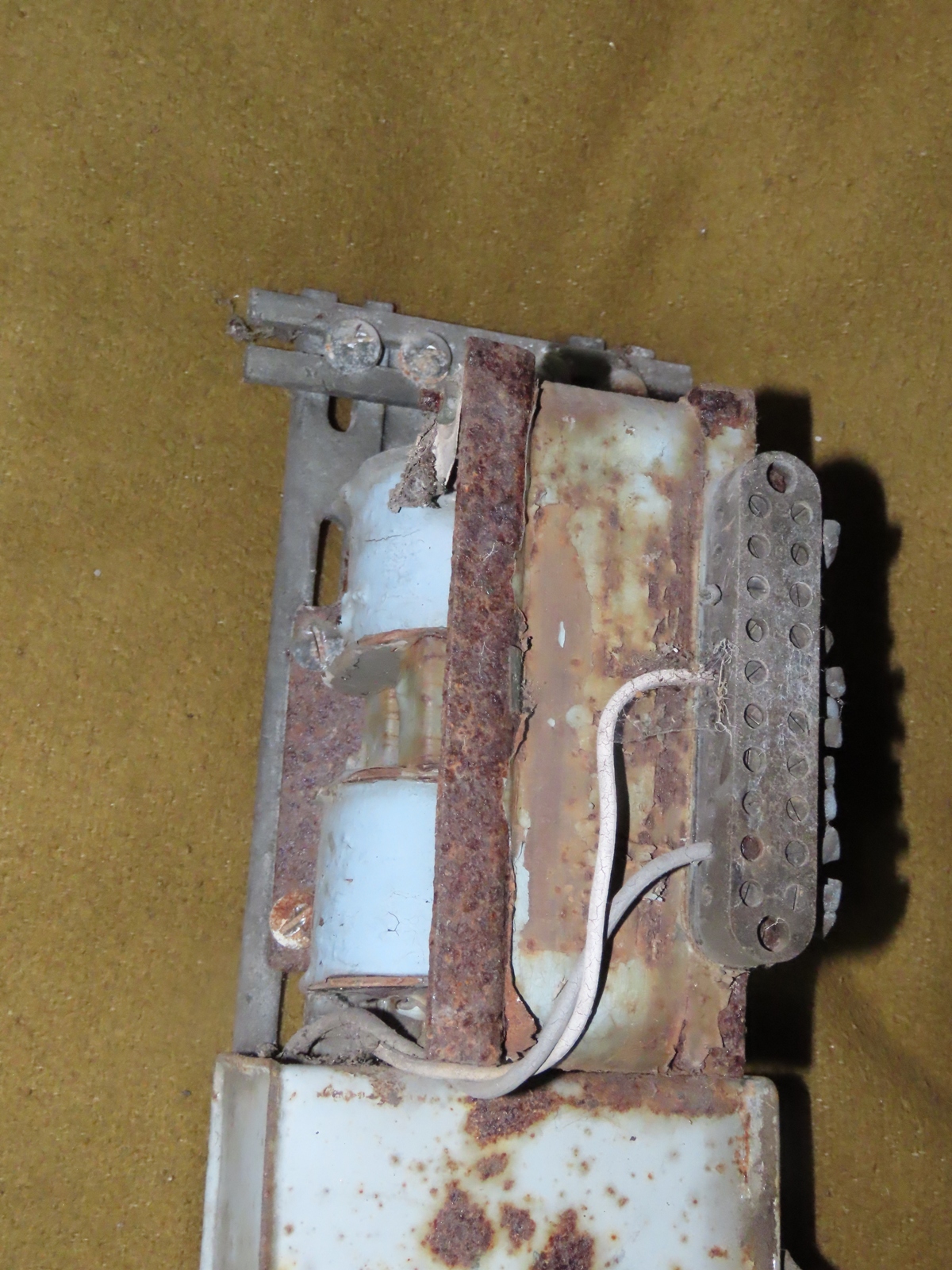
There appeared to have been a label on the space to the left of the ten-way connector block that is attached to the ballast - this would have provided details of the various connections to use, depending on the typical electricity supply voltage for the area. Sadly, the label is long gone, and only two wires emerge from this side of the transformer.
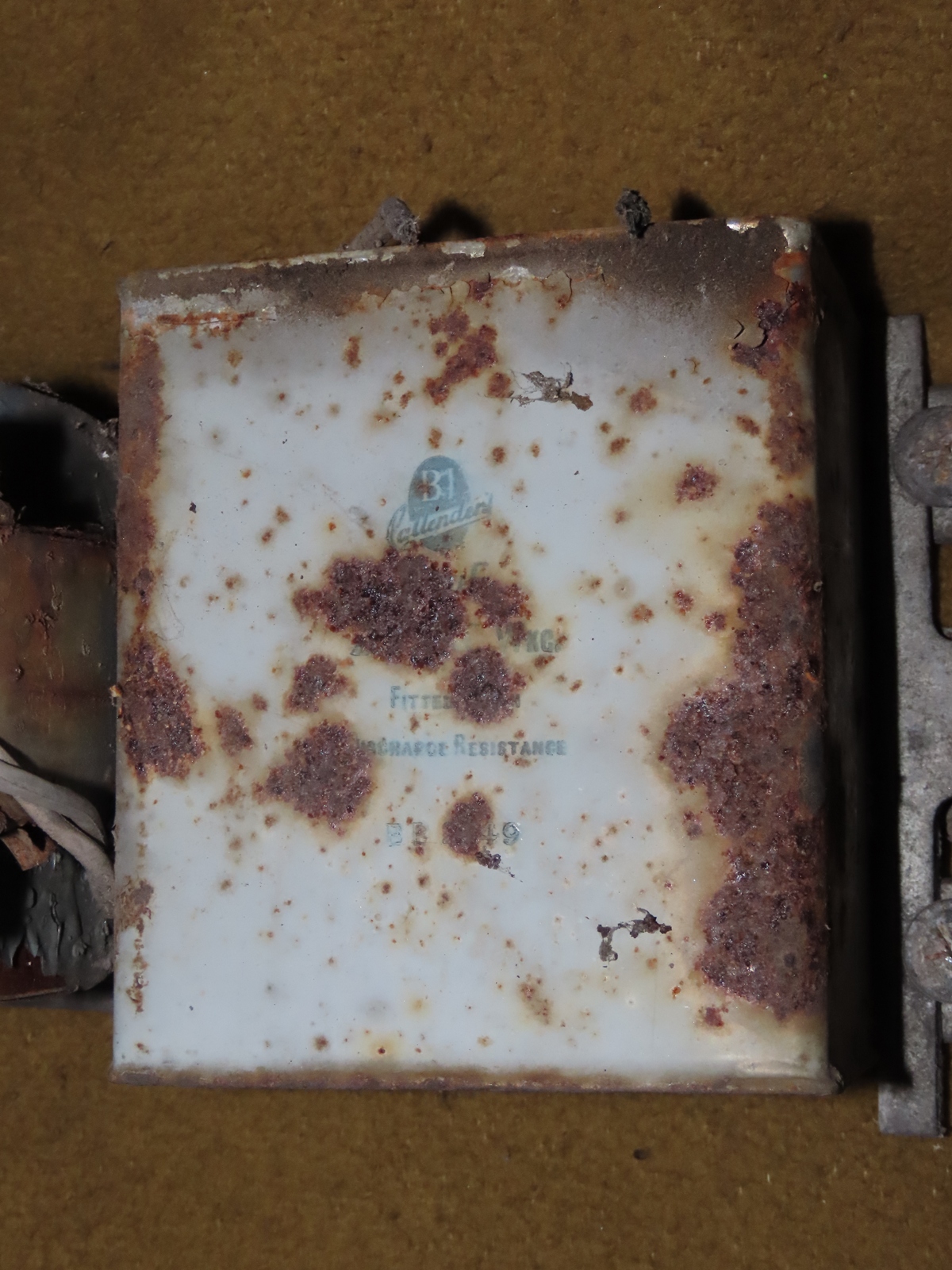
The capacitor is made by British Insulated Callender's Cables (BICC), which was formed from the merger of Callenders Cable and Construction Company and British Insulated Cables in 1945. Although rusting to the casing has prevented all of the text from being read, the year of manufacture (1949) is still visible, making my original estimated age of these installations only ten years out. The wires leading from the top of the capacitor have been cut.
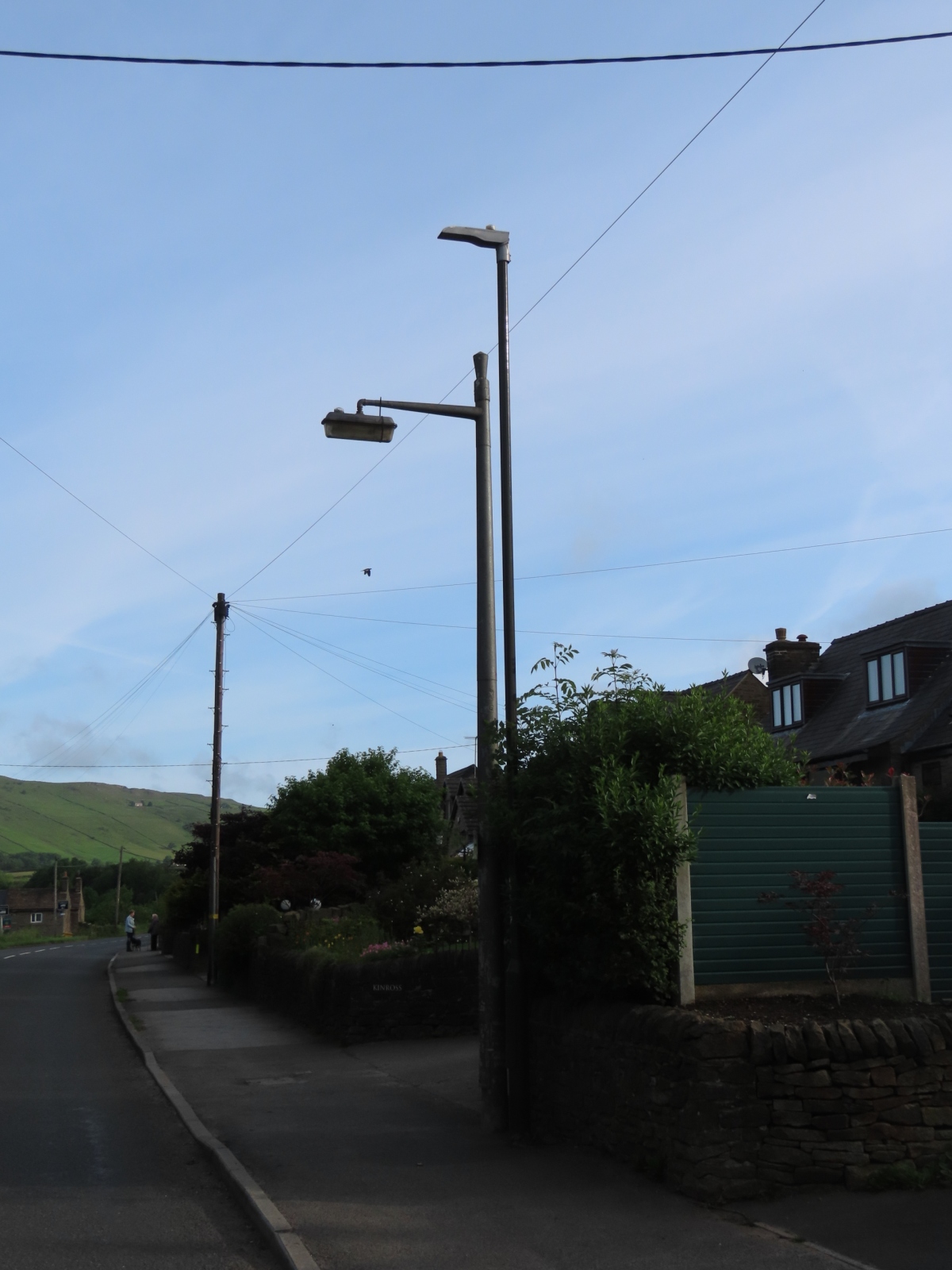
With likely removal of the old columns not being far away, I returned to the site to re-photograph the installation, along with the other examples installed along the road, in June 2026. The new columns support CU Phosco P852 lanterns.
The Gemini still remains in the condition that it was in on its final day of operation.

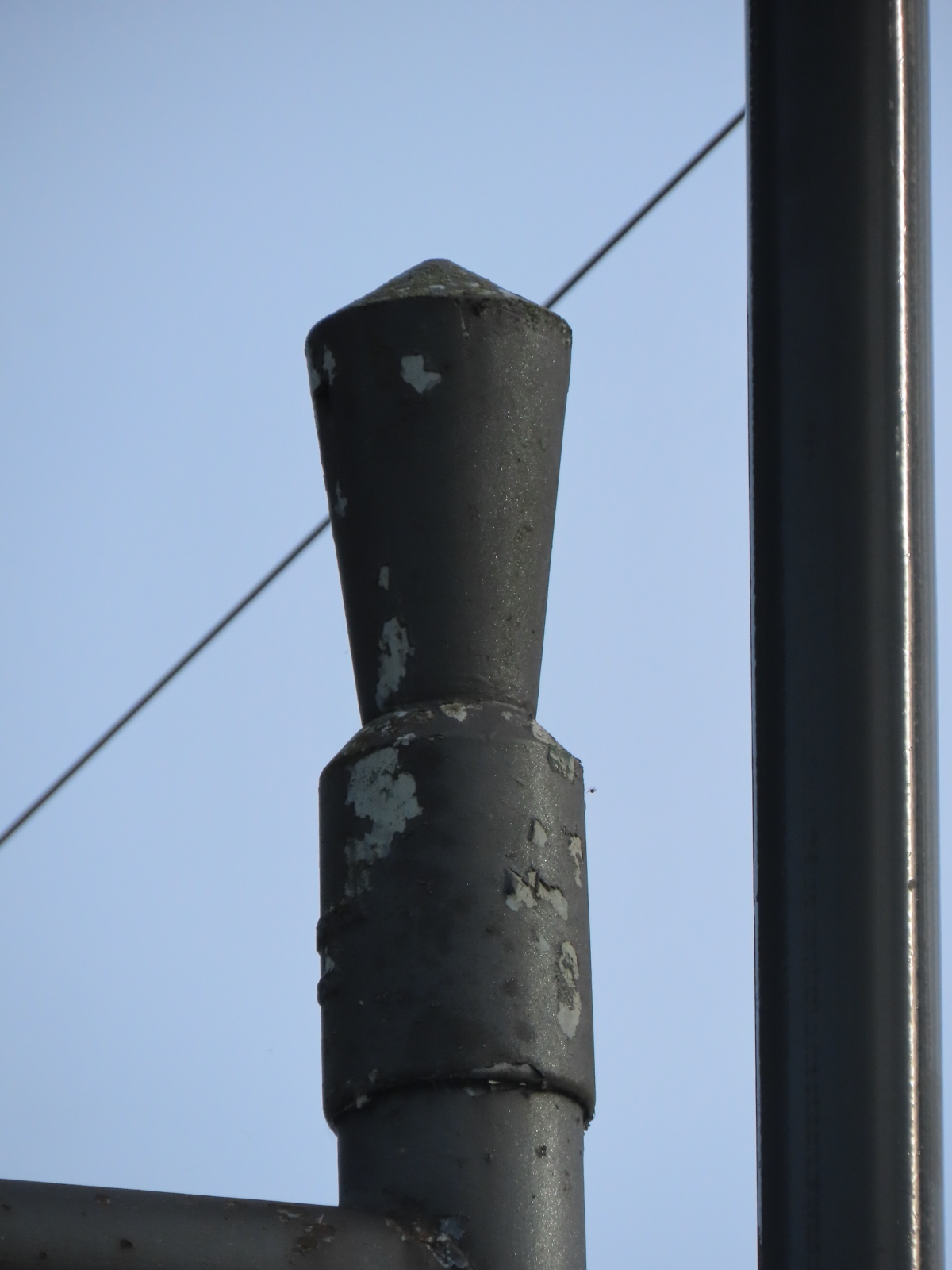
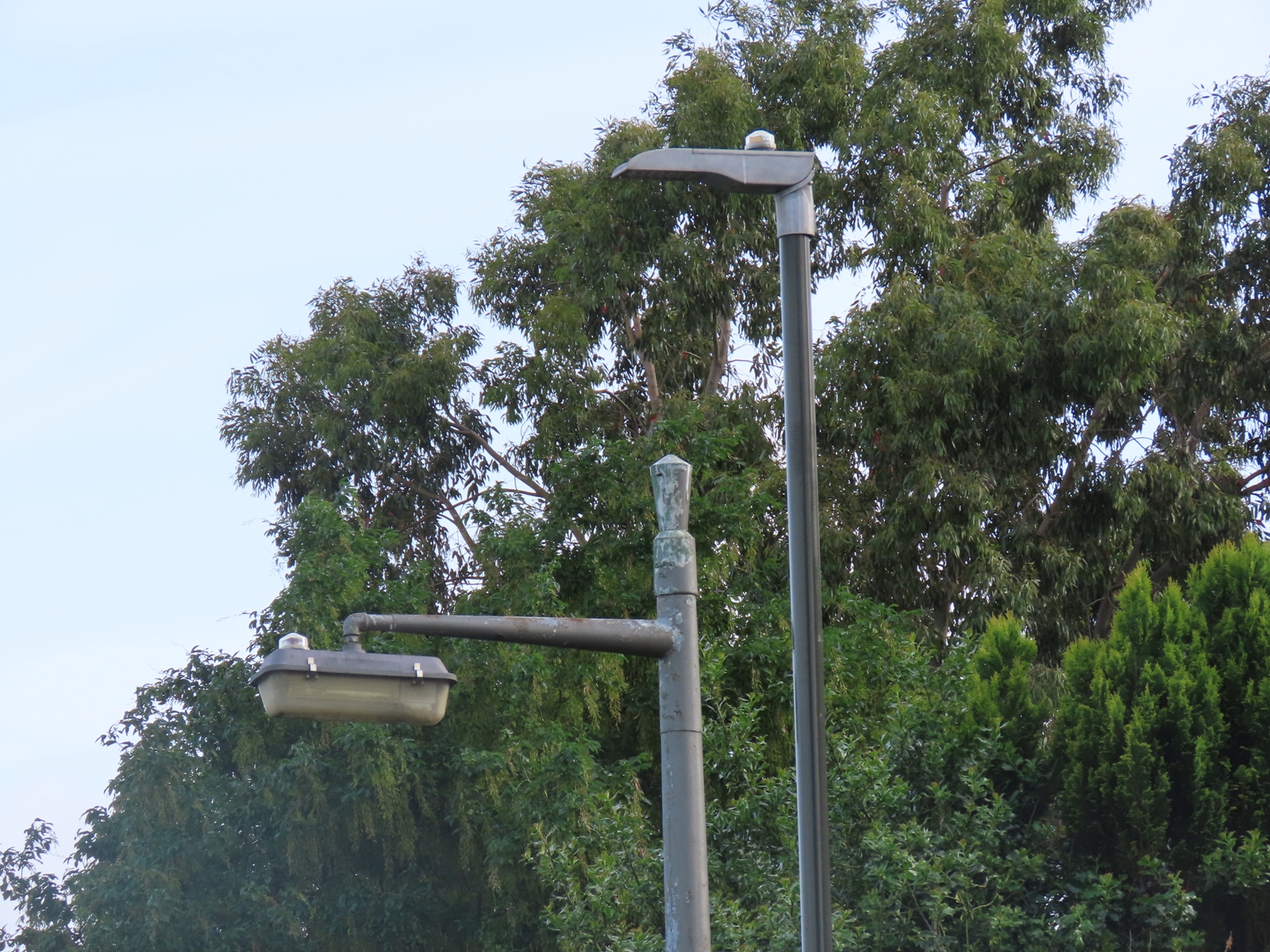
The finial part of the old column shows no signs of rusting whatsoever, and even the most recent coat of paint isn't in terrible condition.
The next column along also supports a Gemini; these were probably the direct replacements for the original open sodium lanterns.
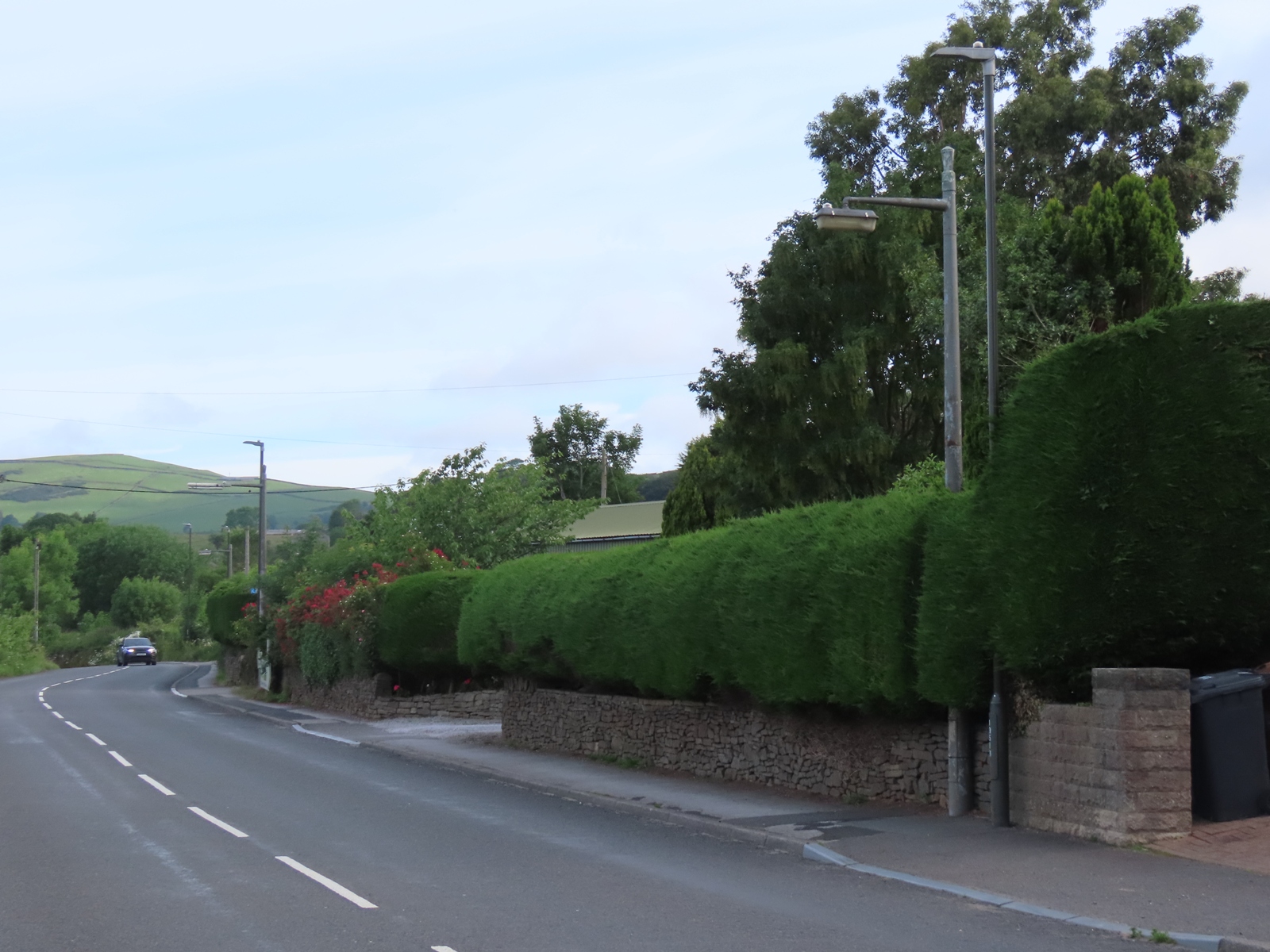
The height difference between the old and new columns is evident here.
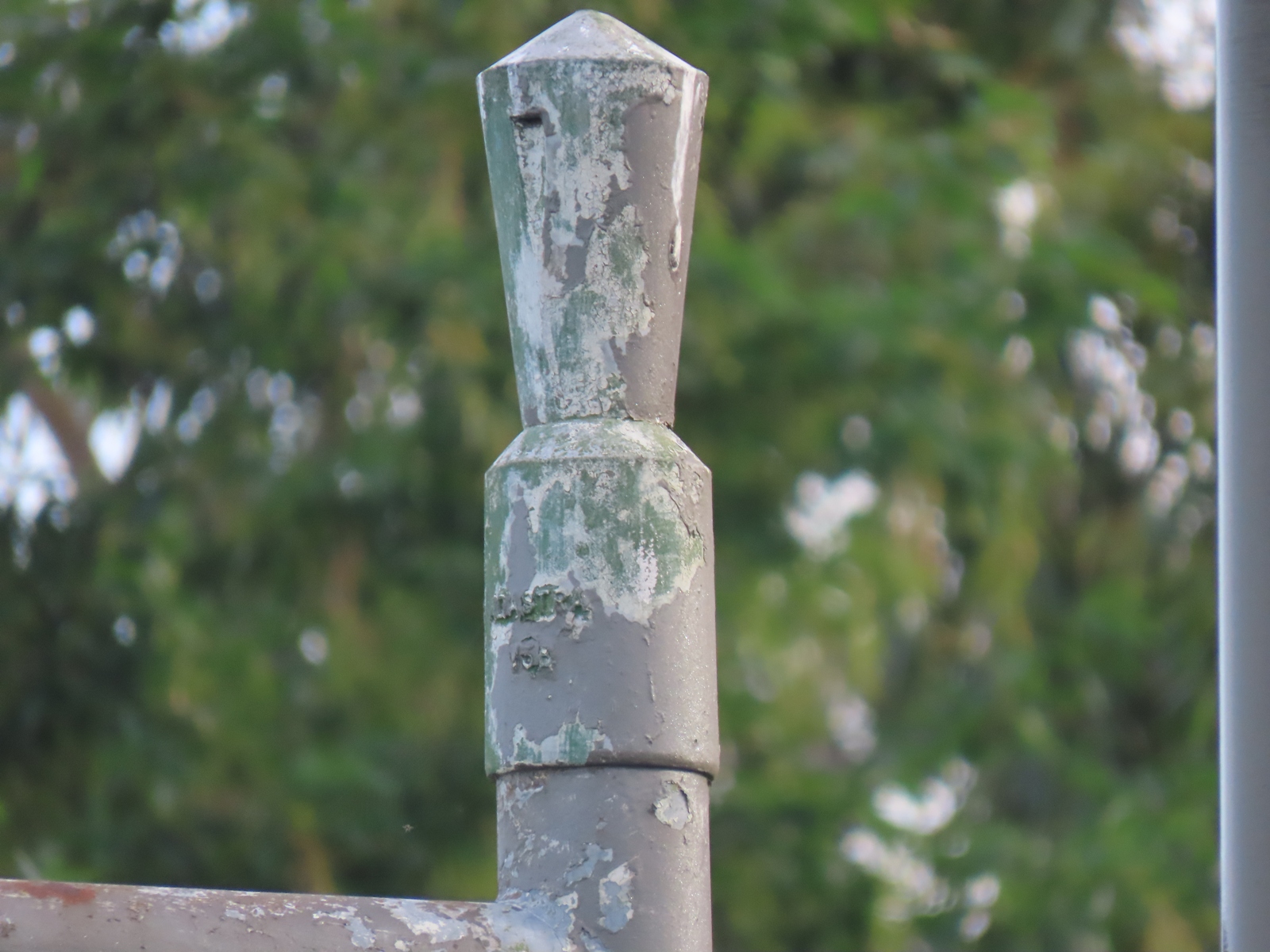
"Adastra V3A" is visible on this column's finial.
The Alpha 4 is fitted to the following column - seeing a lantern intended for use at 8 m (when fitted with a 90 W lamp) installed at around 5 m is very peculiar!
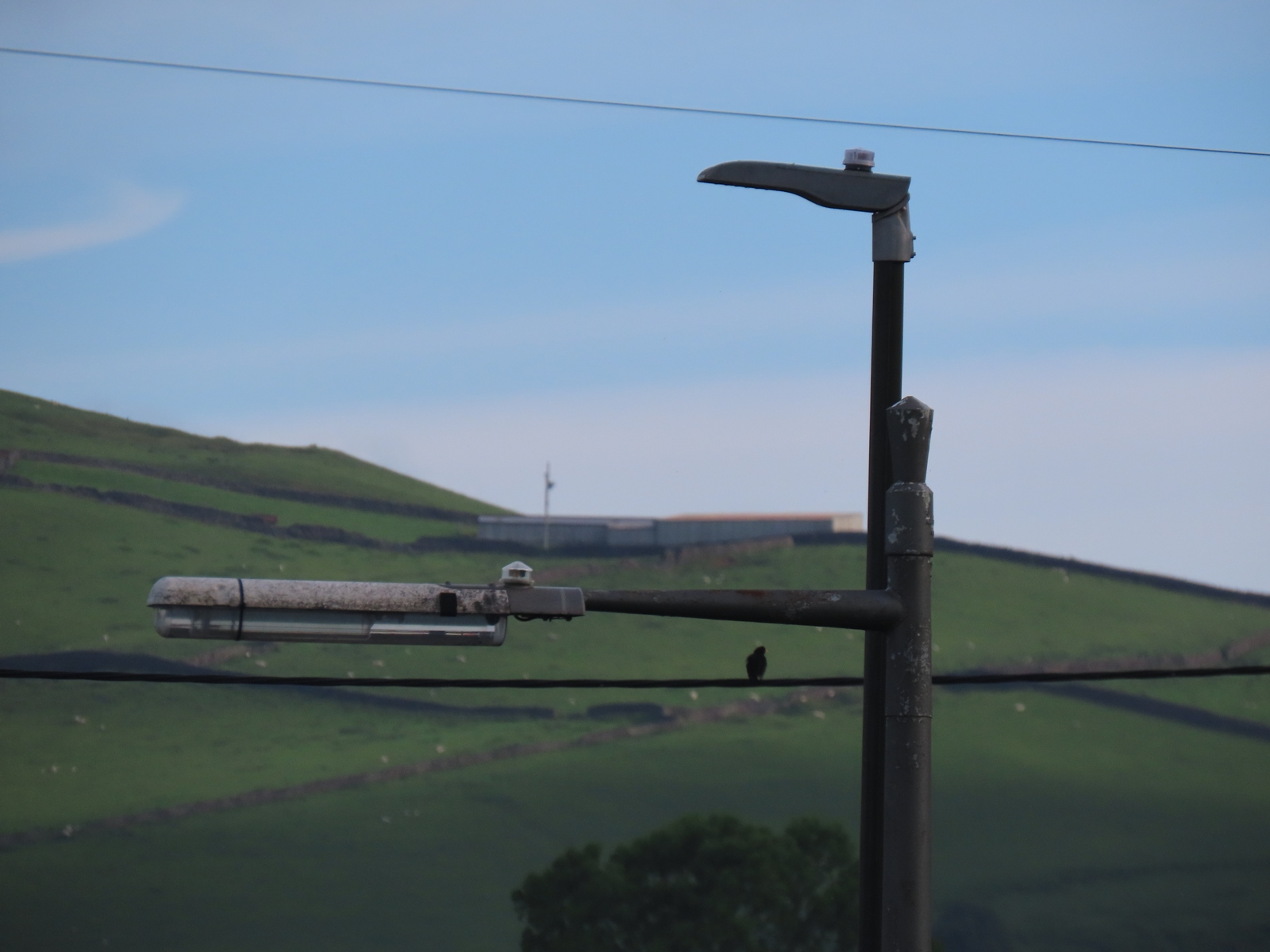
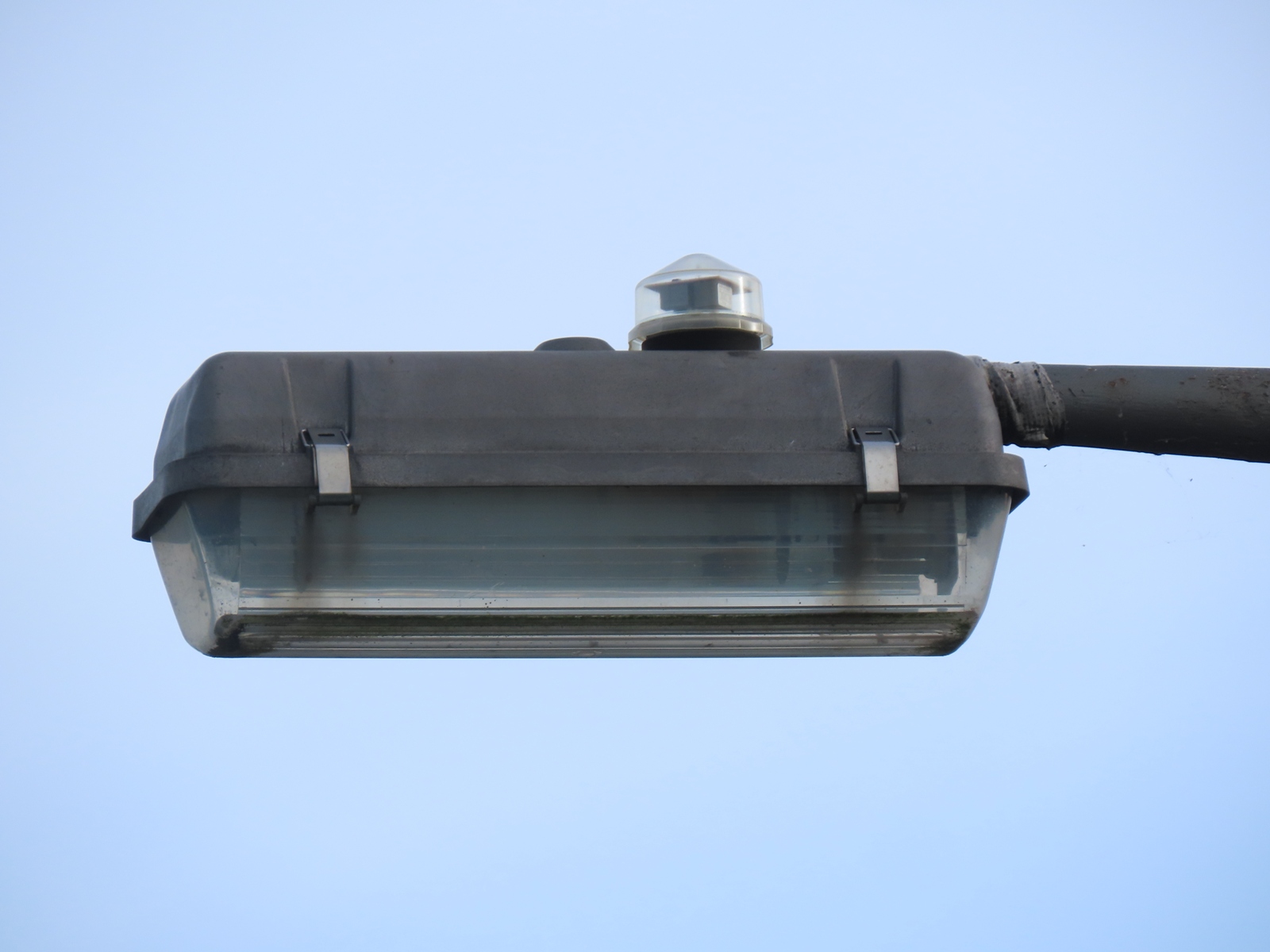
The next column along had also been converted for side-entry operation - here, a 1980s' Philips MI 80 is seen installed.
The bracket's entry into the lantern appears to be wrapped in Denso tape or similar - perhaps, to prevent moisture ingress, or (quite possibly) to attach the lantern more securely to the old bracket.
BACK TO SURVIVORS IN HIGH PEAK
BACK TO SURVIVORS IN DERBYSHIRE
CLICK HERE TO MAKE A MONETARY DONATION
© 2002 - English Street Lights Online