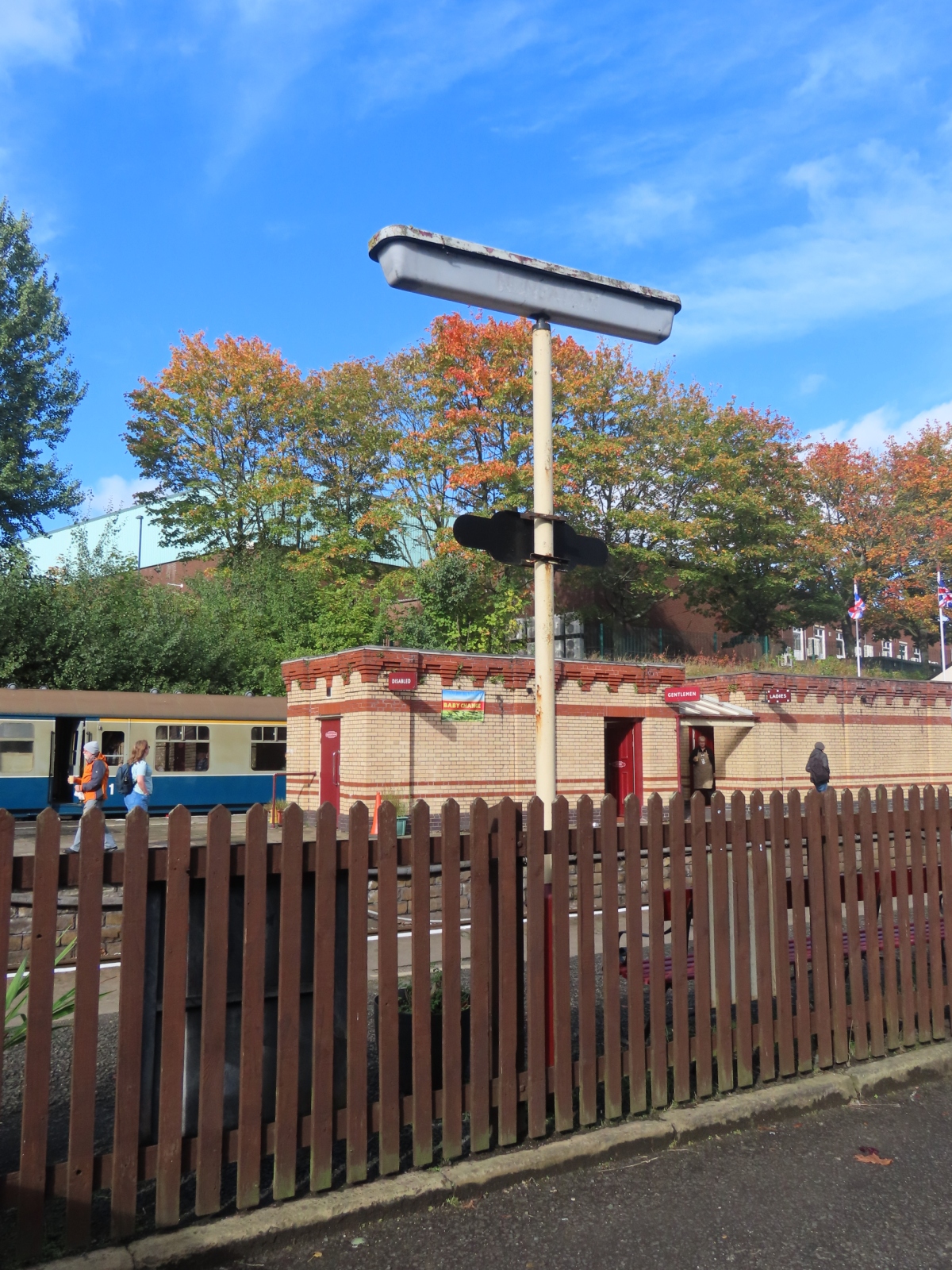
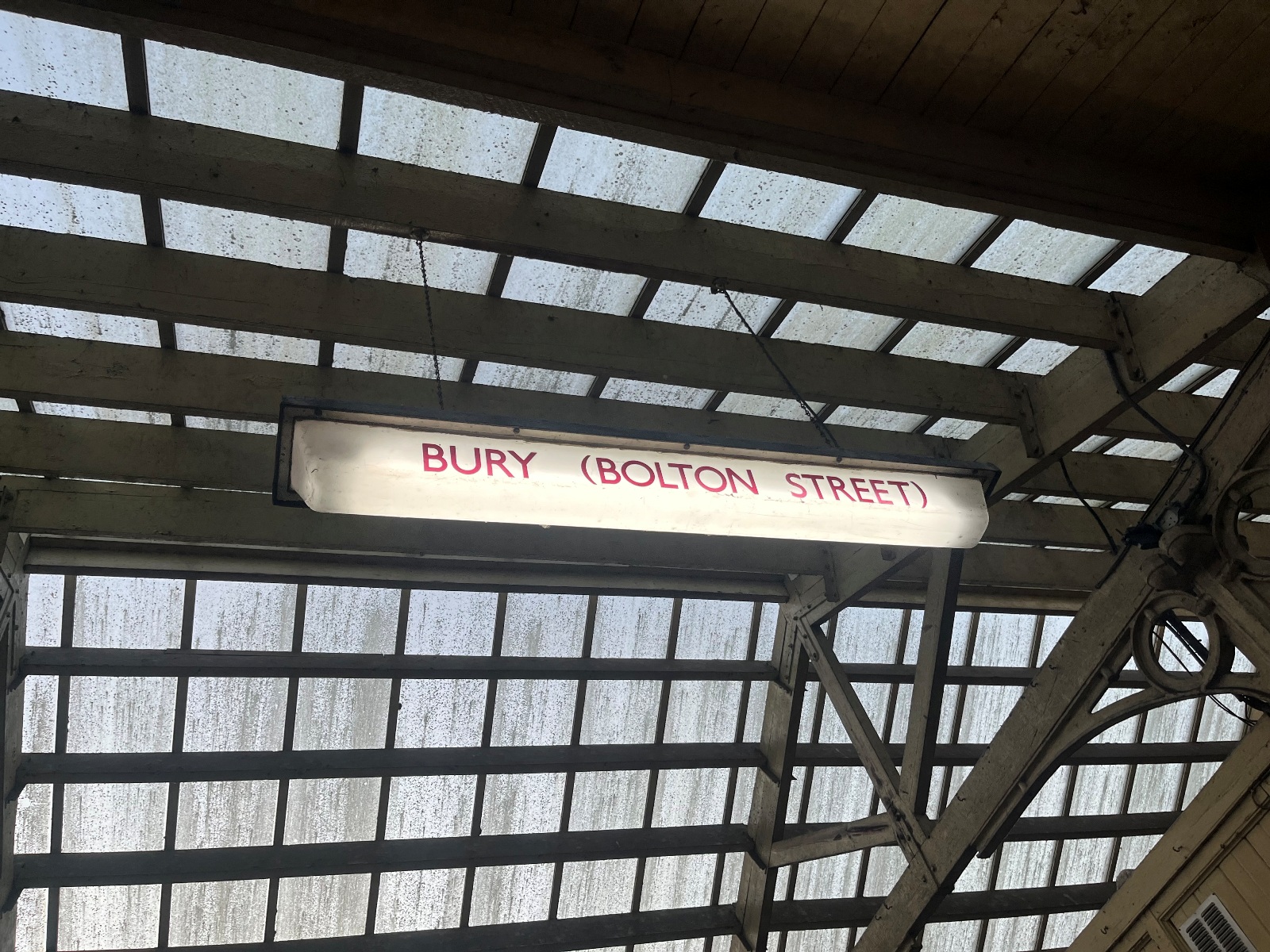
East Lancashire Railway, Bolton Street, Bury, Greater Manchester Installed around this heritage railway are a number of notable installations - some being likely to date back to the days of British Rail, prior to the line's closure in 1980, and subsequent reopening as a heritage asset seven years later. Notably, much of the lighting at Bury Bolton Street Station comprises large 1960s' linear fluorescent fittings, some of which still feature the station's name on the bowls.
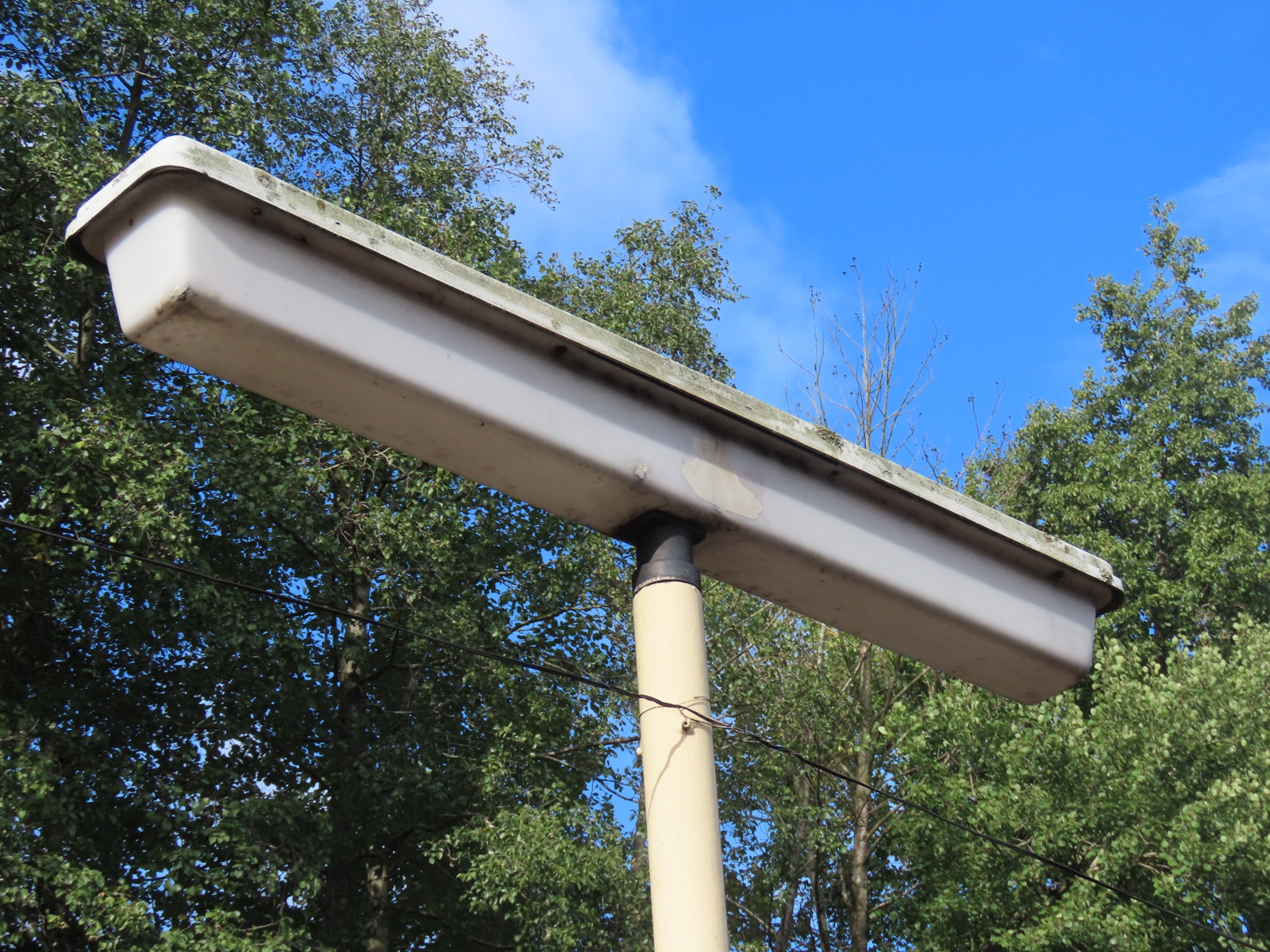
One of the many GEC 'Clearspace' Z8288 post-top lanterns to be seen at Bolton Street station.
The lantern's canopy is now held in place with twists of wire, but would have screwed into place originally.
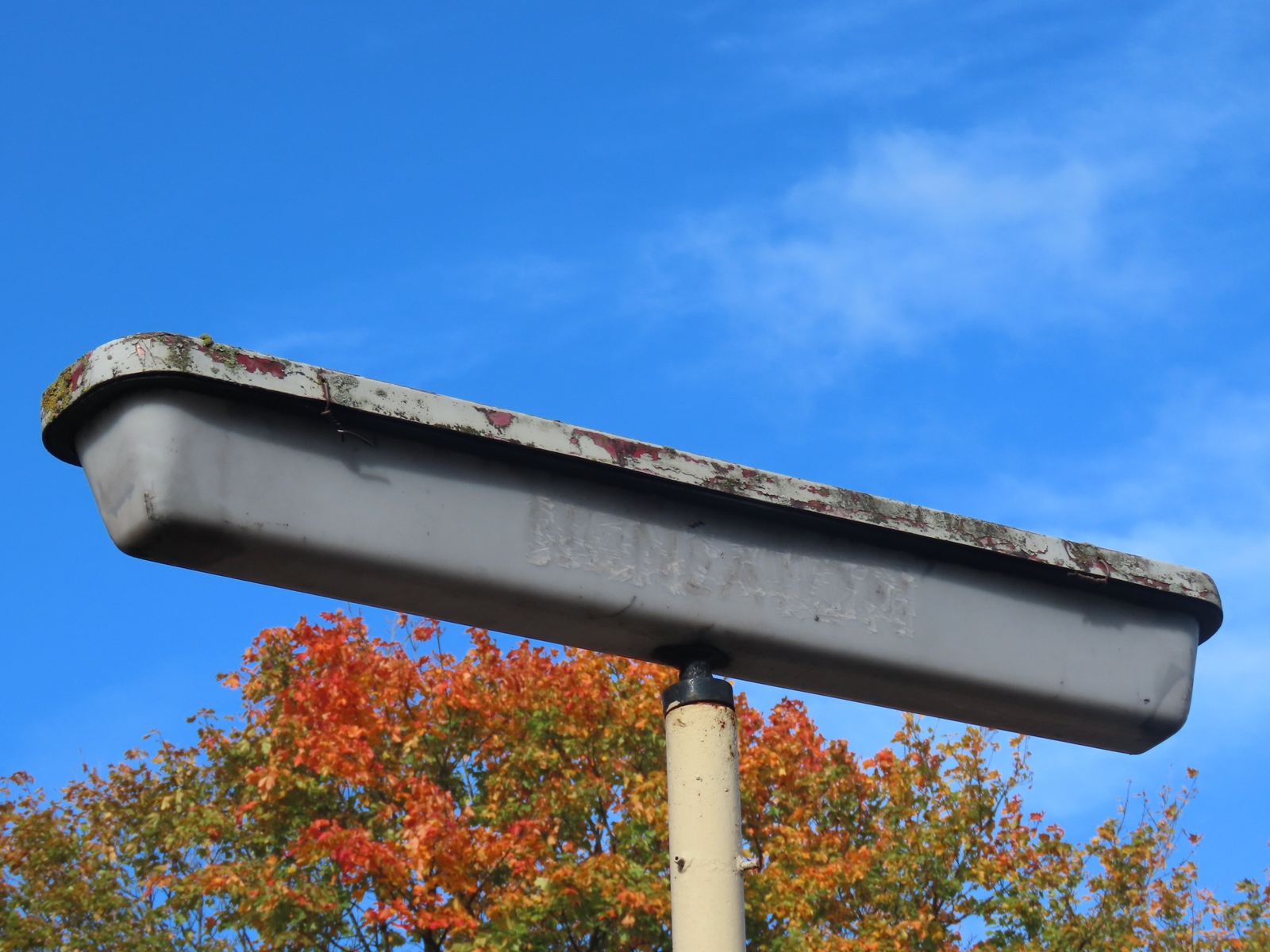
This particular lantern is not original to Bolton Street - as can be seen, 'Nuneaton' has been scraped off the bowl, but the ghost images of the former letters remain visible.
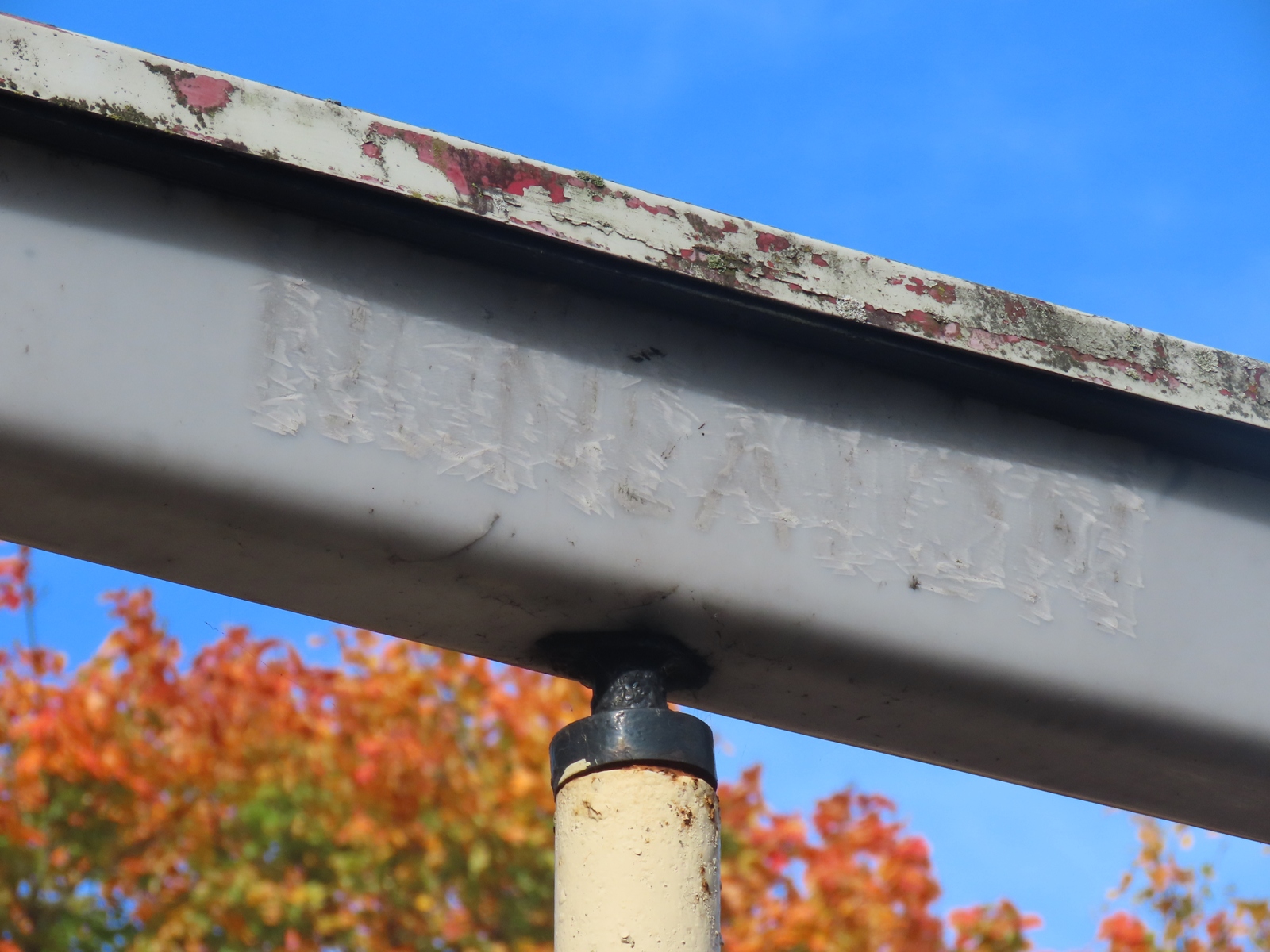
This is another example, and also appears to be ex-Nuneaton.
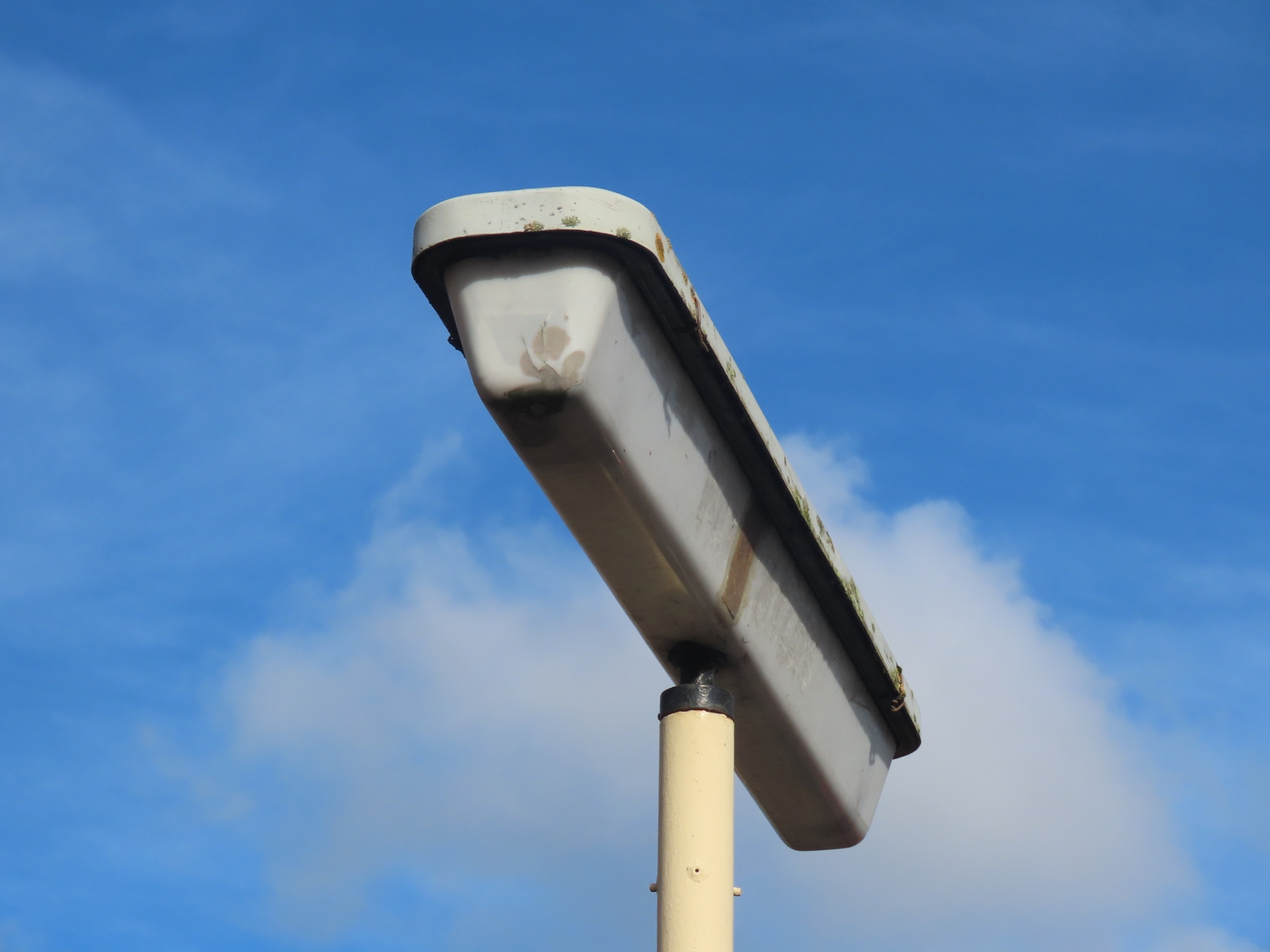
This example is seen on the island platform 3/4.
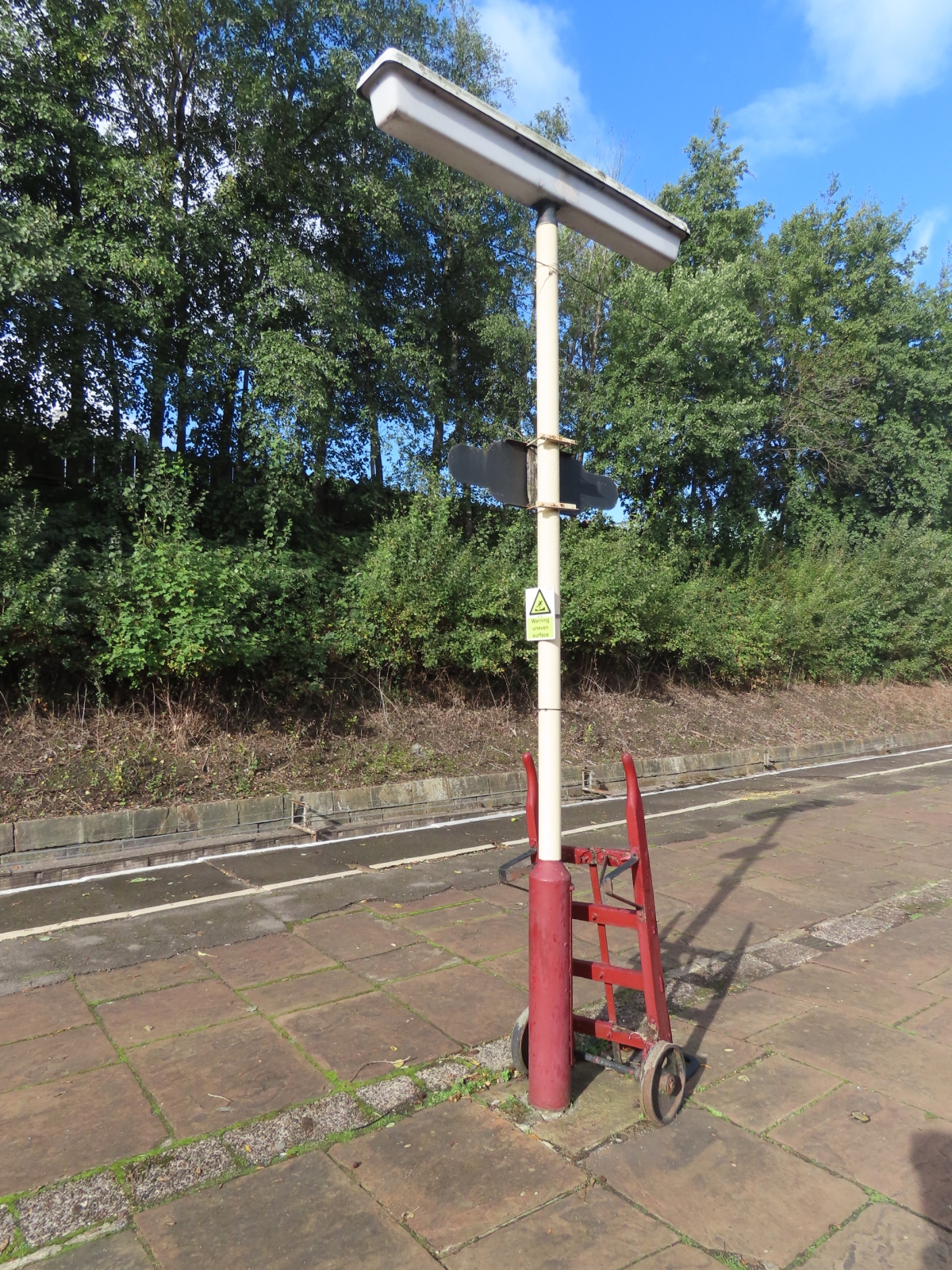
This is a slightly different design (notice the squarer ends), and doesn't appear to have ever featured a station name on the bowl.
Some further examples exist beneath the platform canopies. Fellow collector LeoLampposts believes these to be an AEI [Associated Electrical Industries] product, making them date to no later than 1967.
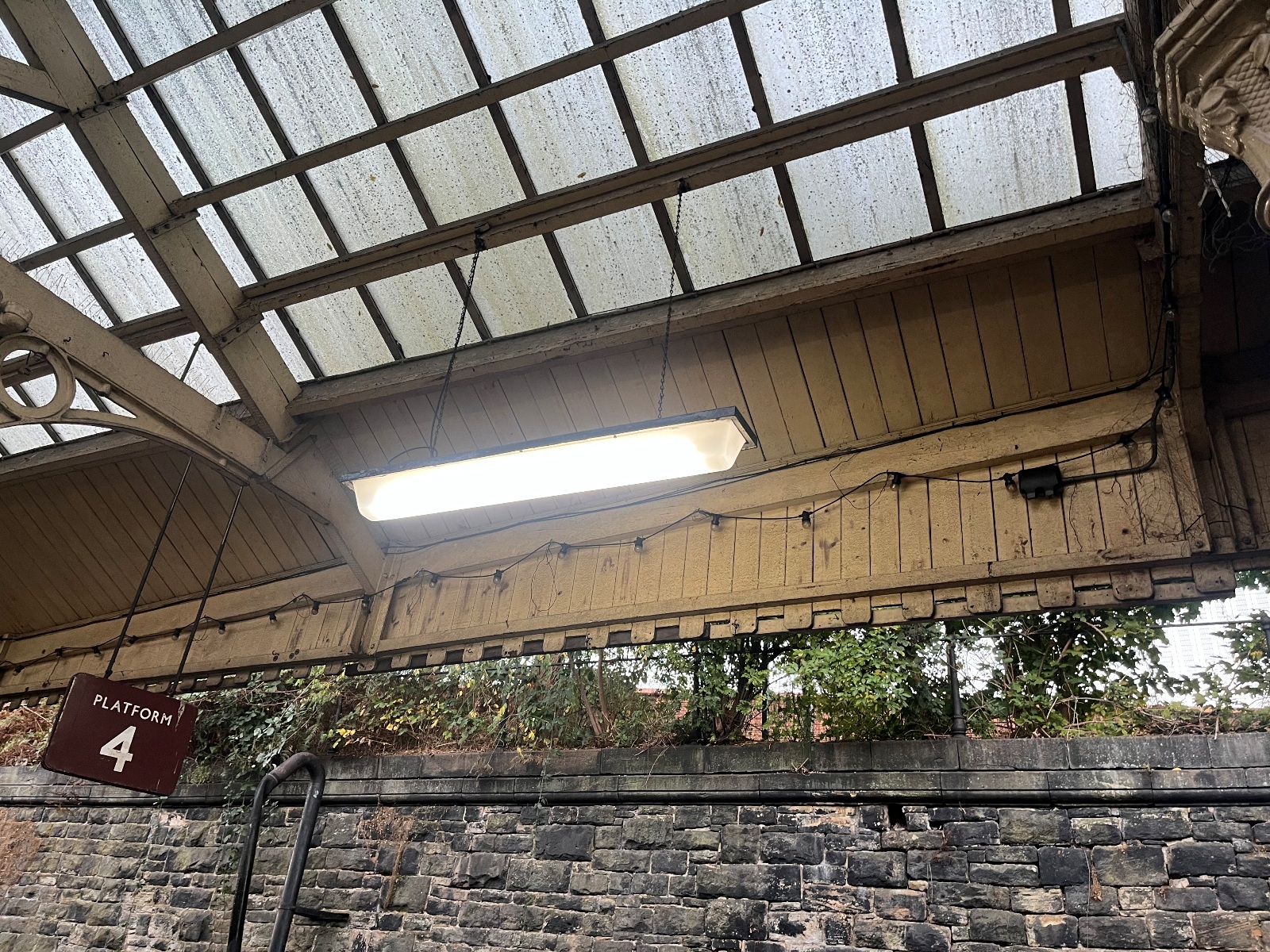
The fittings appeared to have had LED lamps fitted in place of their original fluorescent equivalents, although the appearance was still convincing.
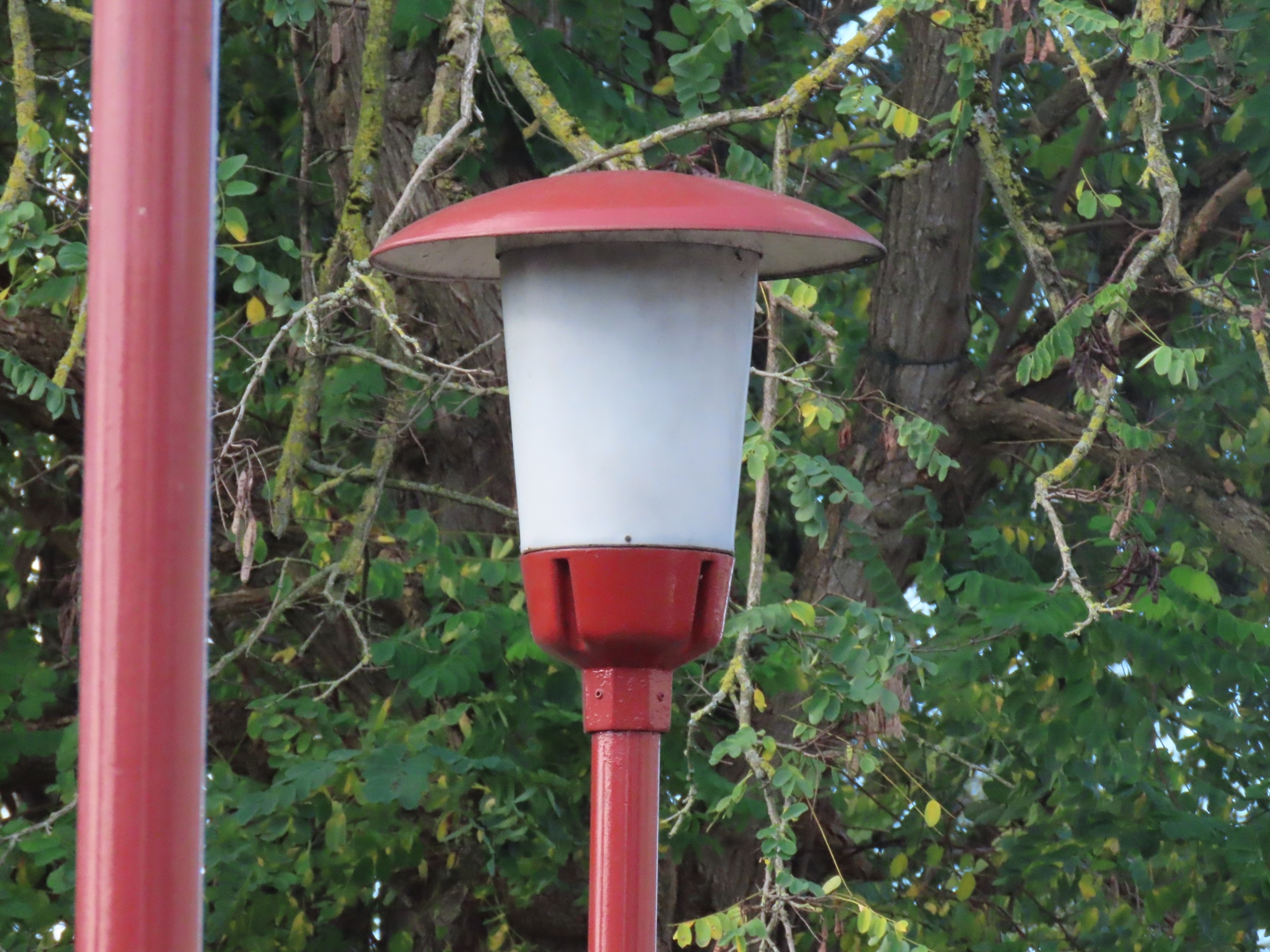
The road bridge over the railway at Bolton Street is home to two short plinth columns, both of which support CU Phosco P352 post-top lanterns.
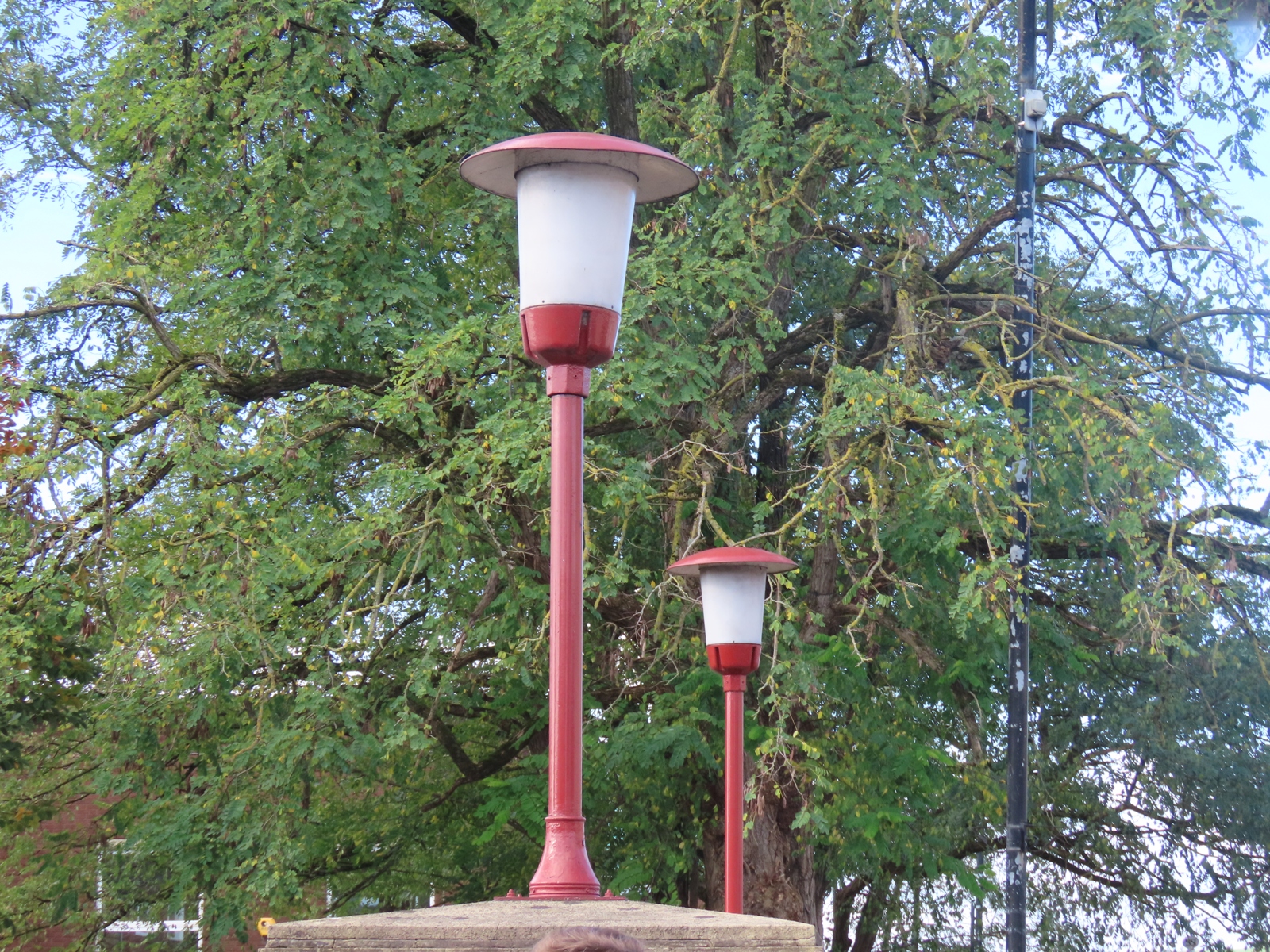
These are likely to be post-BR products, and could date from around the time that the heritage line opened.
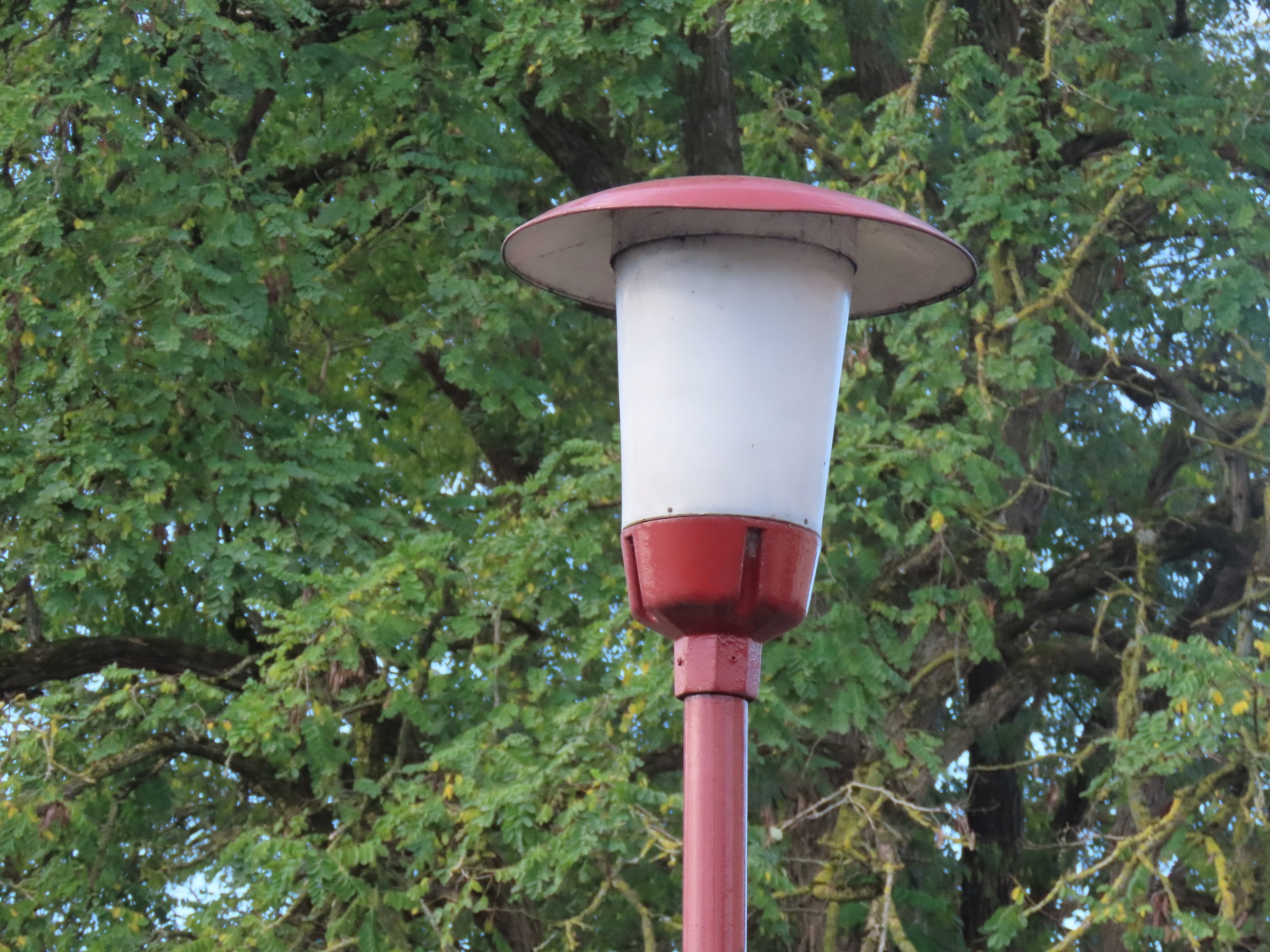
The lamp types fitted are unknown, although they could, similarly, now be LED too.
Adjacent the Railway's level crossing on Baron Street is this old British Rail-specification concrete column.
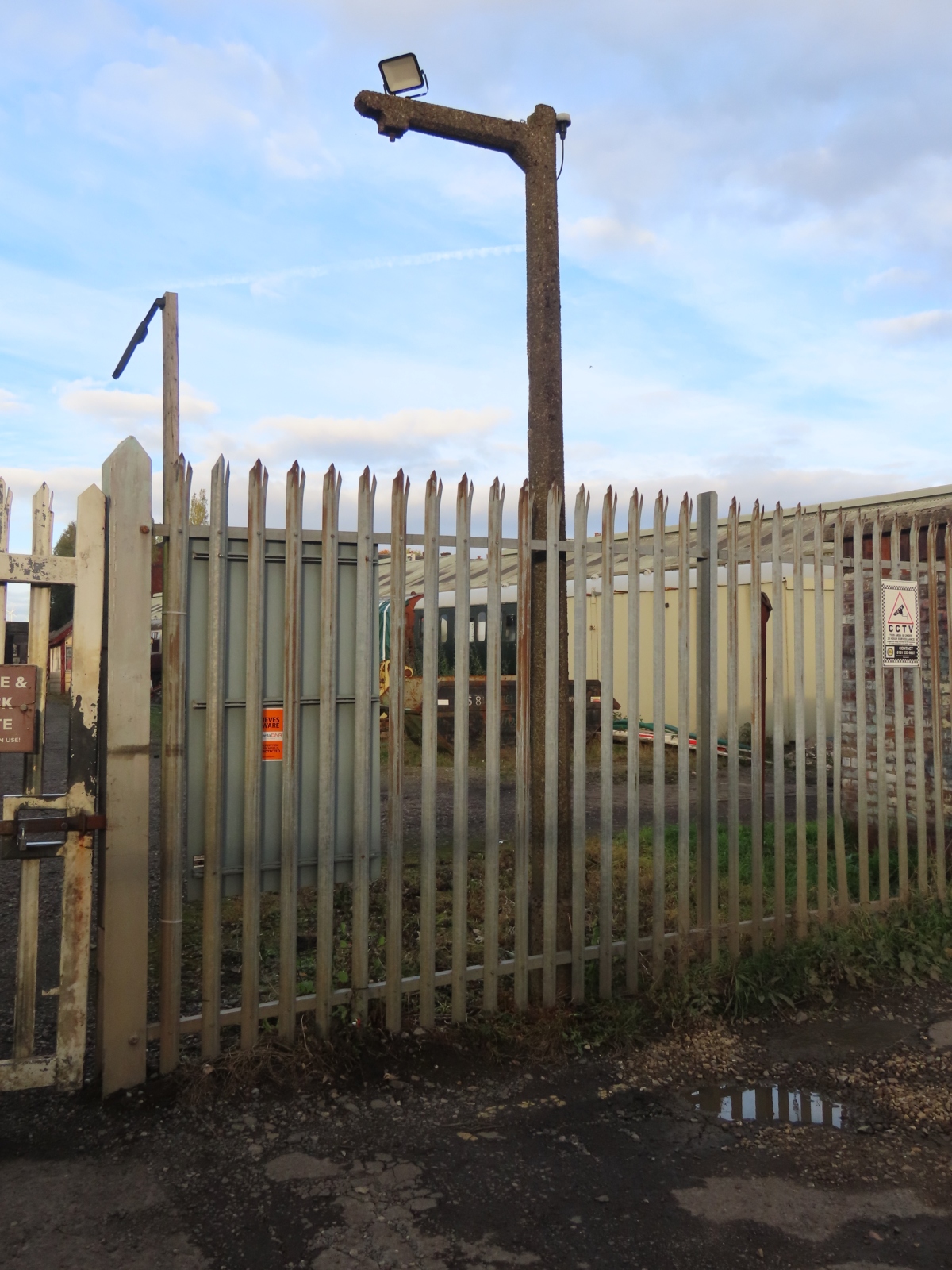
Although the installation's original top-entry lantern is long gone, the structure has been re-purposed to accommodate a NEMA photocell bracket and LED floodlight.
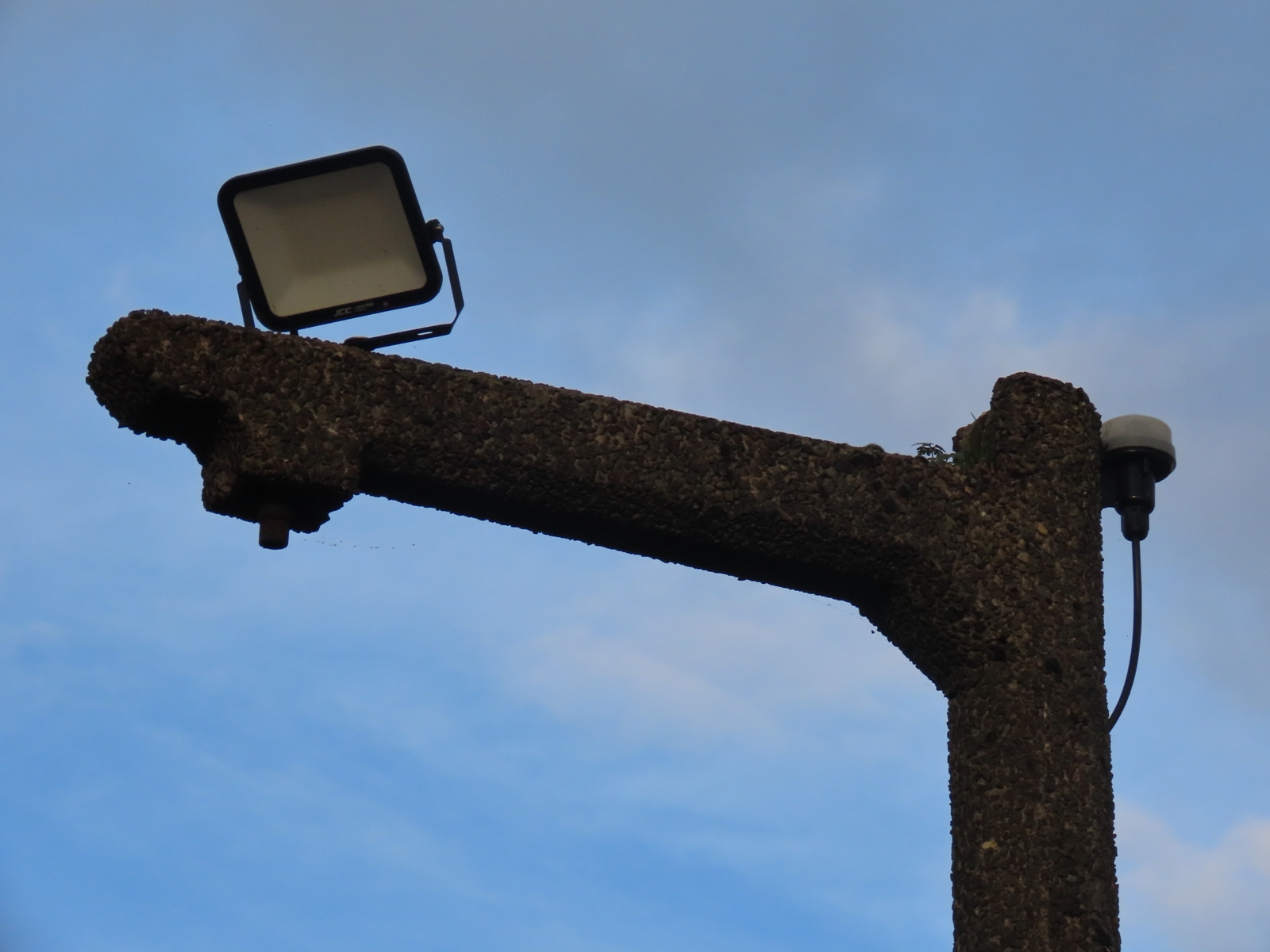
Another of these columns is to be found overlooking the level crossing at Ramsbottom station. The crossing's gates are controlled manually from the nearby signal box, using a large "ship's wheel" device.
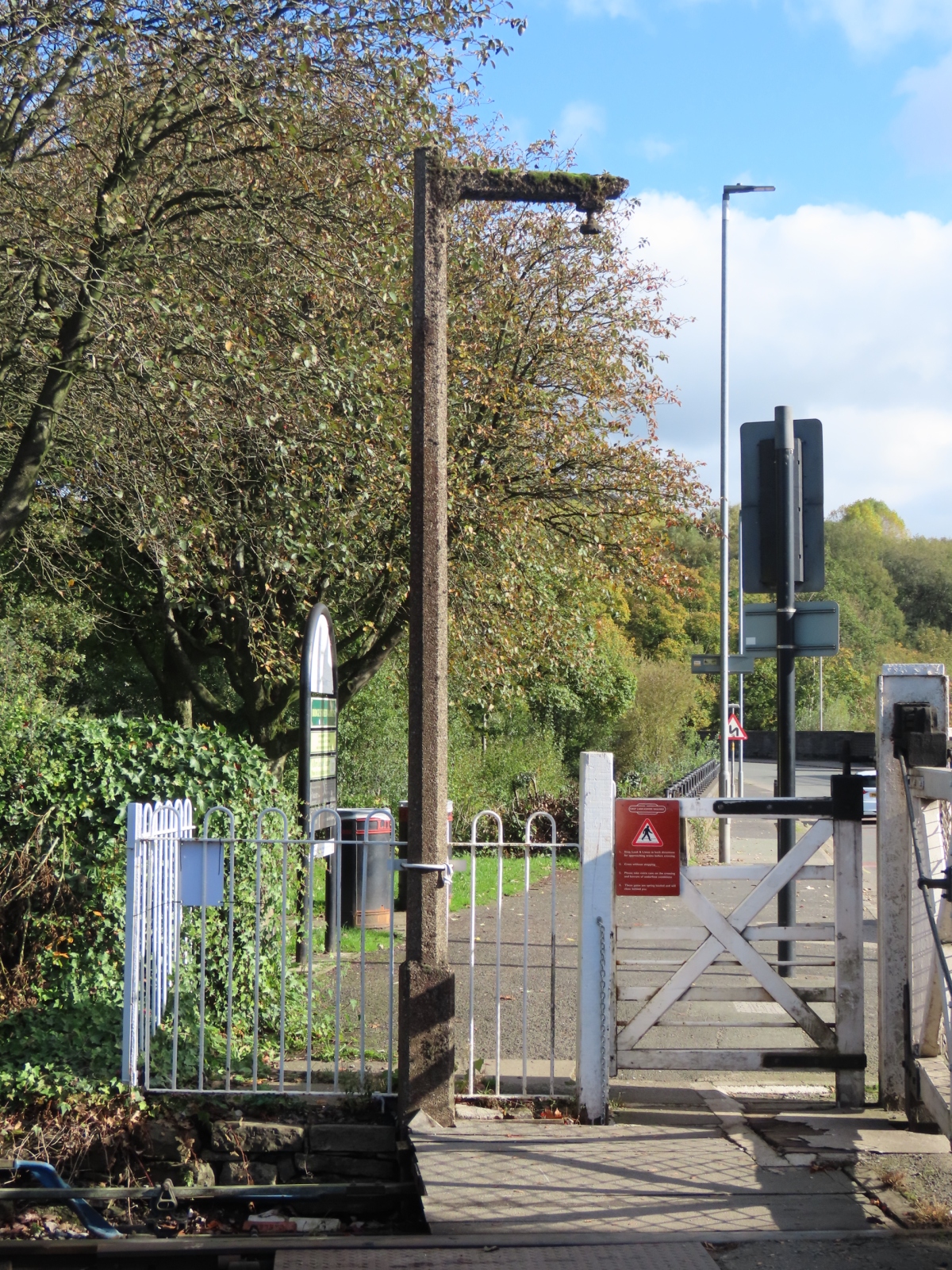
The proximity to the trees has led to moss developing on this column.
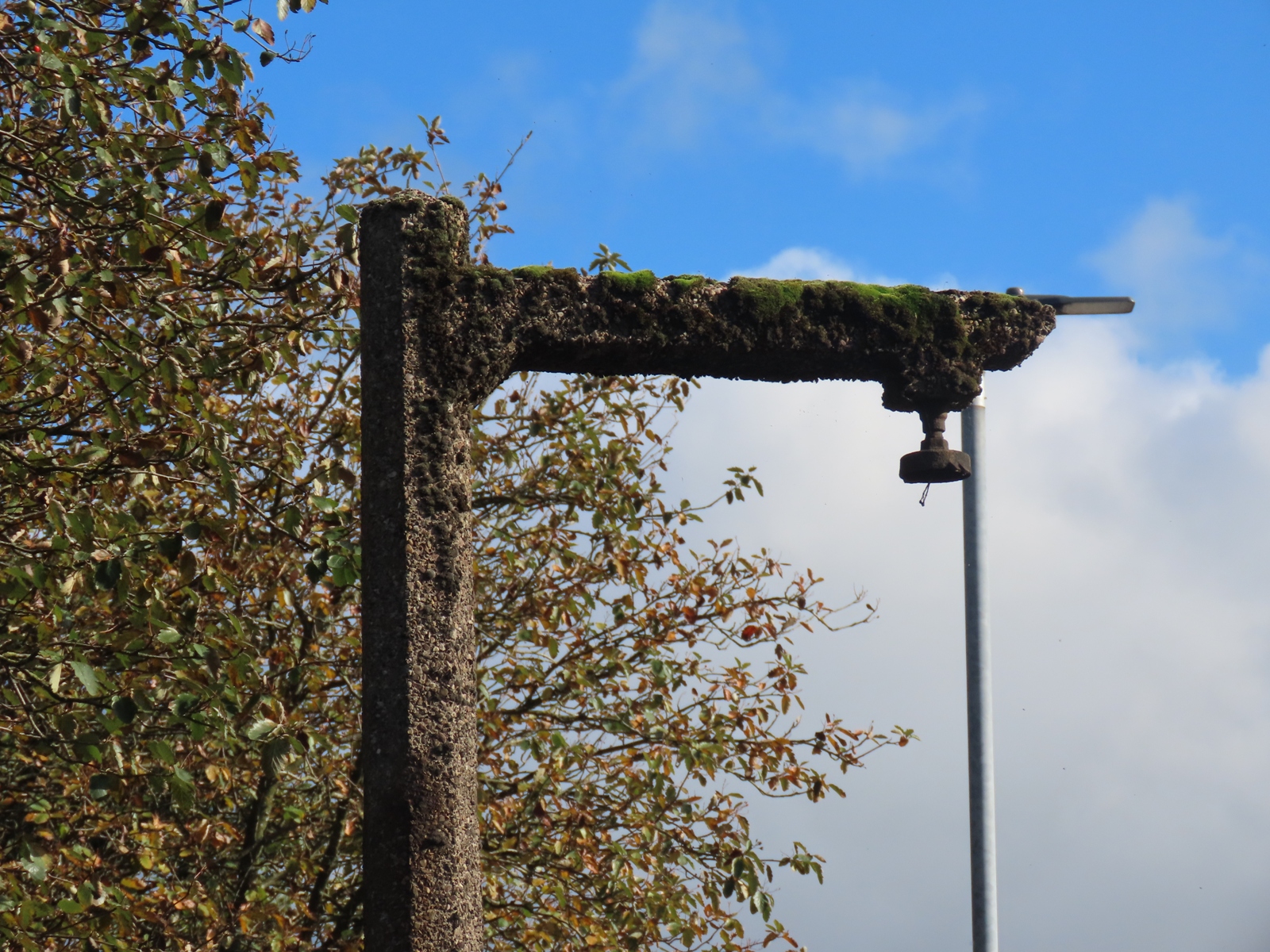
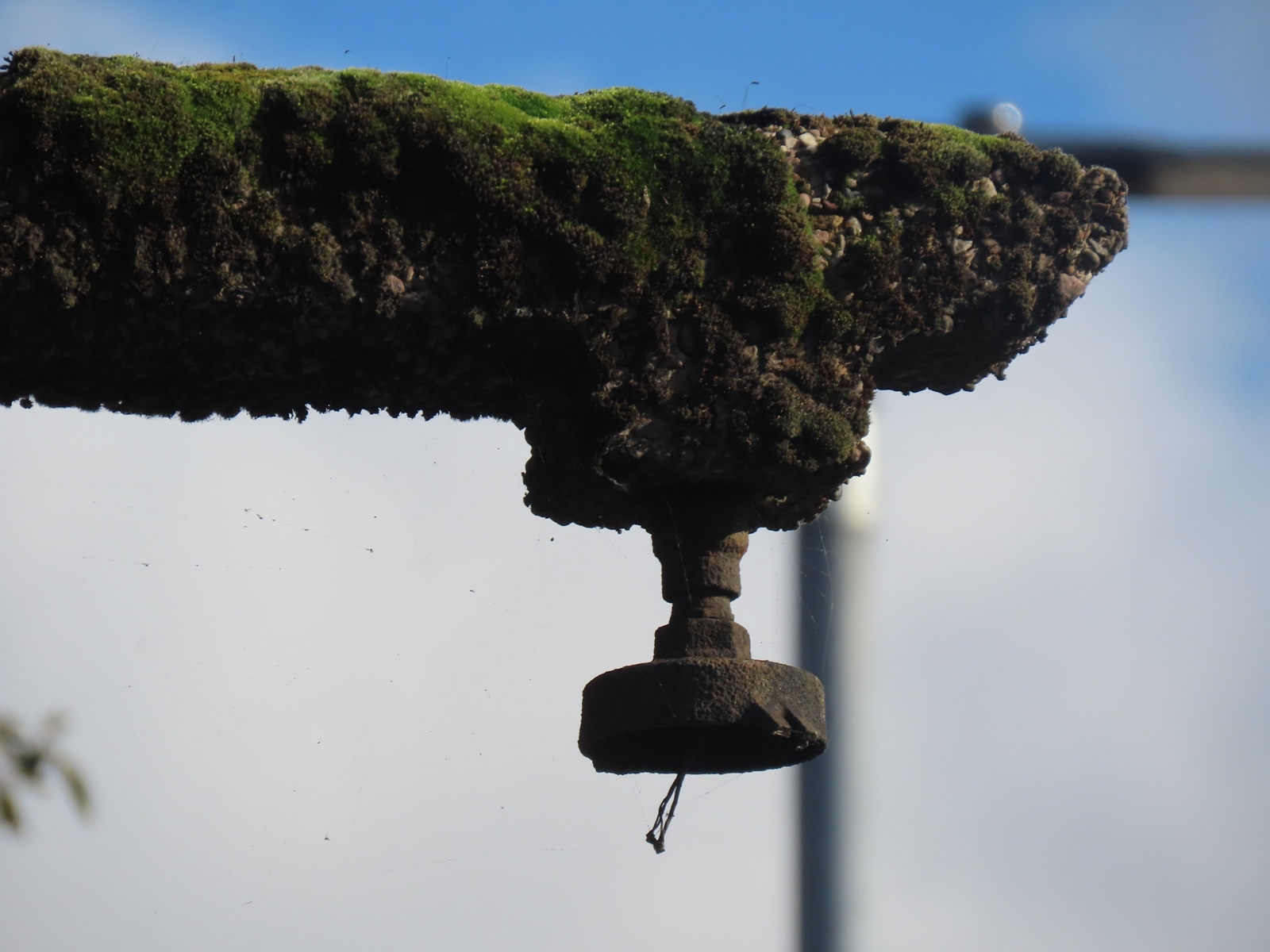
The remains of the very top of the lantern remain here, along with a very frayed wire.
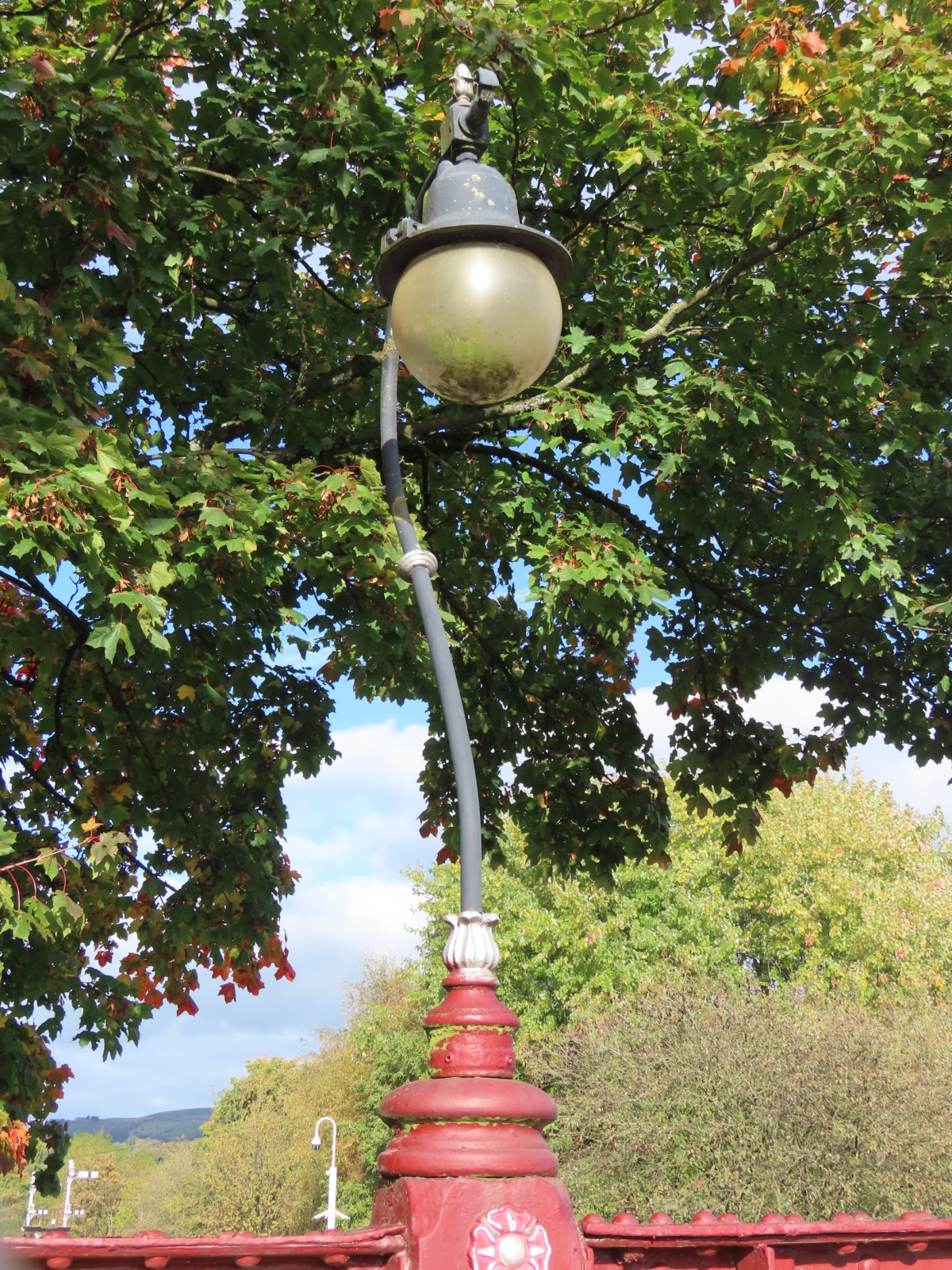
Two top-entry lanterns attached to swan neck brackets are positioned on the footbridge that links the two platforms.
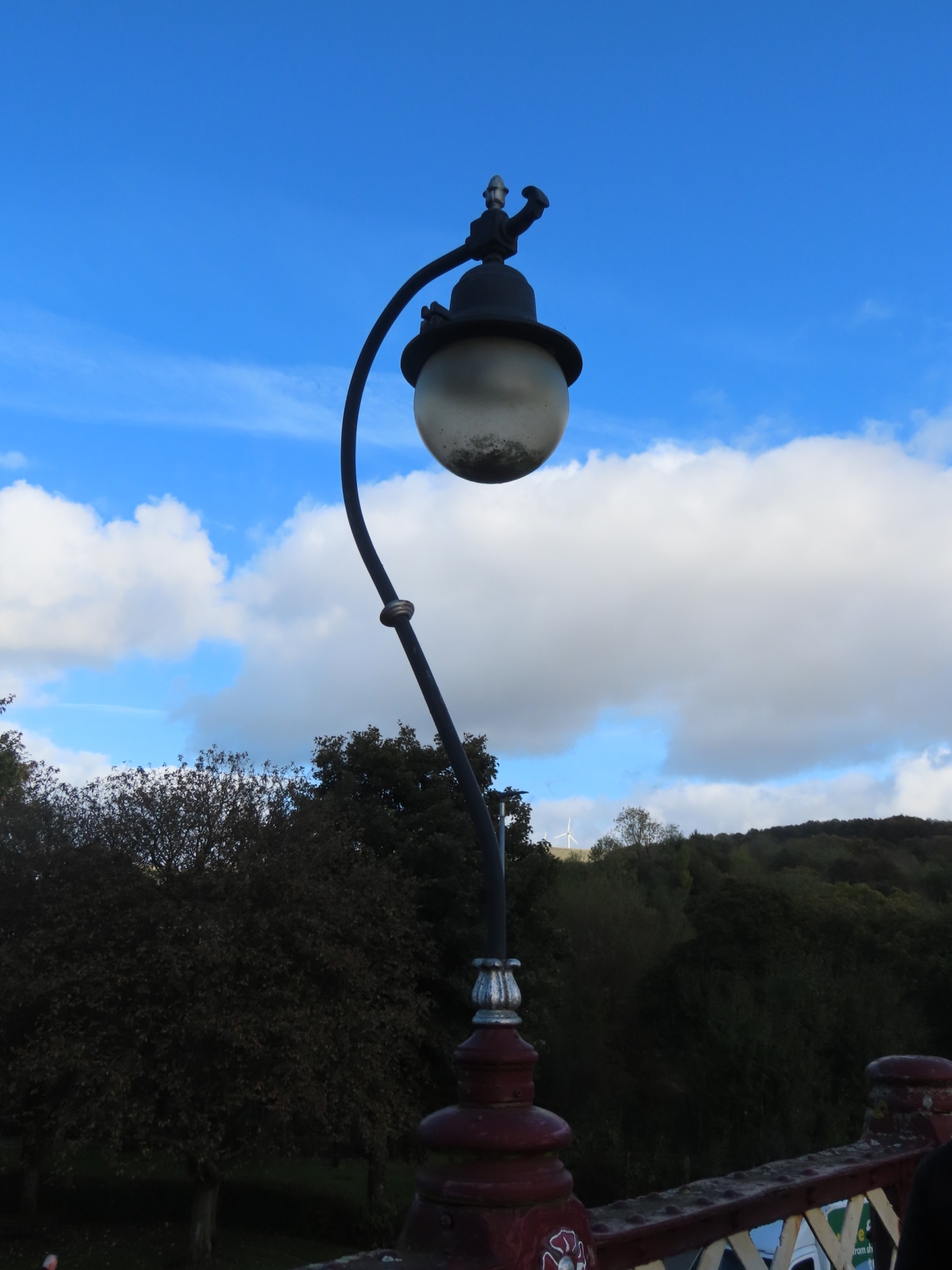
A slight modification made to the lanterns is the use of polycarbonate globe-shaped bowls. There may have been a practical decision to make this alteration, as the mounting height of the two installations is rather low, which may have raised concerns that glass bowls would be susceptible to vandalism.
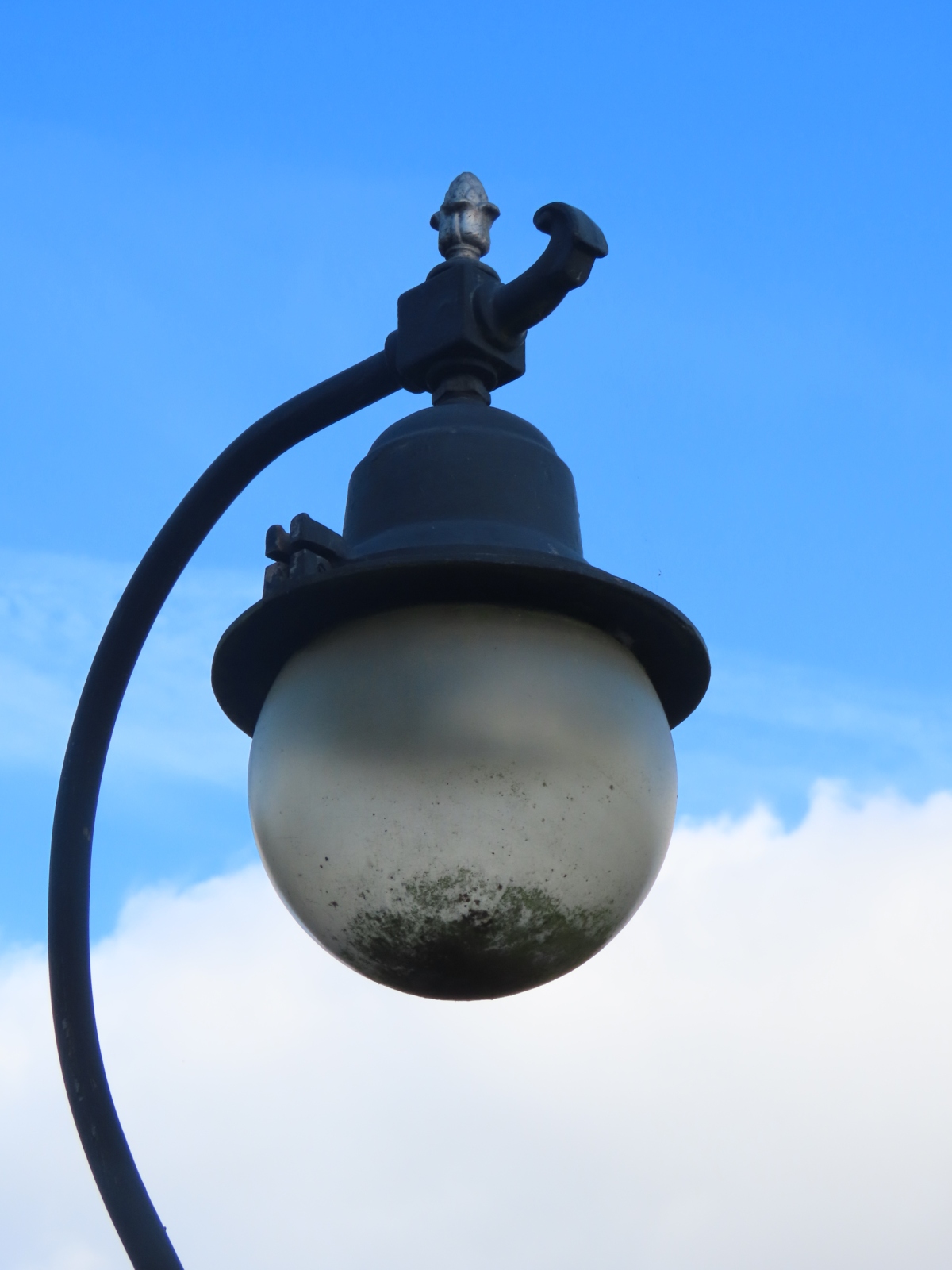
The footbridge is not original to the ELR, having been removed from Dinting Railway Station in Derbyshire.
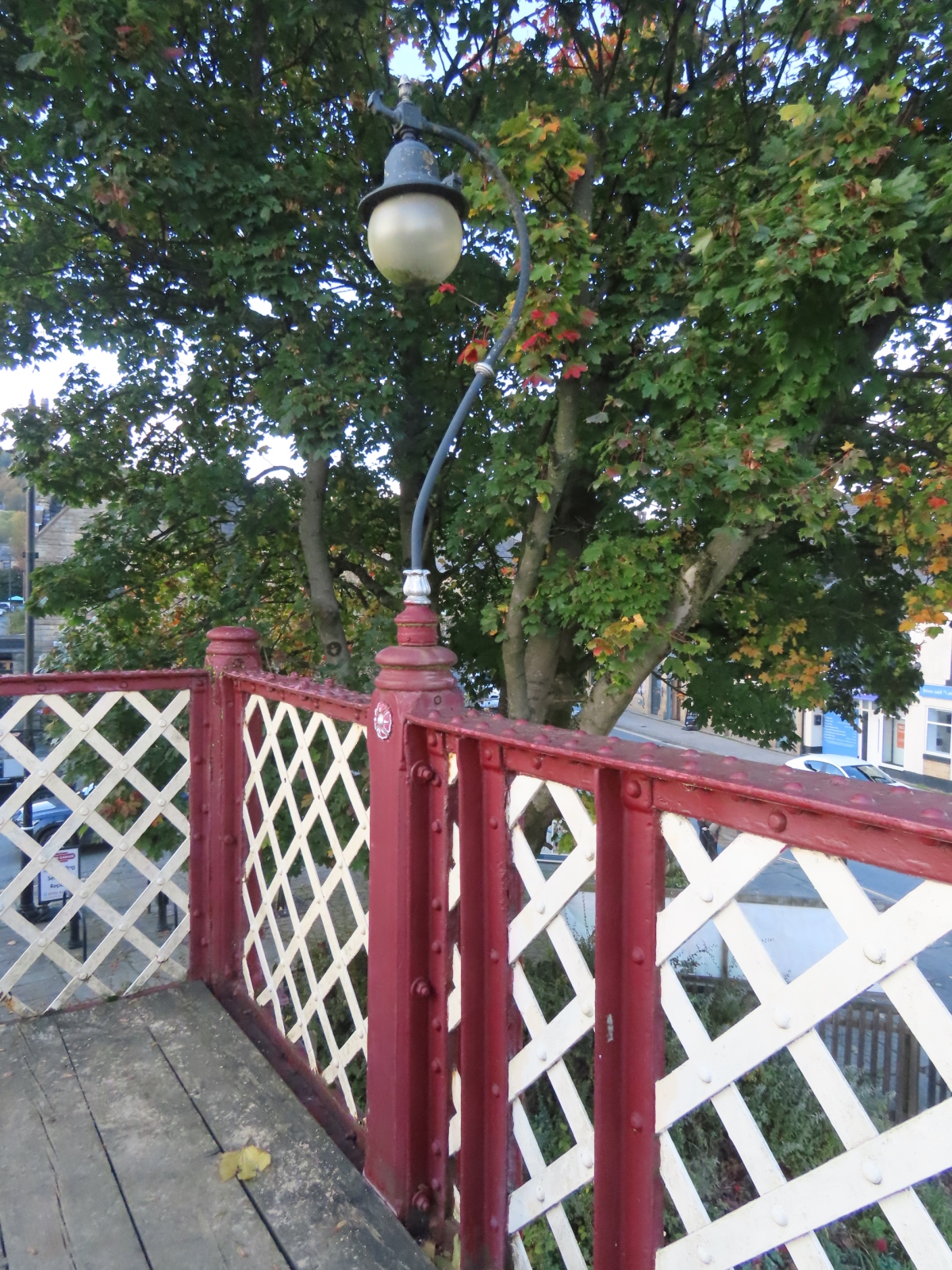
Understandably, each installation is positioned facing the staircase leading to that particular platform.
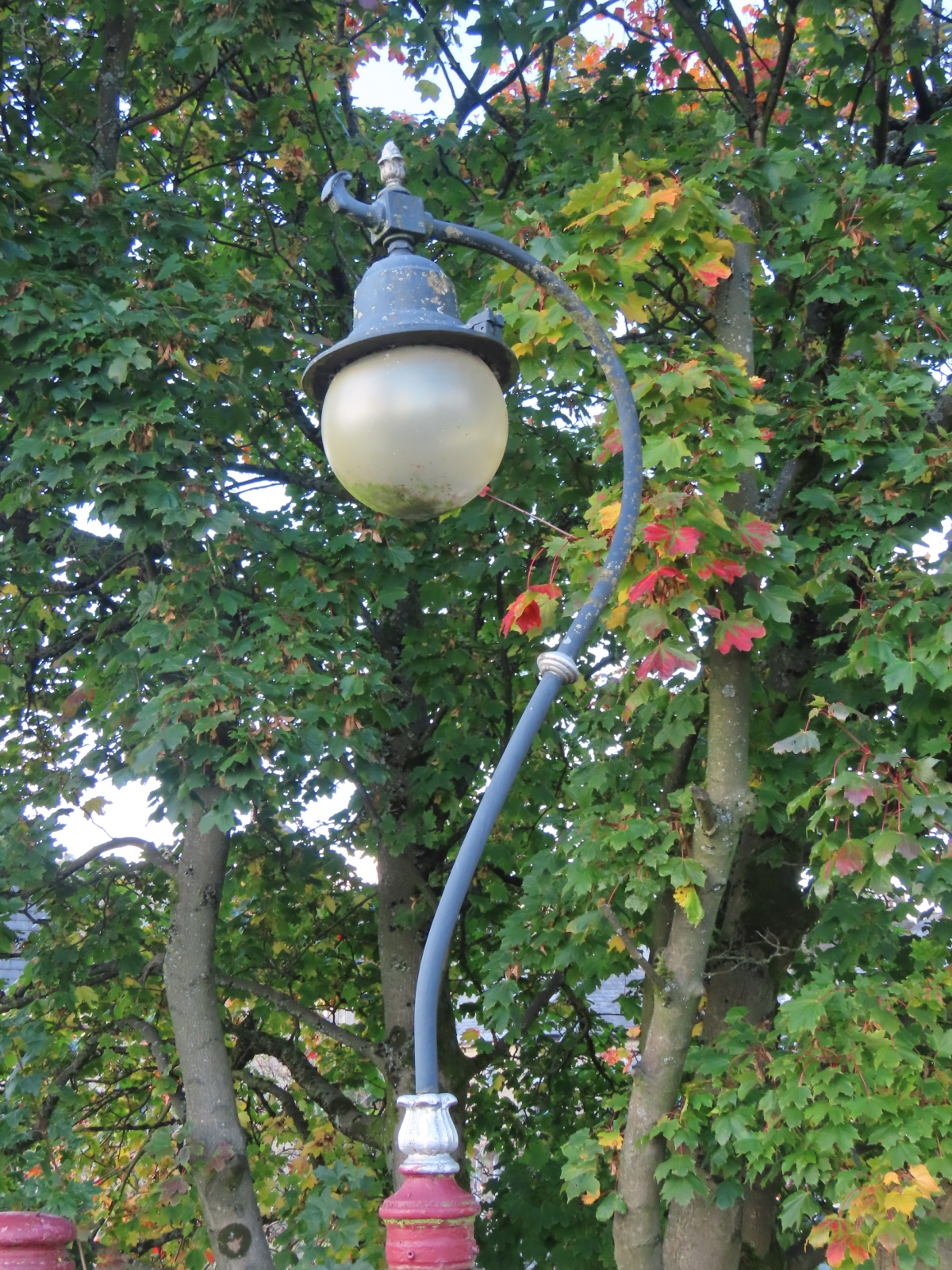
The swan neck's finial design is unusual, and differs from the more common finial designs that are normally seen with swan neck brackets.
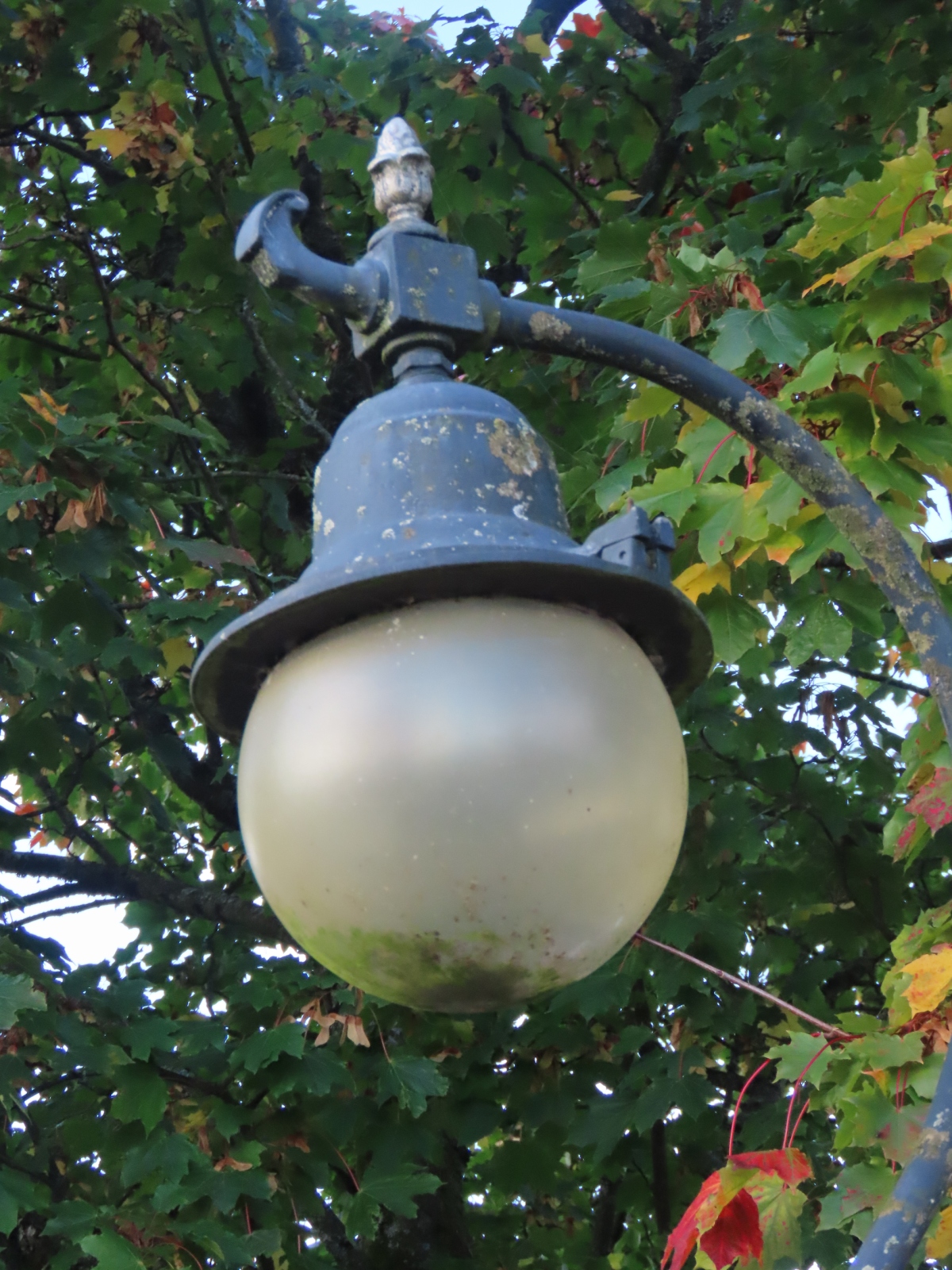
The slight yellowing to the polycarbonate bowls obscures the dreaded LED 'corn' lamps, now fitted to these lanterns, from being seen clearly.
BACK TO SURVIVORS IN GREATER MANCHESTER
CLICK HERE TO MAKE A MONETARY DONATION
© 2002 - English Street Lights Online