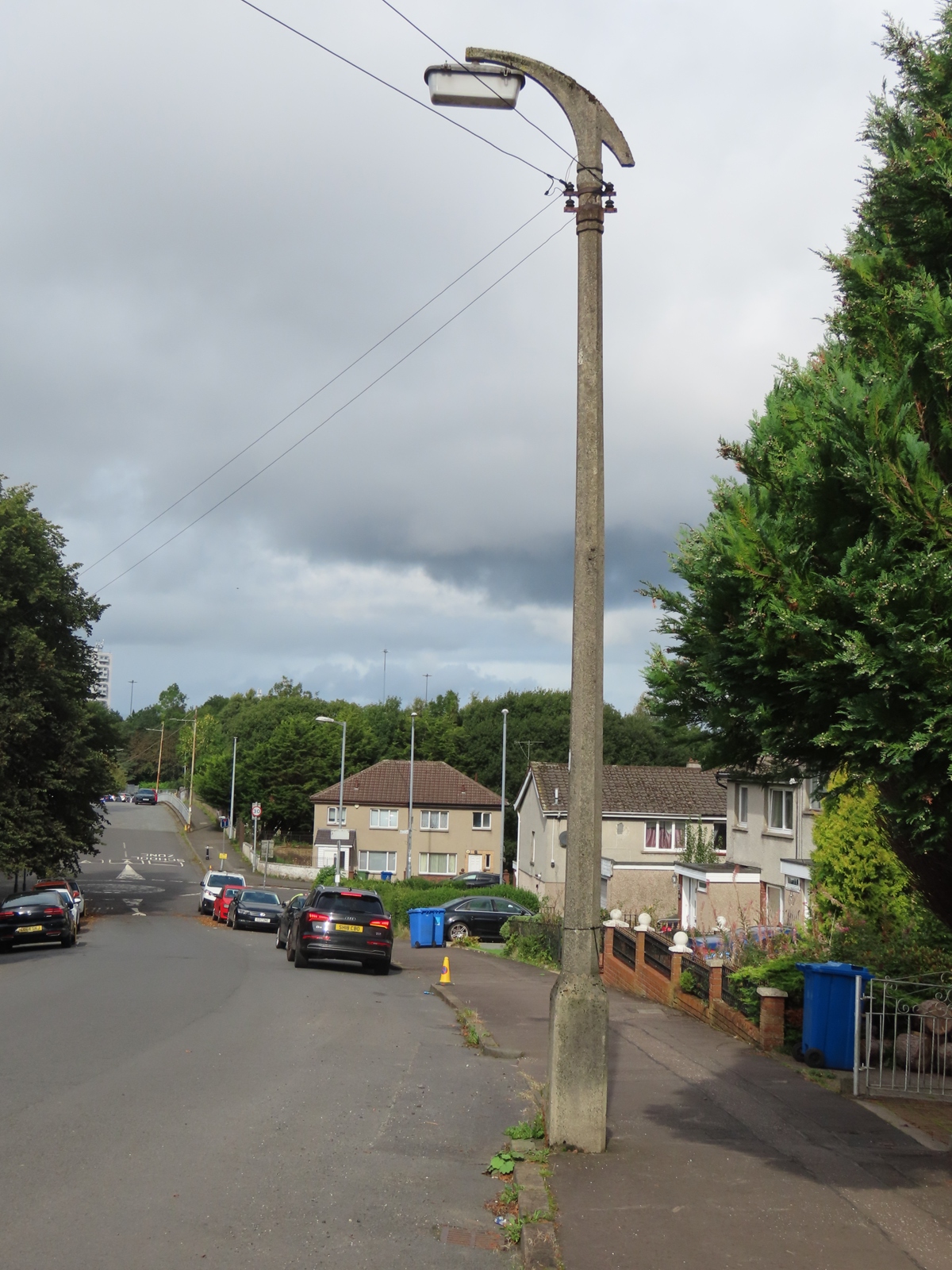
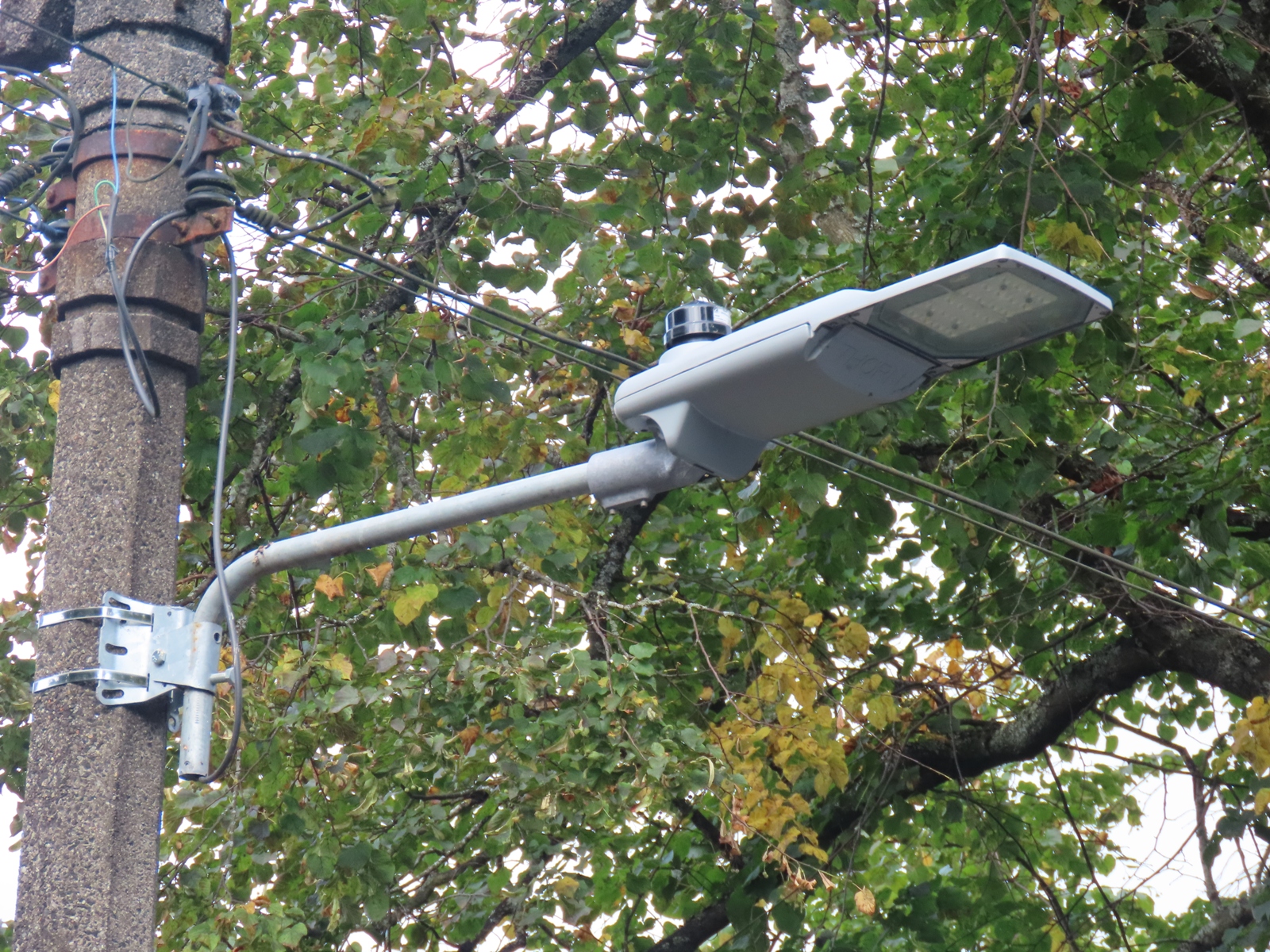
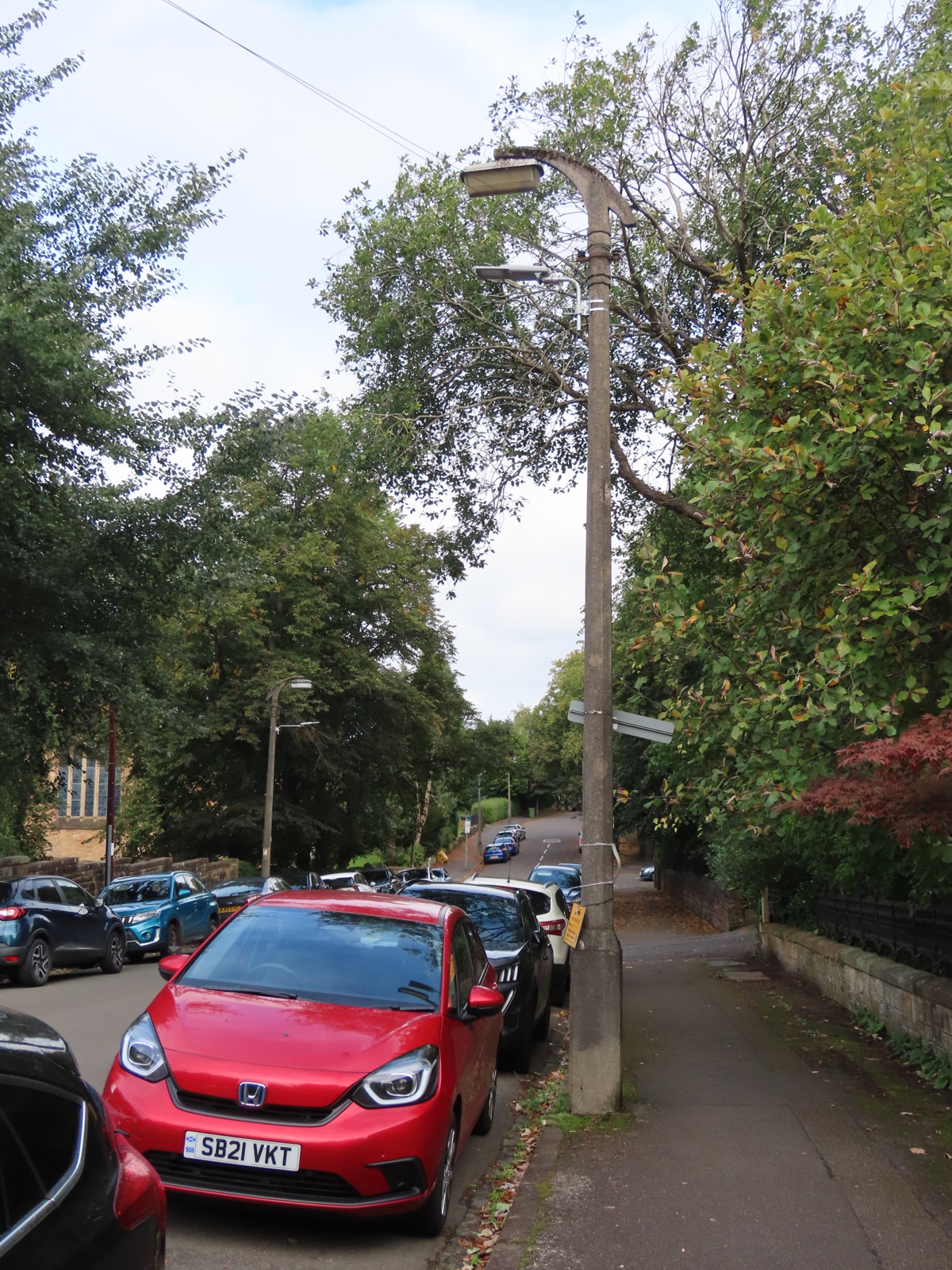
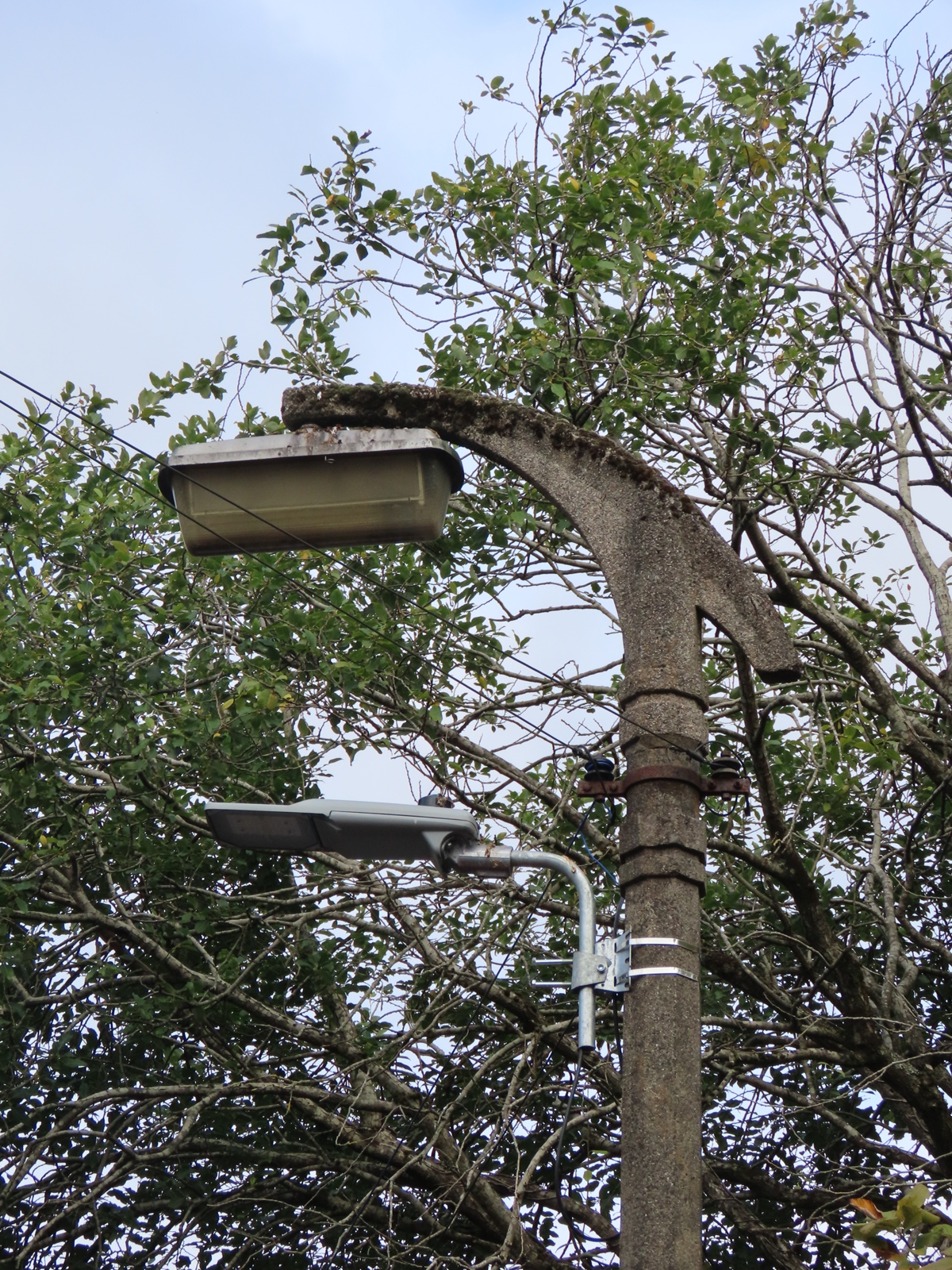
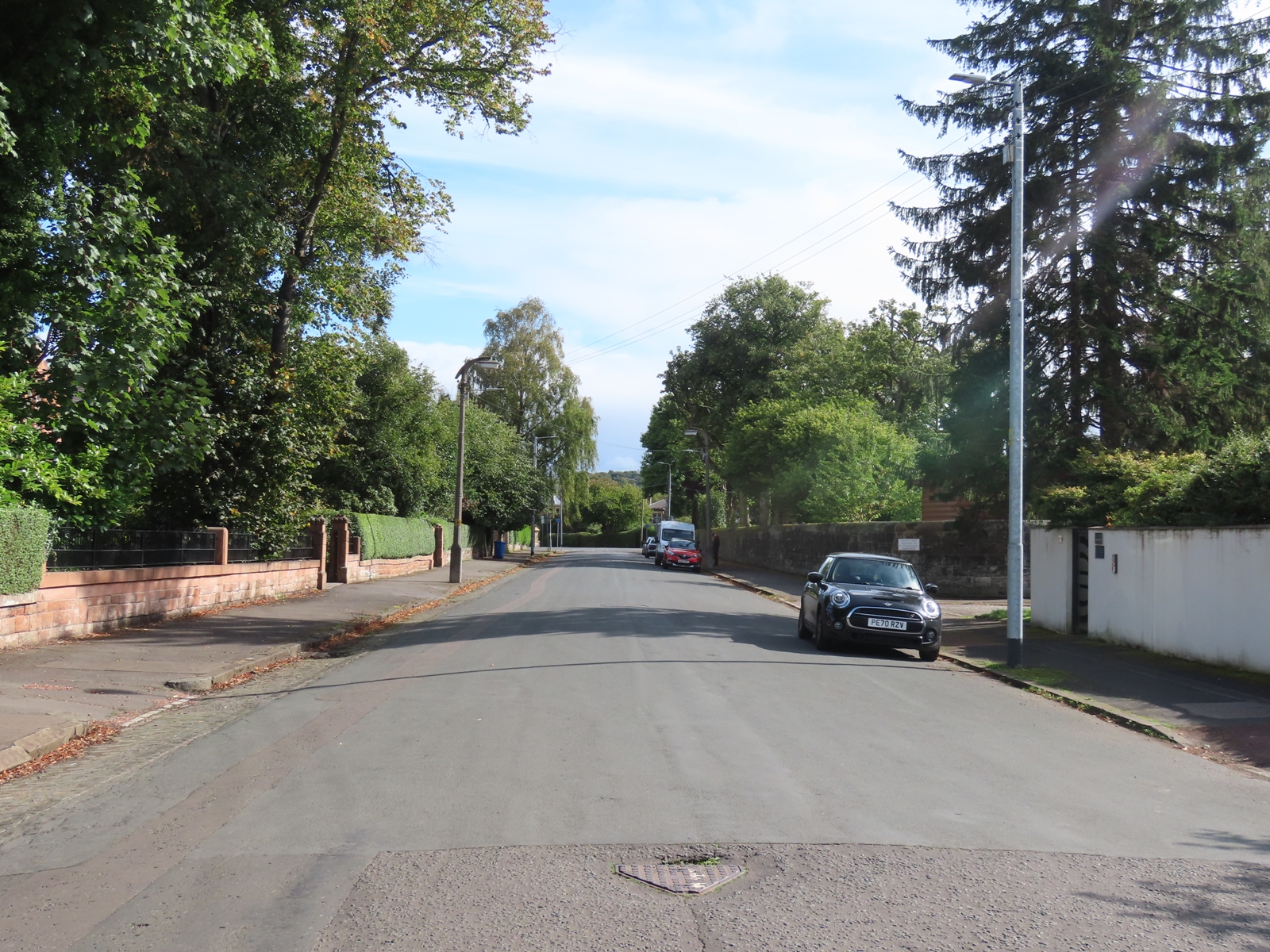
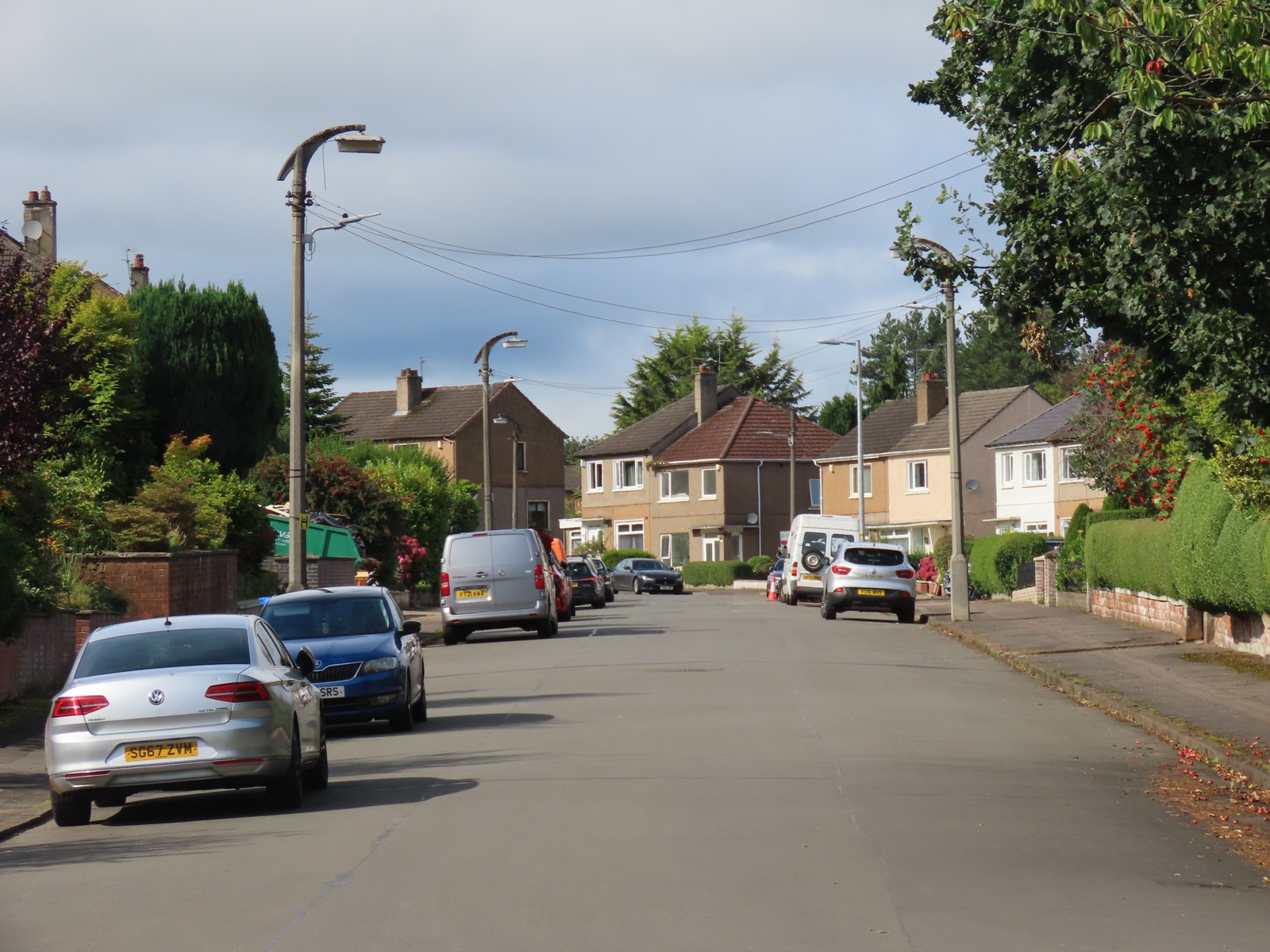
Bellahouston, Glasgow Located on the estate bordered by the M77 Motorway, Dumbreck Road and Saint Andrew's Drive are a huge number of surviving 25 ft (8 m) concrete columns dating back to the 1950s; many of which are still fitted with their original 140 Watt SO/H / SOI/H / 90 Watt SOX (low pressure sodium) lanterns. Sadly, the vast majority of these lanterns are no longer in operation, however, with steel wall brackets supporting LED lanterns having been attached crudely to the columns at a lower position. Many of the columns are supplied on overhead electricity supplies; where underground supplies do exist, these also appear to be the original 1950s' cables, complete with VIR (Vulcanised India Rubber) insulation, which is now cracking and crumbling rather alarmingly. There are two suppliers of concrete columns - the highest proportion being produced by Springbank Quarry Company Limited, of Airdrie, in Perthshire, with Concrete Utilities' products making up the remainder.
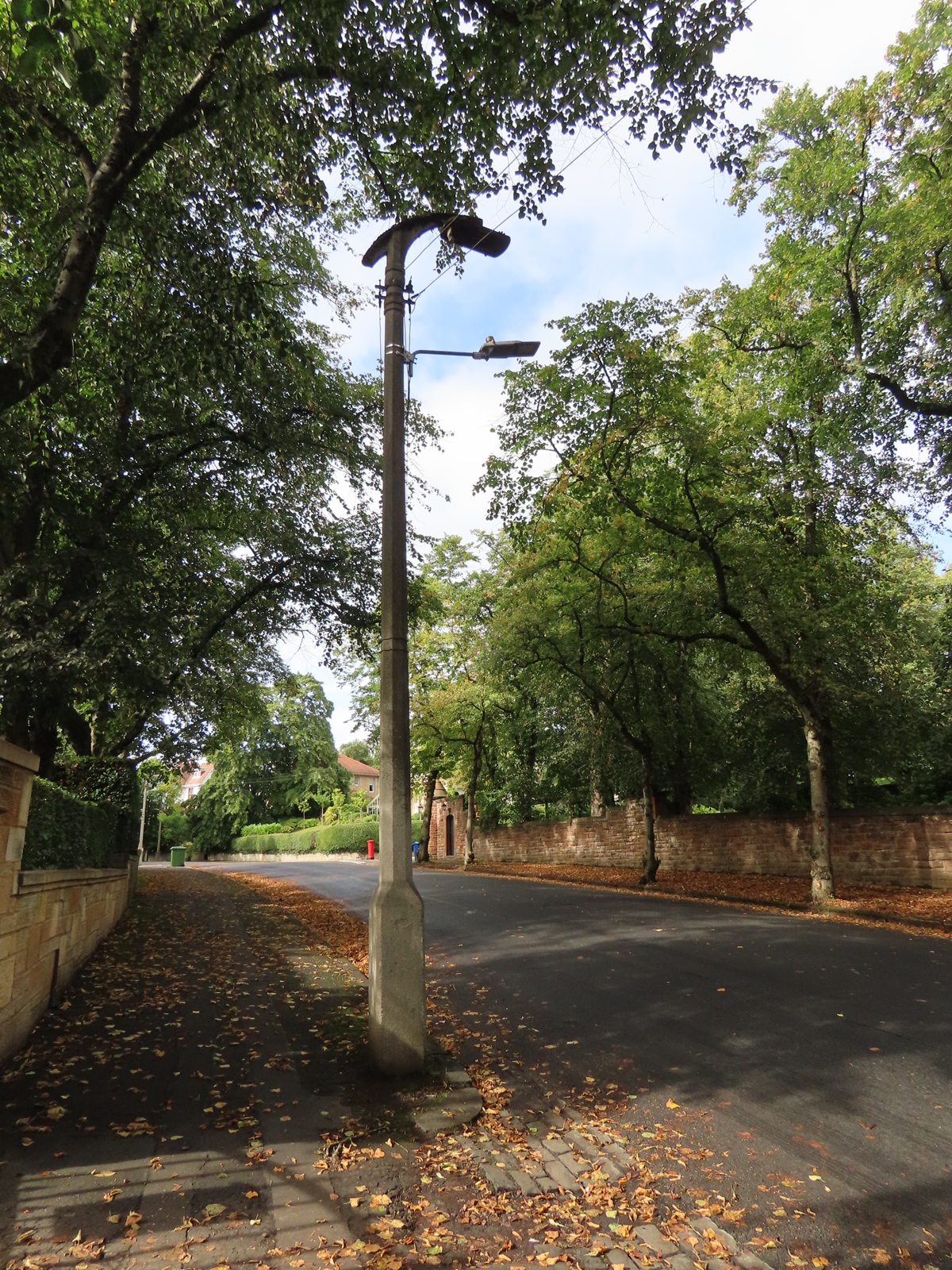
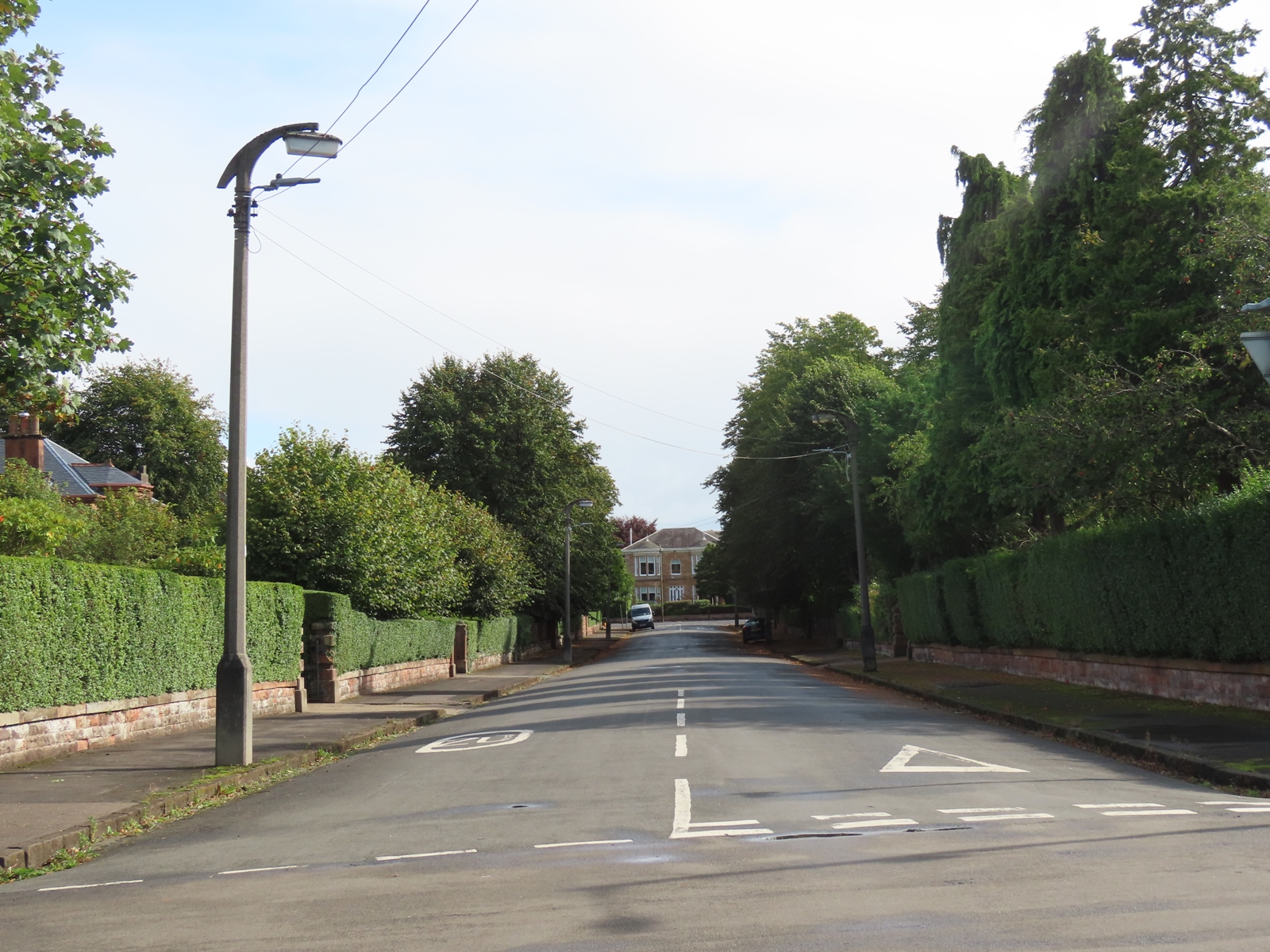
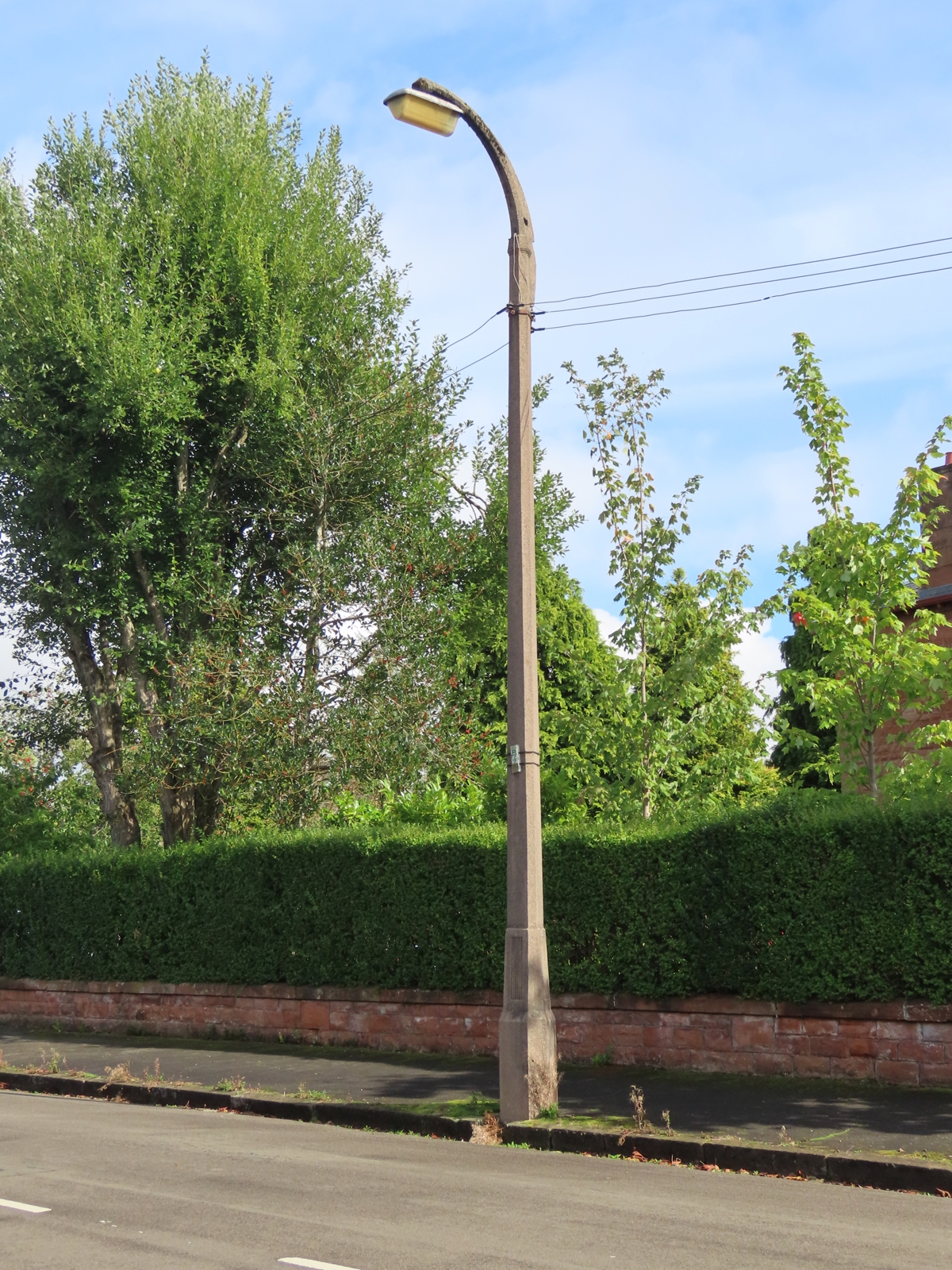
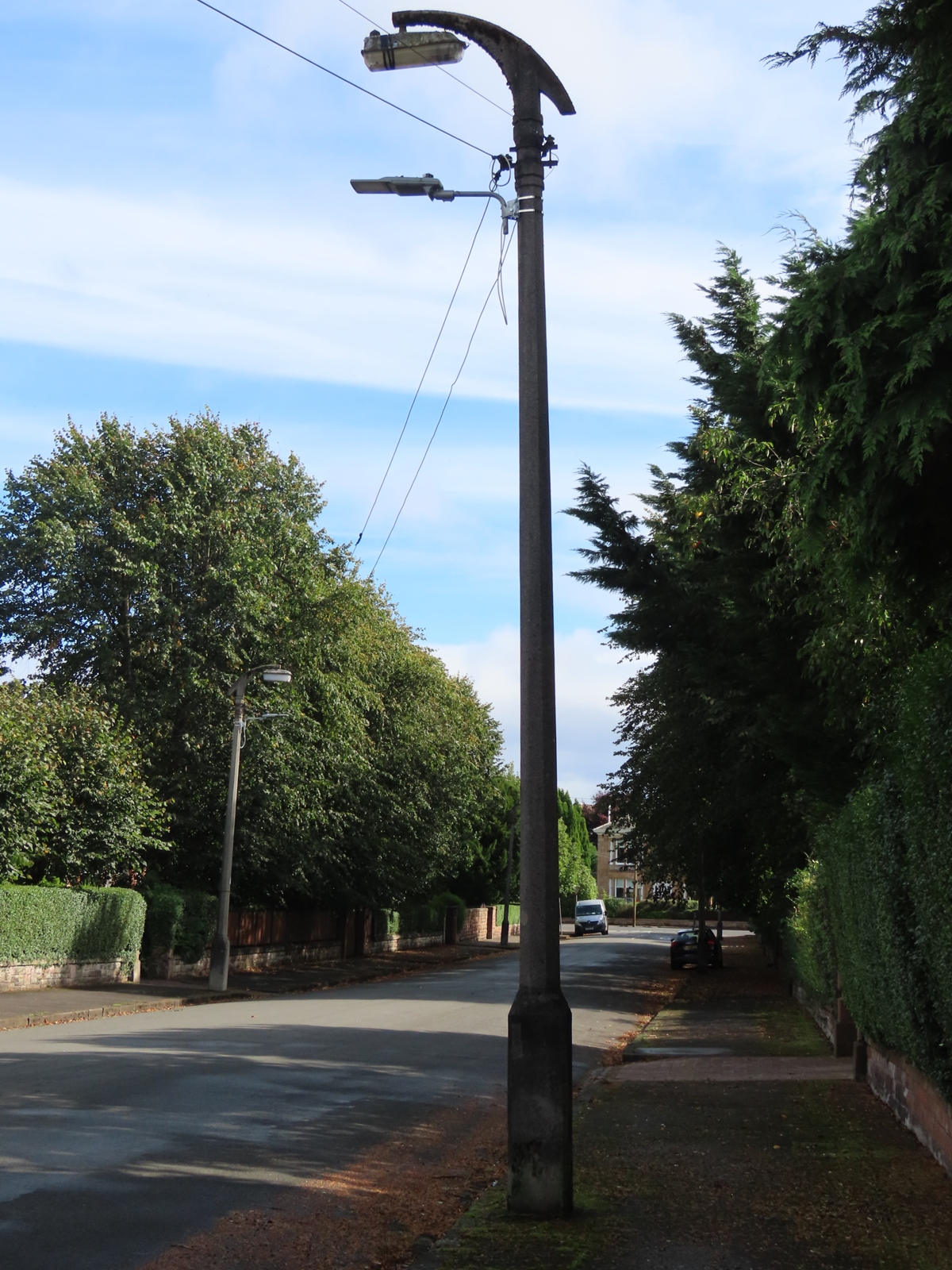
As so many installations survive on this estate, I haven't photographed every single one, but have still pictured a generous handful. Our mammoth tour commences on Gower Street, in the northern portion of the estate. This is one of the few columns that has not yet received an LED lantern on a new bracket.
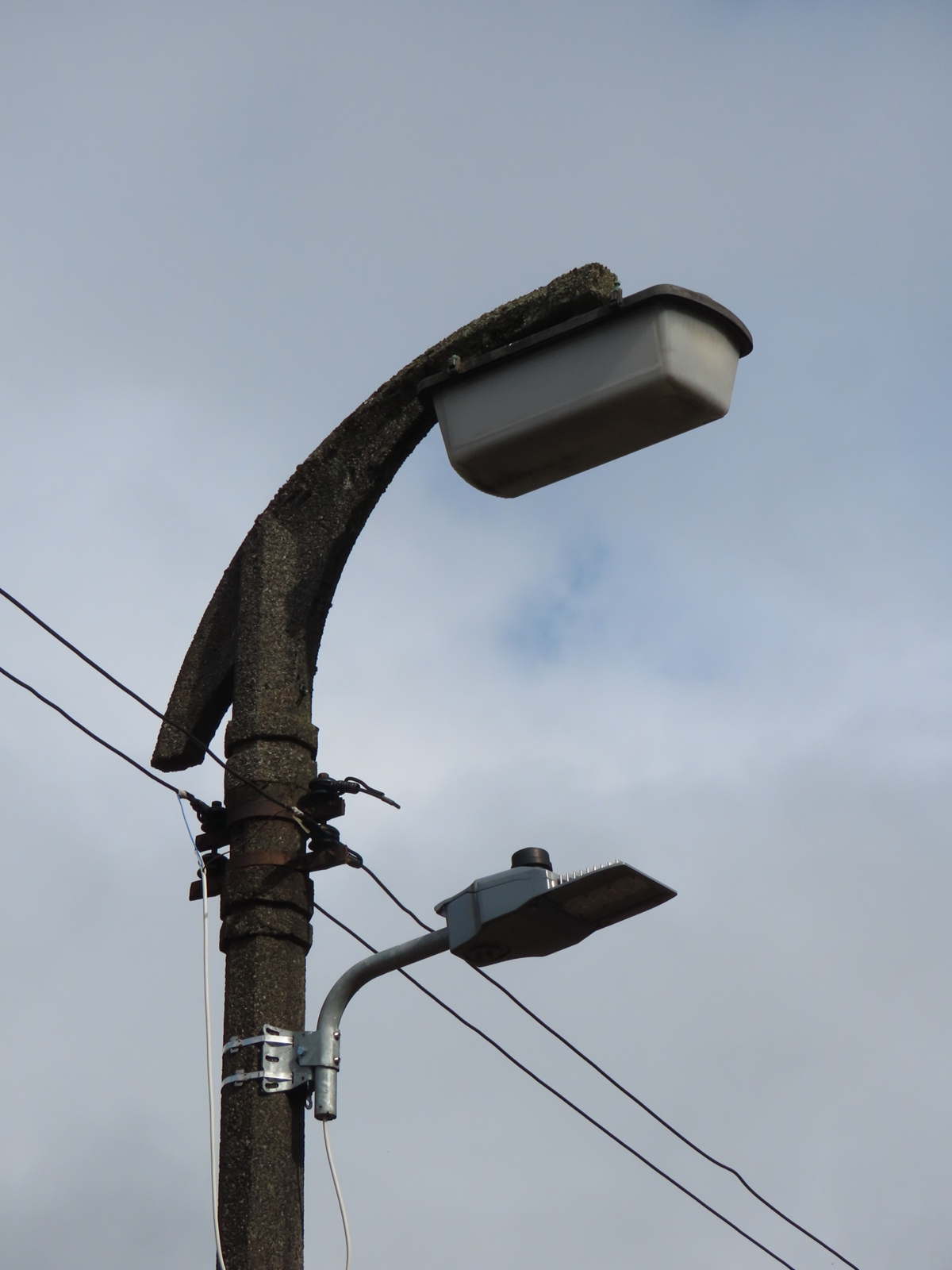
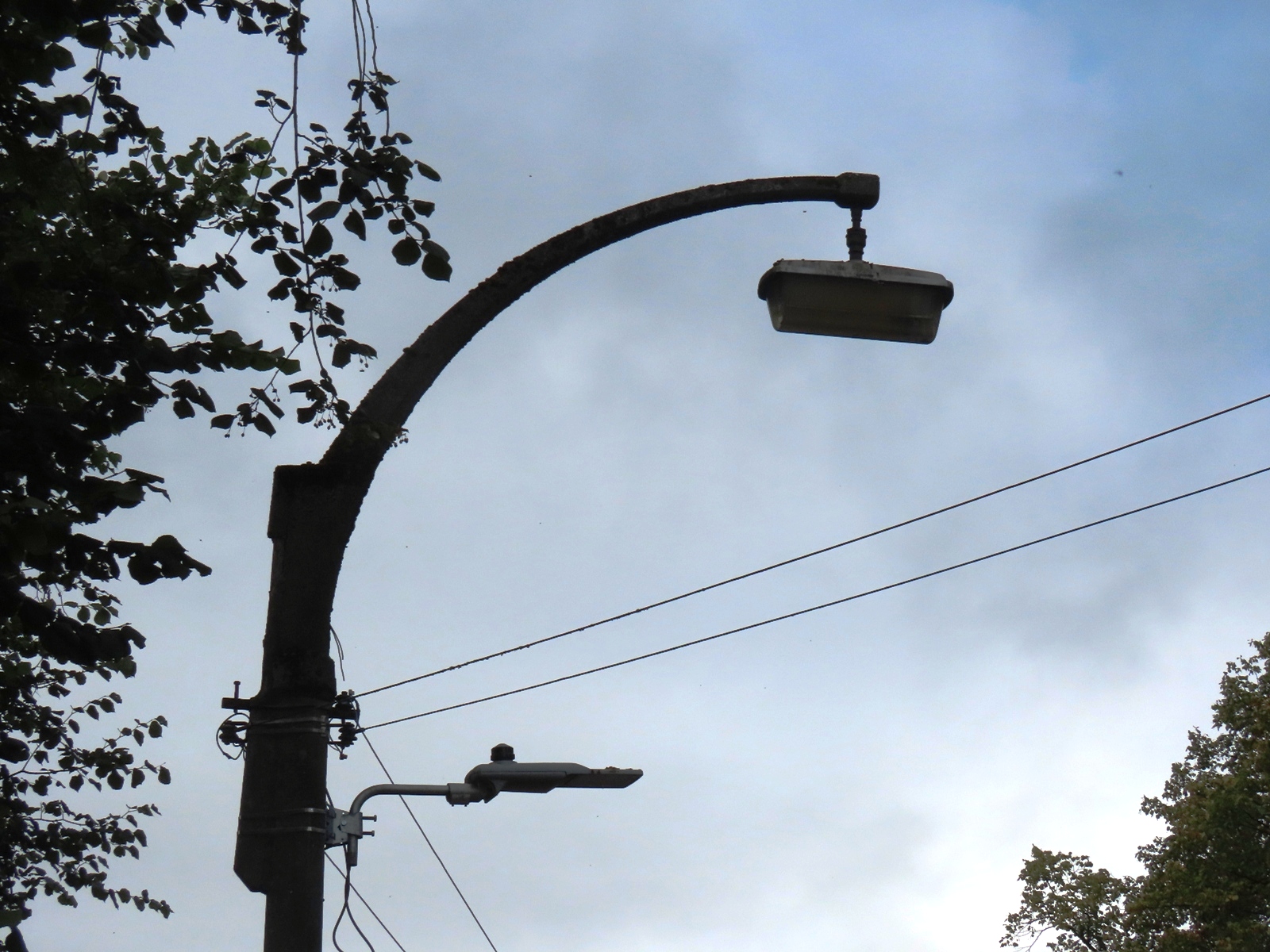
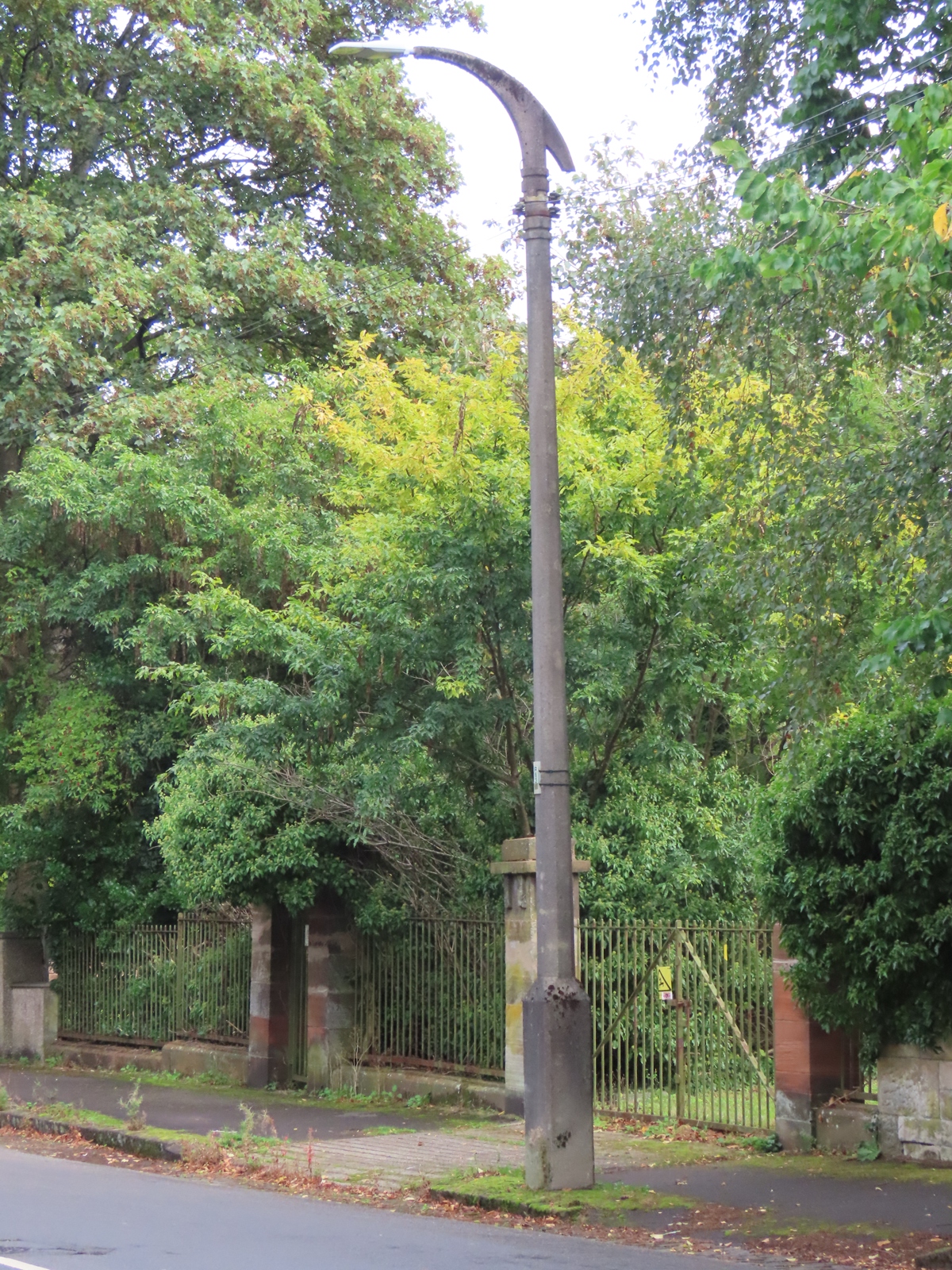
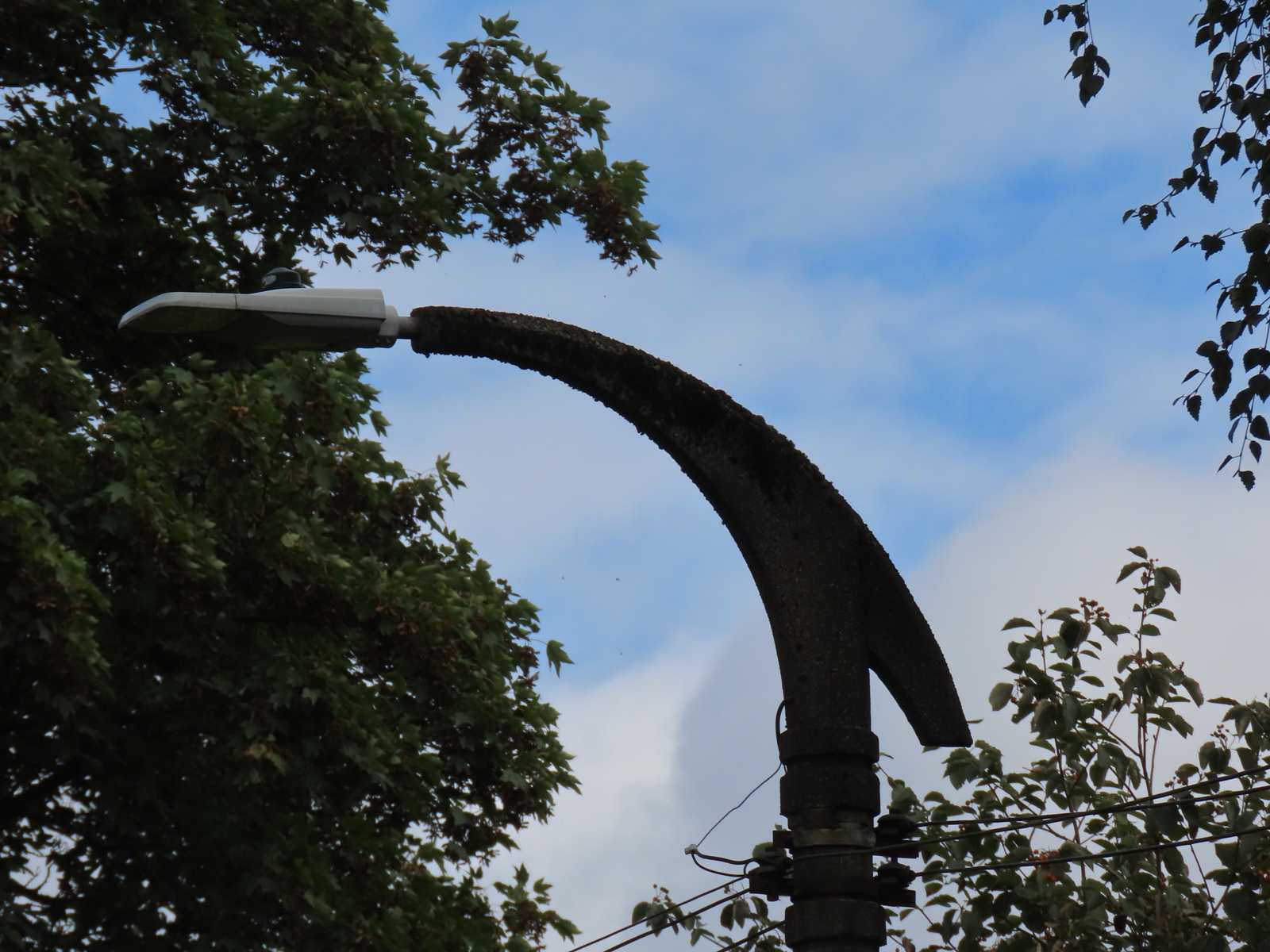
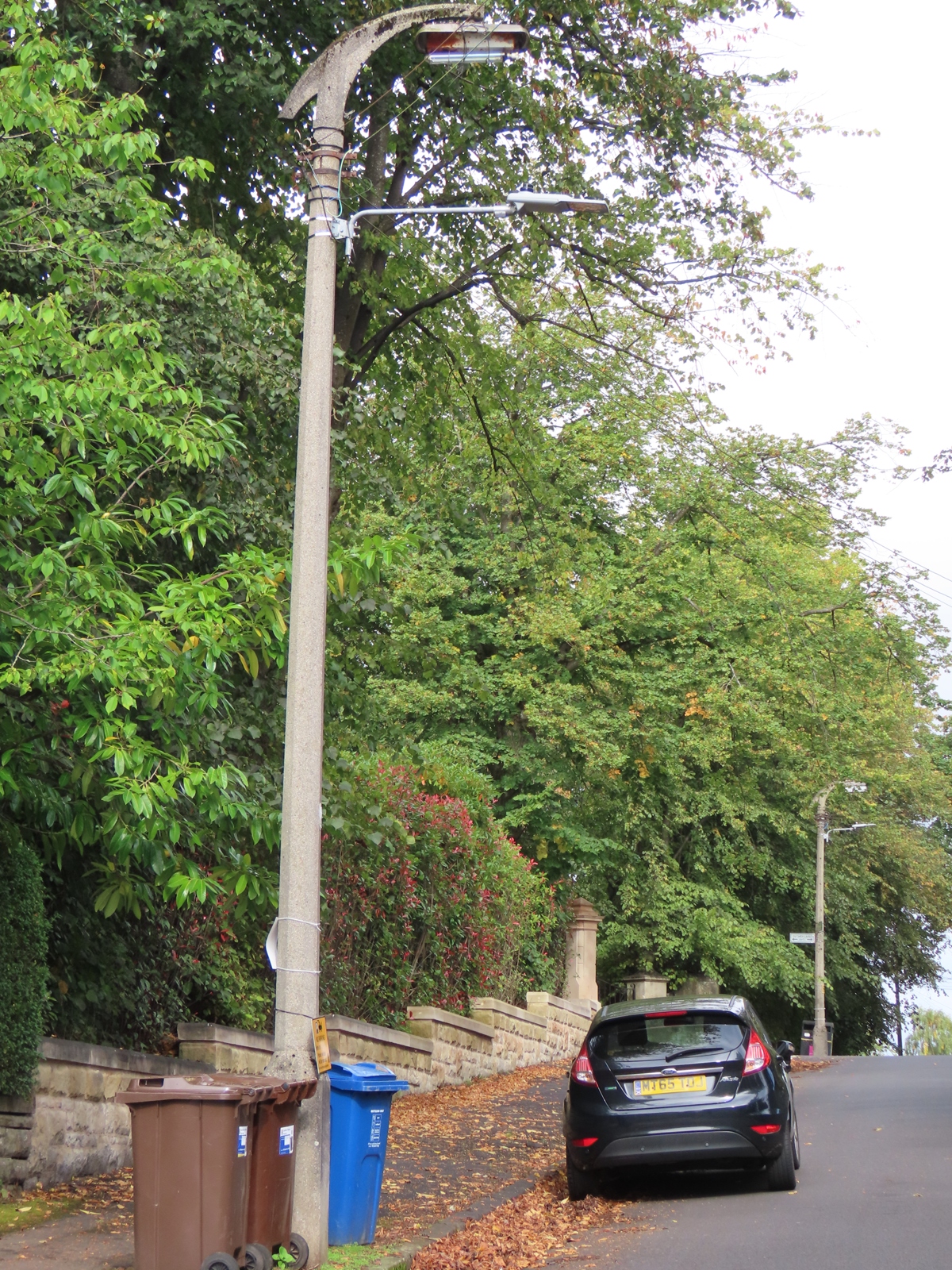
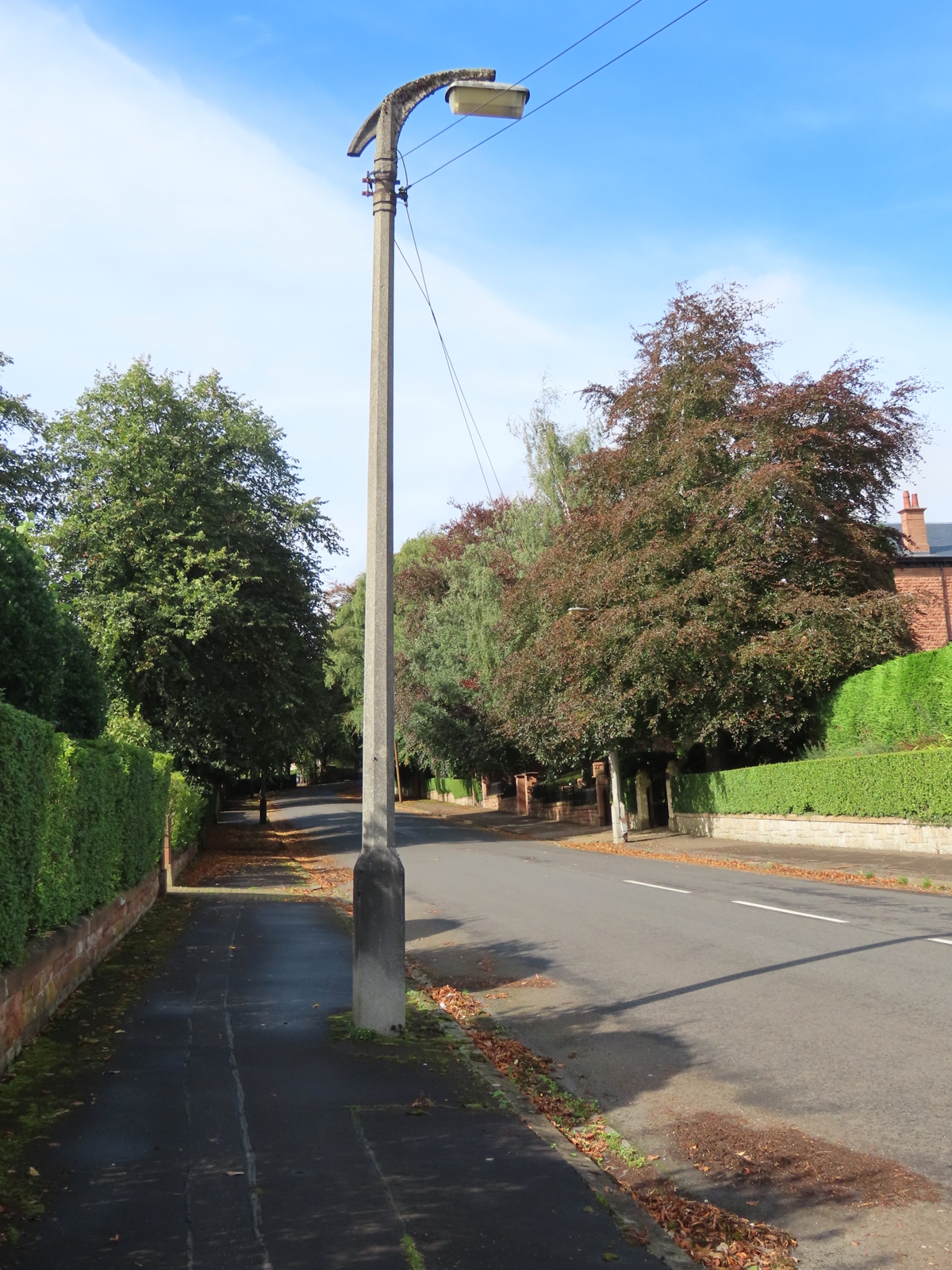
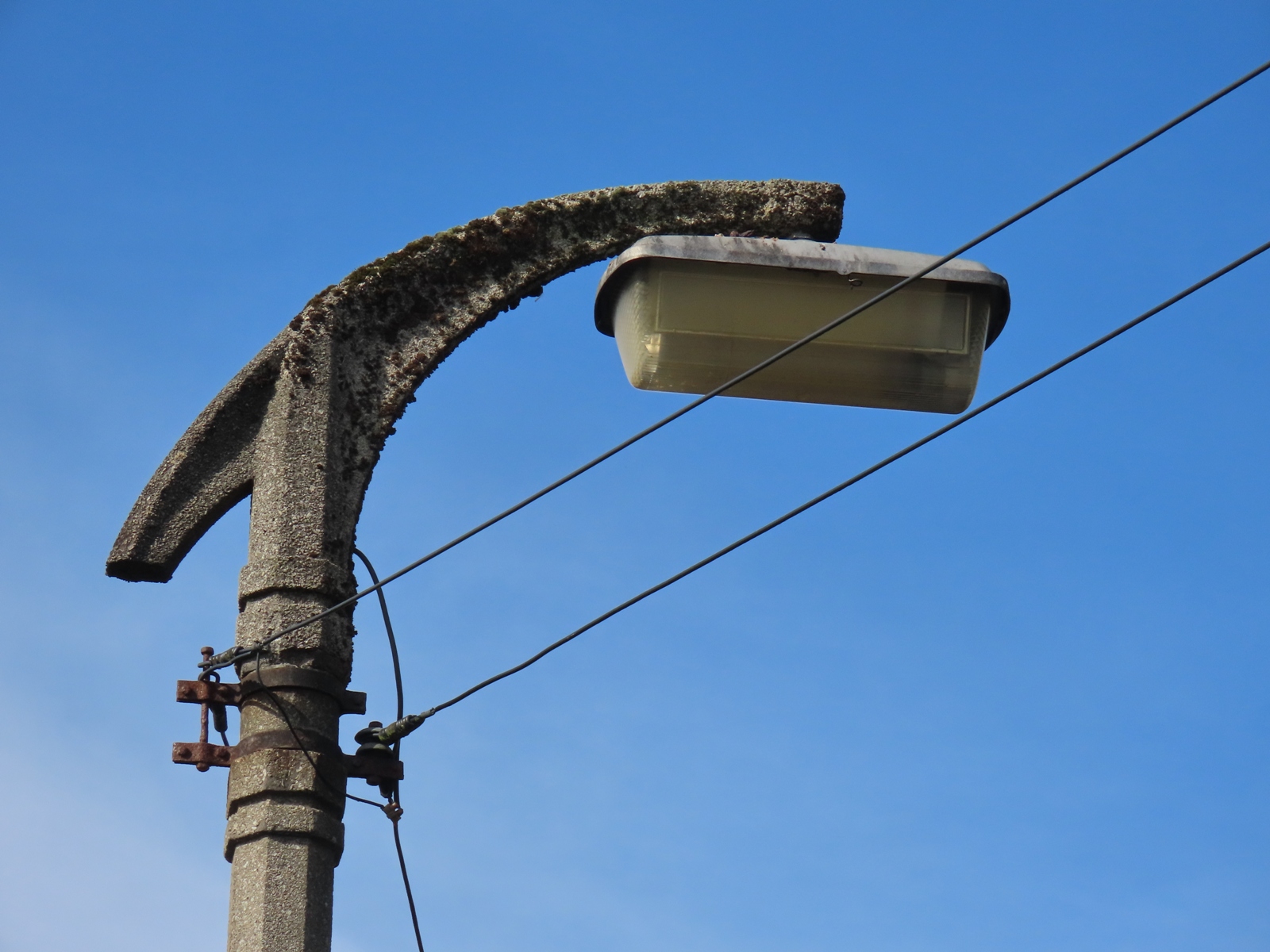
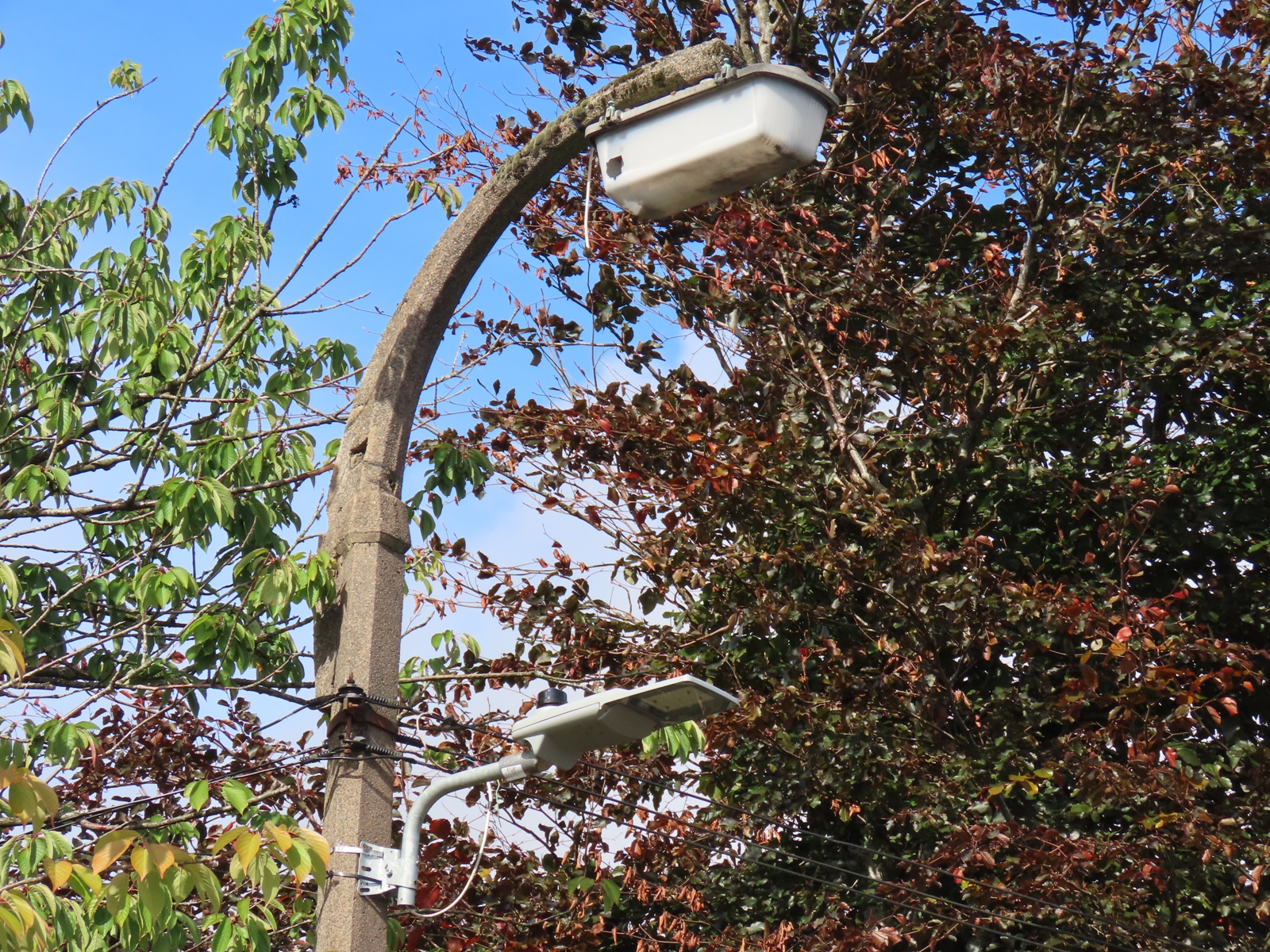
The Springbank columns all feature this distinctive top-entry bracket style.
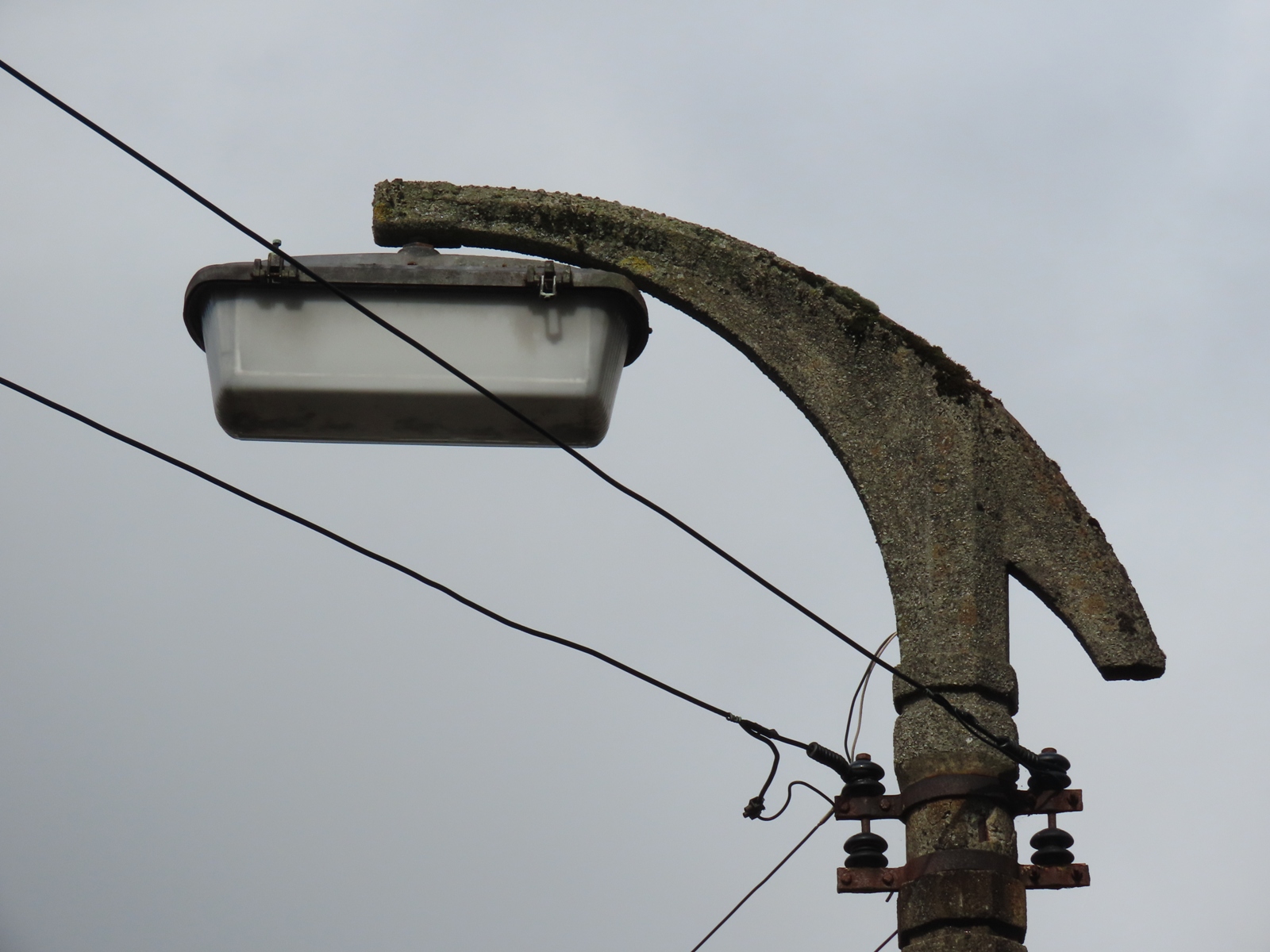
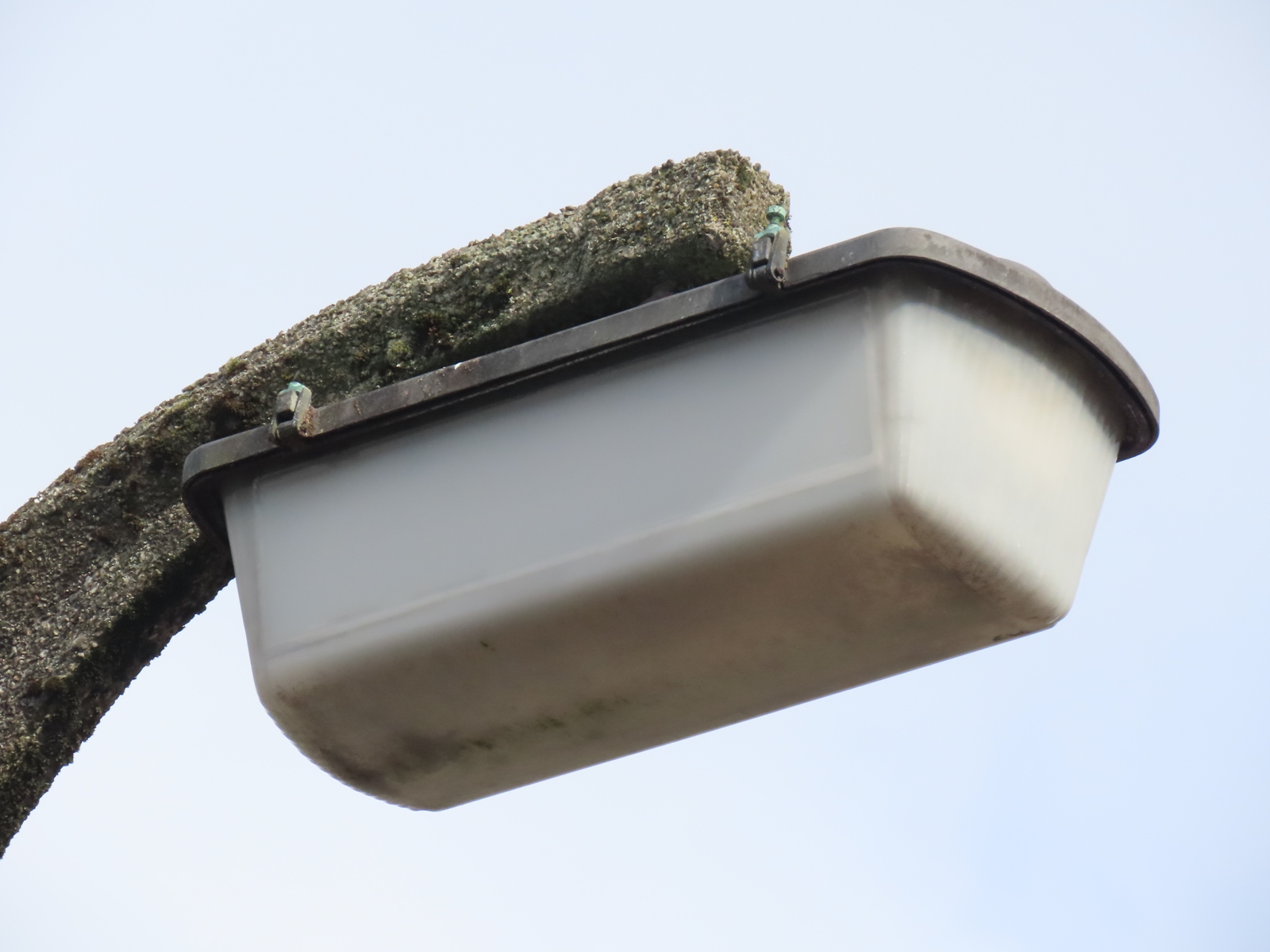
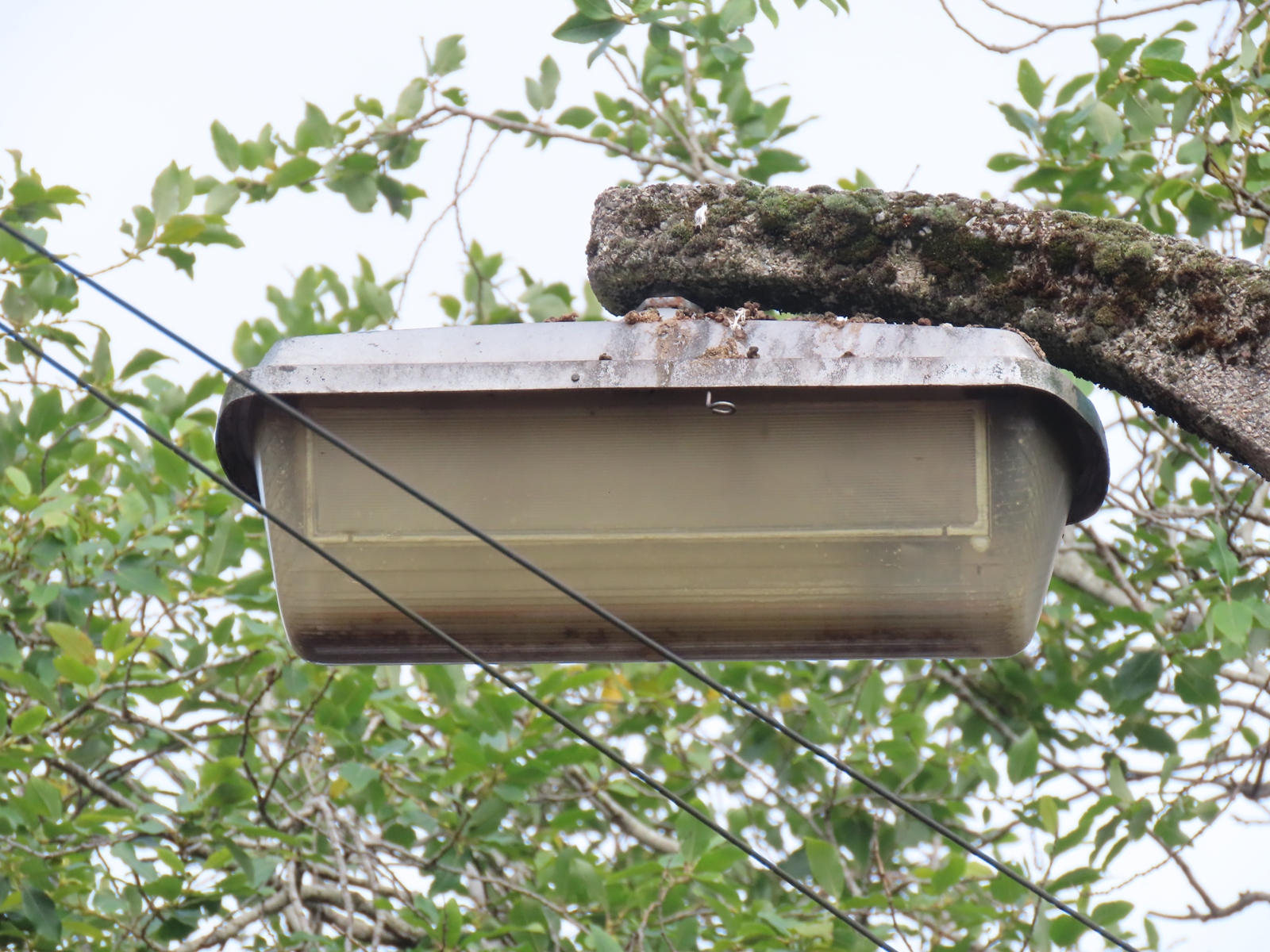
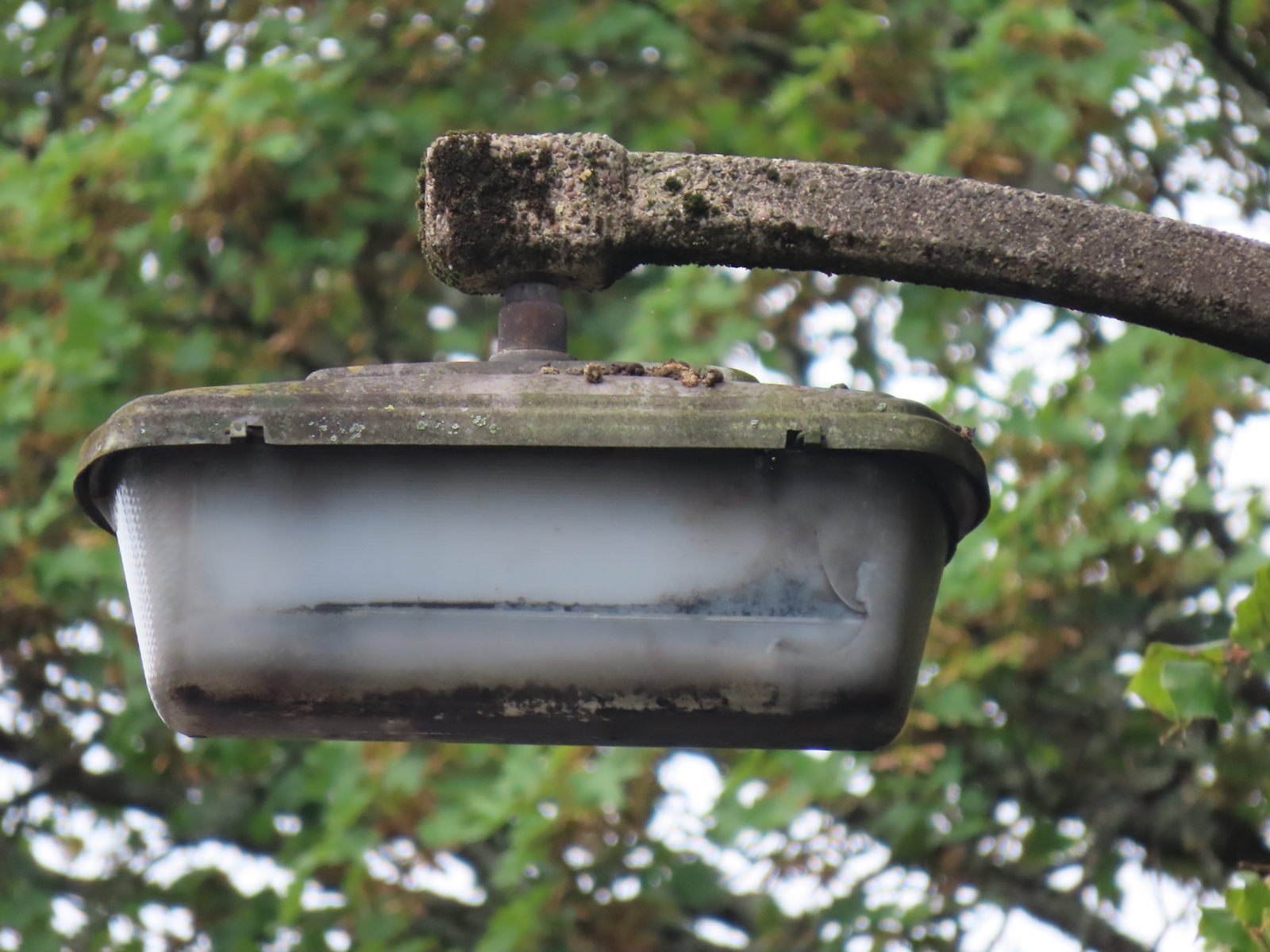
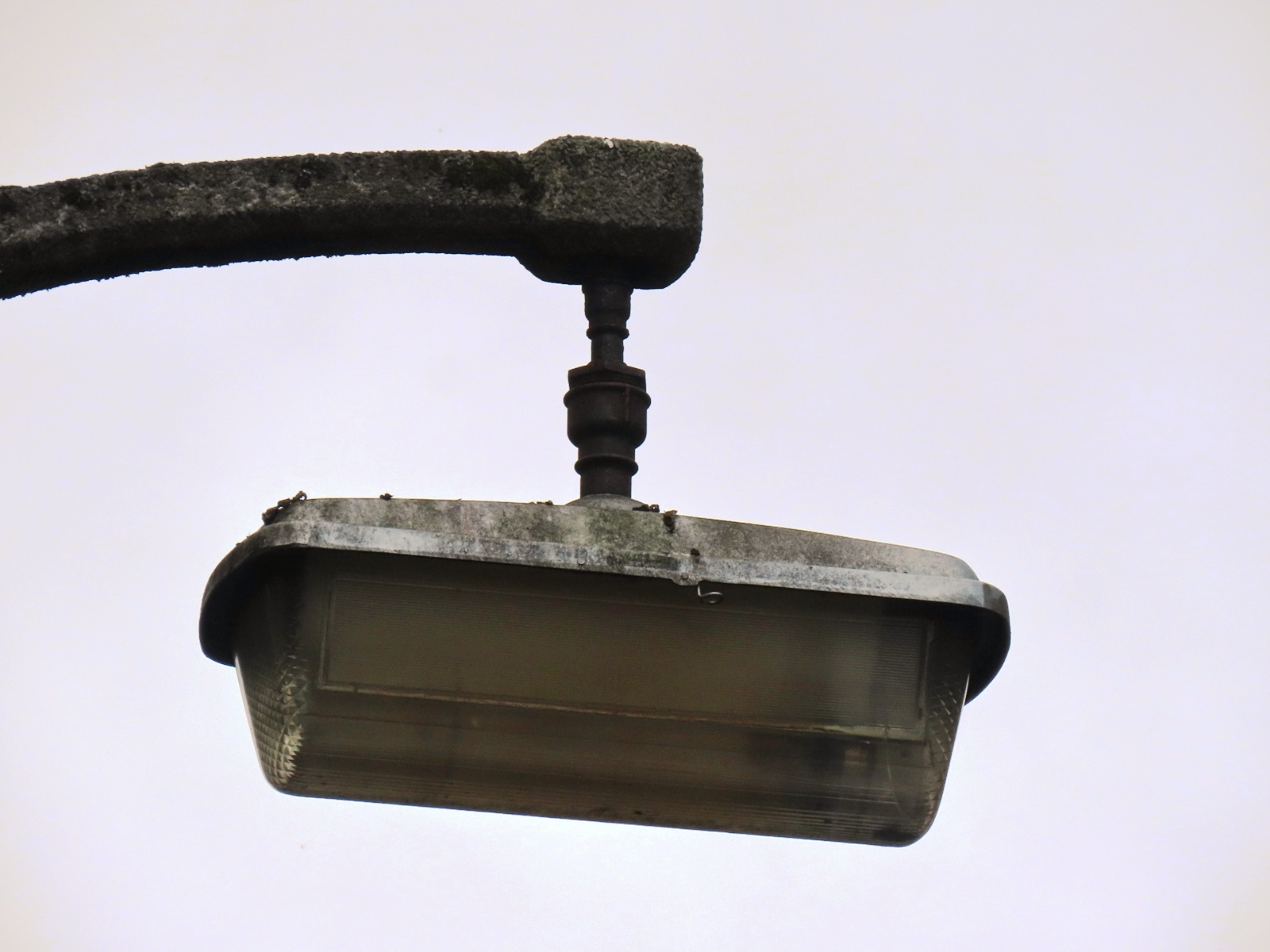
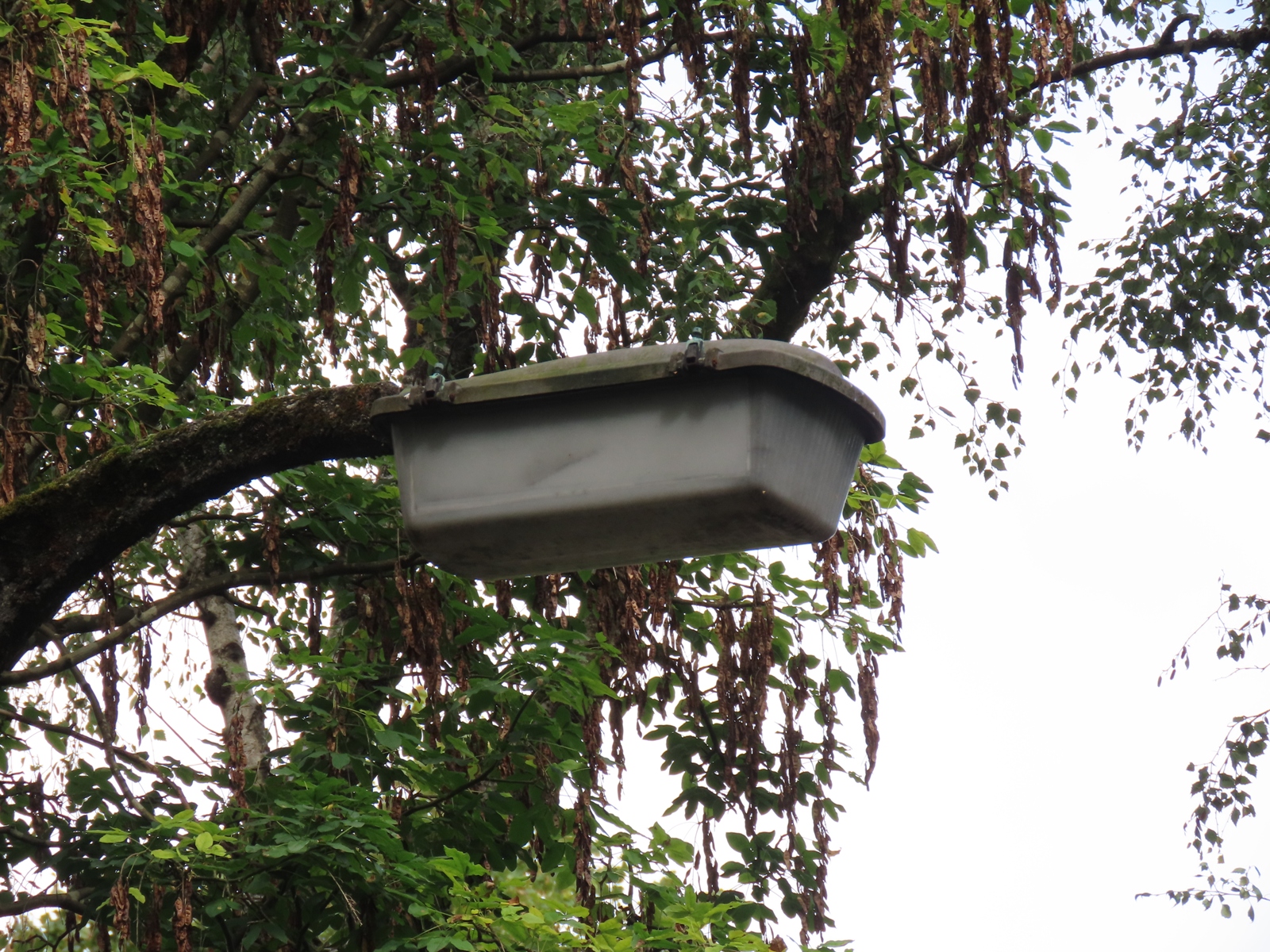
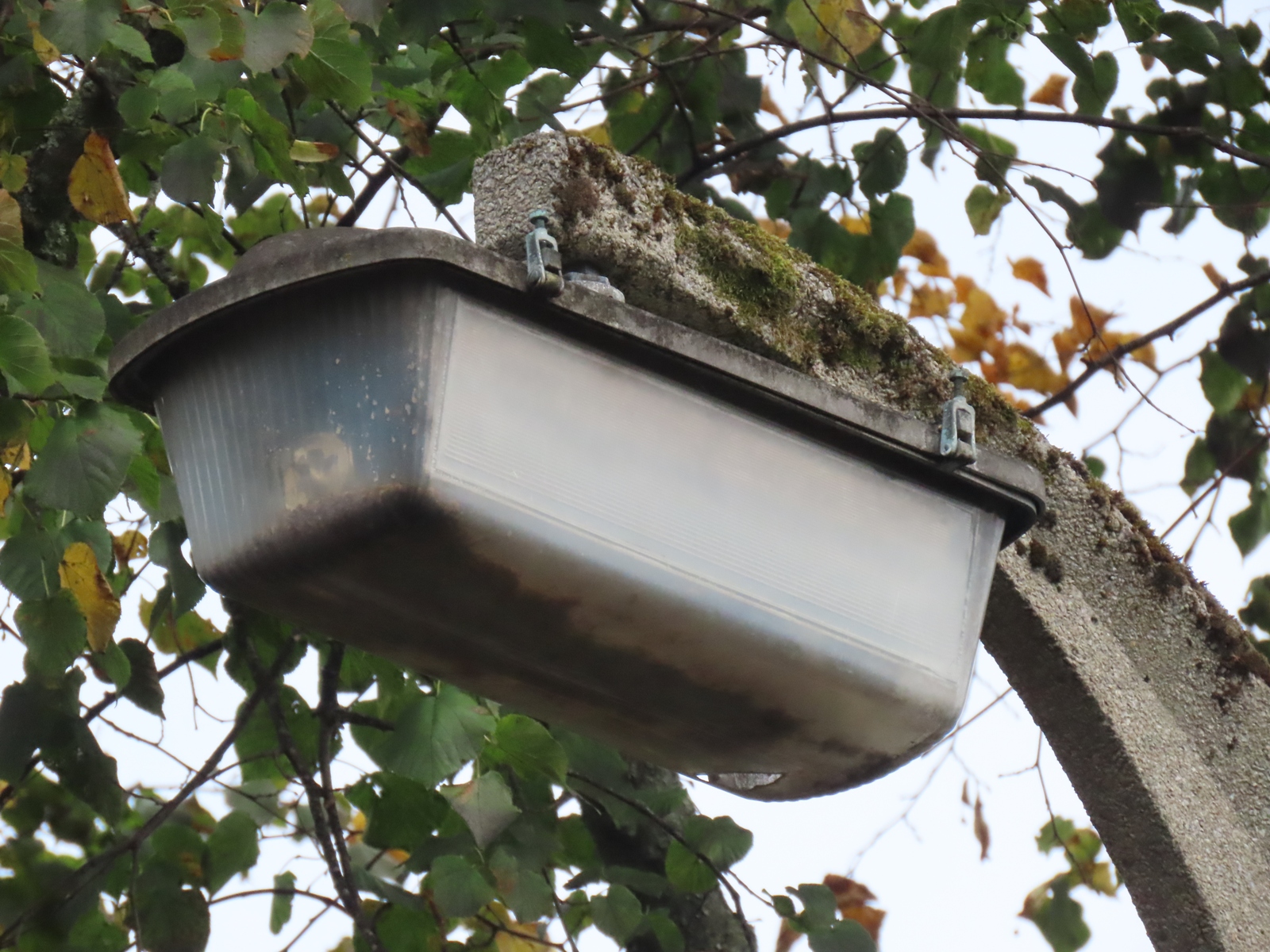
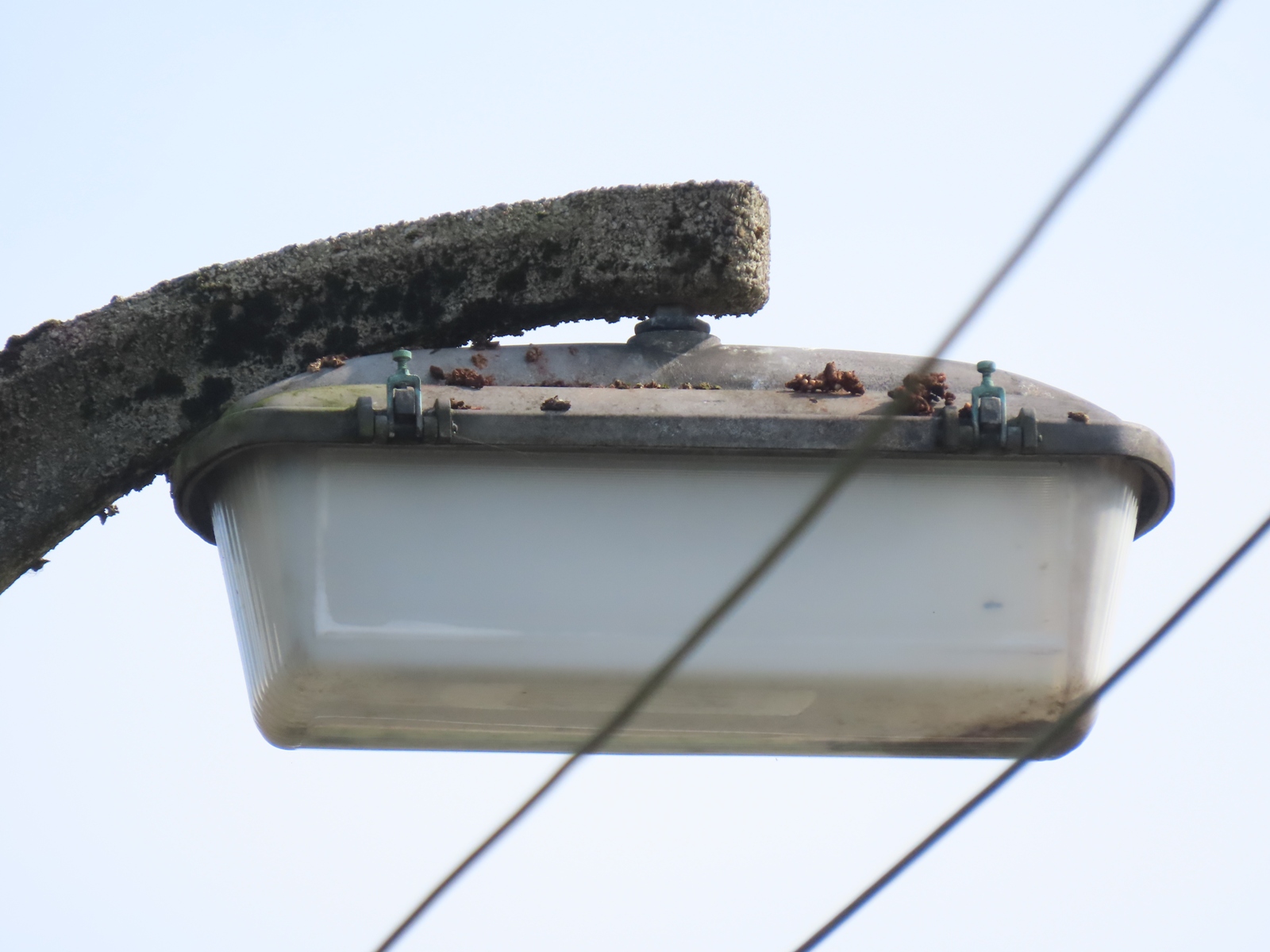
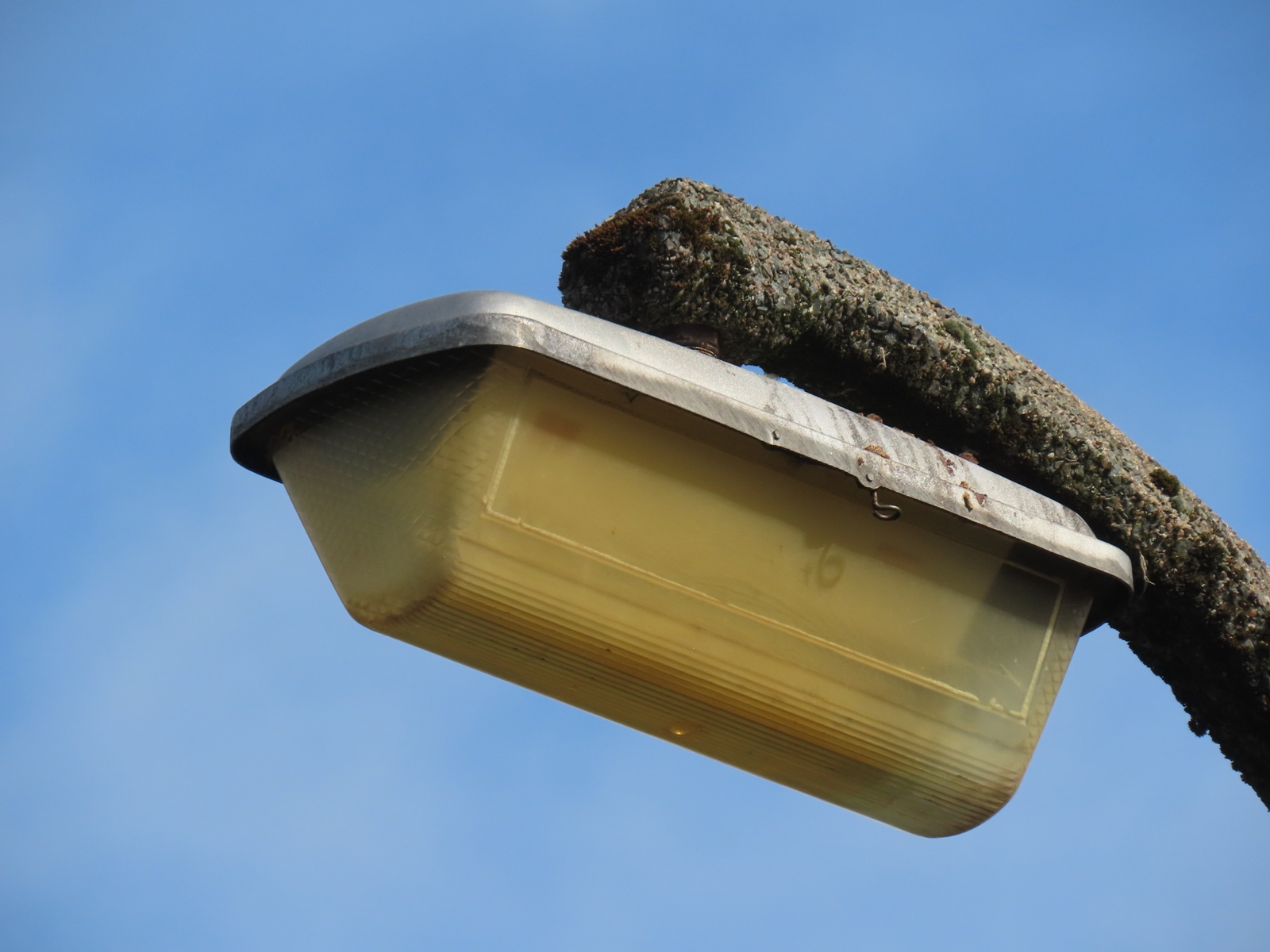
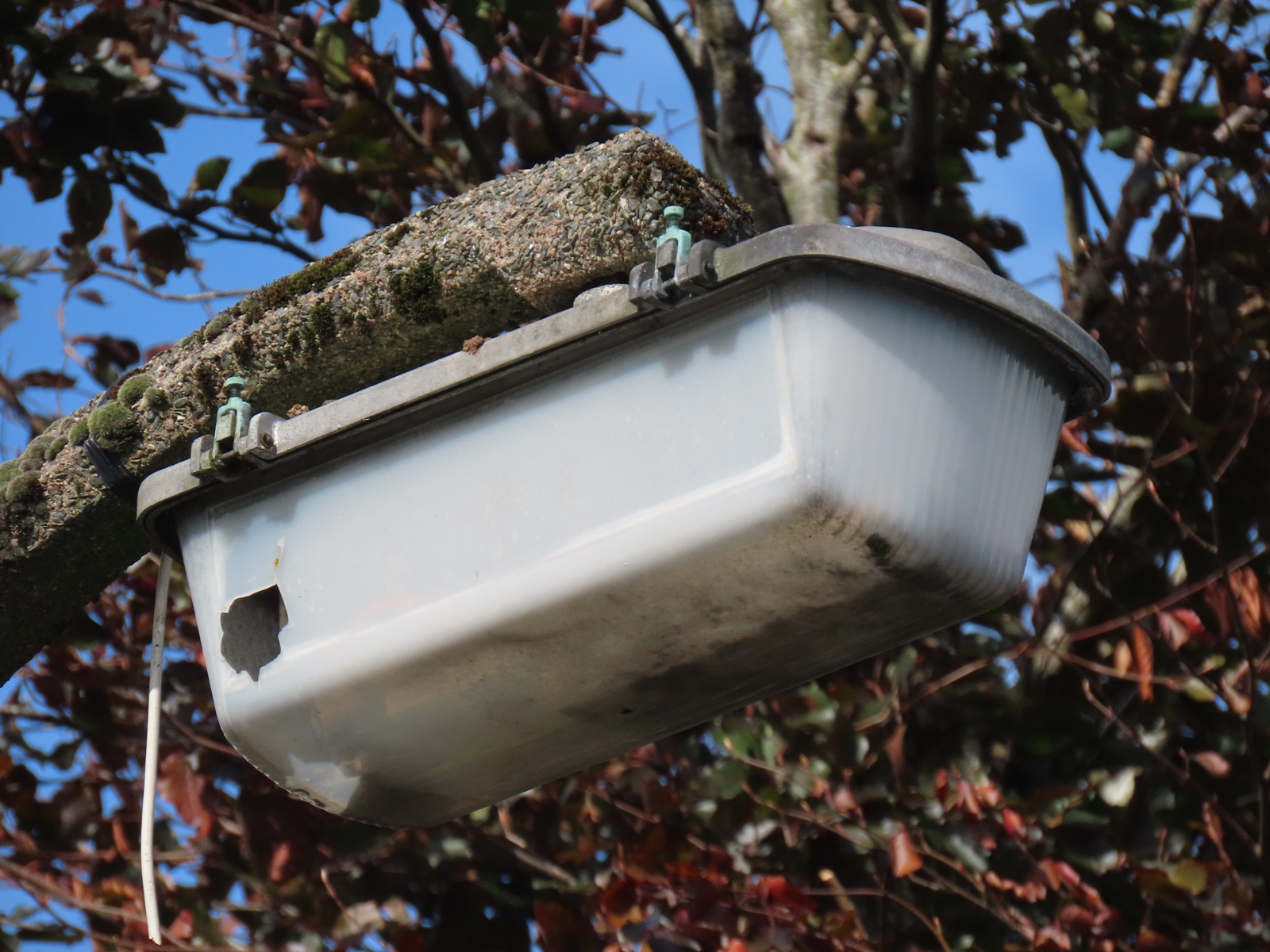
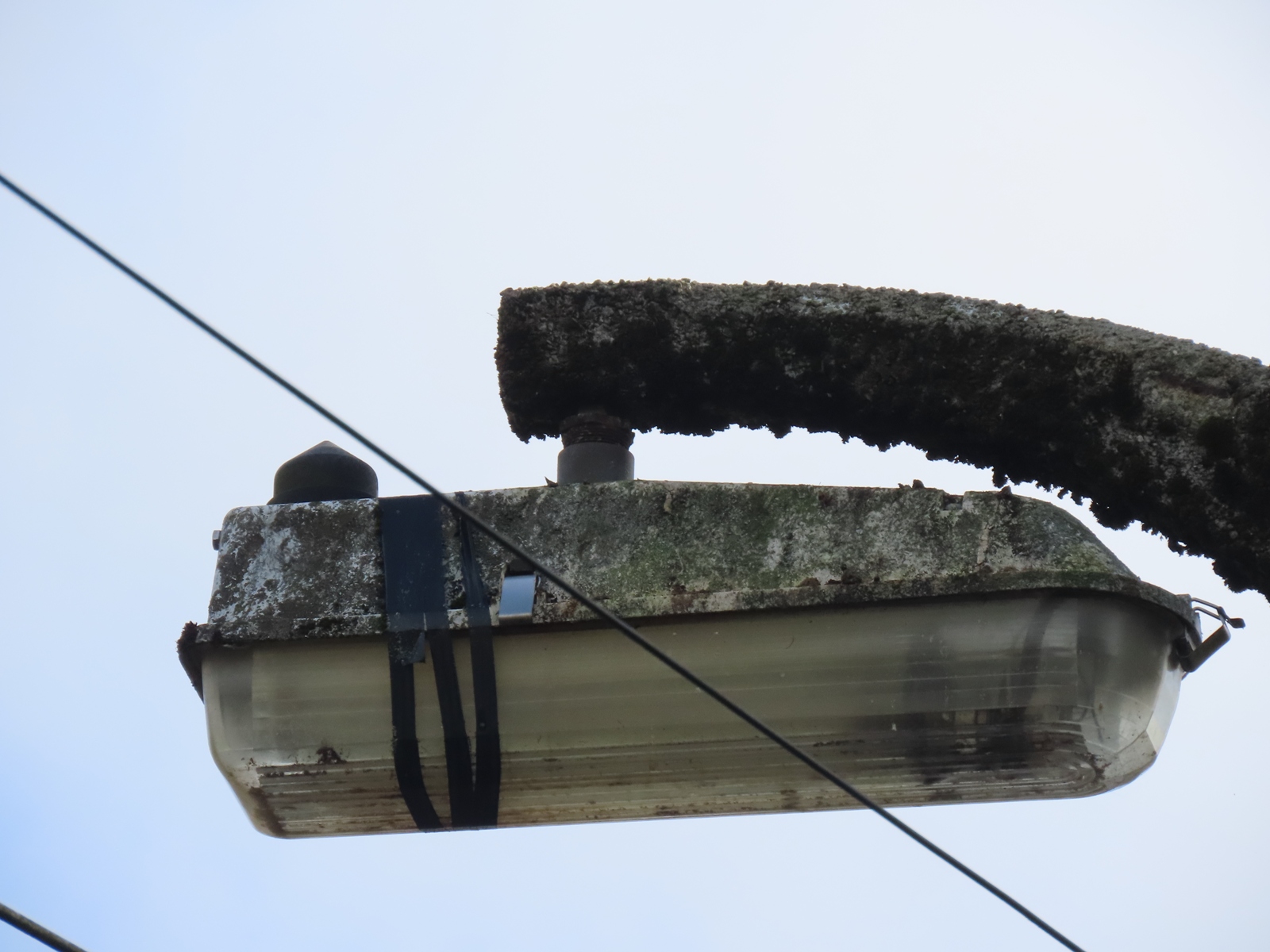
The lanterns are an unusual design, with two brass or bronze thumbscrews being used to secure the bowl to the canopy ordinarily - one of which is missing on this example.
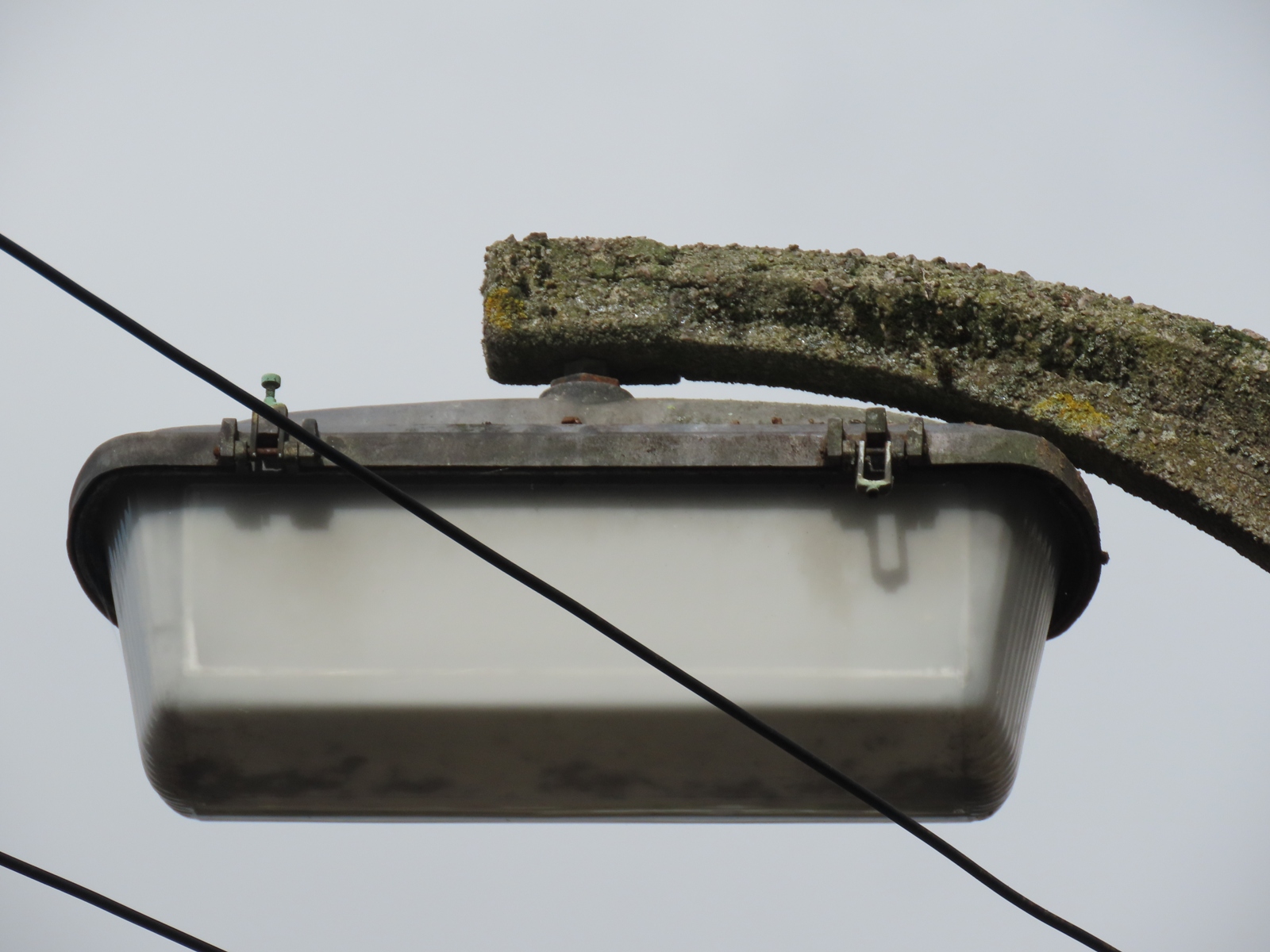
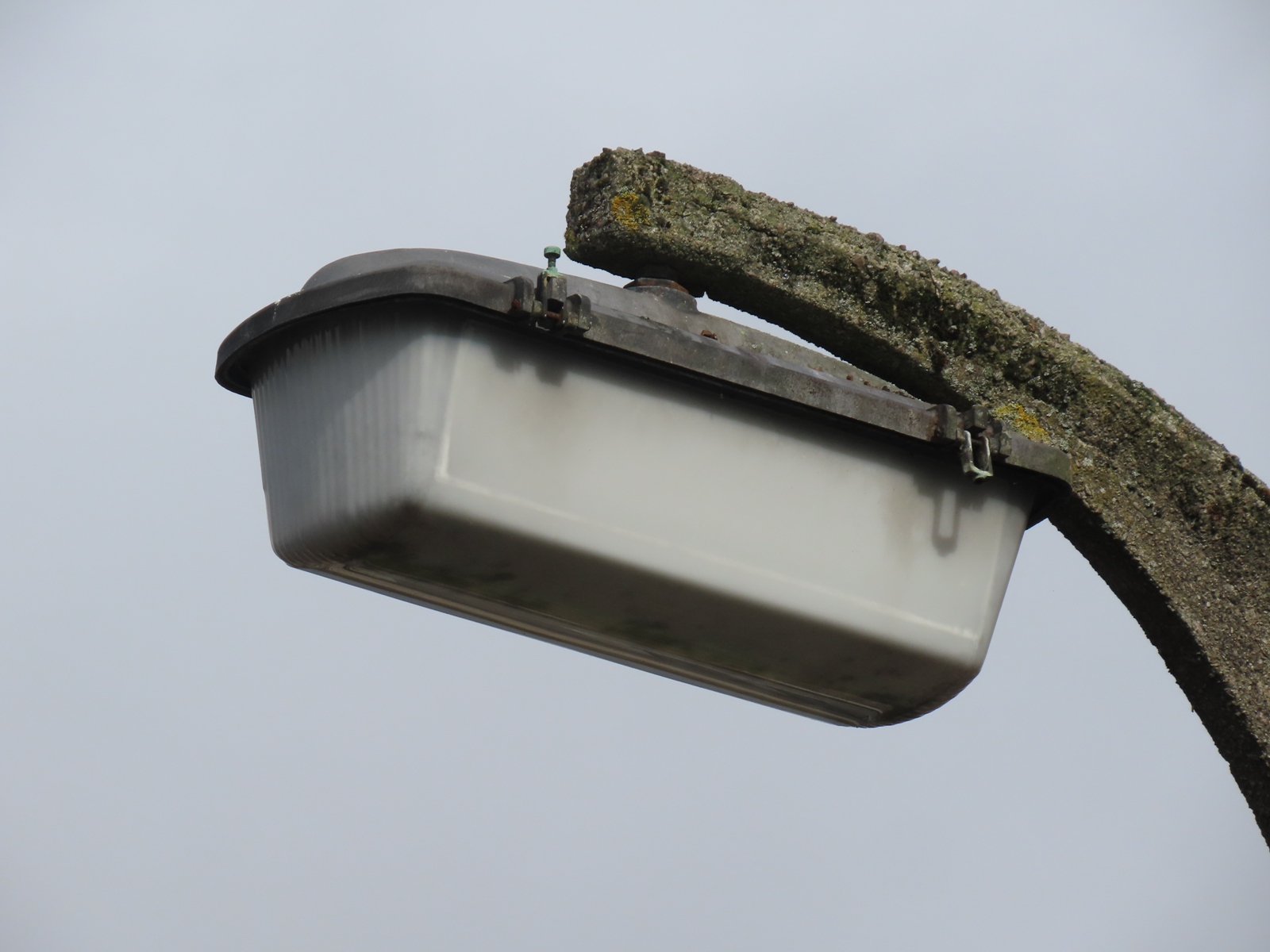
The wide vertical diffusion pattern moulded into the ends of the bowl suggest that these are possibly a Phosware product.
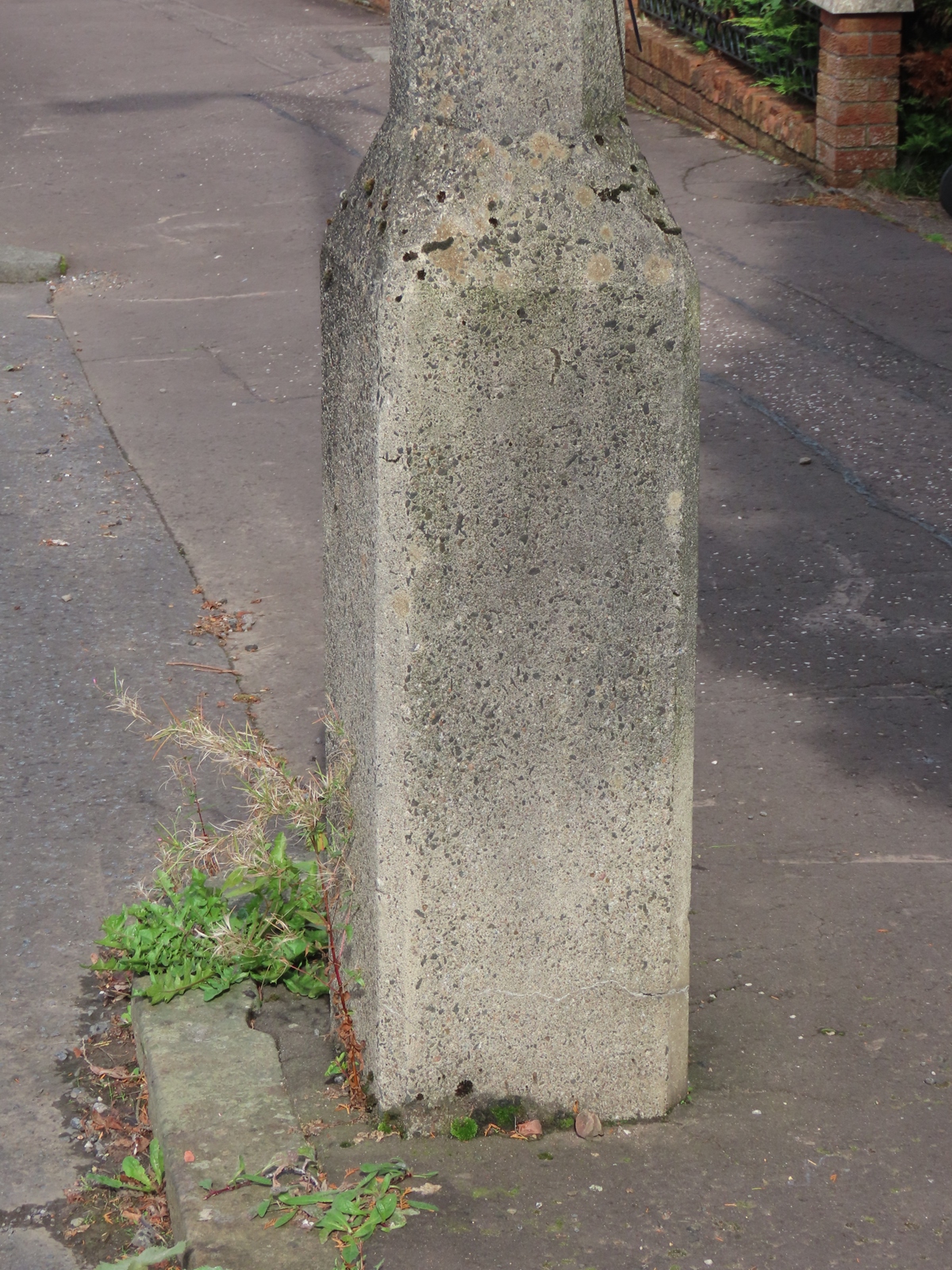
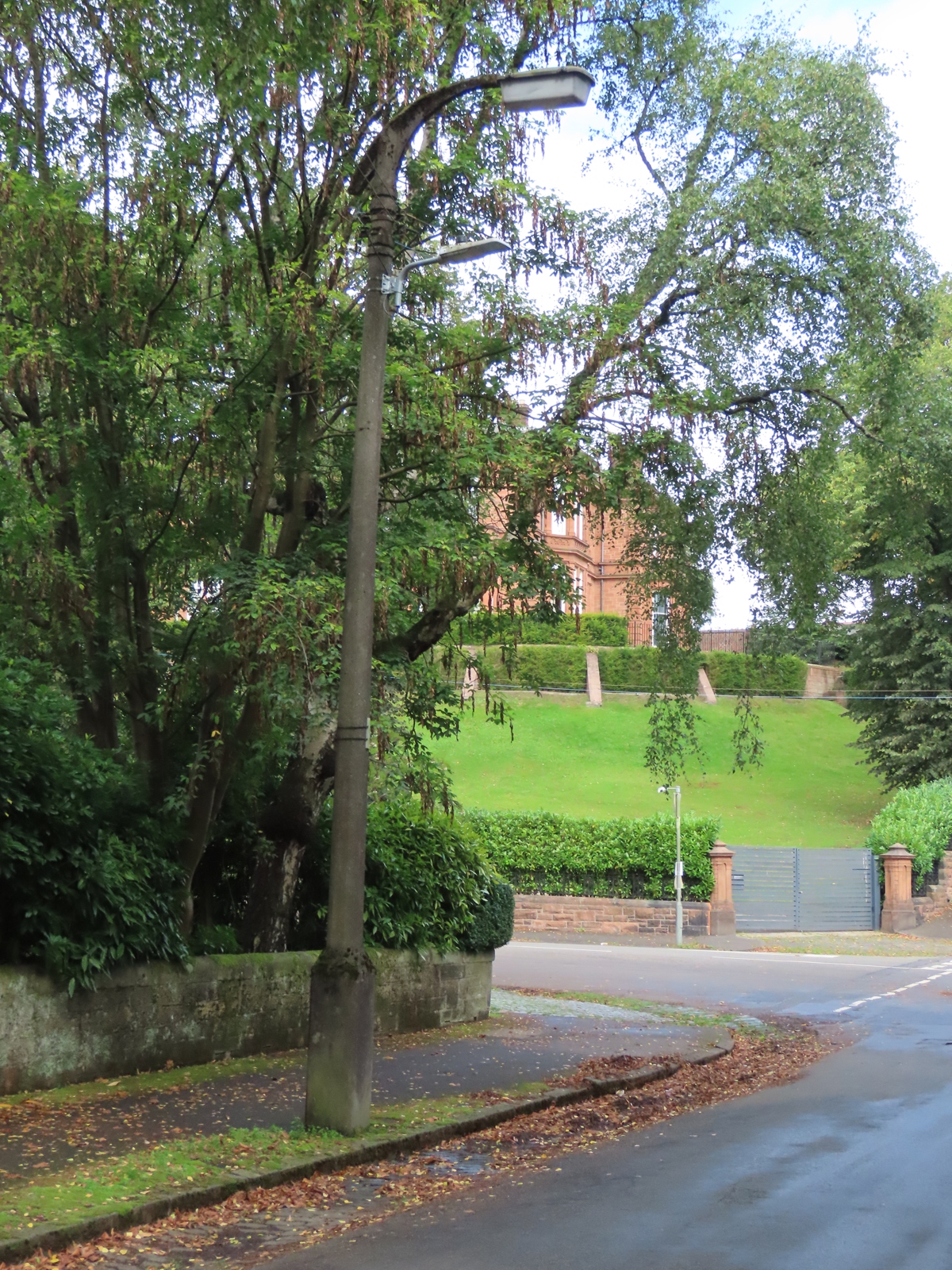
The Springbank column base design is rather stubby and industrial in its appearance. As these columns are supplied on overheads, and the lanterns have the lamp control gear situated within them, base compartments are not provided. Local fusing at each column doesn't seem to exist.
Sherbrooke Drive / Avenue is one of the main arteries through the estate.
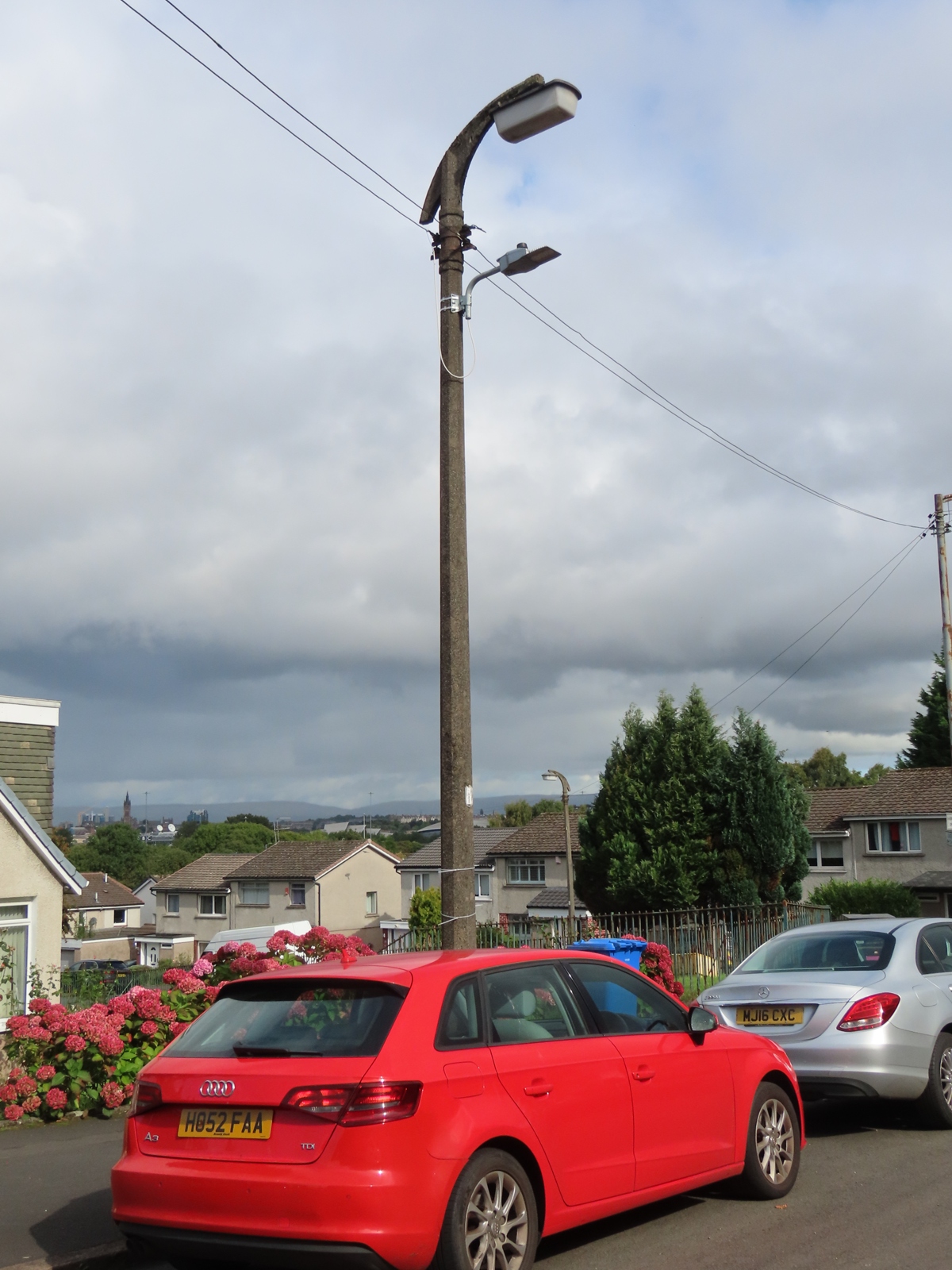
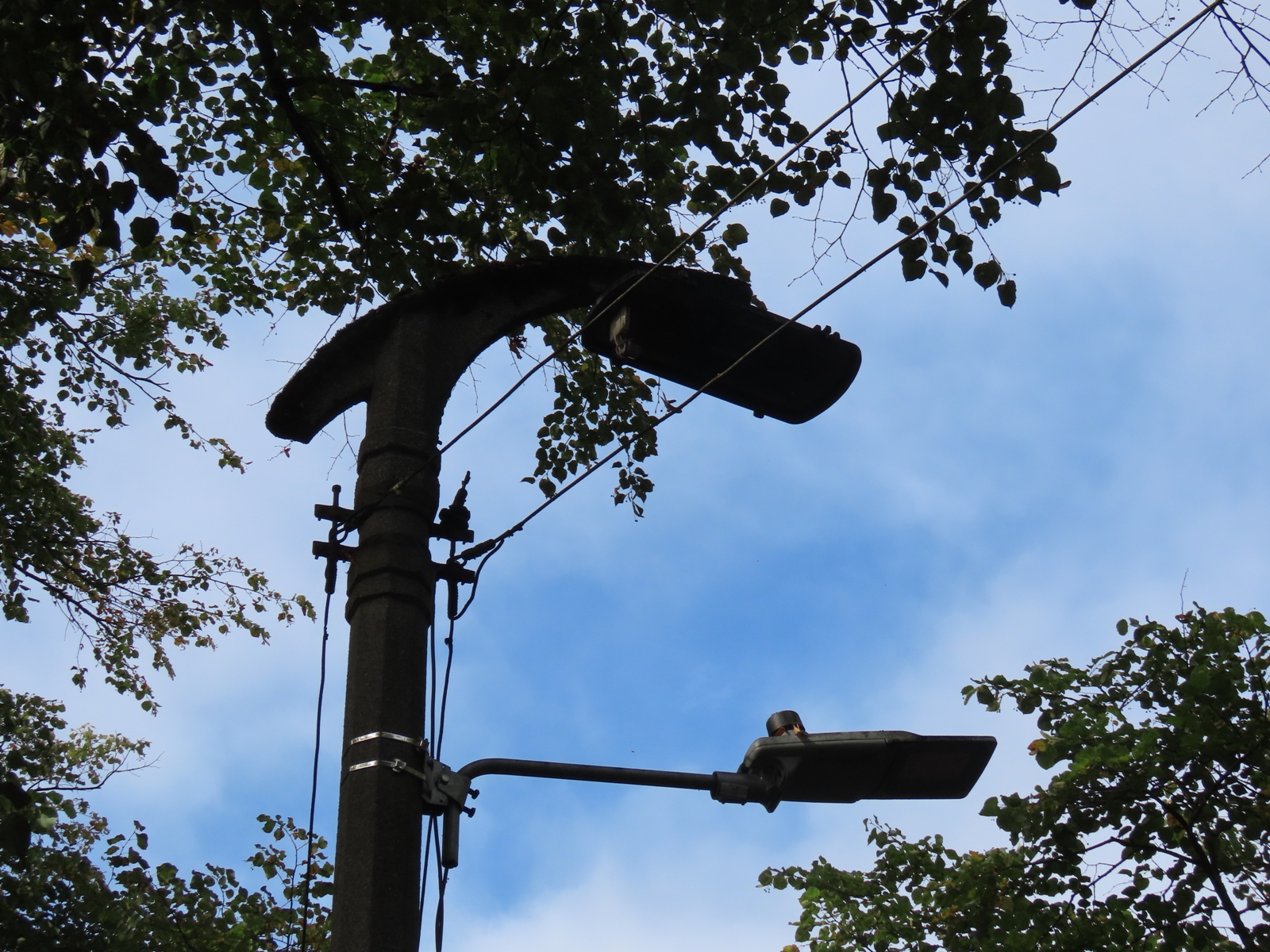
Although Pudsey Diamond name the new bracket as being 'Universal', somehow, I doubt that they ever expected one to be Tespa banded to an existing column! The wiring to the old lantern can be seen to be cut, while the flexible cable supplying the new lantern is clipped to the overhead conductors.
There doesn't seem to be a definitive 'front' to these lanterns, given that the one seen previously was positioned with the clips facing the other way to how they are here.
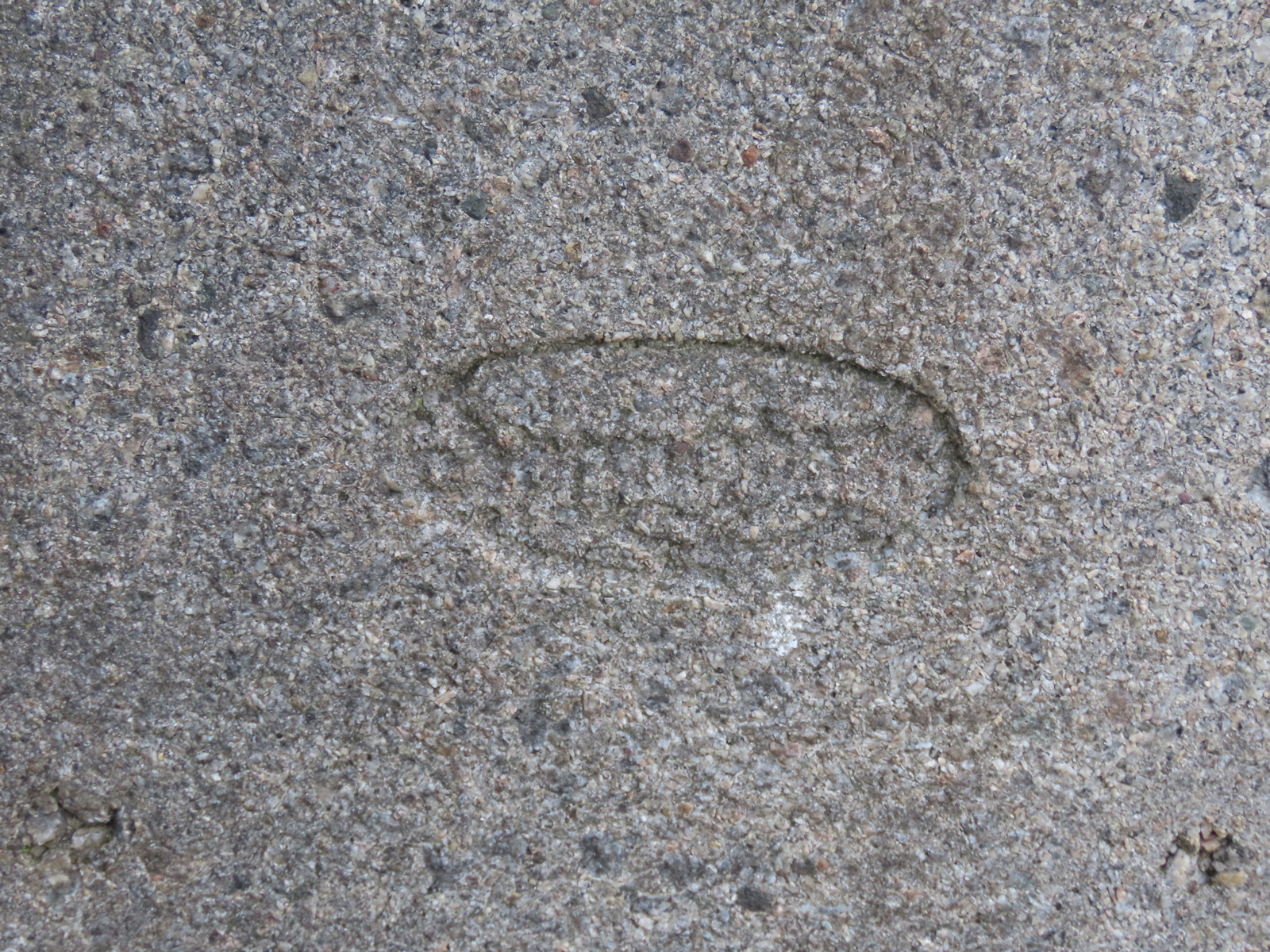
Although heavily weathered, the Springbank logo is still visible in the column structure.
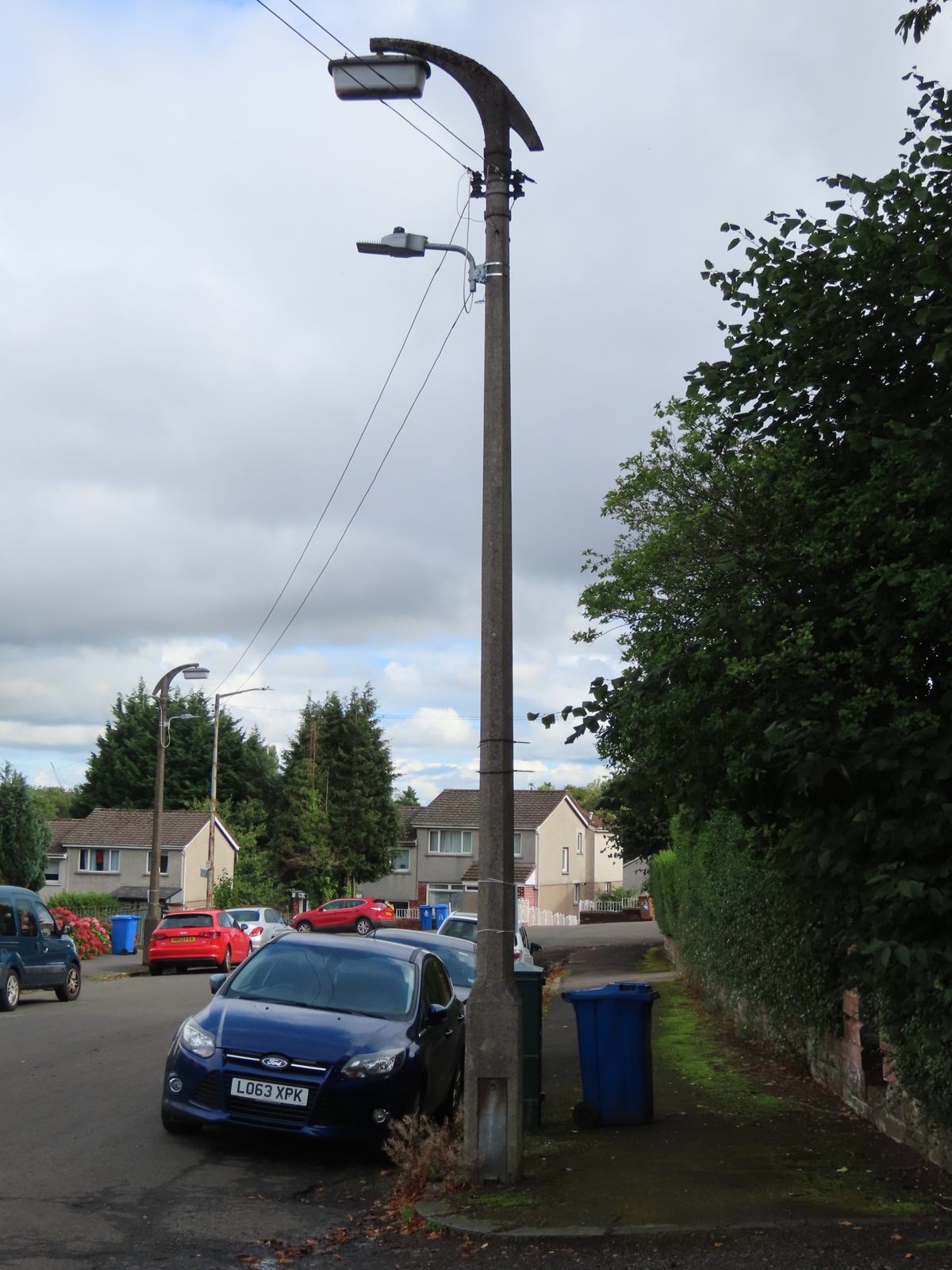
The next column is one of the few that does contain a base compartment, and is probably a control point.
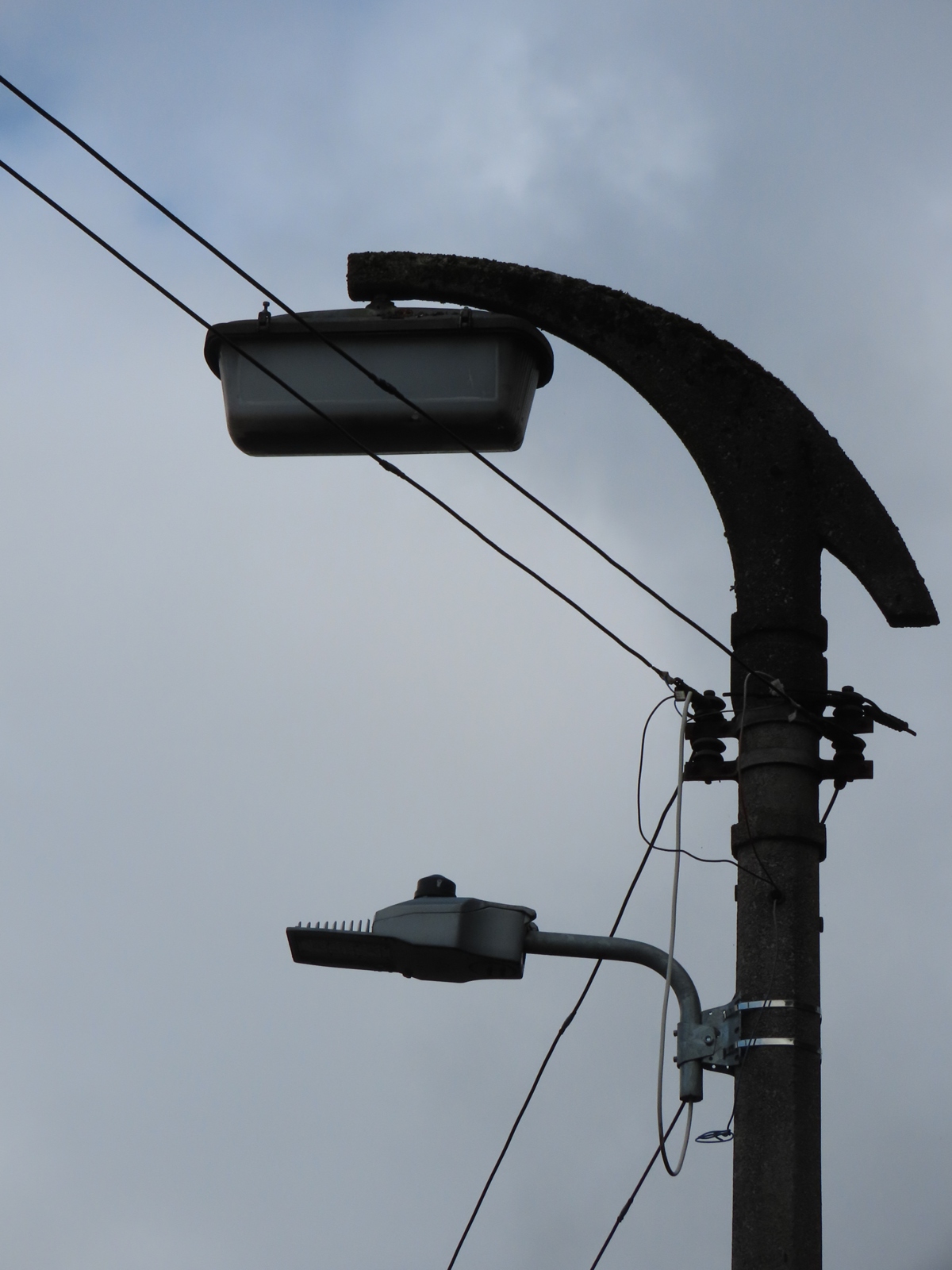
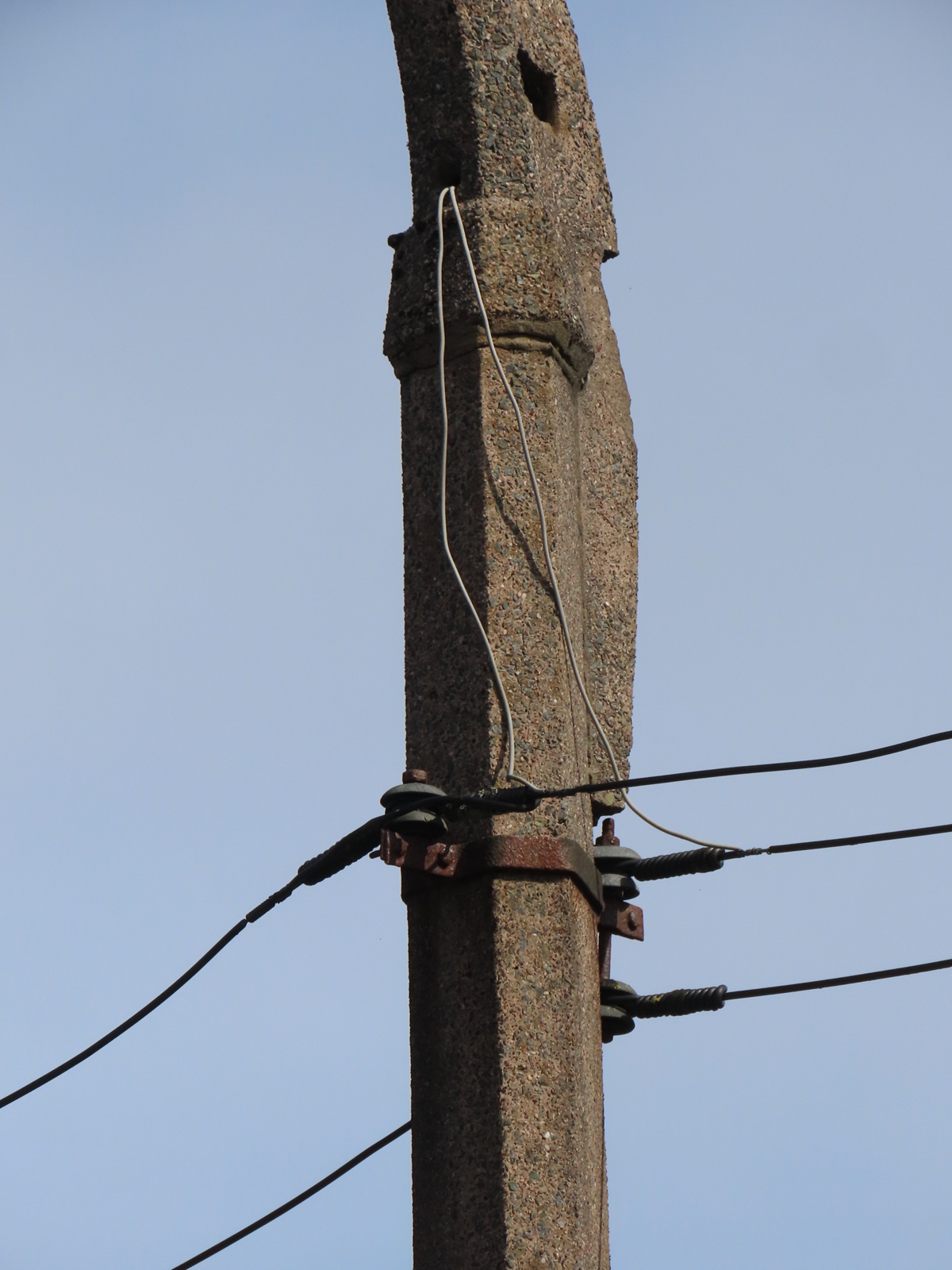
Two rather thin wires are seen emerging from a hole in the column shaft, which then connect onto the overhead conductors.
A Thorn Isaro Pro-S lantern was the replacement at the next column.
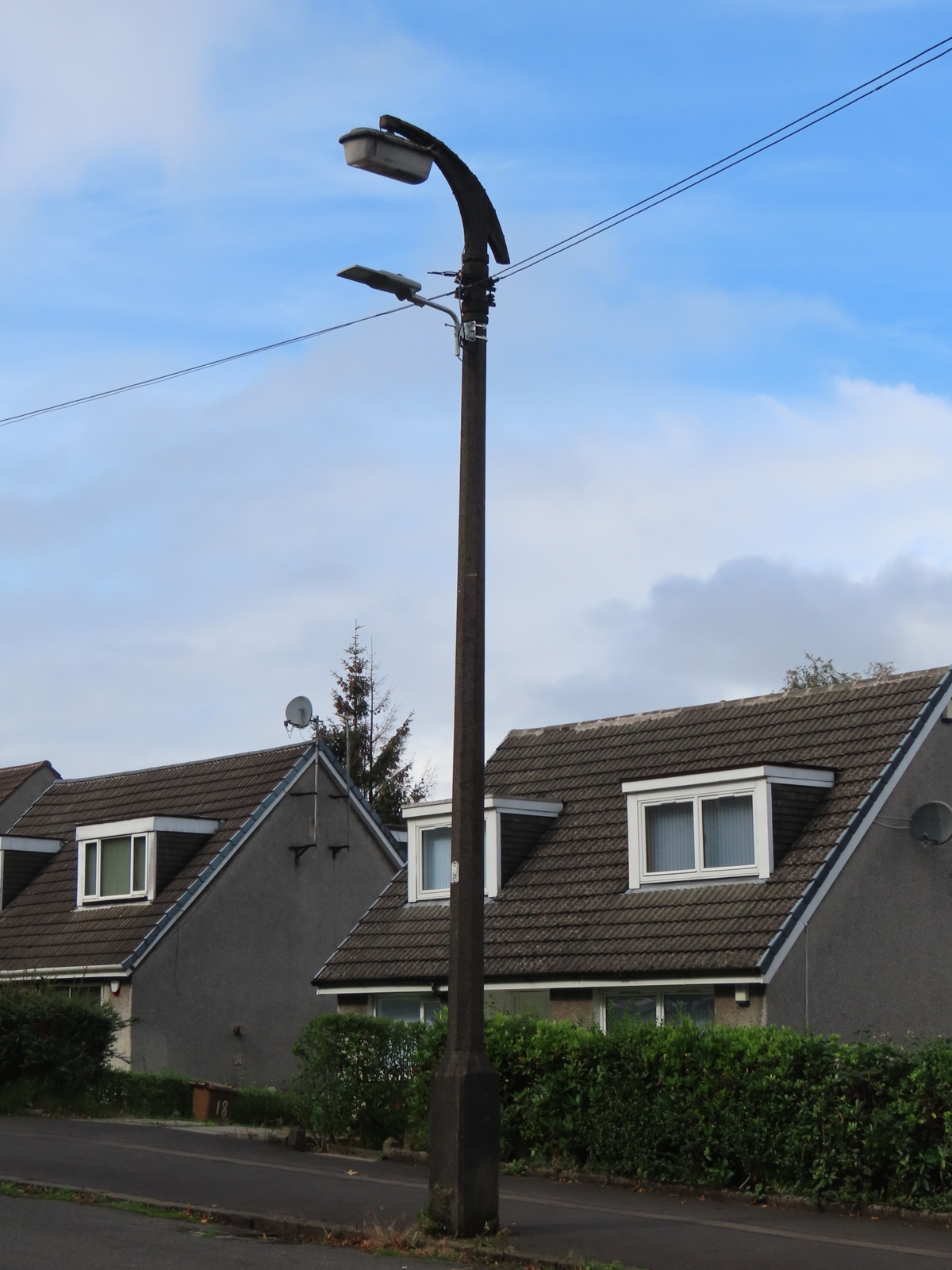
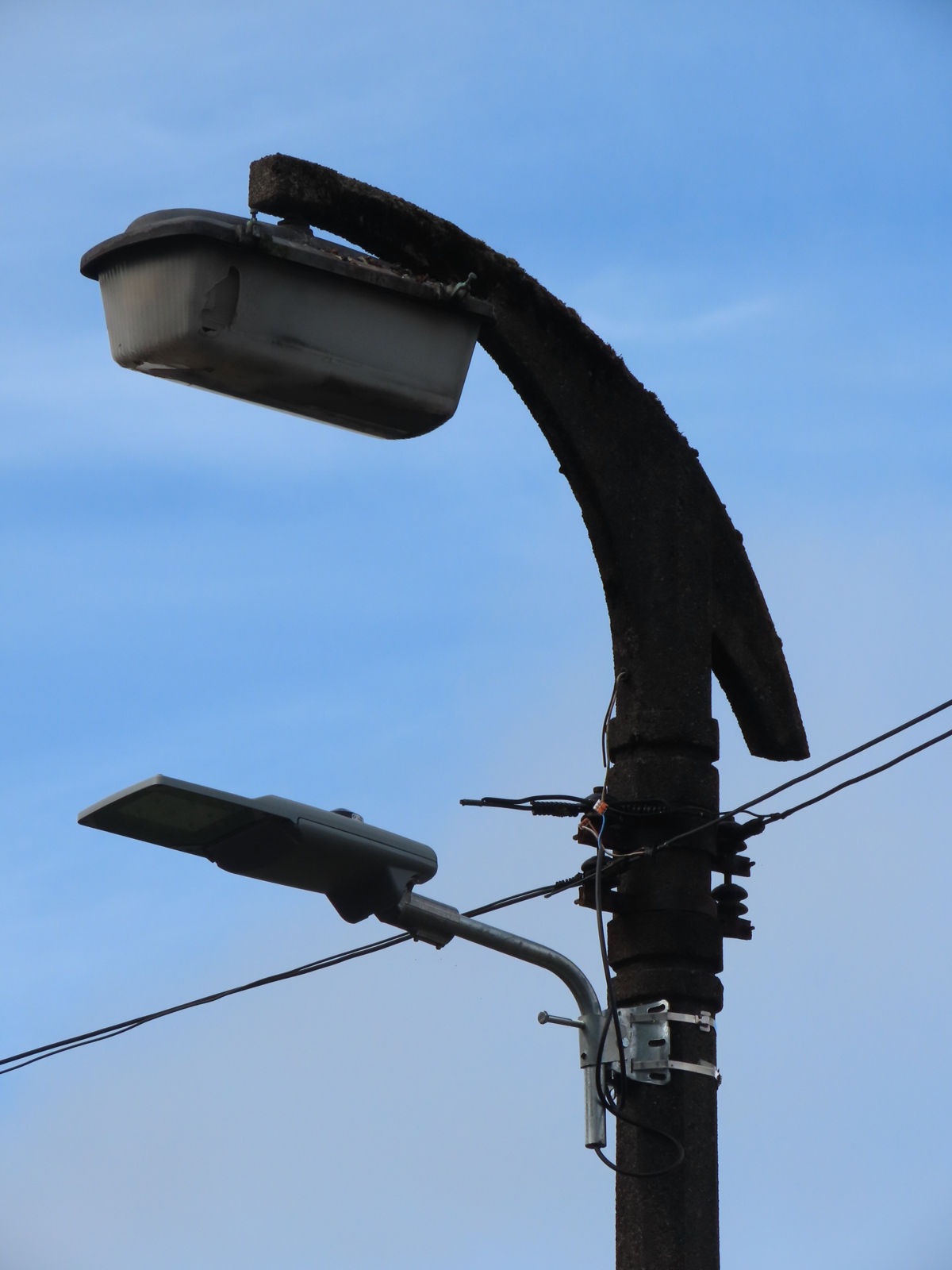
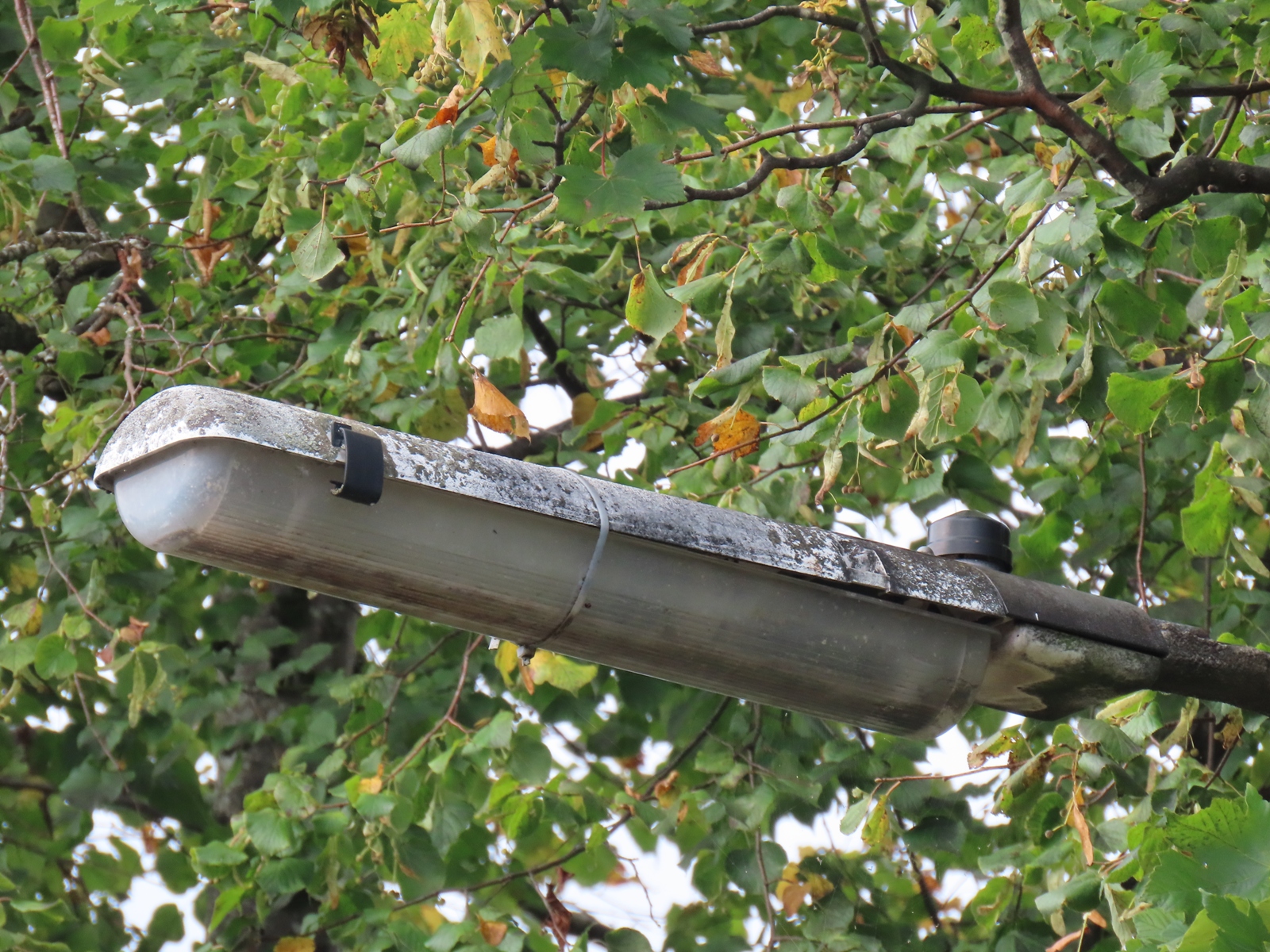
The old lantern's bowl shows signs of damage here.
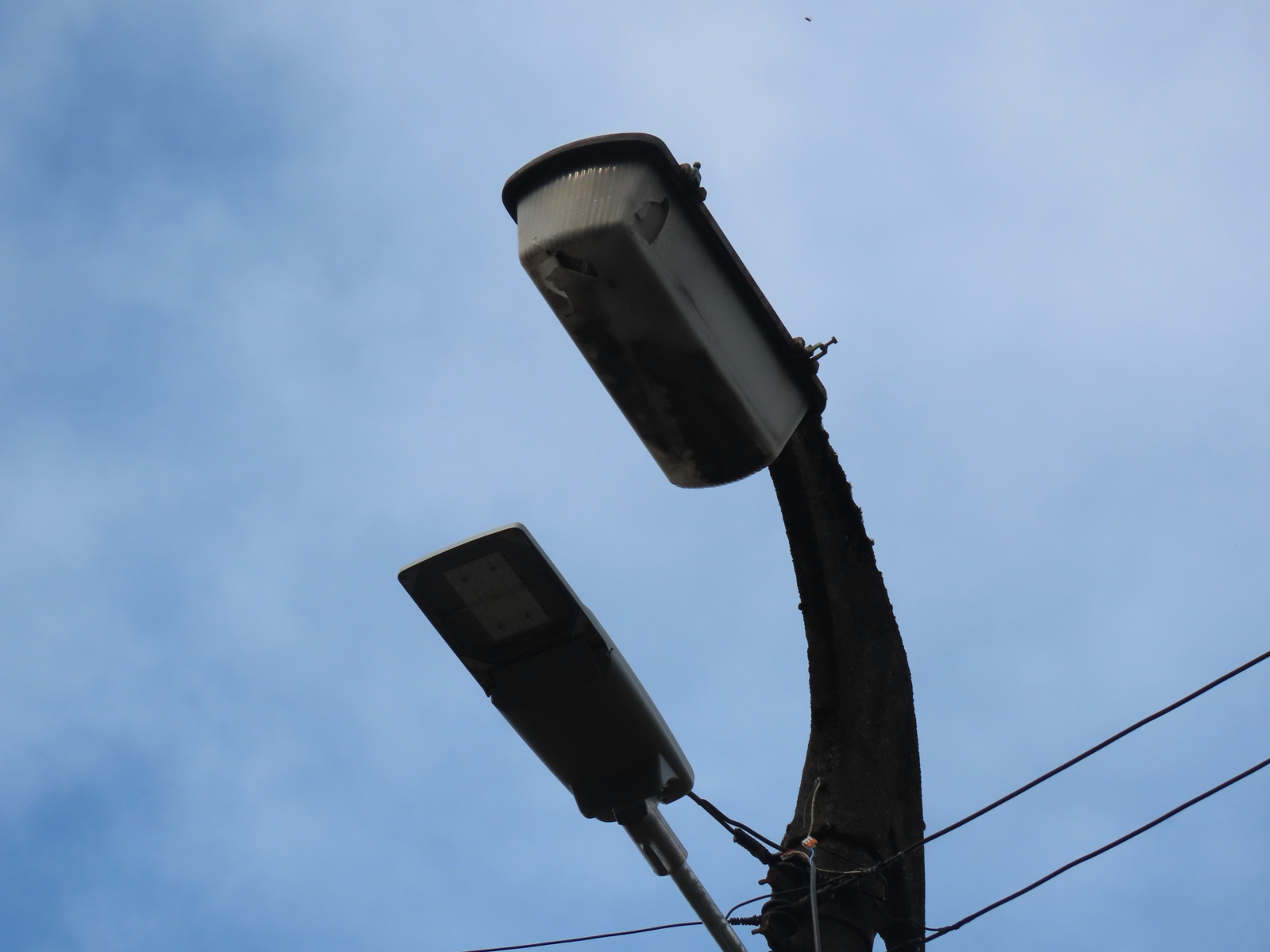
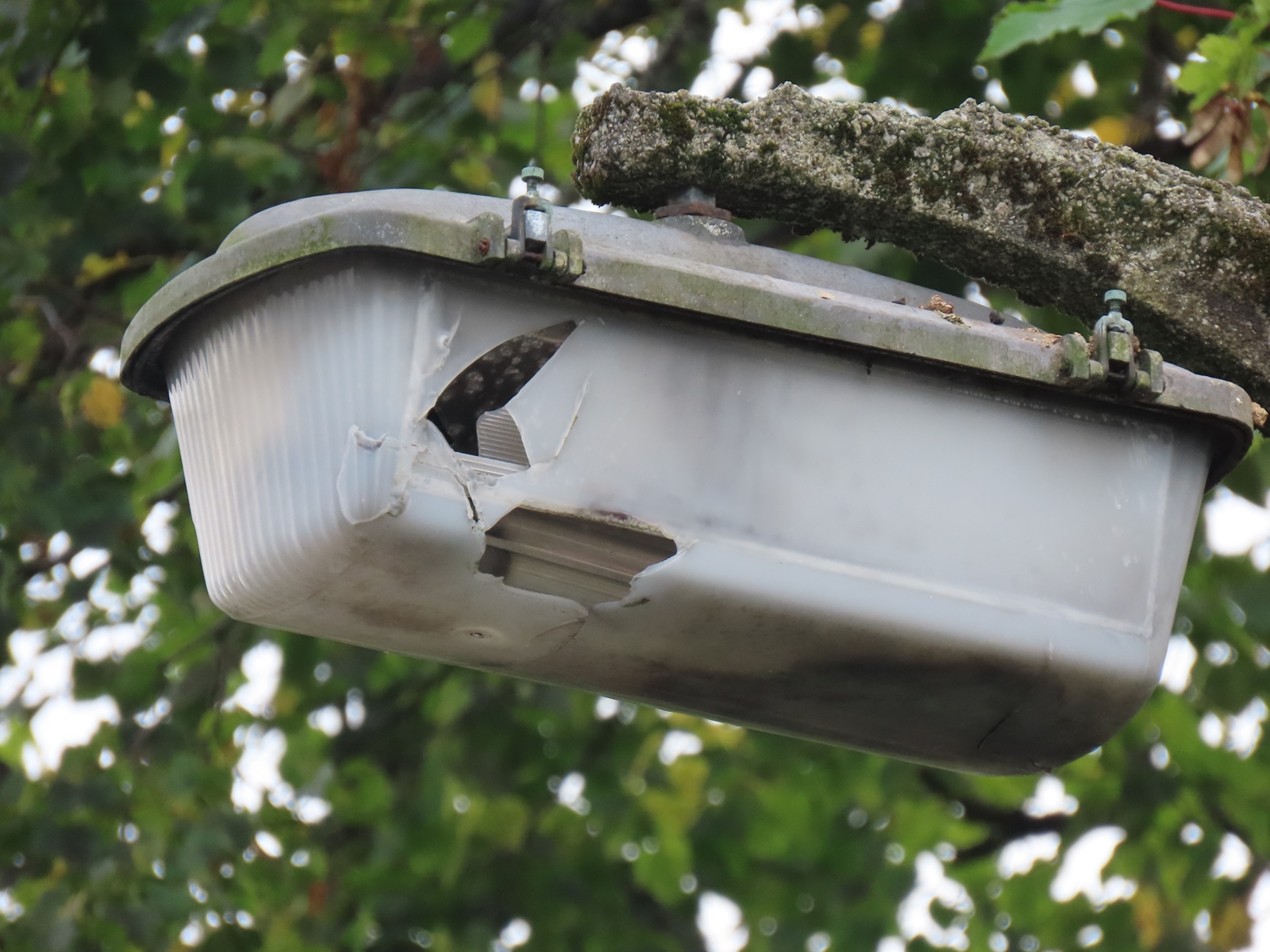
The broken Perspex on this example revealed that a lamp remained fitted within the lantern.
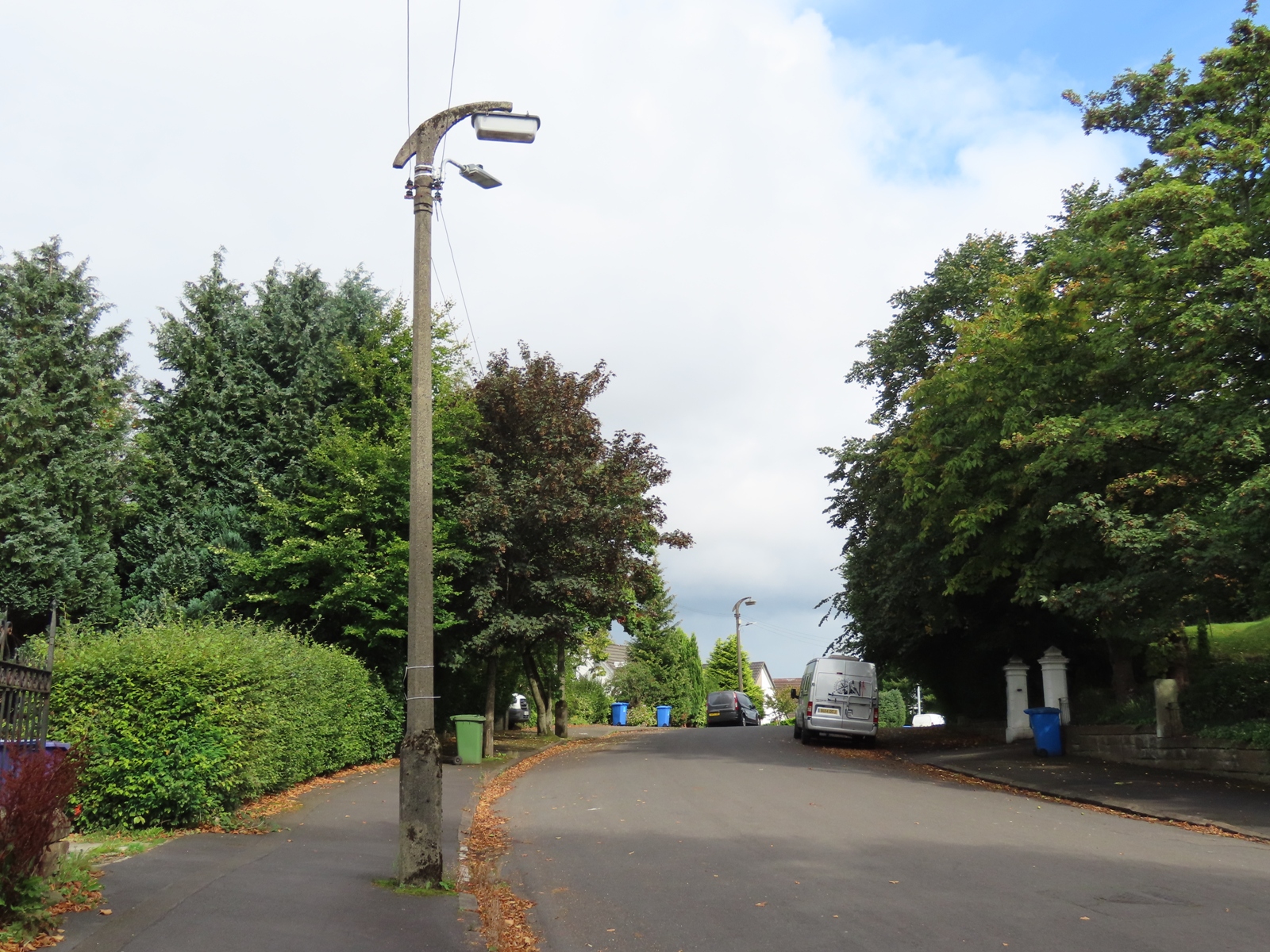
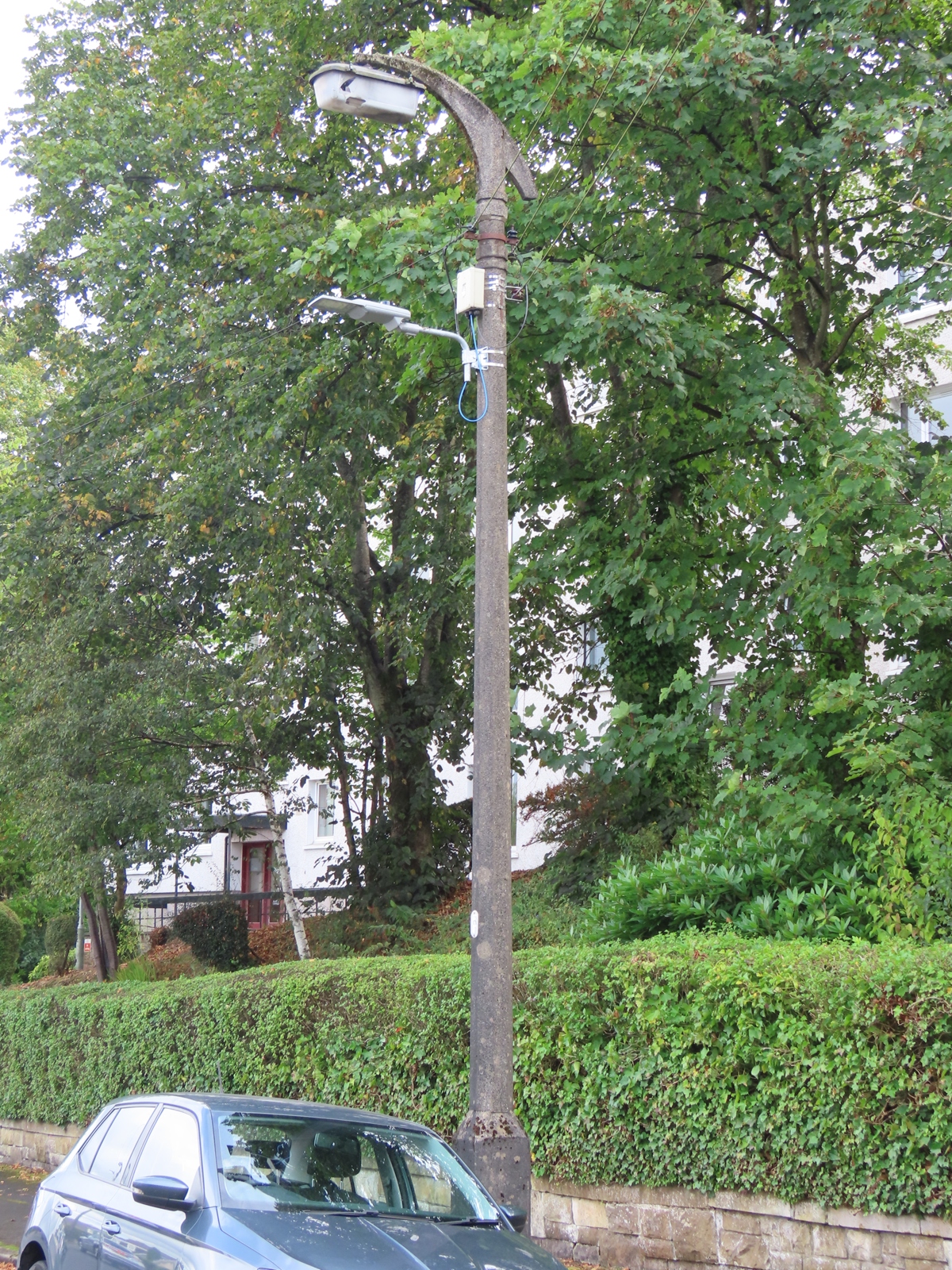
The new bracket on this column had already rotated slightly out of position.
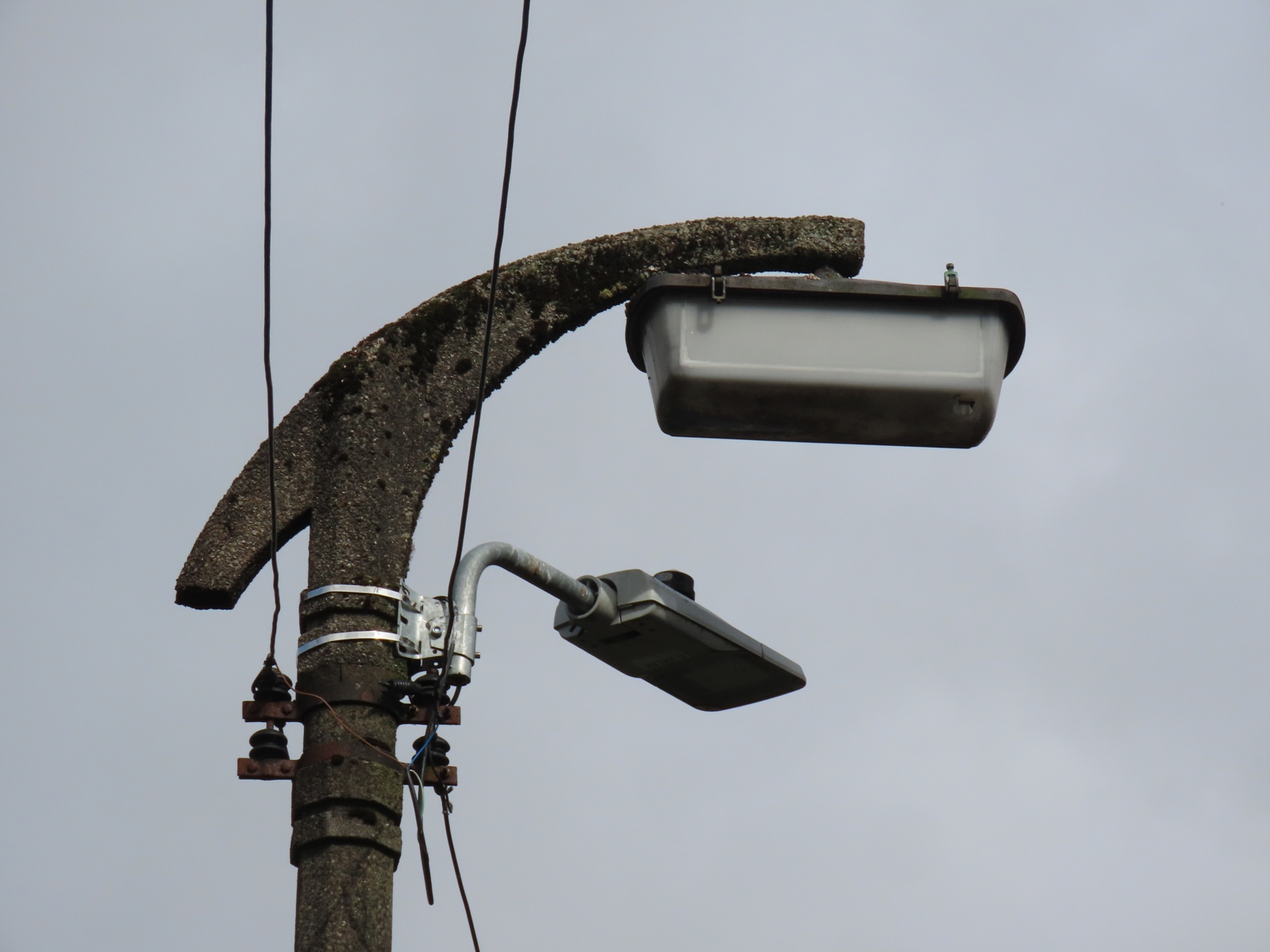
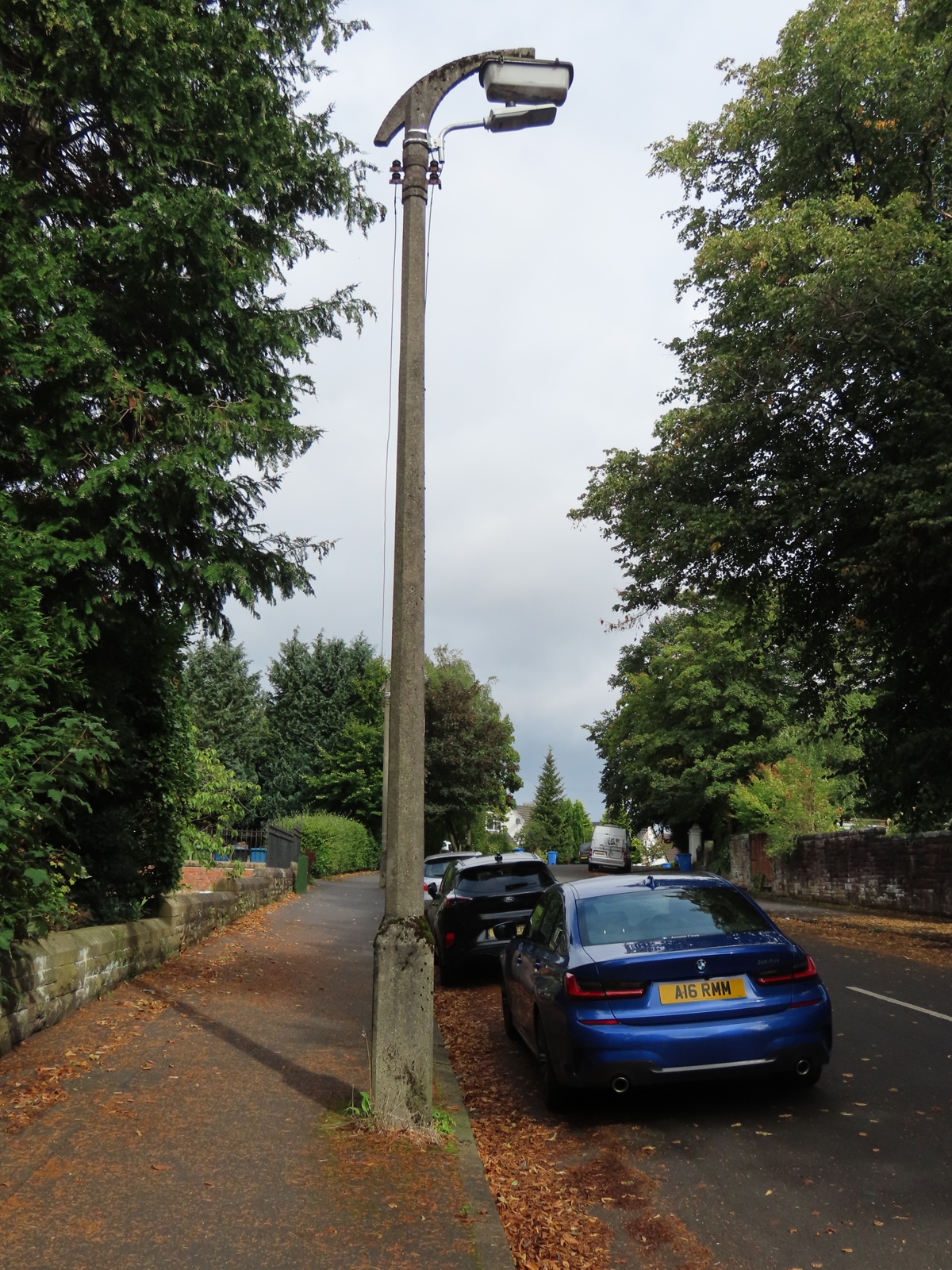
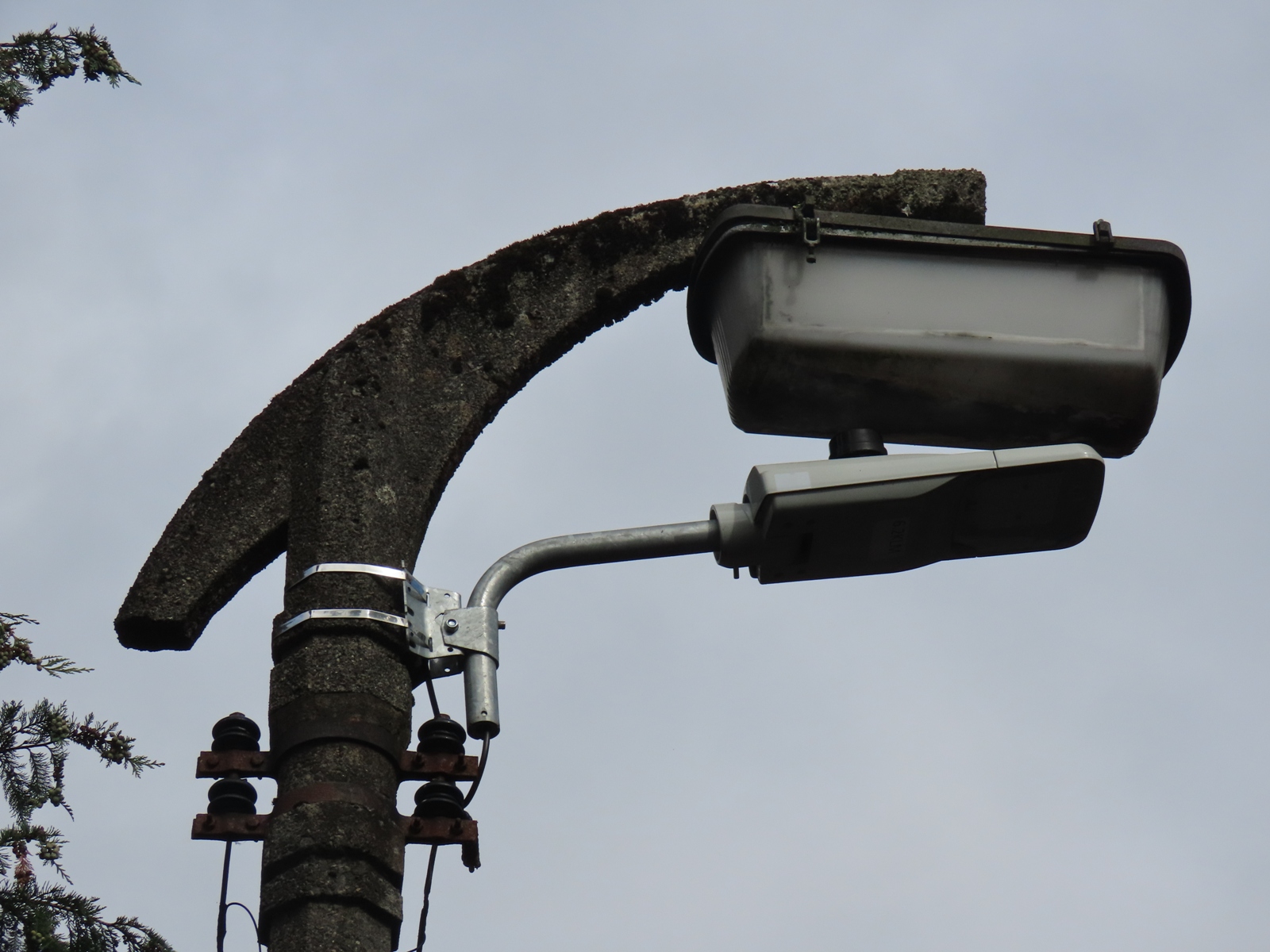
The new lantern was positioned so high up the column that opening the bowl of the old one would now be rather difficult.
Crossing over Nithsdale Road, we head onto Sherbrooke Avenue, which is wider than Sherbrooke Drive was.
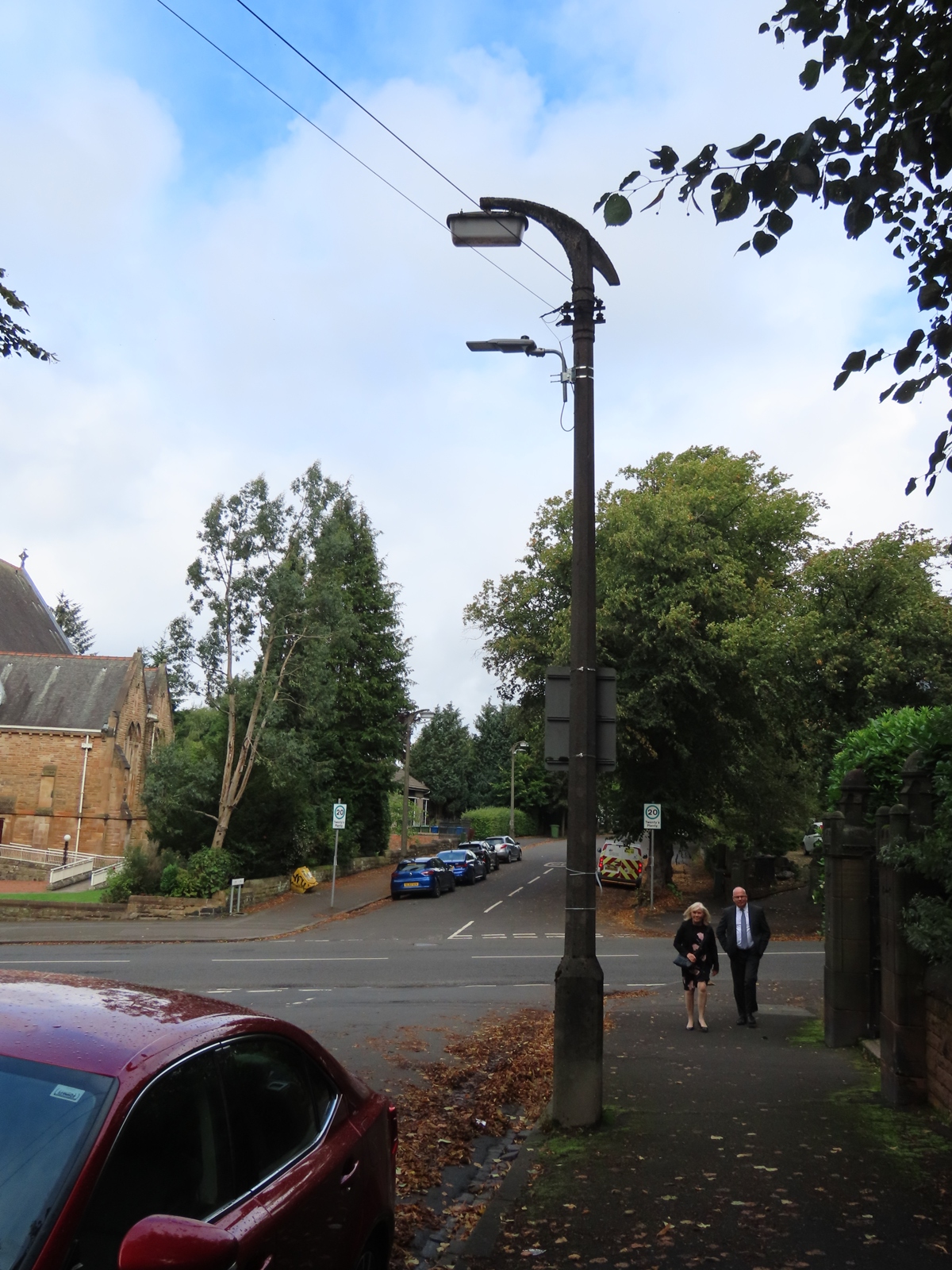
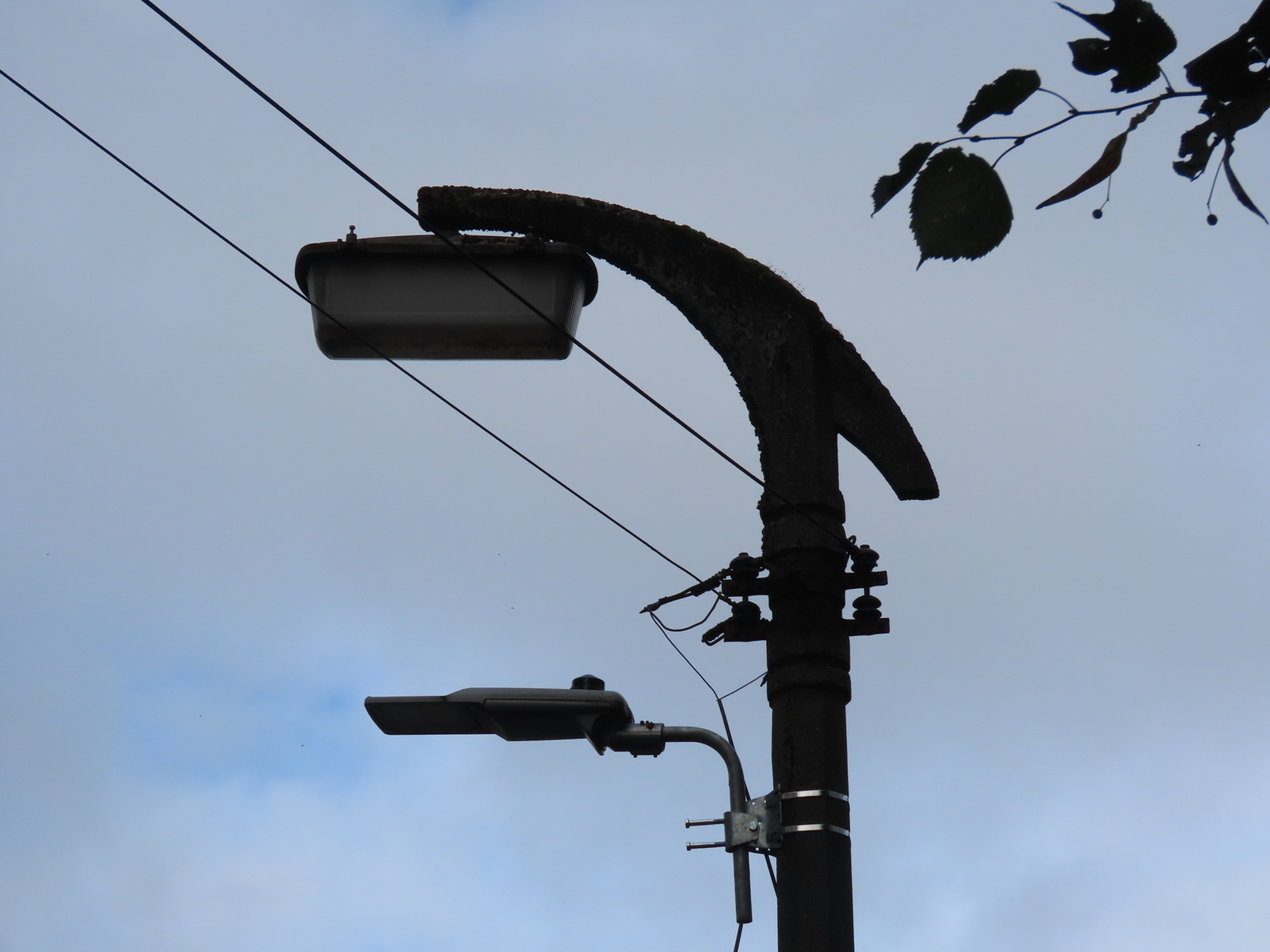
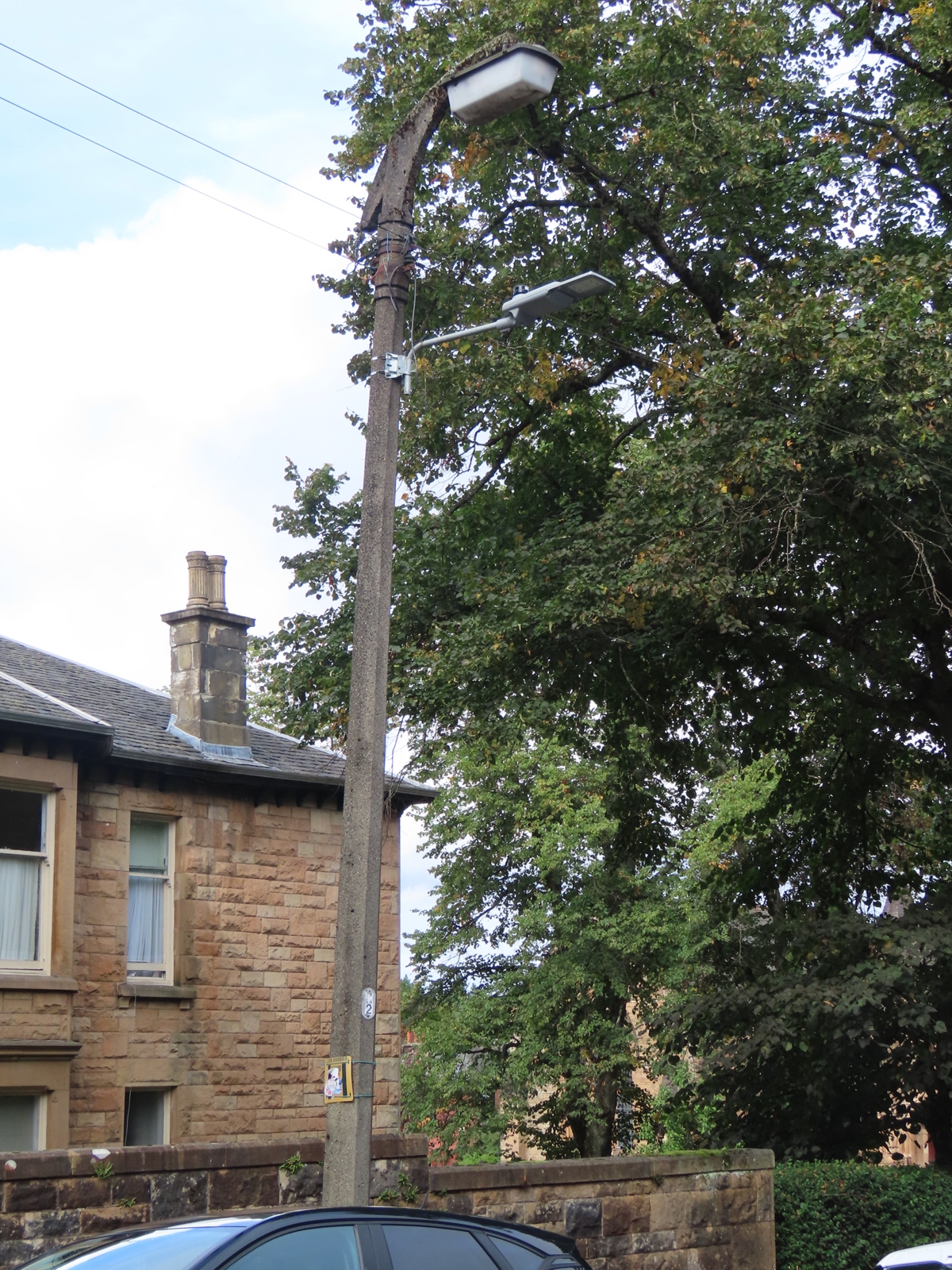
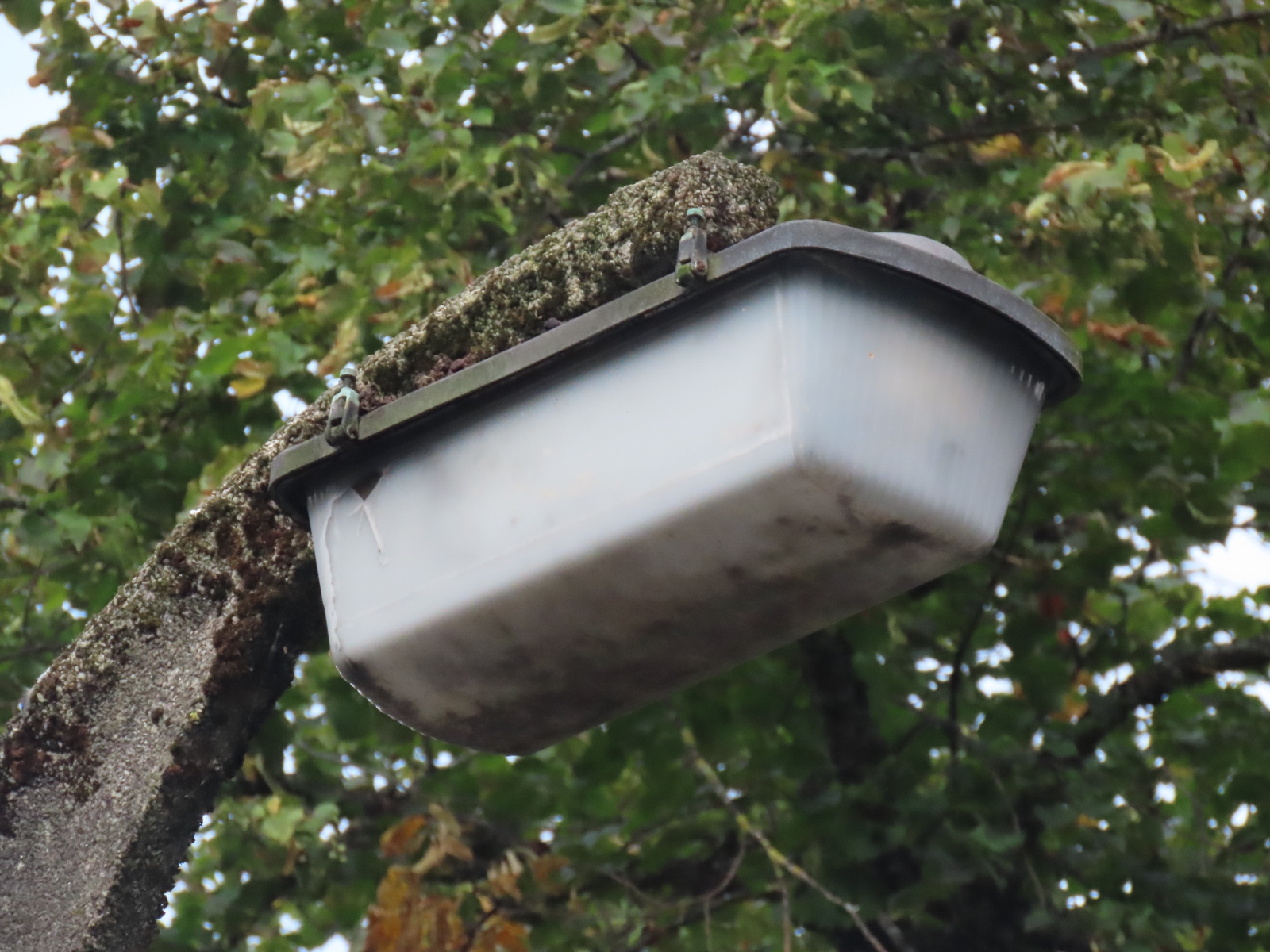
From looking at the highly BS7671 (Wiring Regulations)-compliant wiring, the earth conductor for the lantern doesn't appear to be connected to anything.
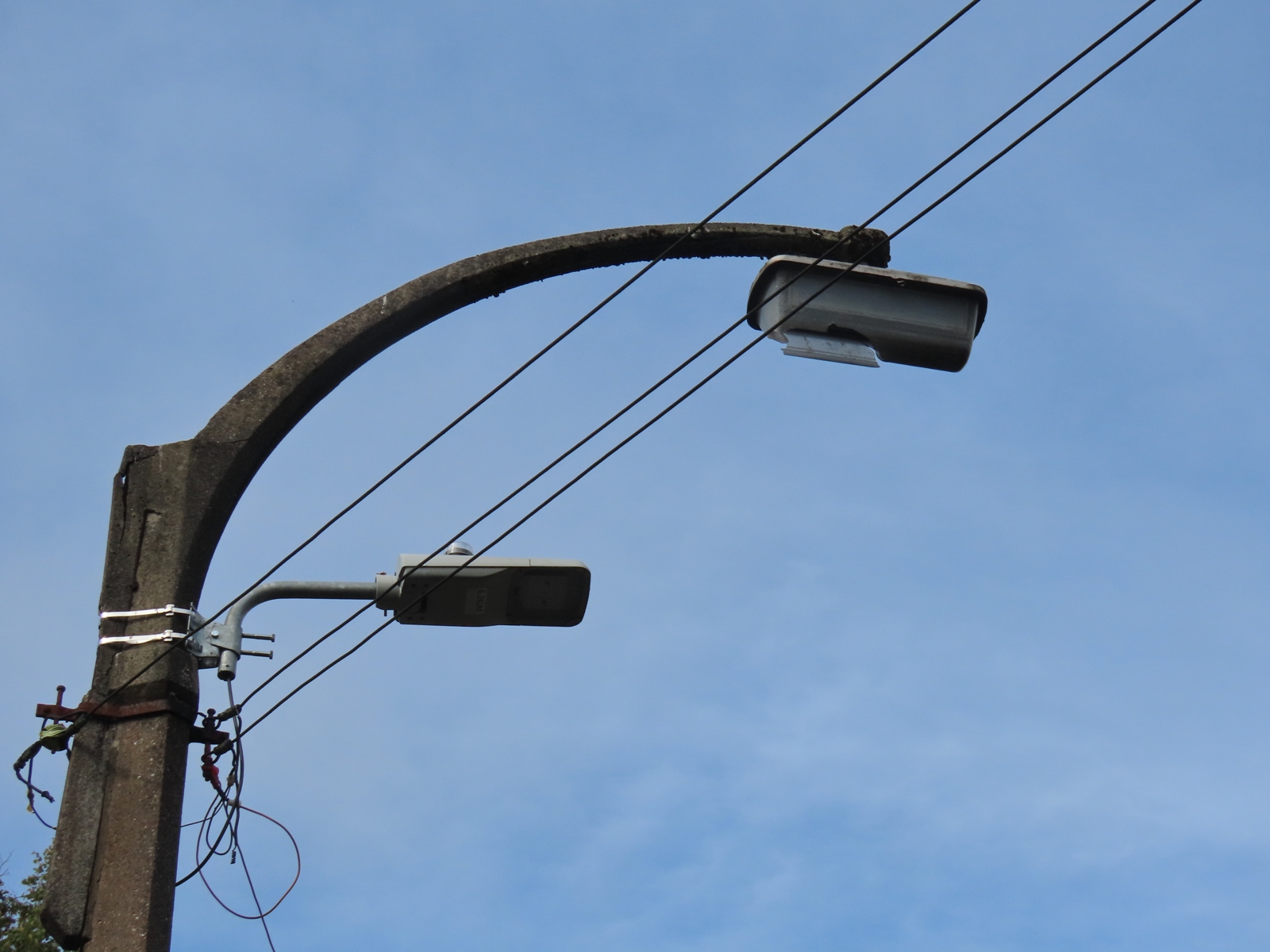
The next installation was the first to be fitted with a replacement SOX lantern; in this case, a GEC Z9465.
The new lantern was probably installed in the 1970s or 1980s.
I then walked onto Dalziel Drive, where the first Concrete Utilities column of the explore was found. This is an 'Avenue 3D' design, with a 'New Arc Arm' bracket (later, renamed the 'Arc 1').
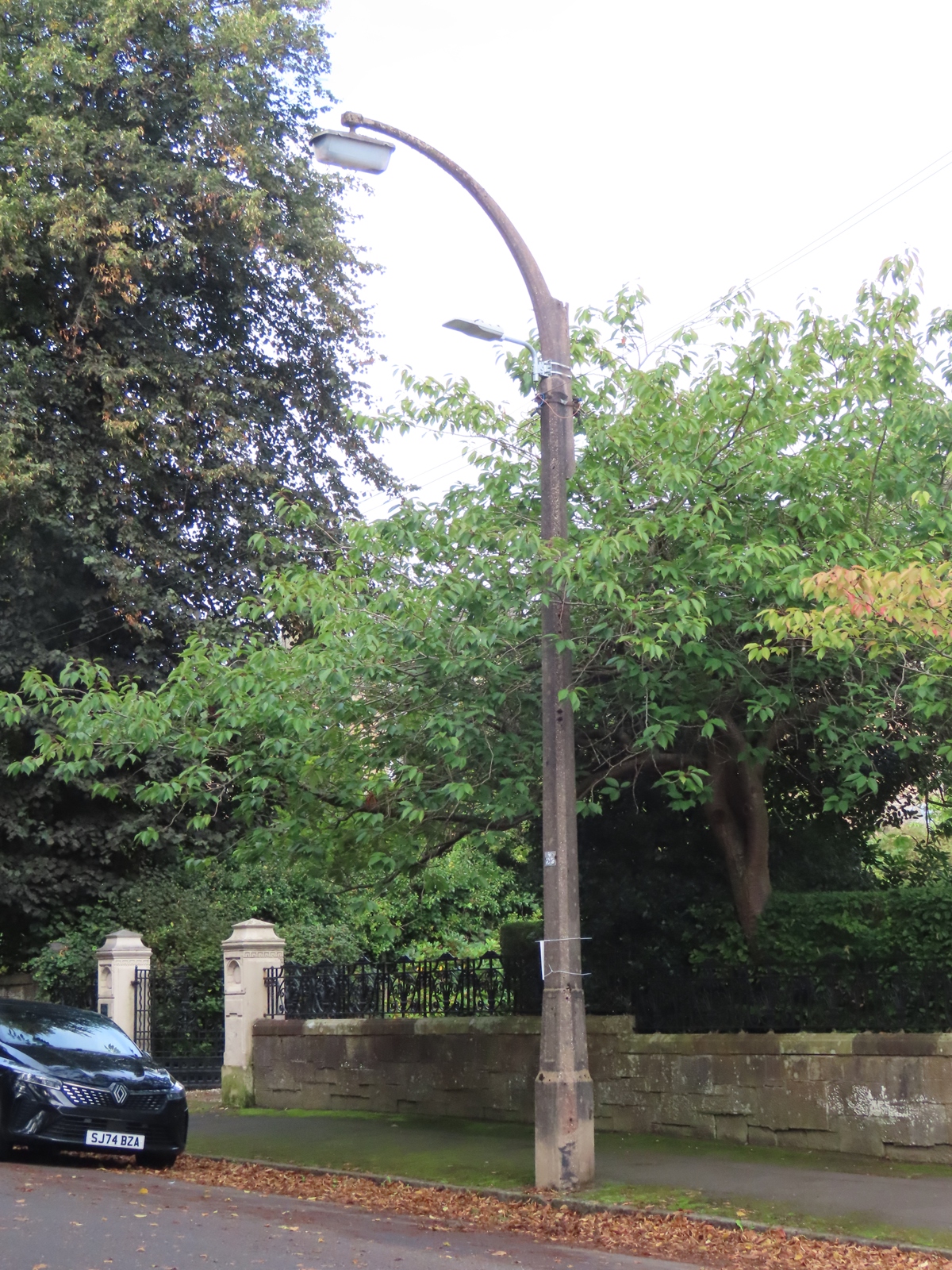
These brackets feature a much greater radius curve than the equivalent Springbank examples do.
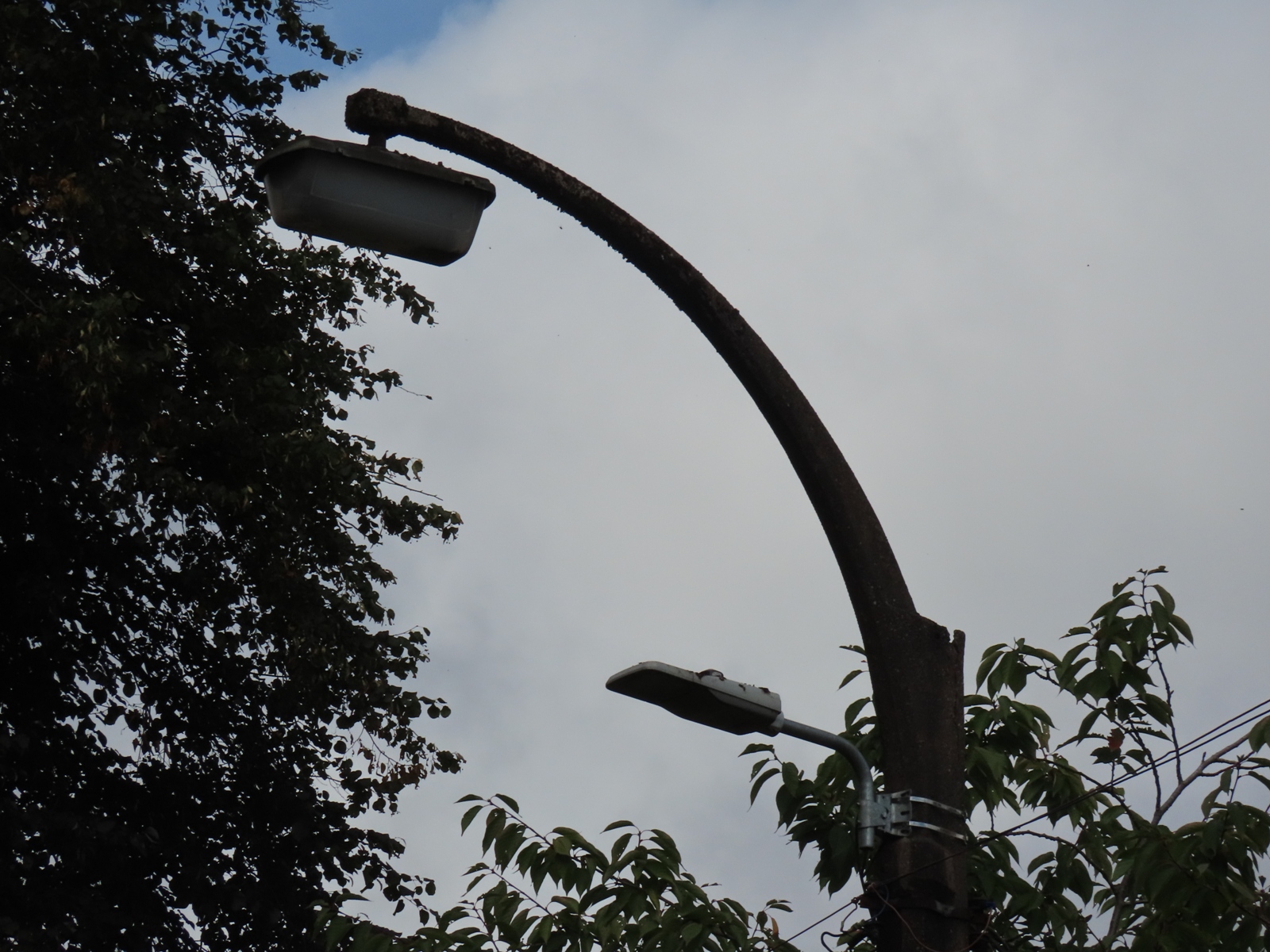
The lantern here is a Z9461.
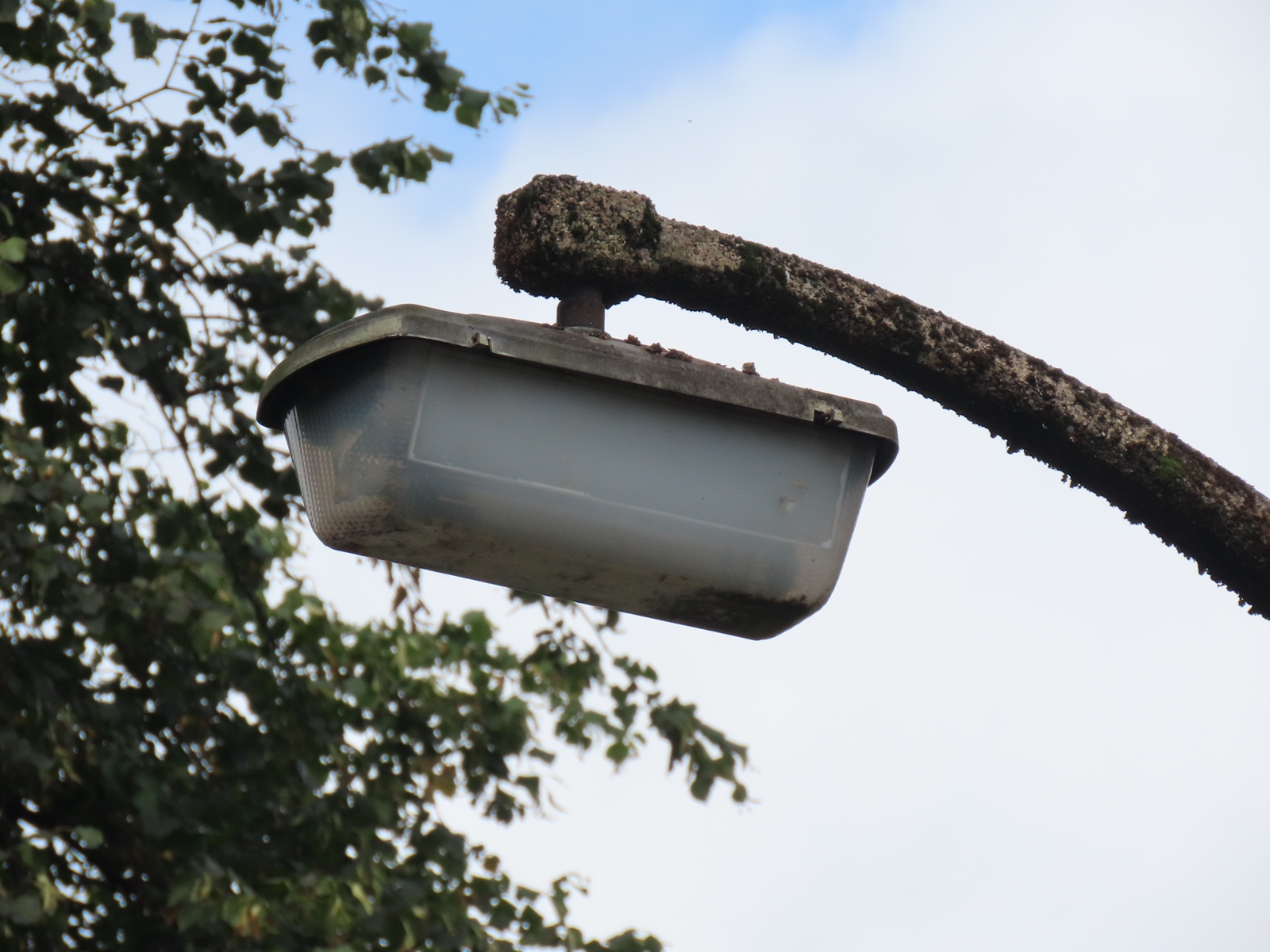
Another Z9465 was fitted to the following bracket.
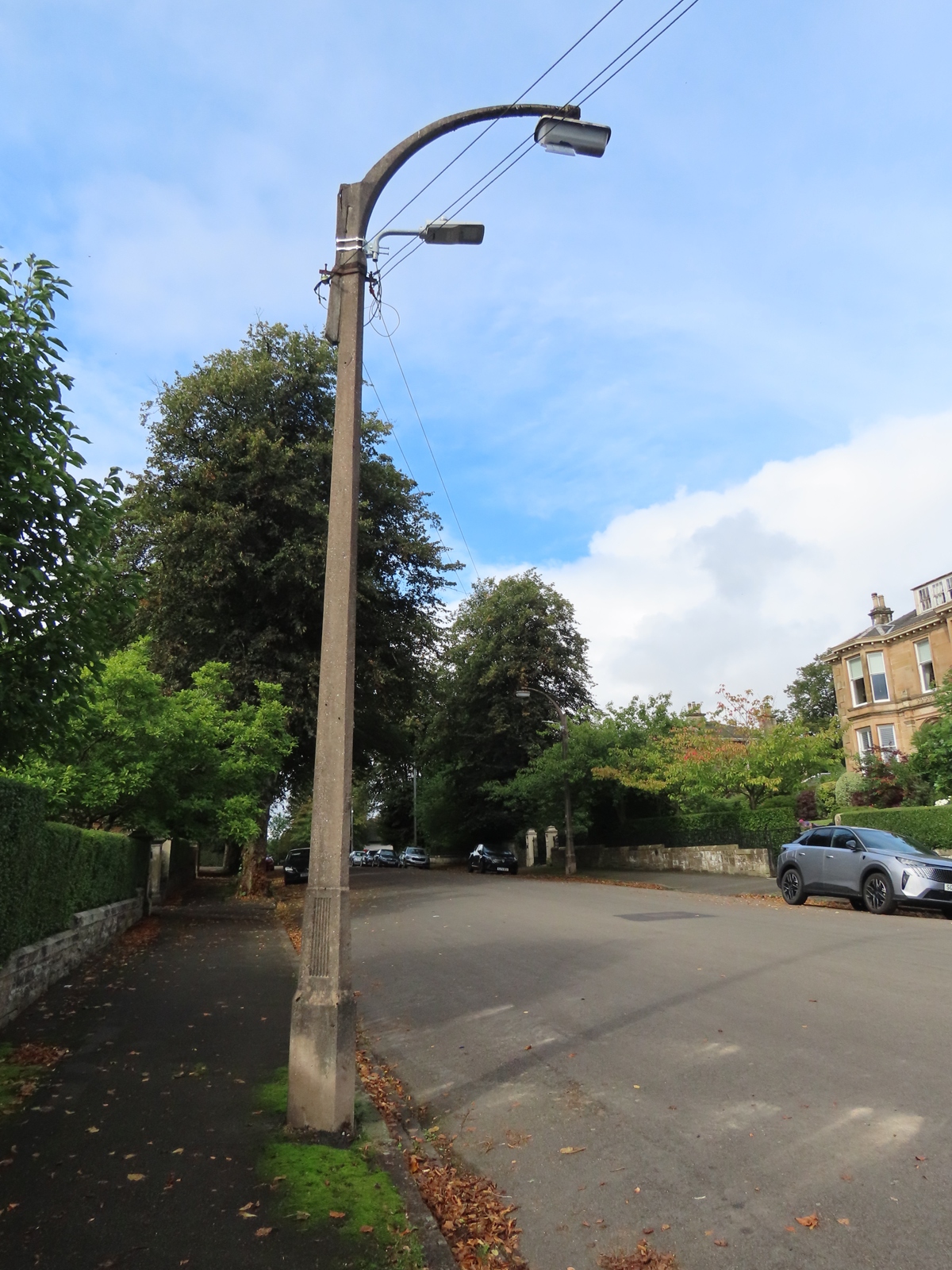
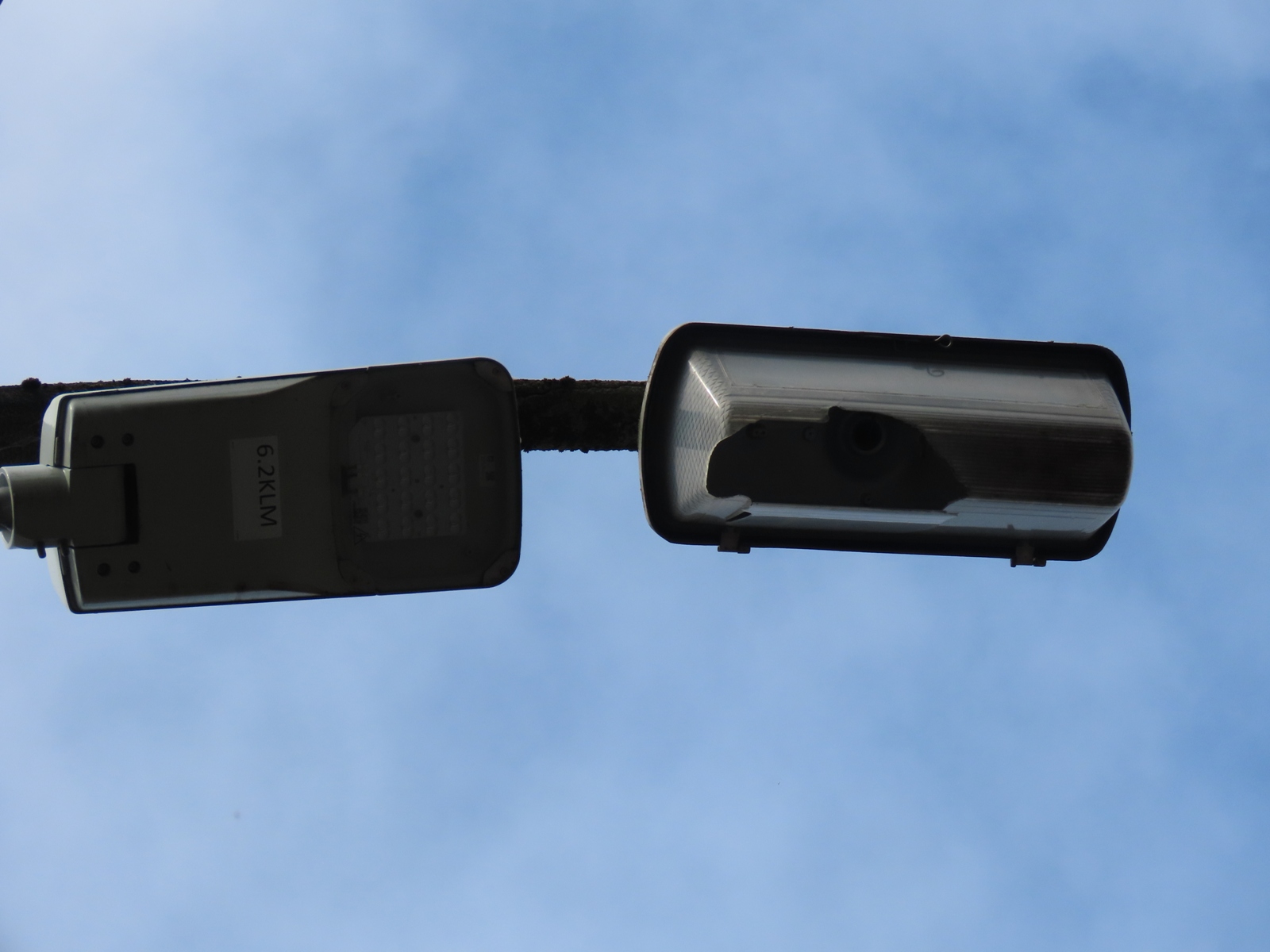
A label on the underside of the replacement lantern states that its lumen output is 6.2 kilolumens; by comparison, a 90 Watt SOX lamp is 13 klm.
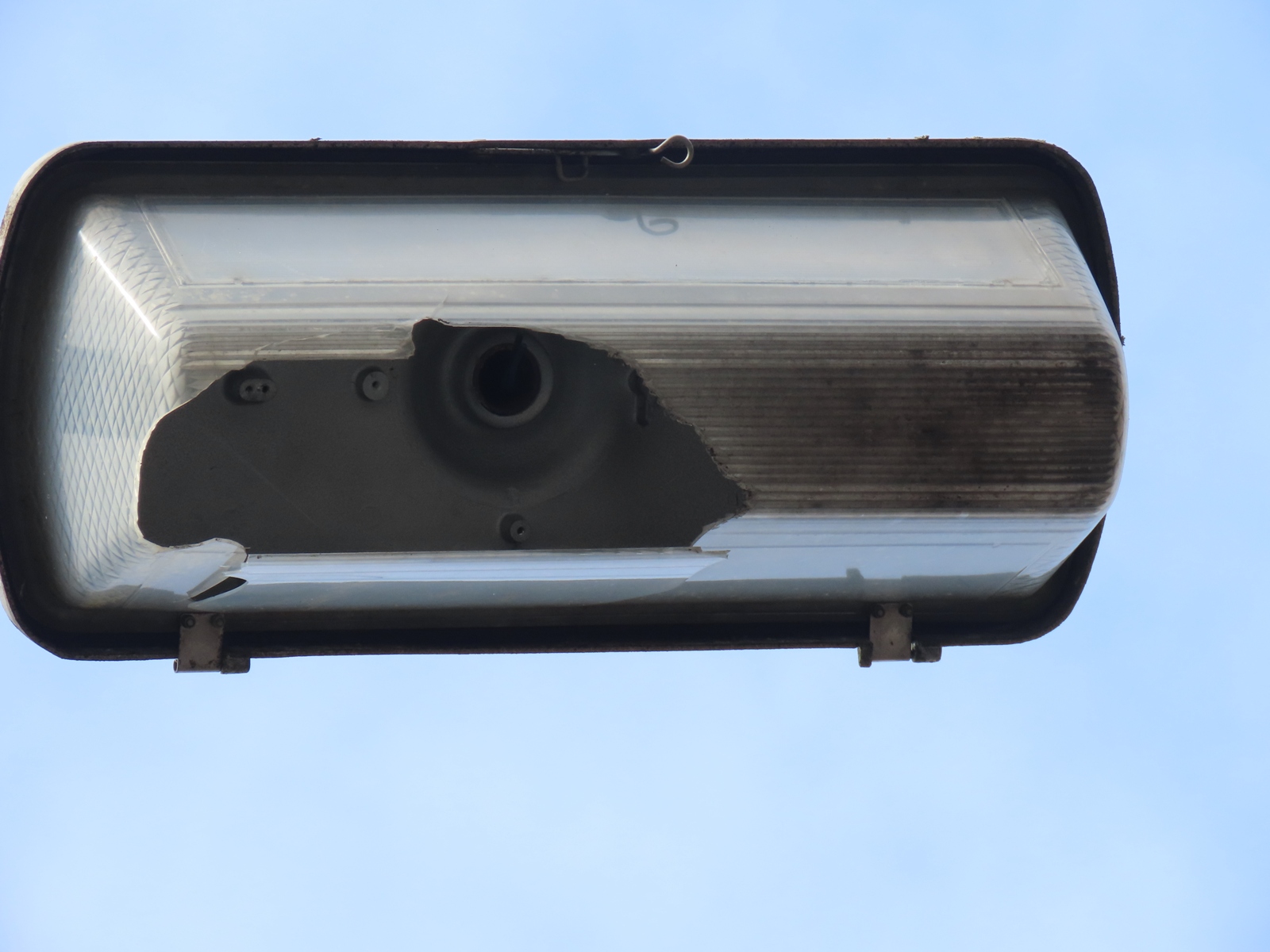
The underside of the bowl is damaged, revealing here that the lantern has been stripped of all components and its lamp.
A likely early replacement is seen next, with a steel pole replacing the concrete column.
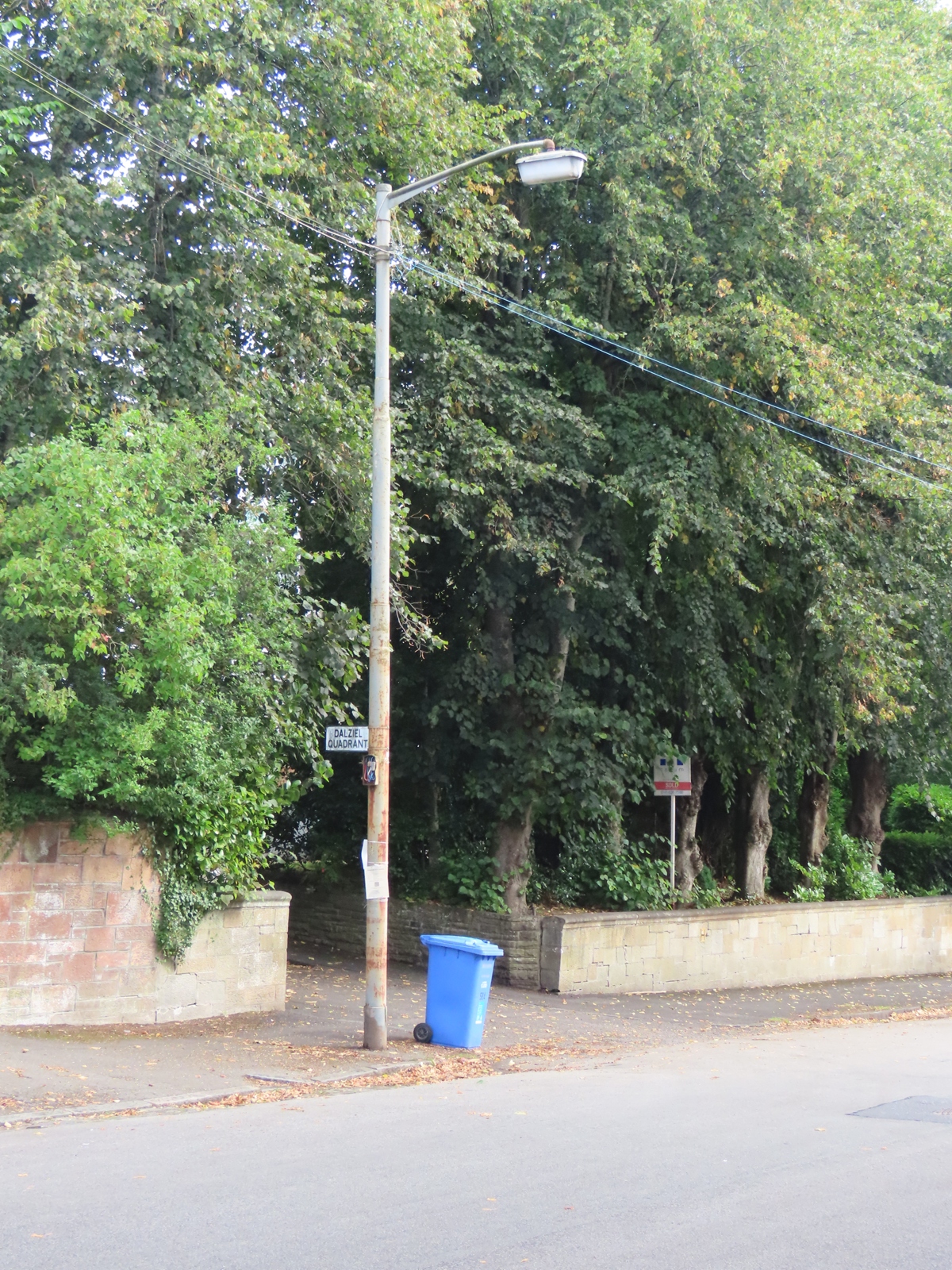
This too supports a Z9461.
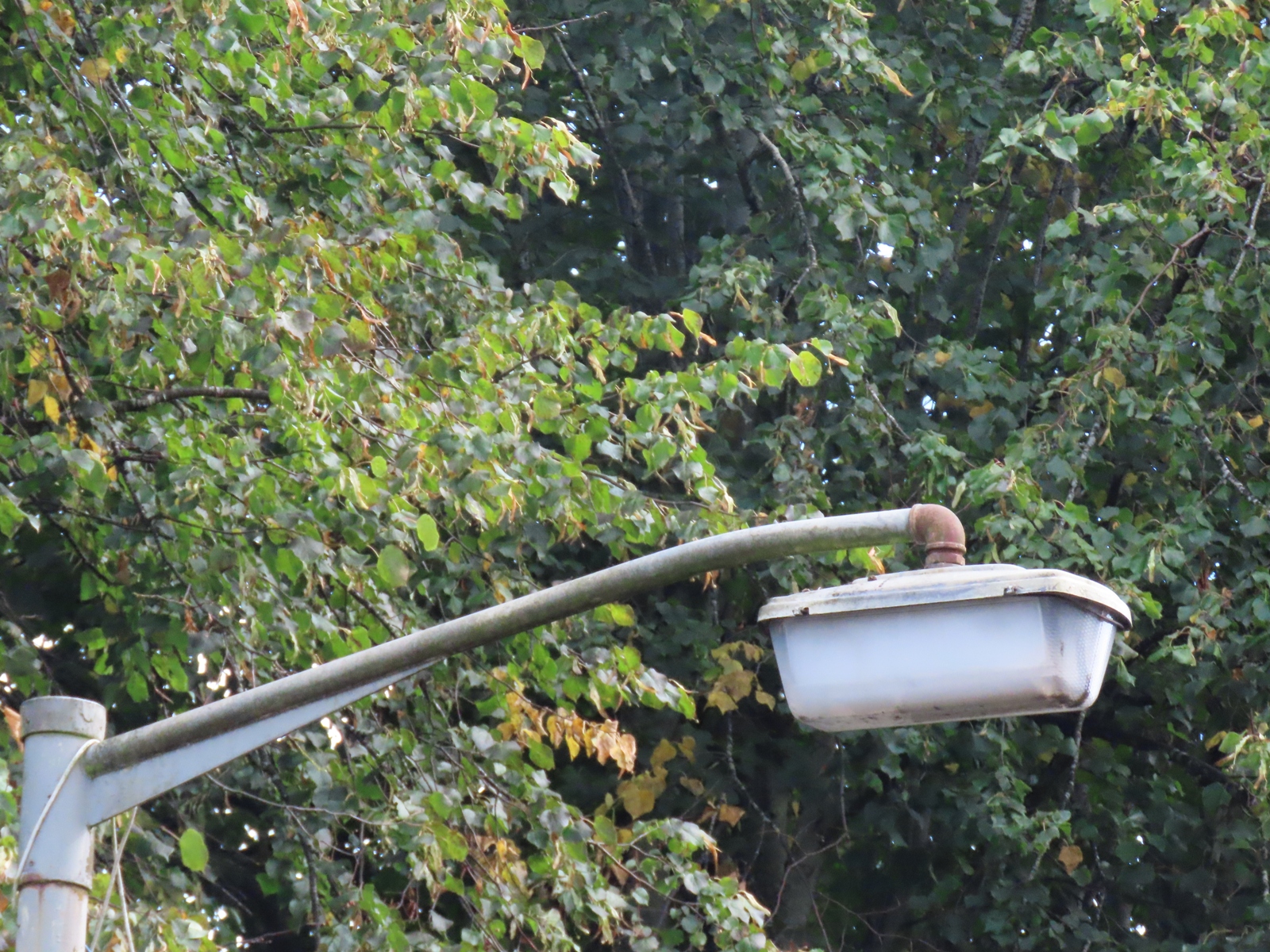
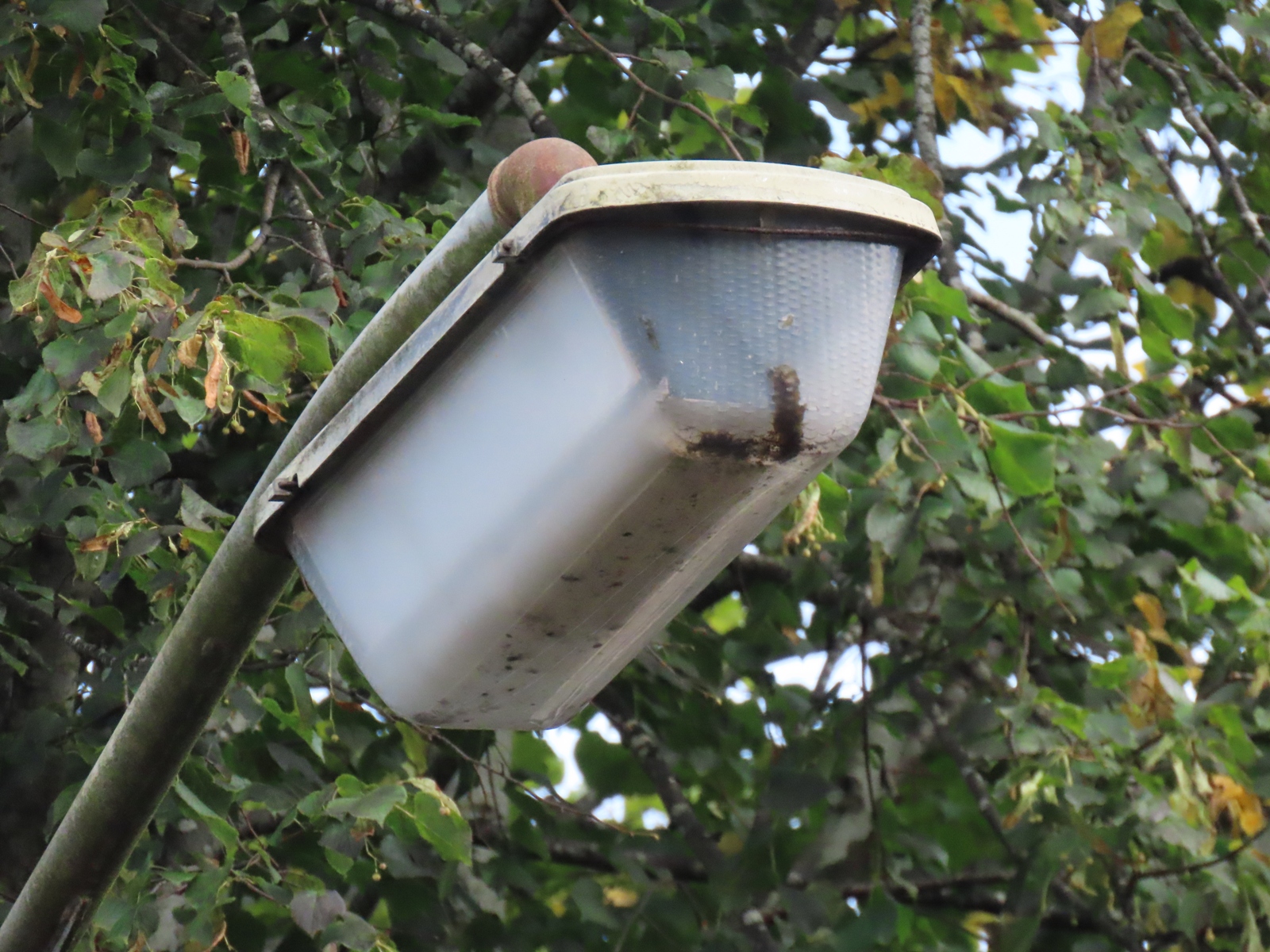
This example appears to have had an LED gear tray placed inside the bowl, which must look downright bizarre after nightfall.
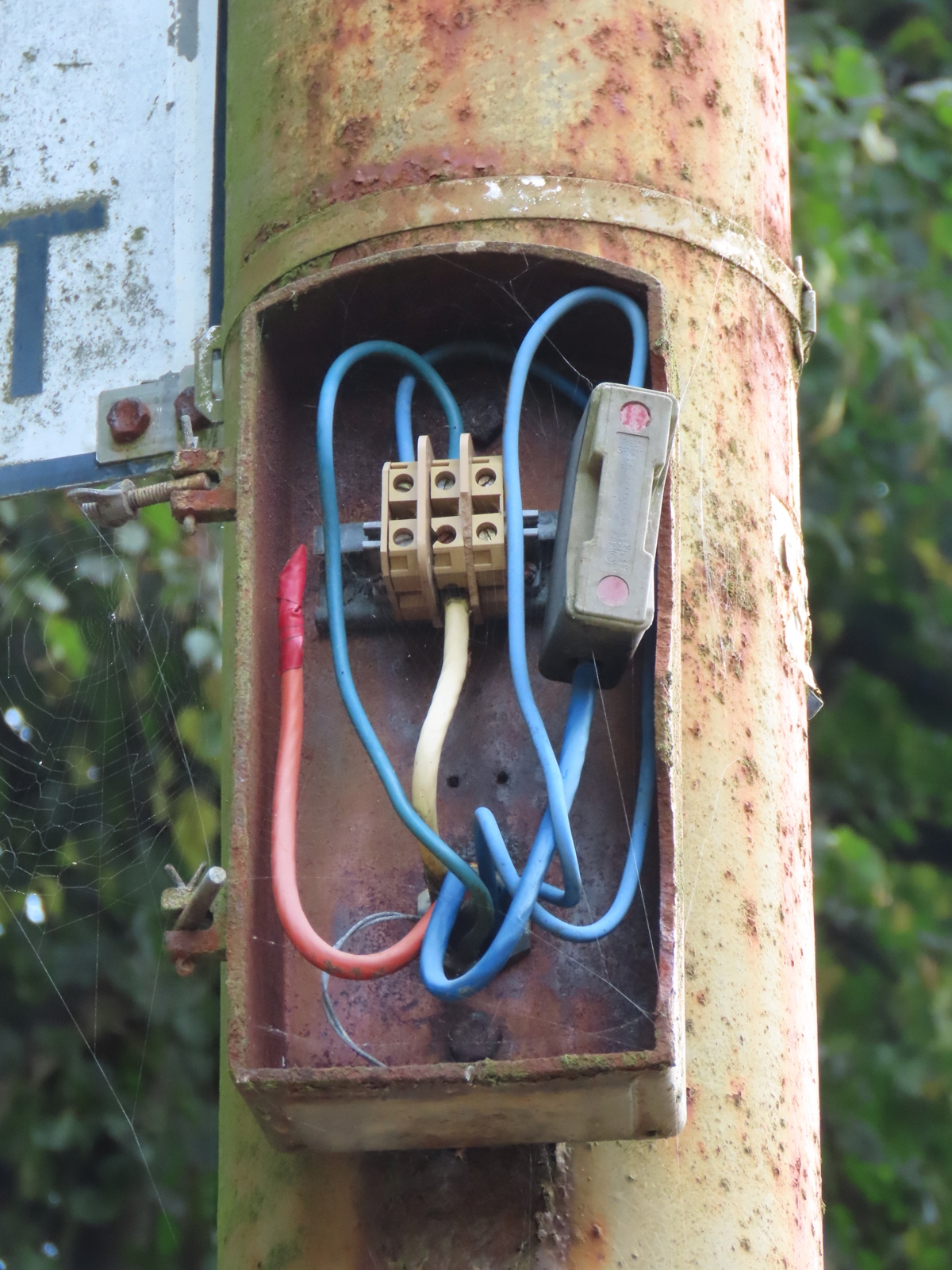
A small enclosure on the side of the pole is missing is cover, revealing more slightly confusing wiring.
After passing a modern replacement column, another Avenue 3D was to be seen.
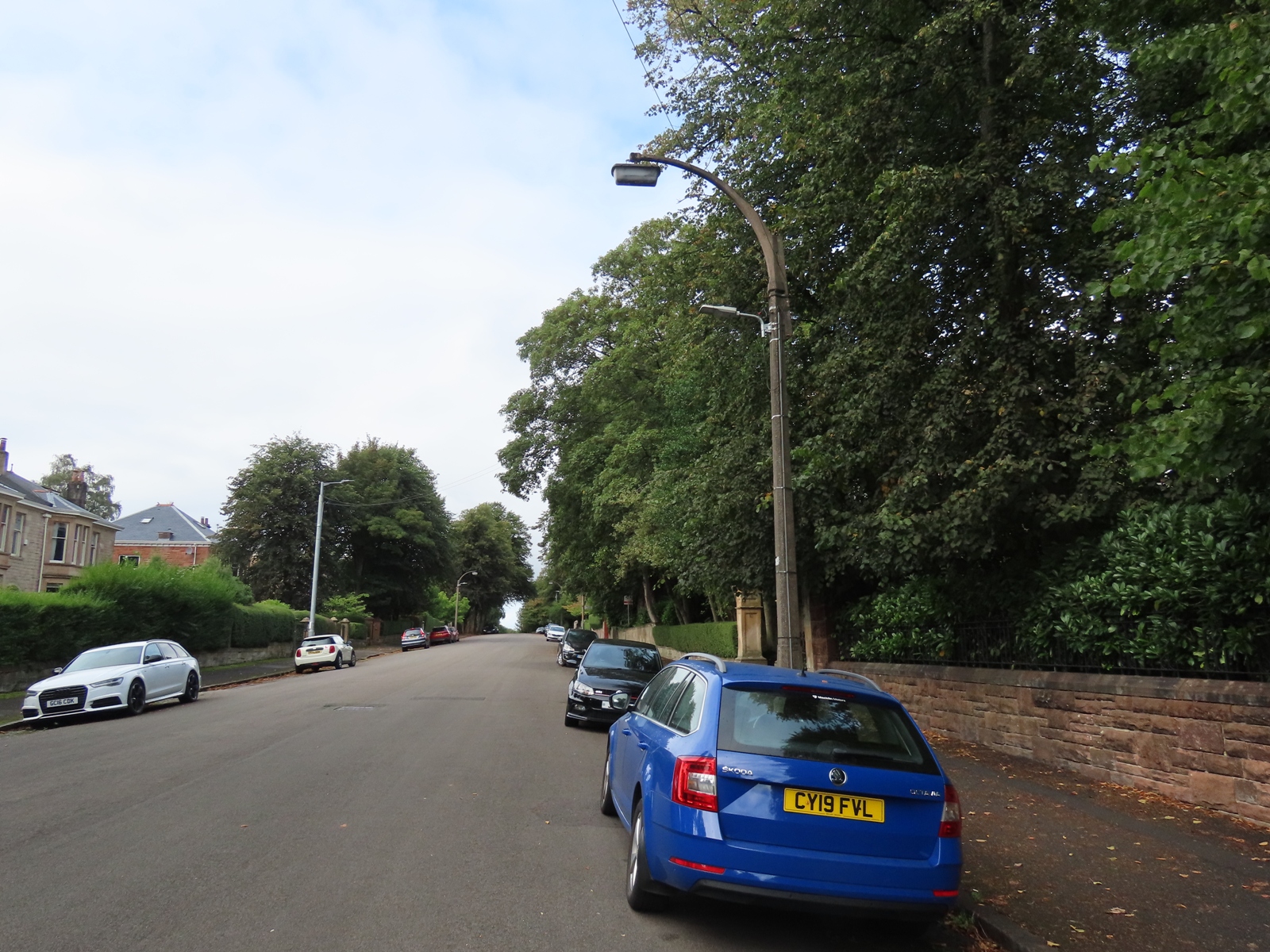
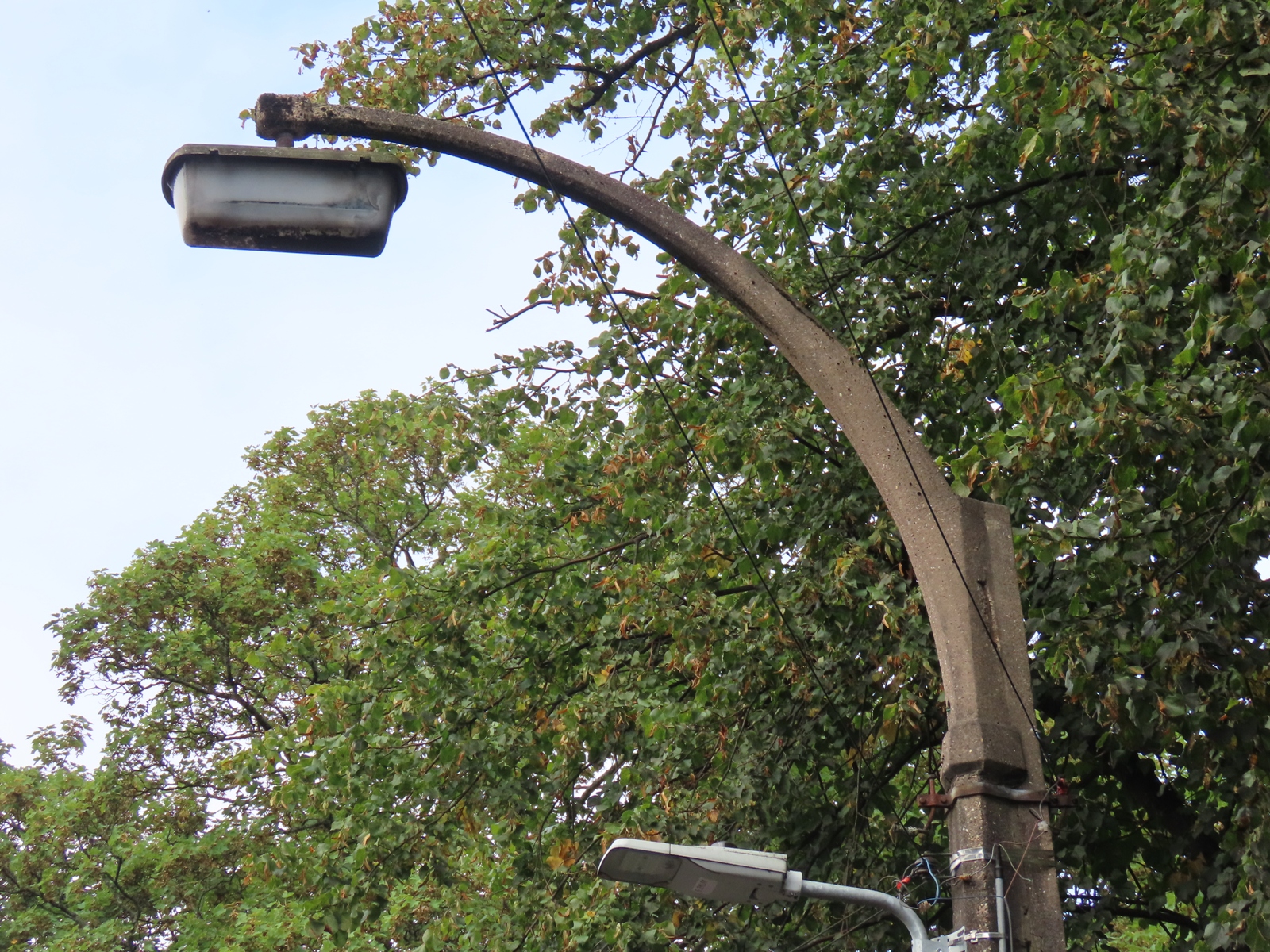
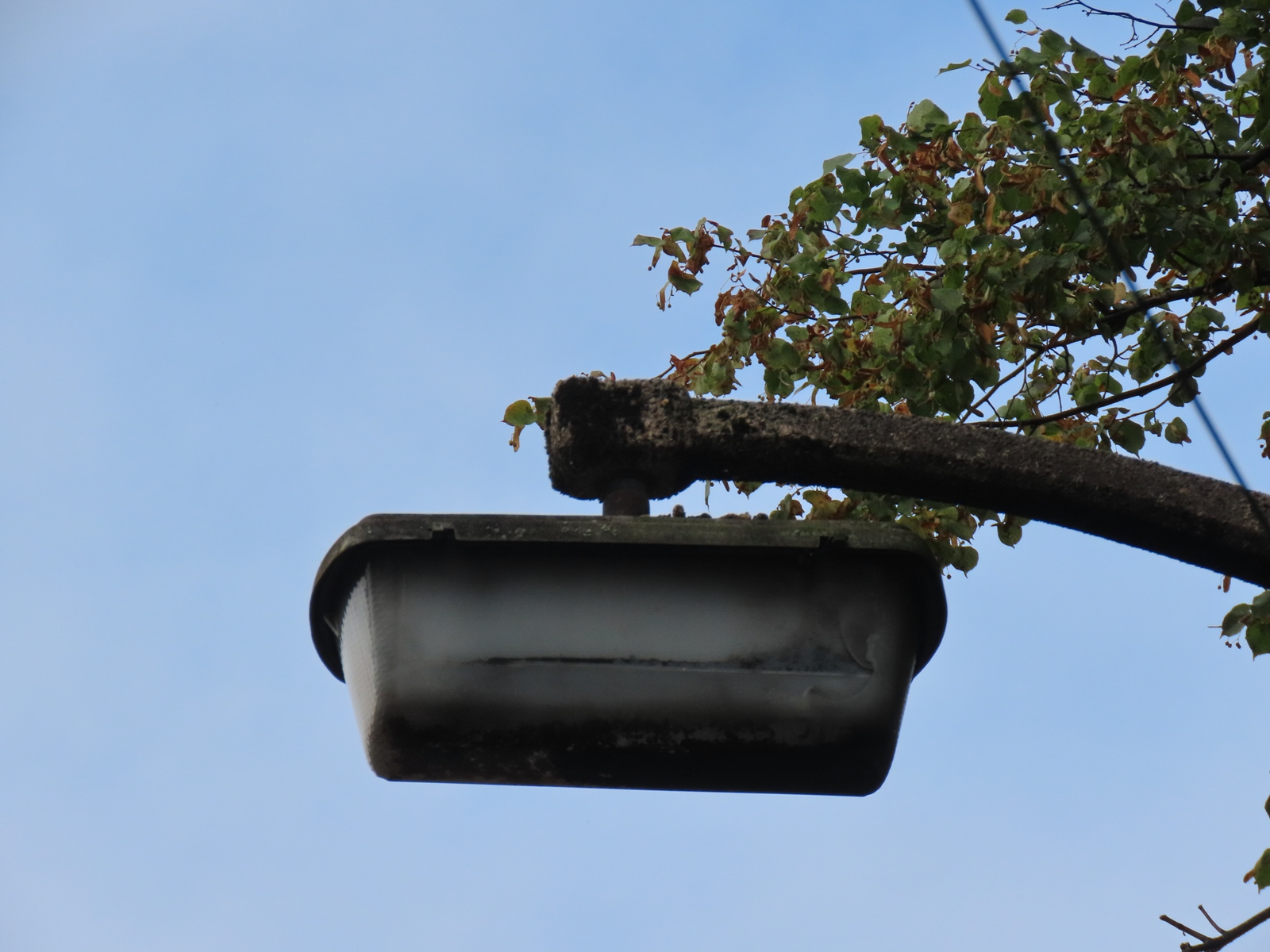
A cuboid-shaped moulding conceals the right-angled bend that converts the side-entry pipe to accommodate a top-entry lantern.
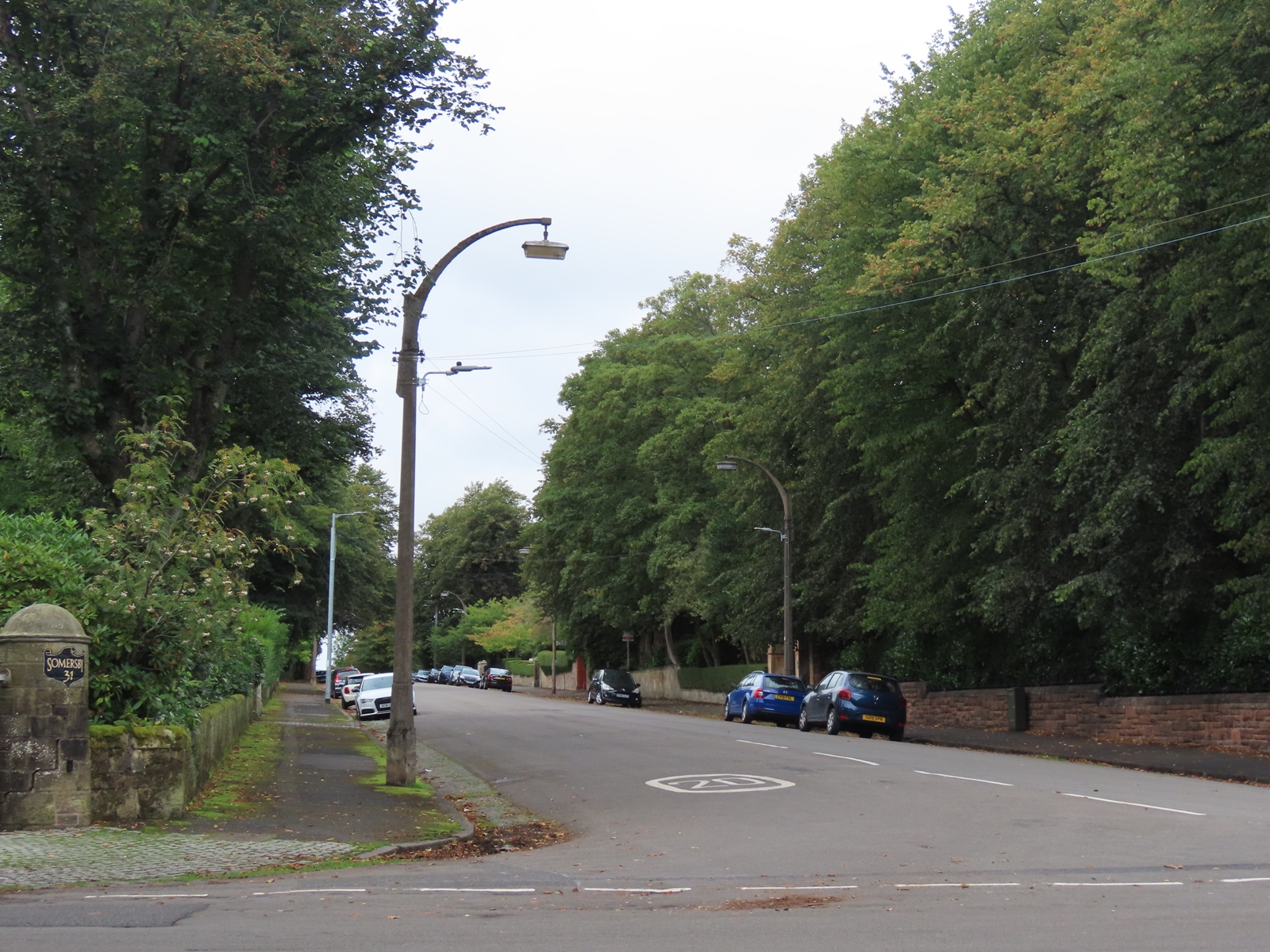
This column is at Dalziel Drive's junction with Albert Drive.
Another replacement Z9465 existed here.
An assortment of adaptors and couplers linked the bracket to the lantern.
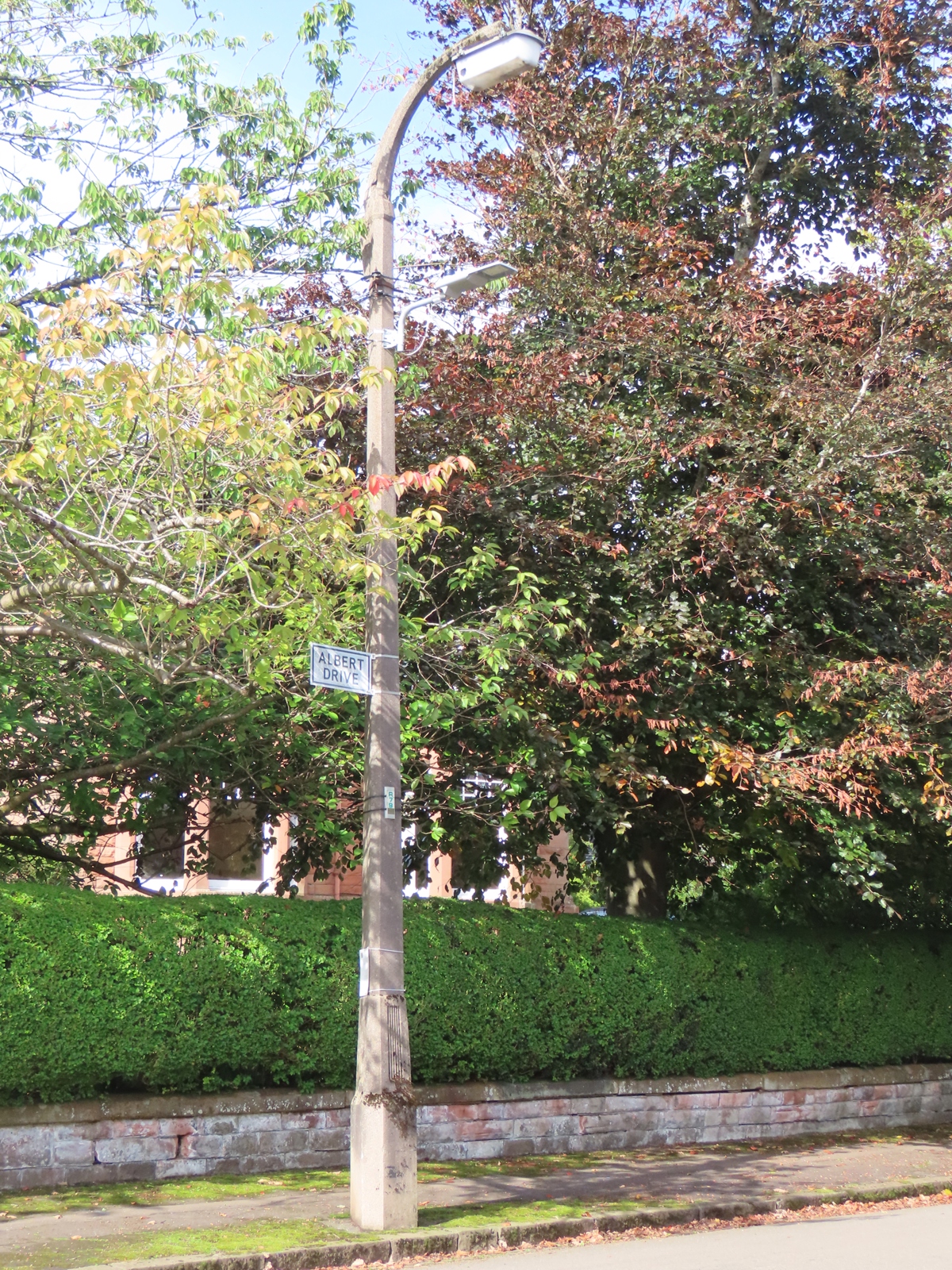
This part of Albert Drive saw a return to Springbank columns.
Although the new lanterns are fitted with NEMA sockets, dummy links are fitted in place of photocells, suggesting that the installations are group-controlled.
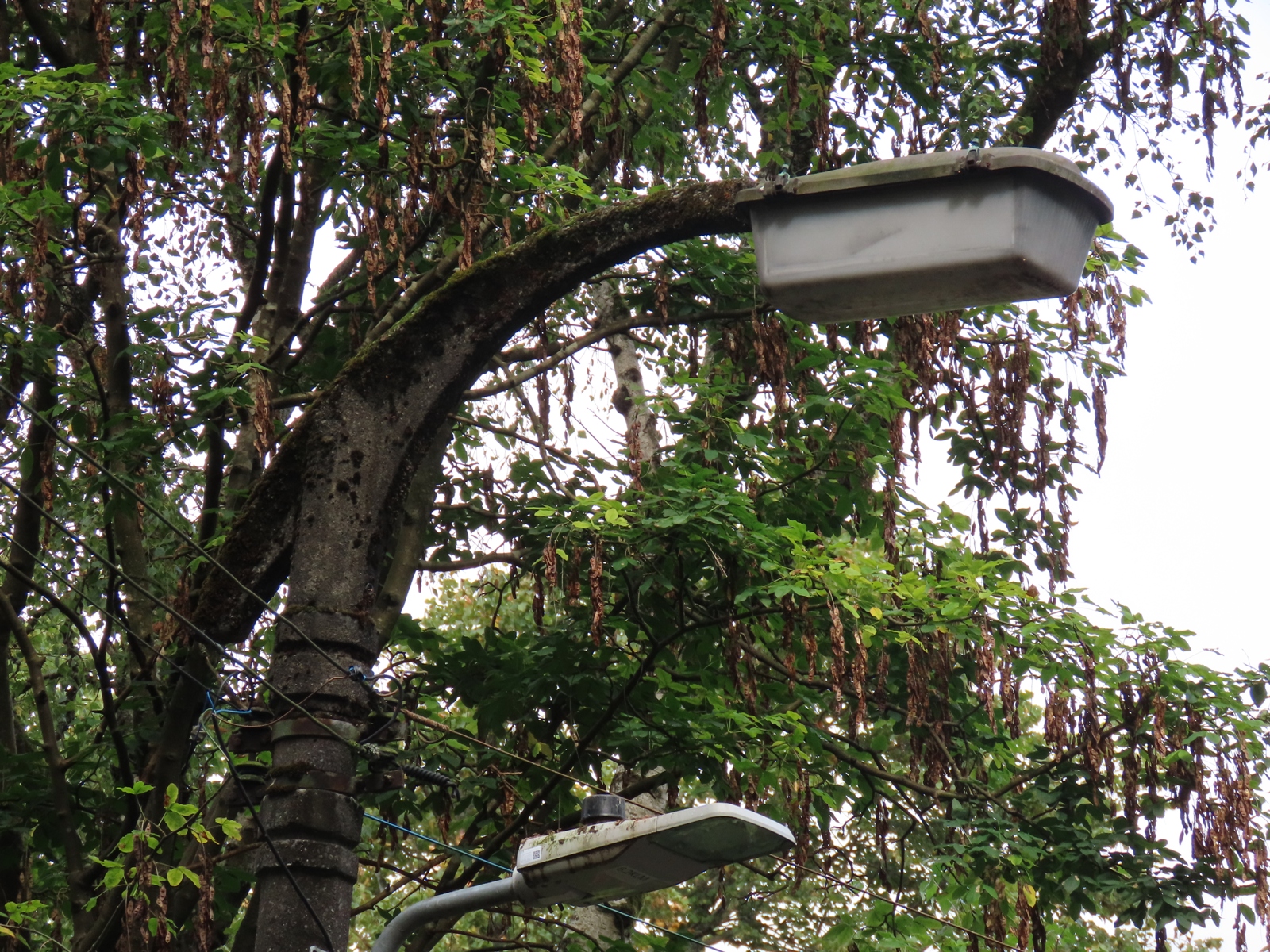
As the old order pre-dates photocell control by a considerable margin, no NEMA sockets are installed on them.
Some of the old columns do have the LED lantern fitted to them directly, where the bracket had already been converted to take a side-entry lantern.
Prior to this lantern being installed, a V-Lux LPX / Tamlite Tamcourt existed here, and before that, a Thorn Alpha 4 was installed.
This is at the junction of Hamilton Avenue.
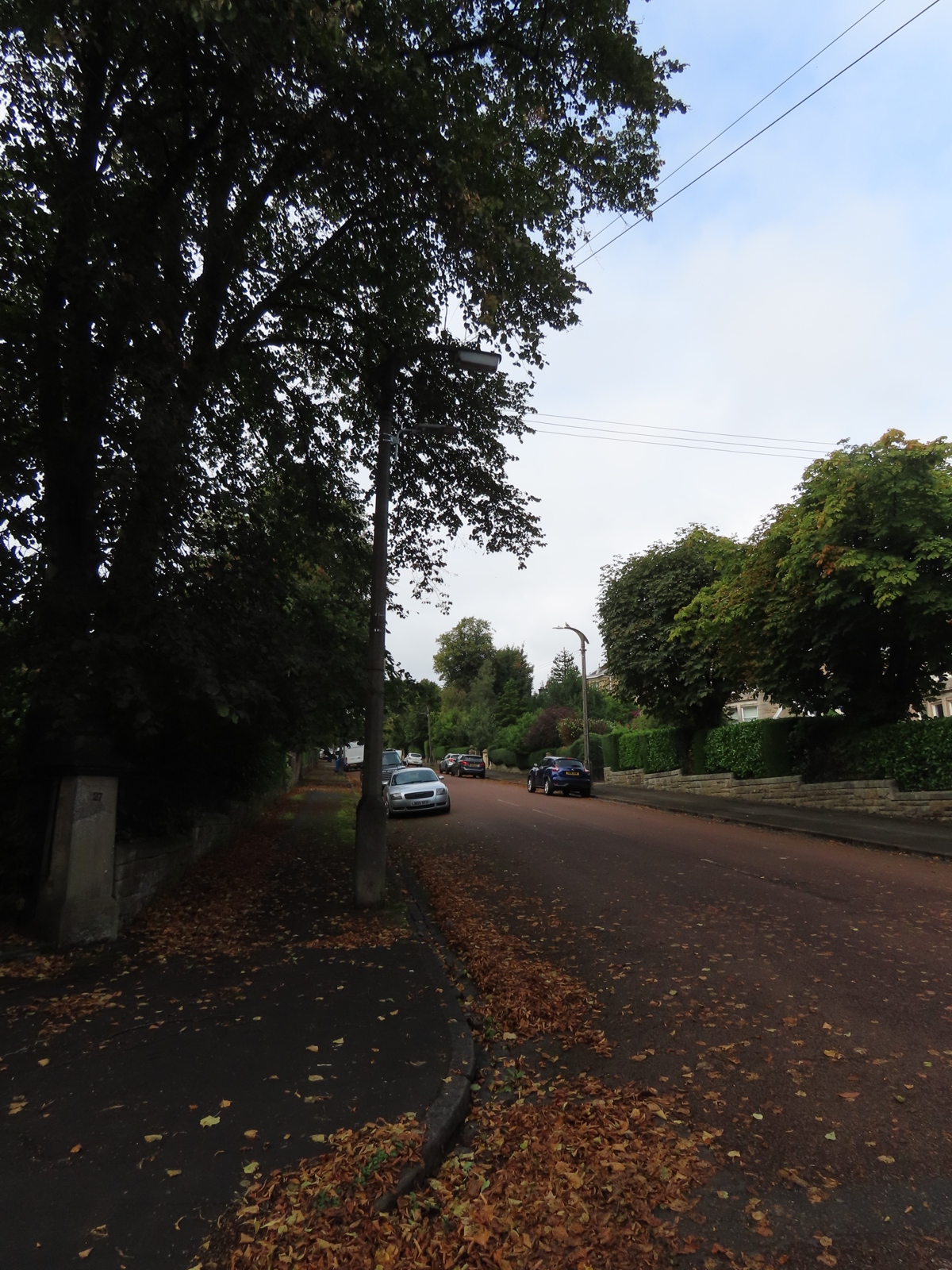
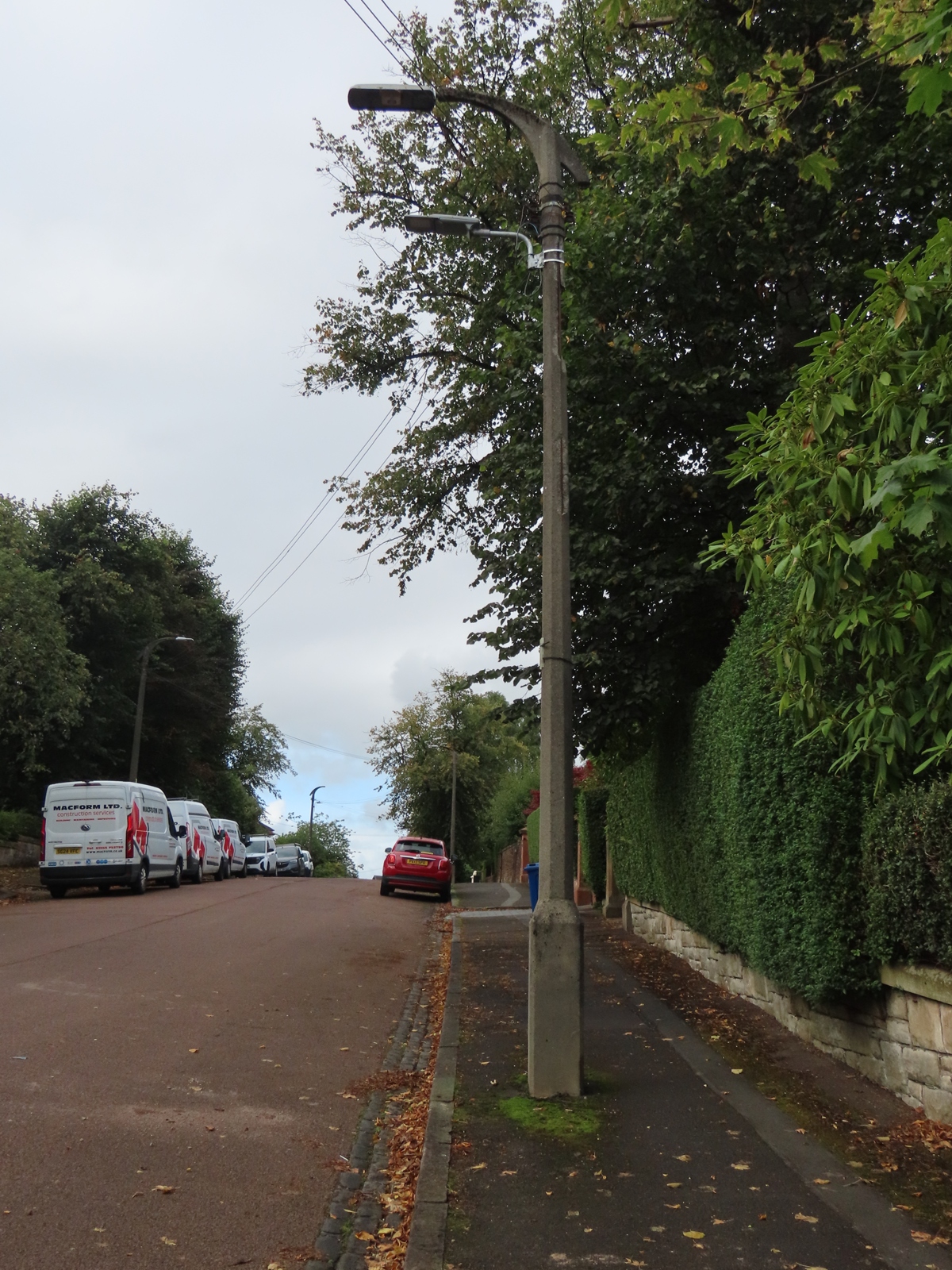
With this column surrounded by trees, the lower position of the new lantern will be advantageous.
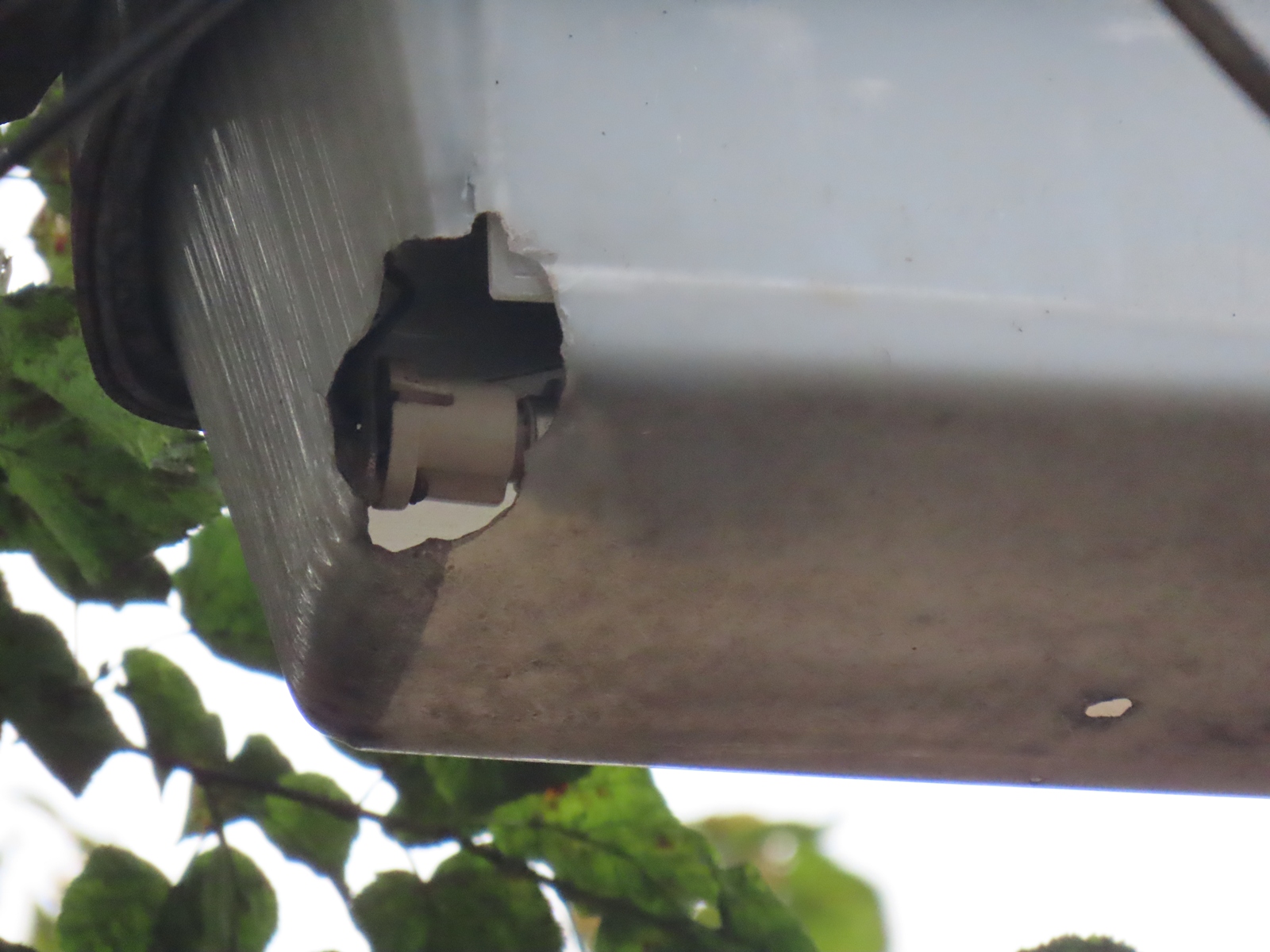
A small hole has been punctured in the rear of this lantern's bowl.
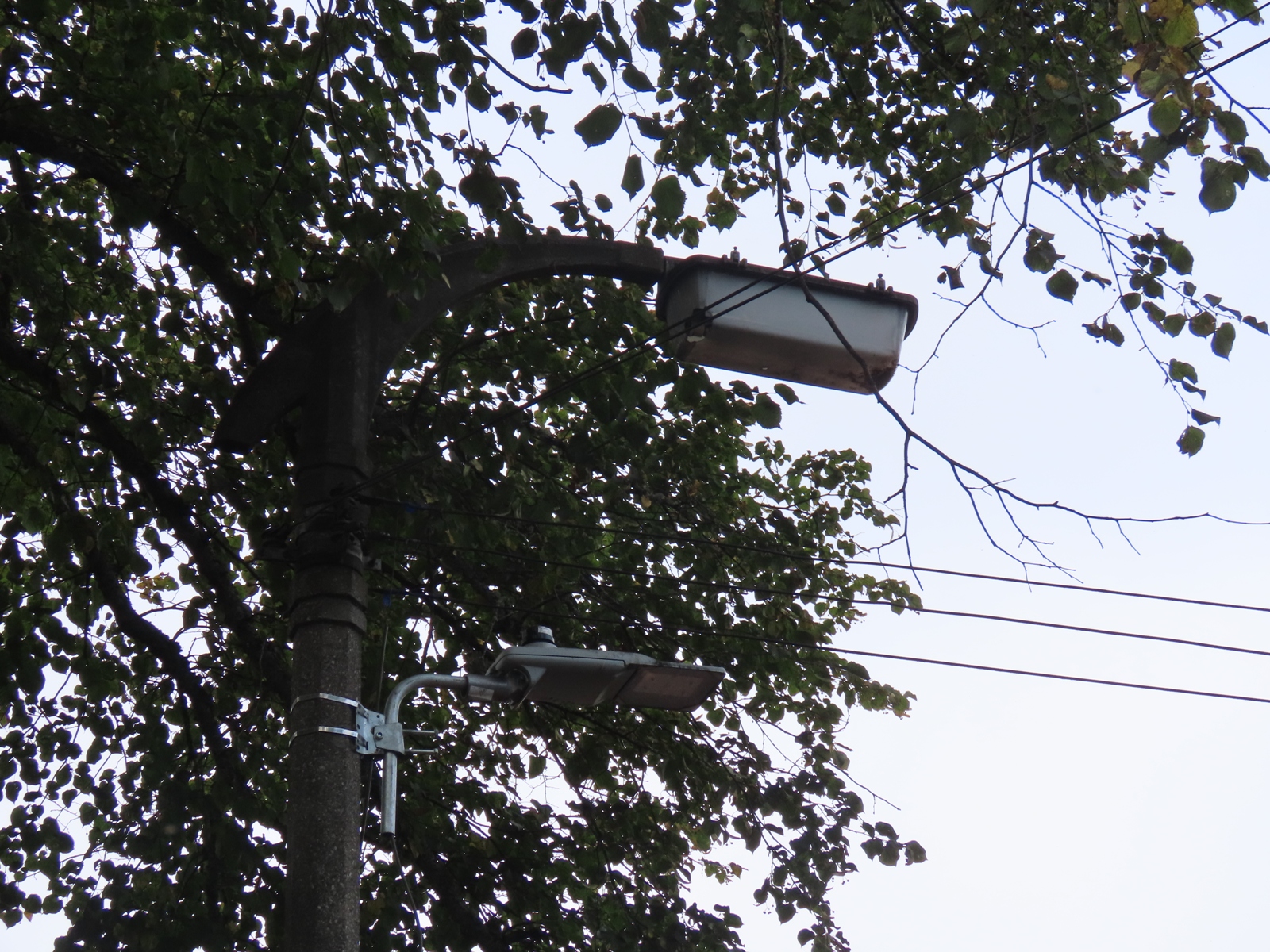
As this bracket had also been made side-entry in the past, a Z9464 was fitted here. Oddly, the new lantern was not installed on the old bracket's spigot.
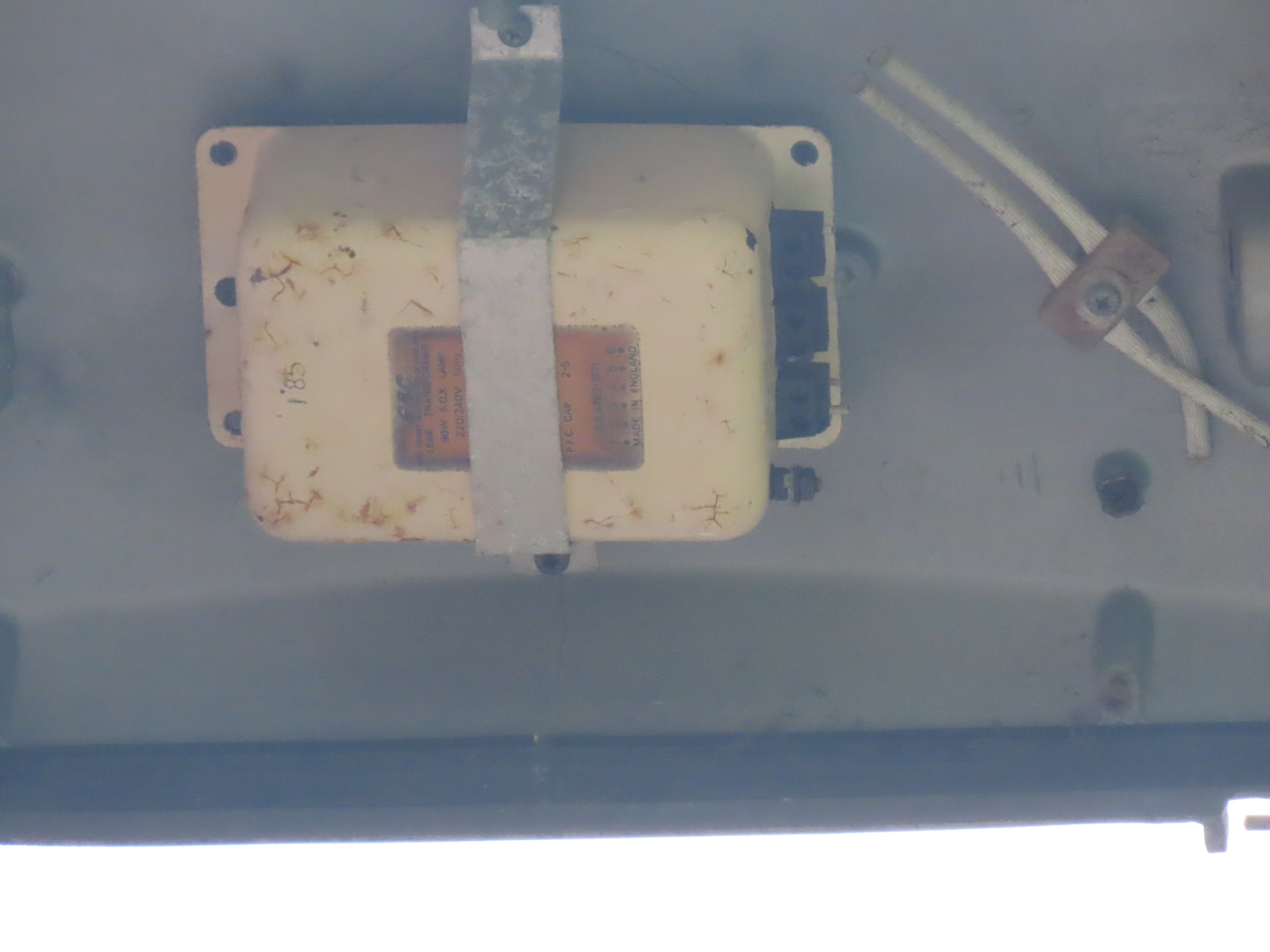
Save for the ballast, the lantern had been stripped of all components. Amusingly, the supply cable clamp, and the heat-resistant fibreglass sleeves intended to be placed over the exposed insulated cores of the cable, appear never to have been used, and remain ready for use.
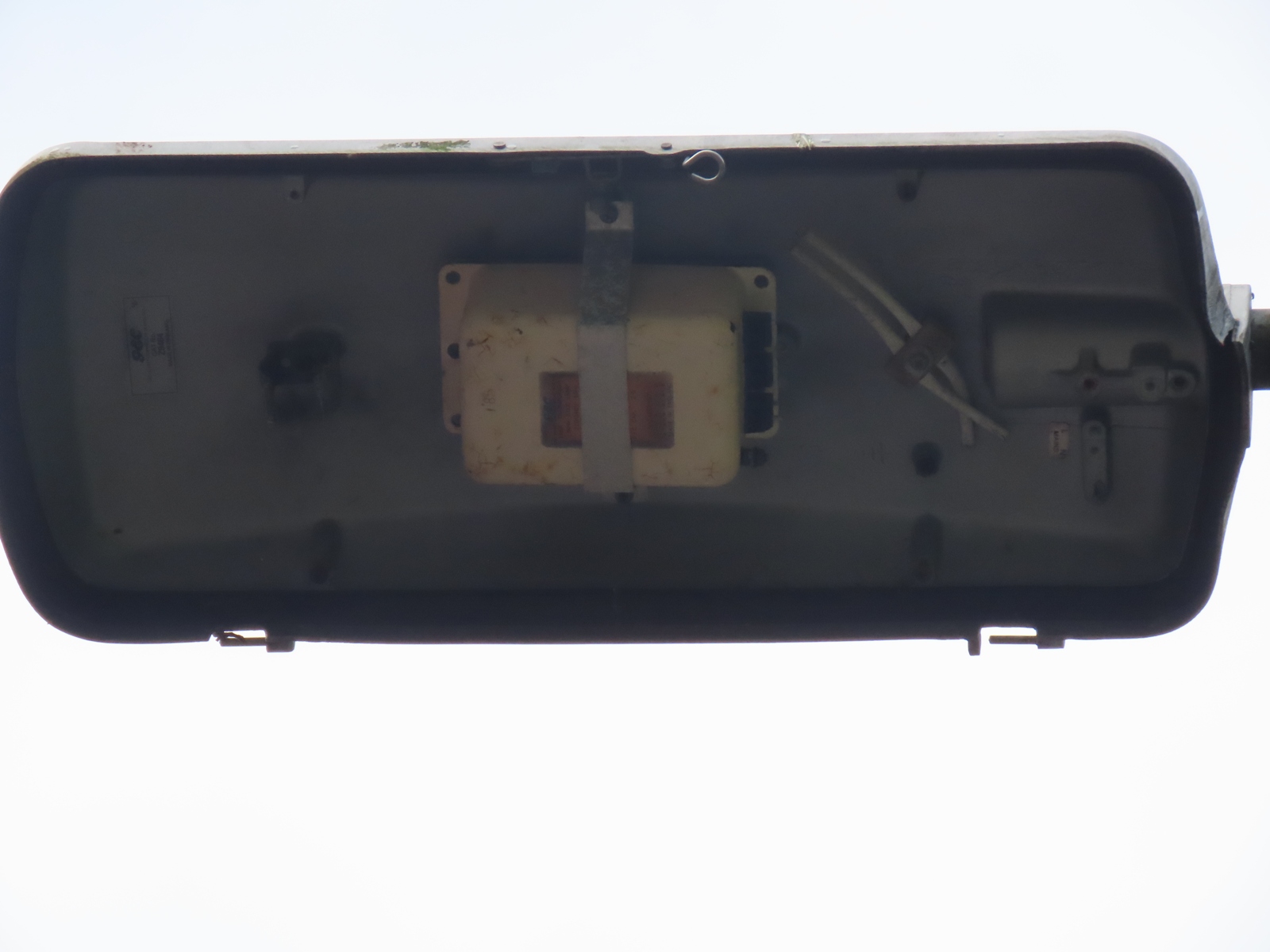
Zooming in on the ballast reveals that it was produced in 1985.
The entire lantern was missing from the column at the junction of Sherbrooke Avenue.
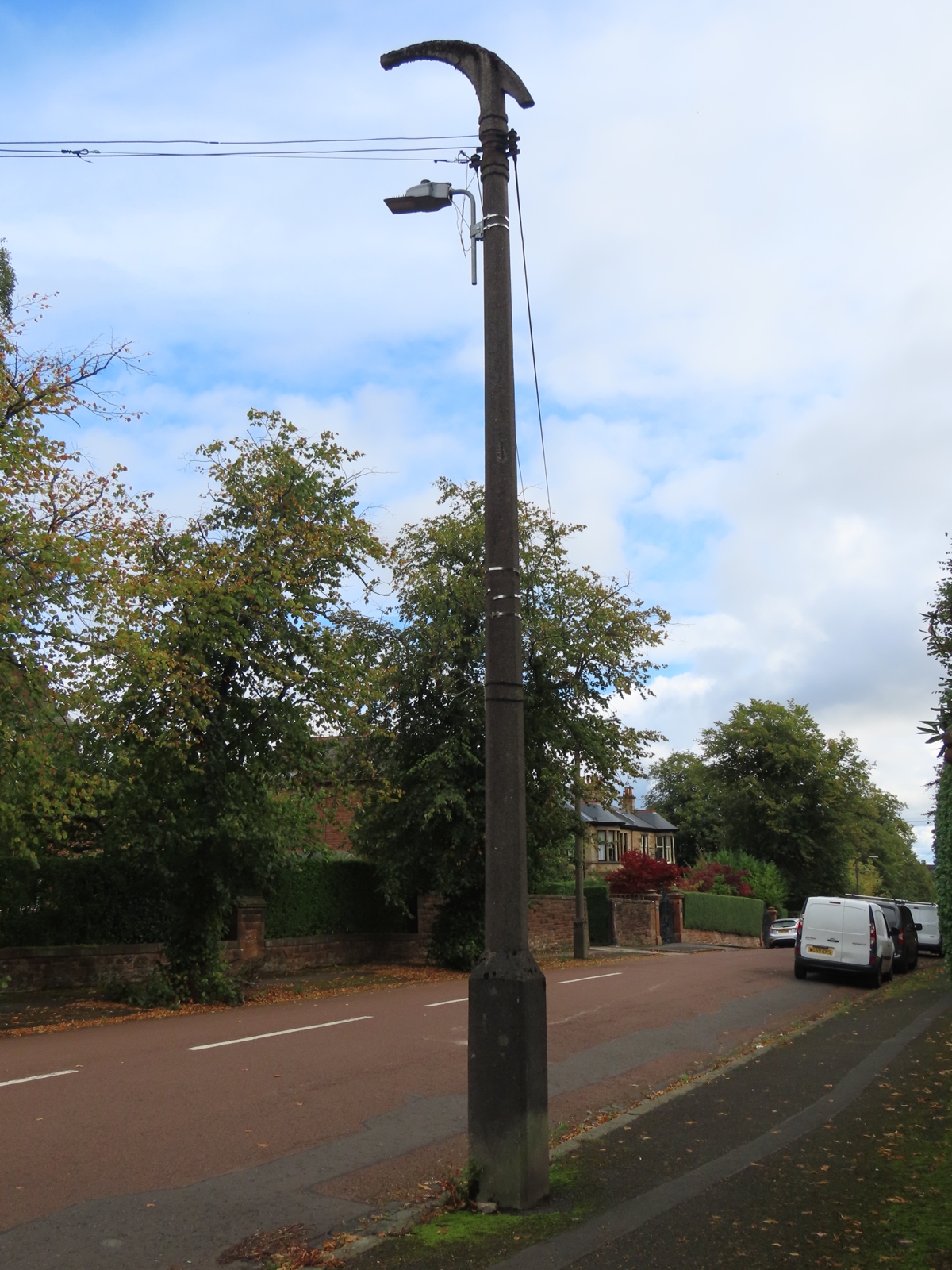
Google Street View imagery confirms that the bracket retained its top-entry lantern until some point after November 2020.
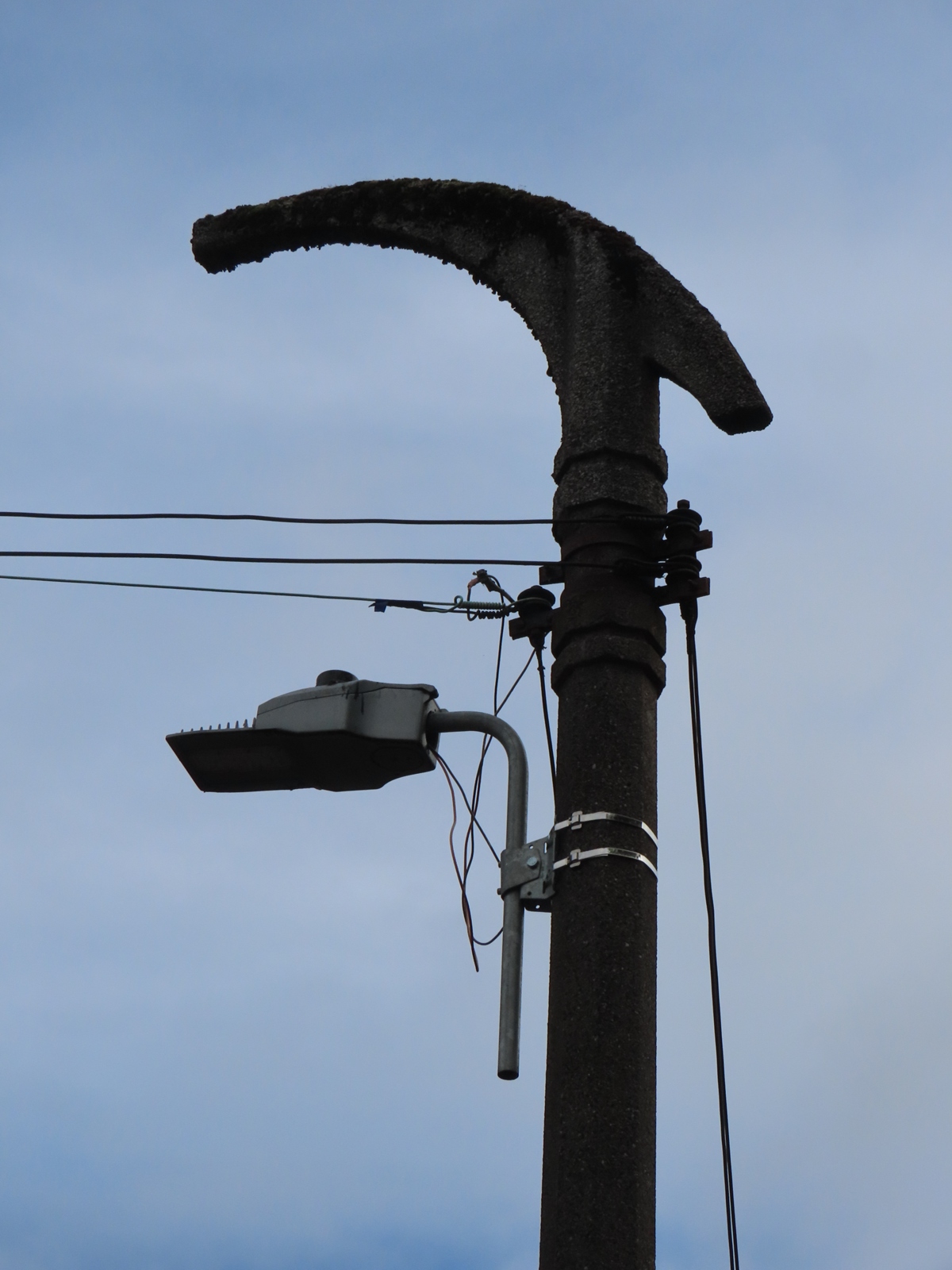
Back on Sherbrooke Avenue itself now.
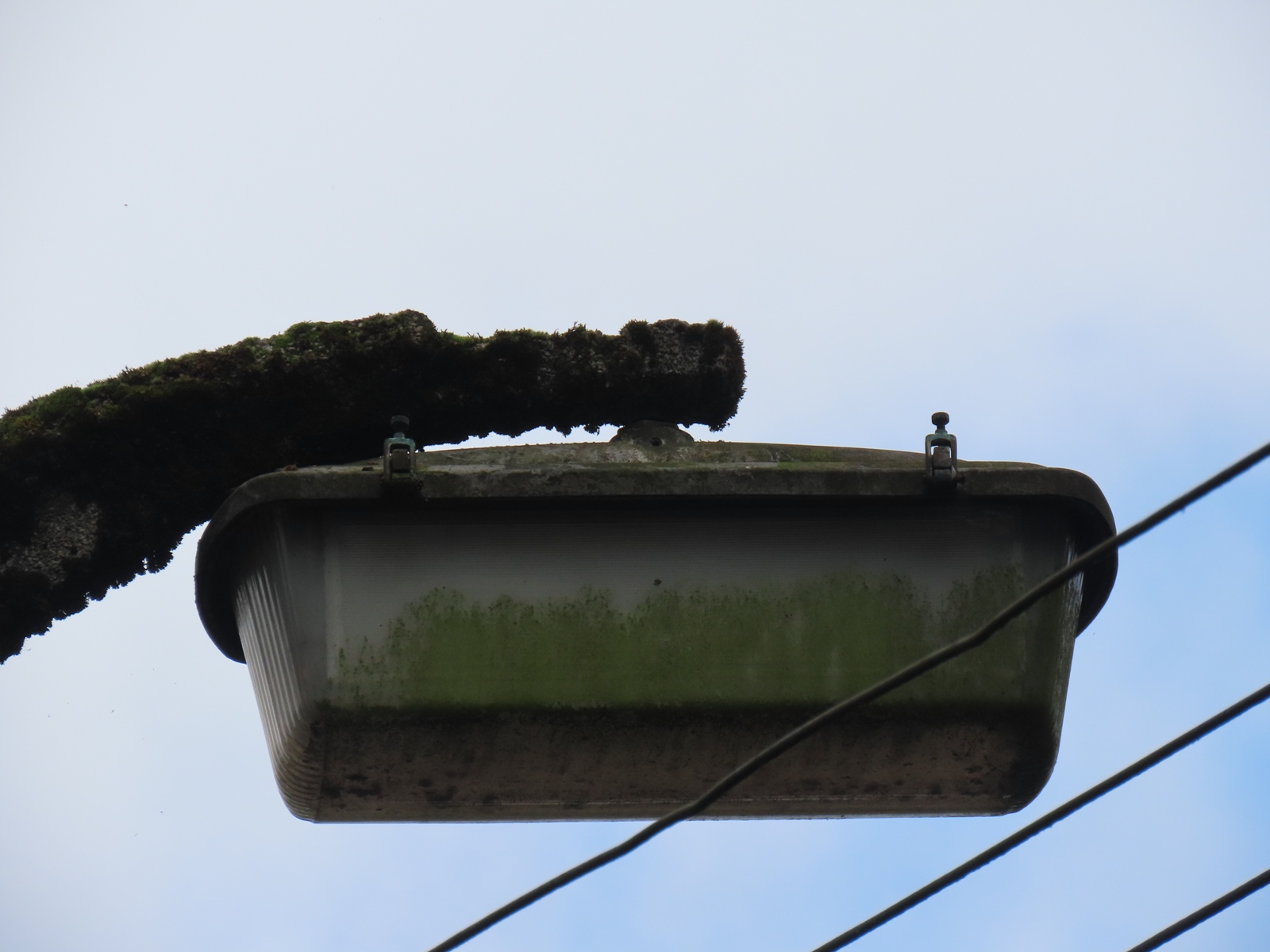
A portion of the concrete is missing from the front end of the bracket; however, as the inner pipe is covered in moss, this damage is not recent.
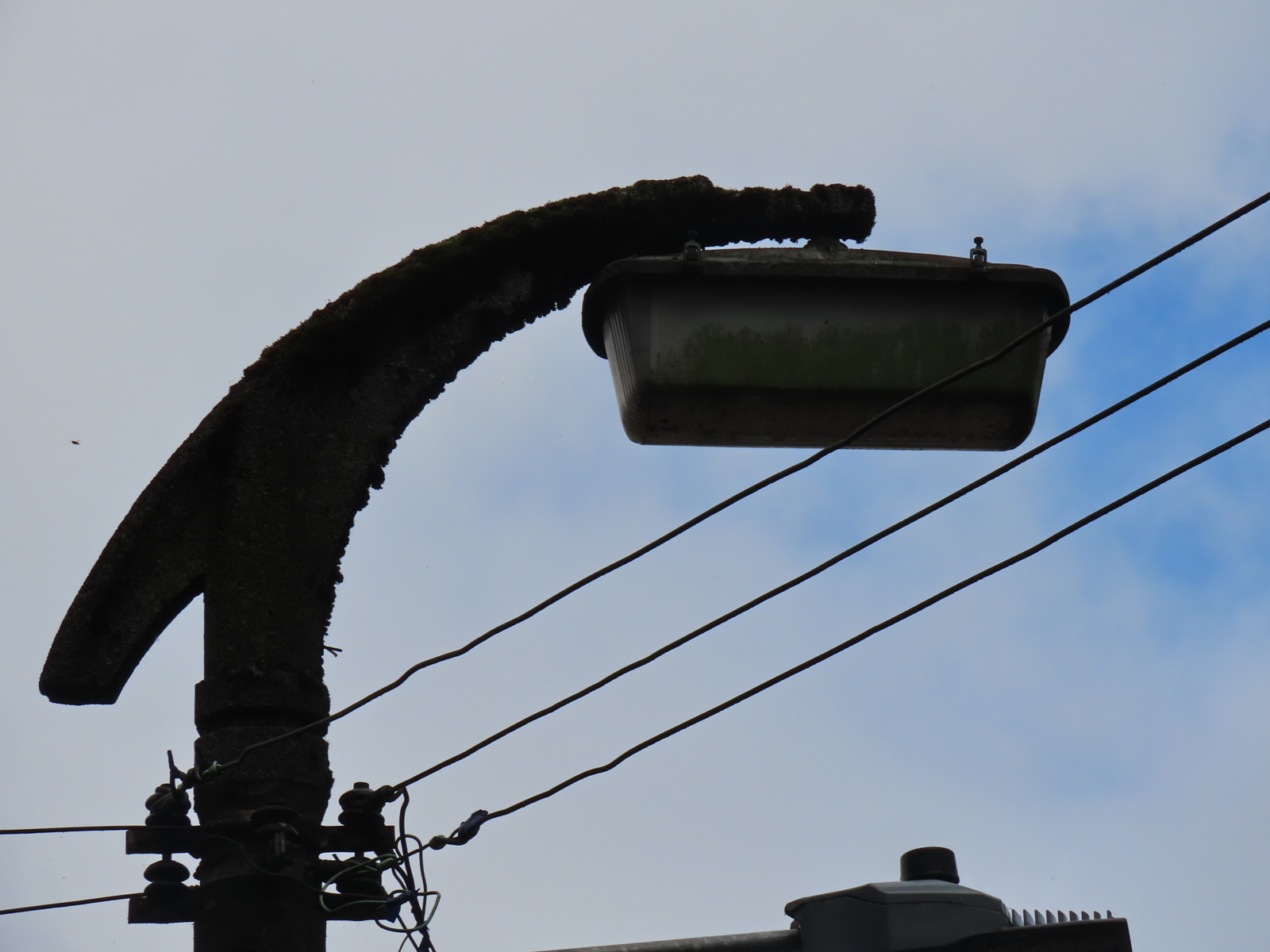
The lantern's bowl has also developed a slightly emerald coating.
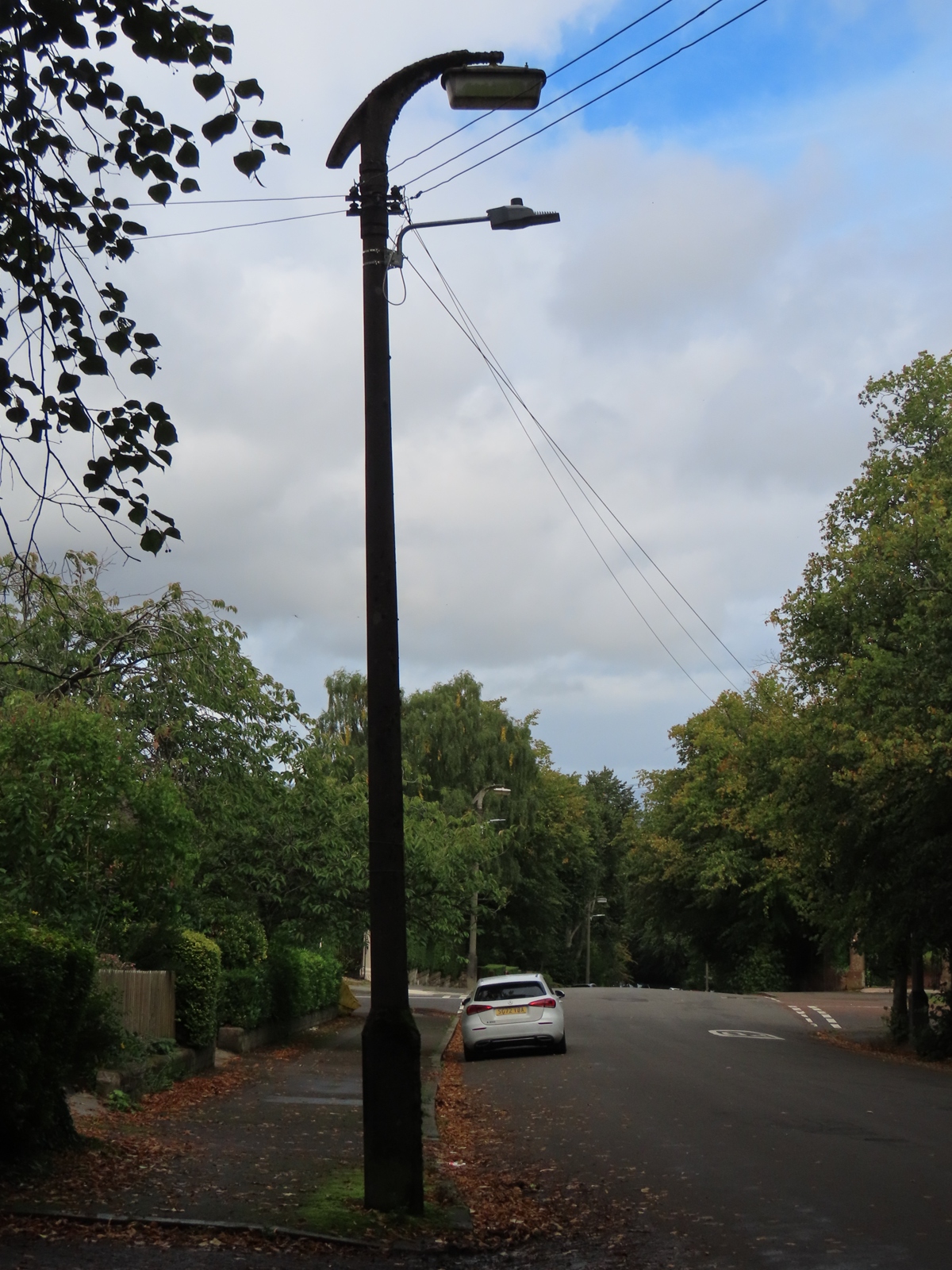
Another installation that was still to have a new lantern fitted.
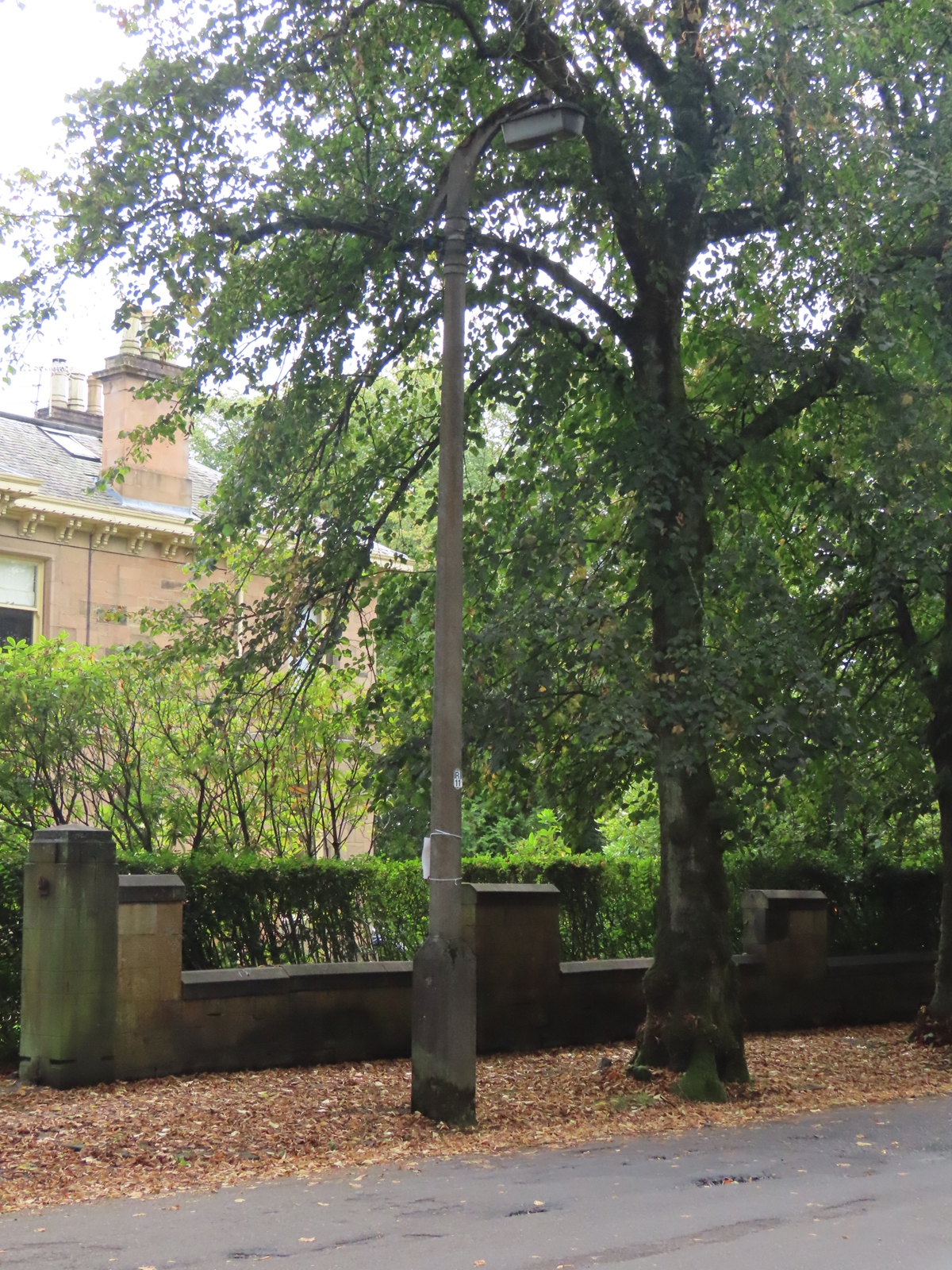
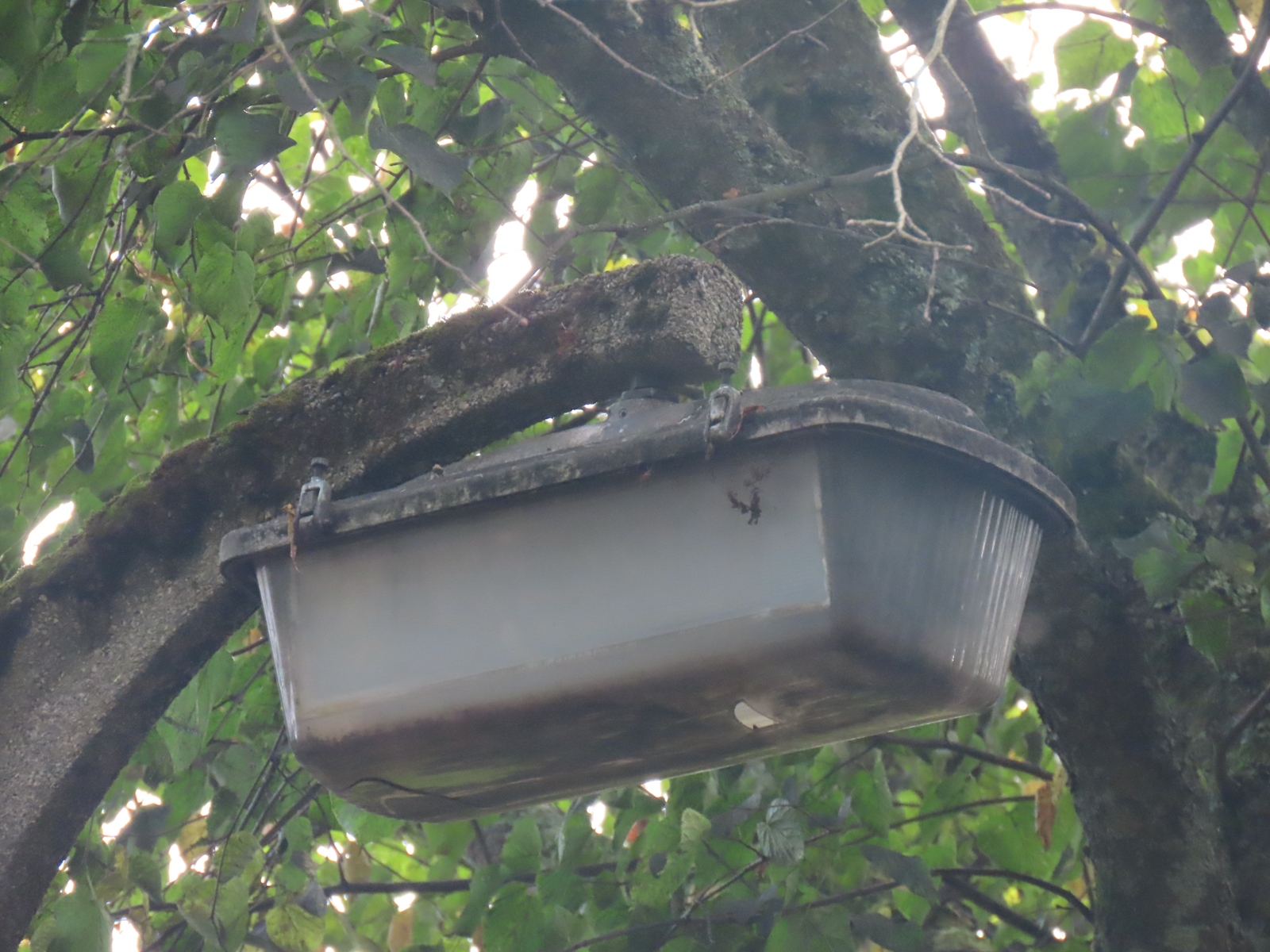
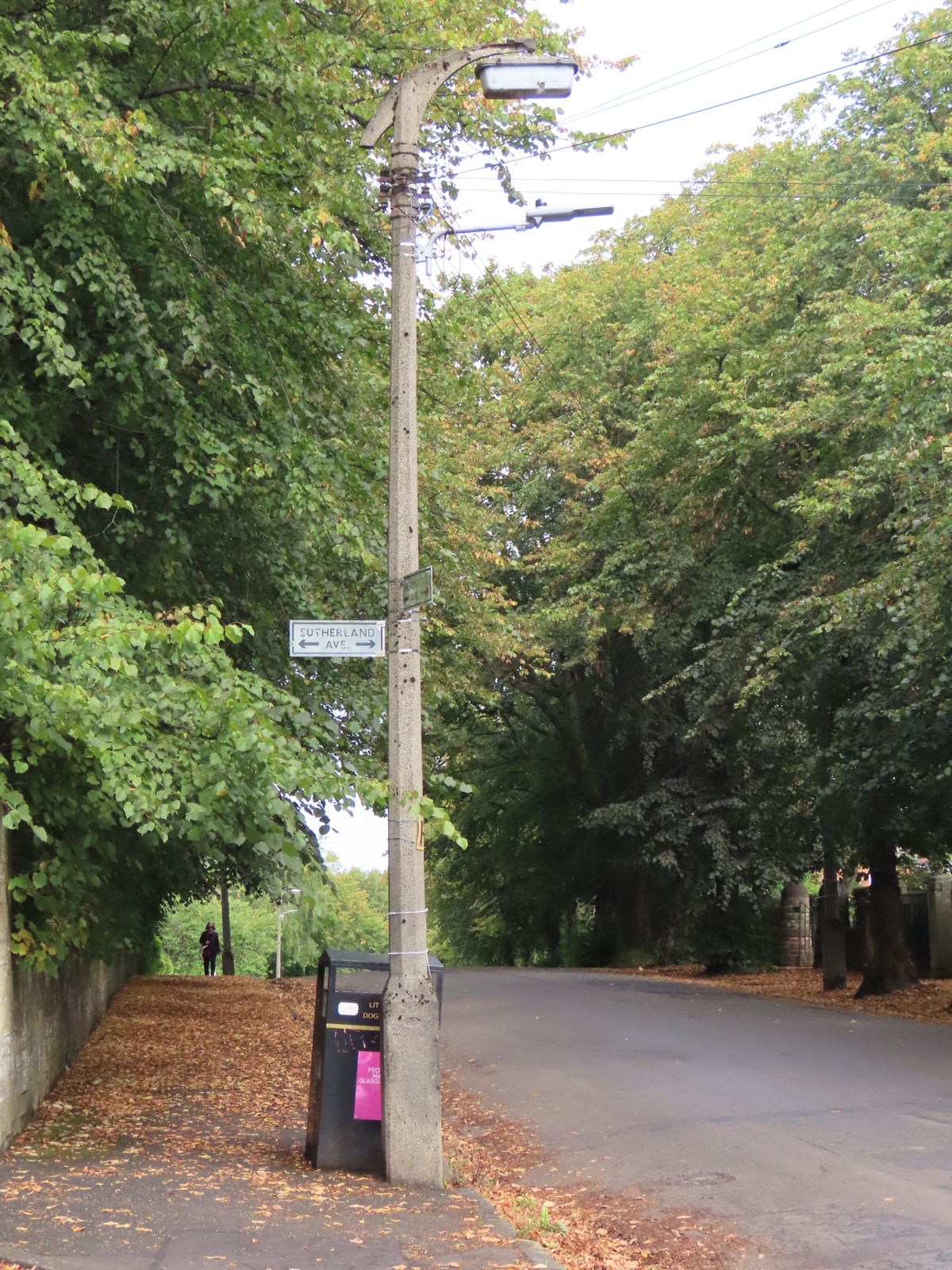
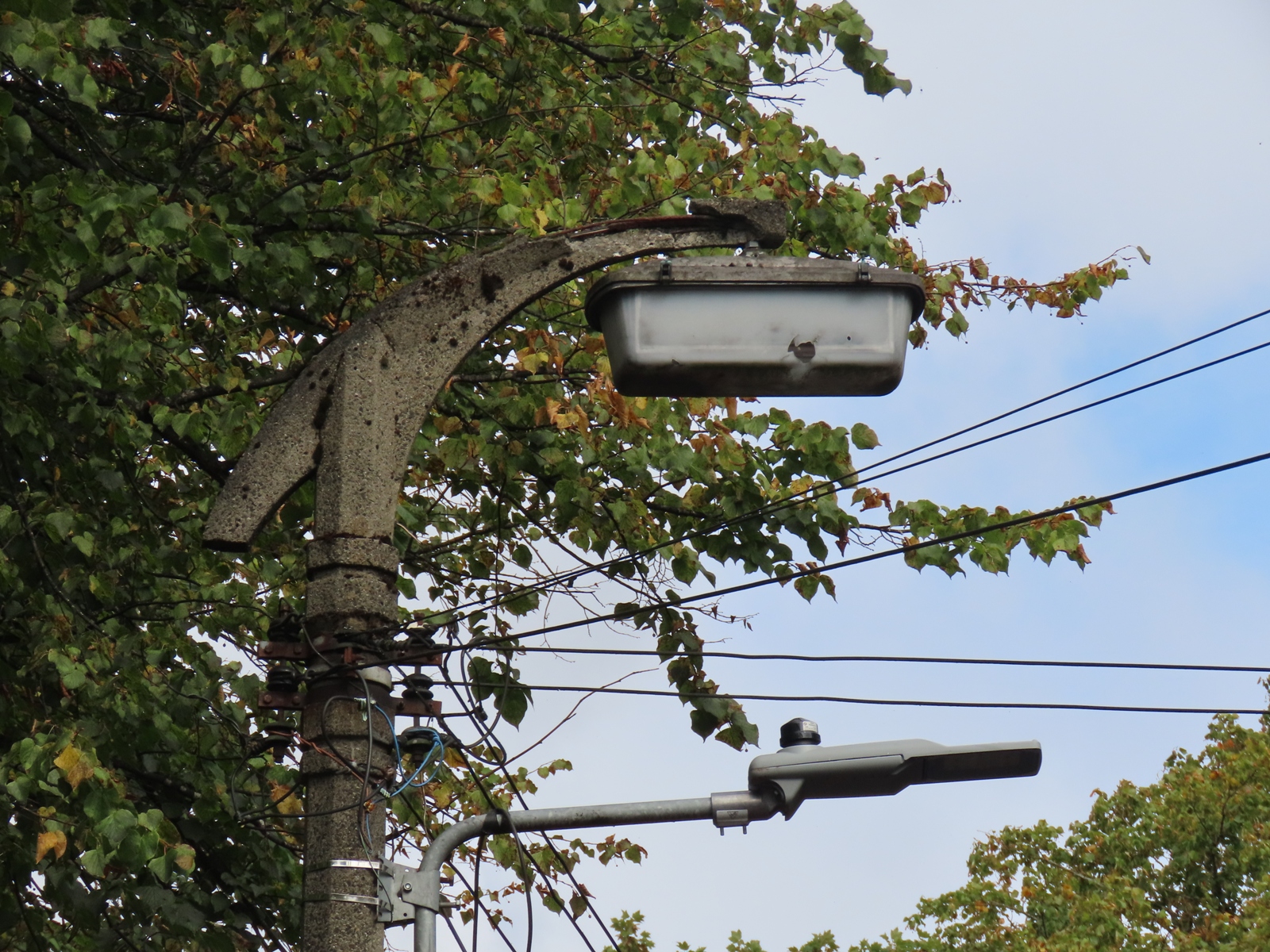
The old bracket on this example was in especially dangerous condition - not only has the concrete been heavily displaced, but much of the internal steel conduit has rotted away too.
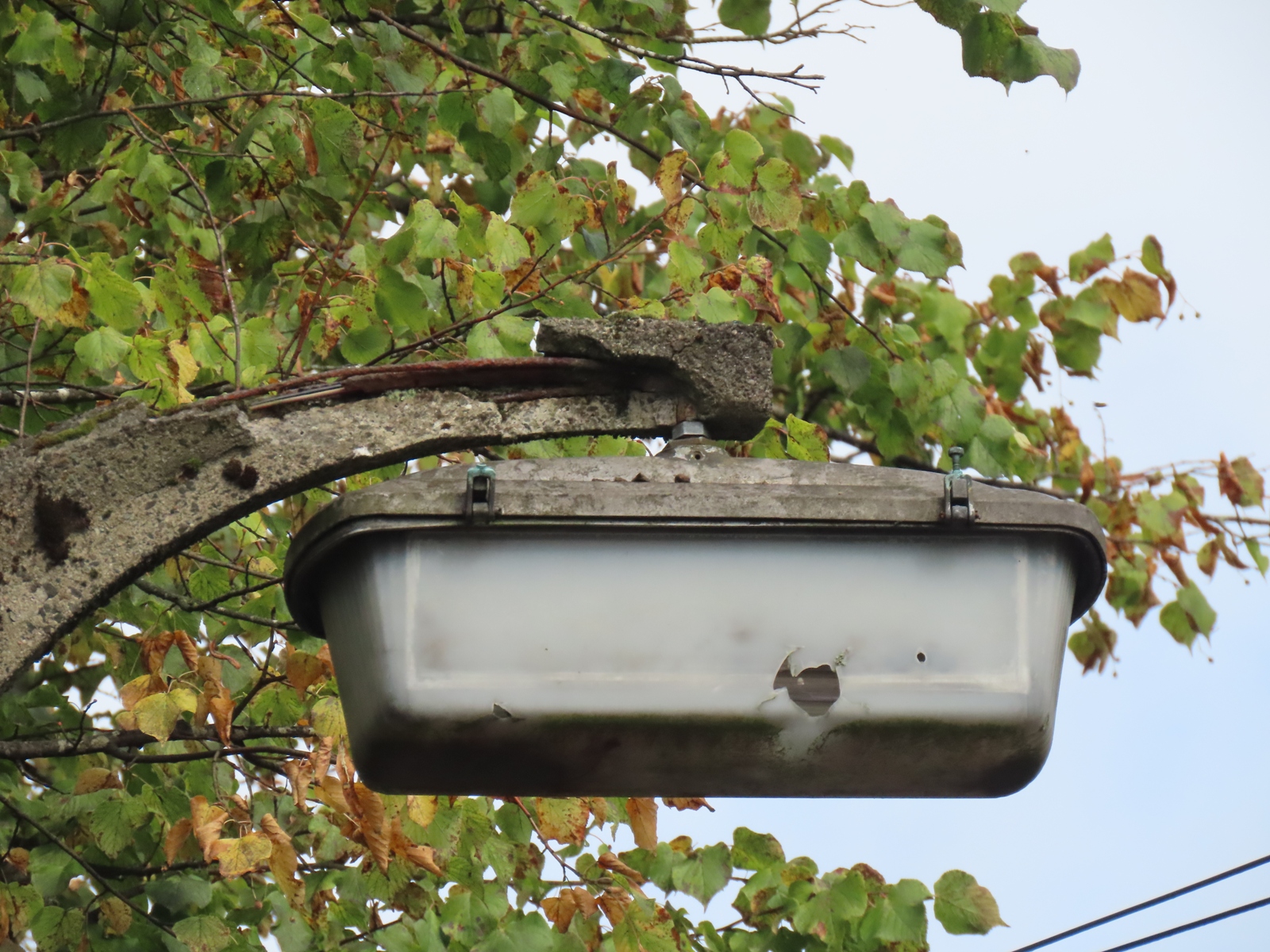
Changing roads again - this time, onto Sutherland Avenue.
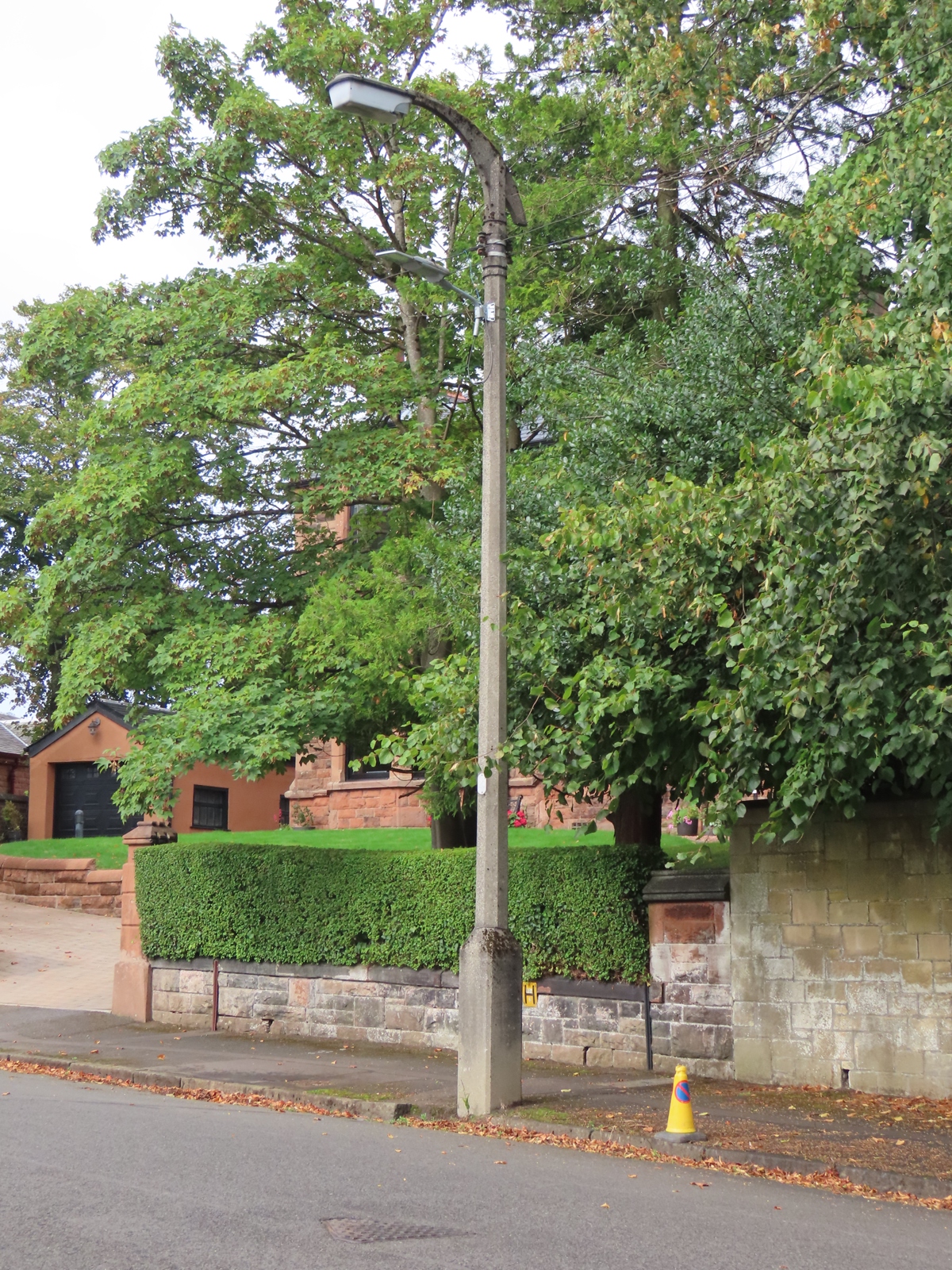
One of the few (apparently) original side-entry versions of the Springbank brackets was installed here.
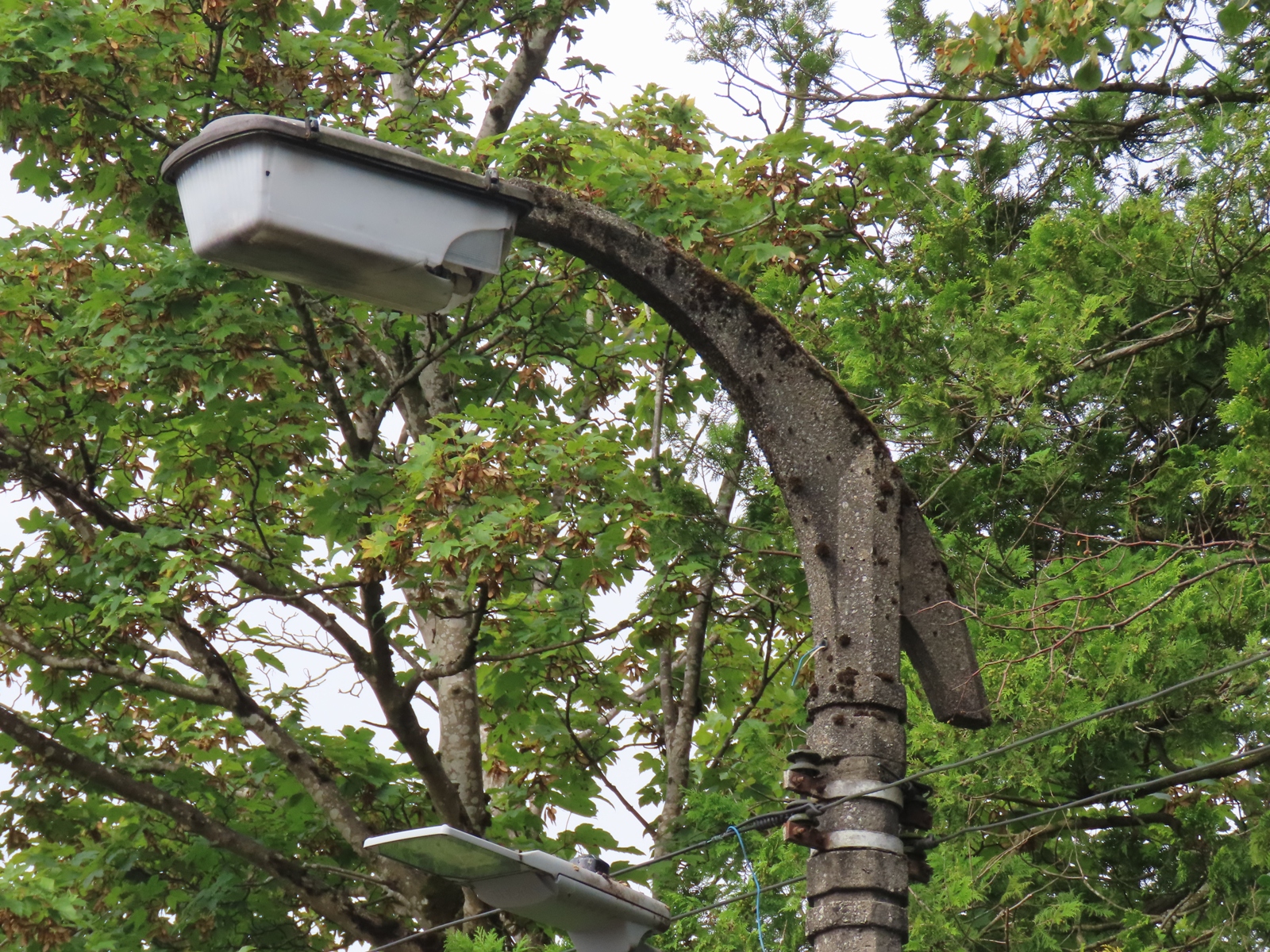
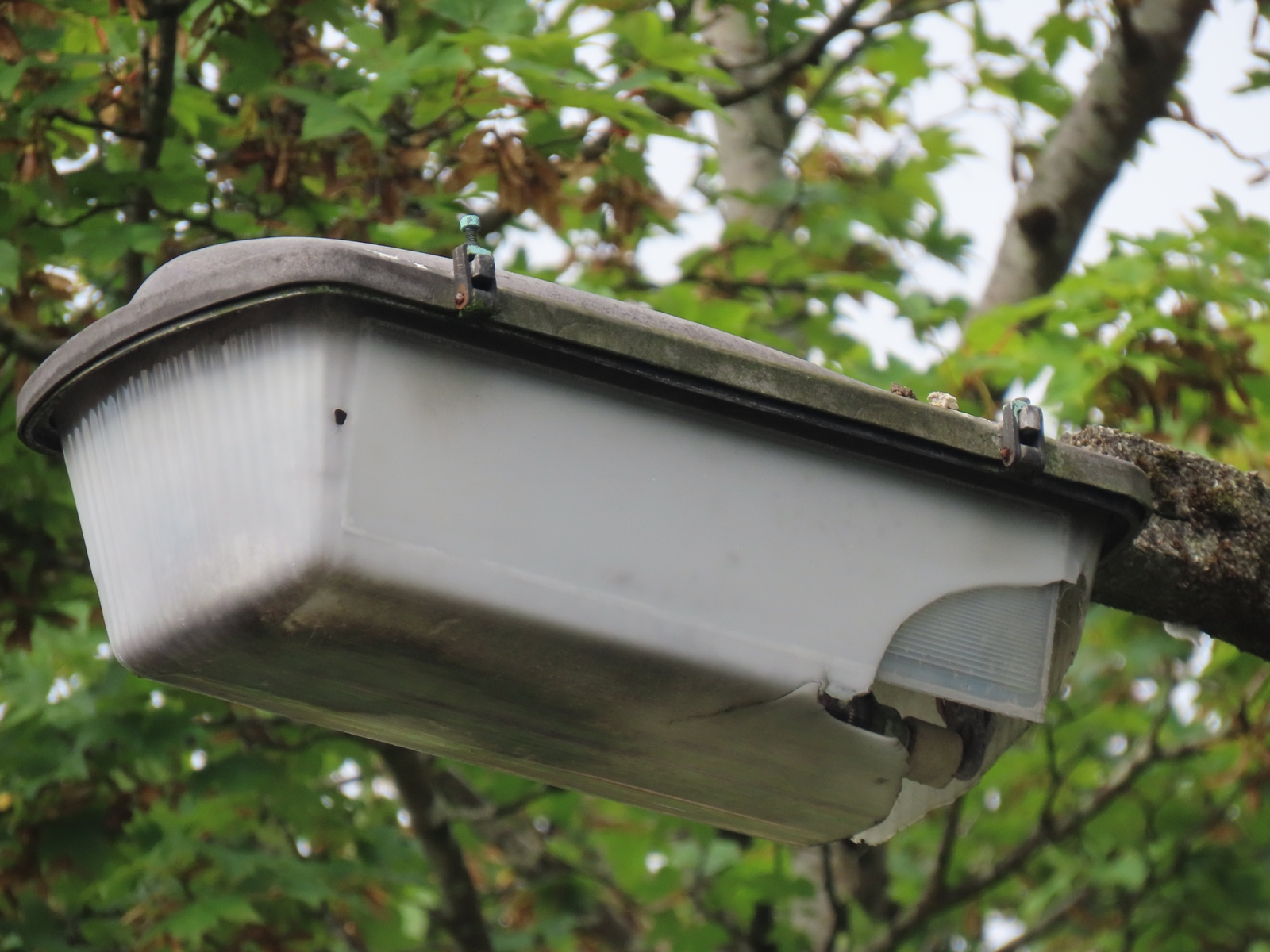
The back of this bowl showed some rather severe damage.
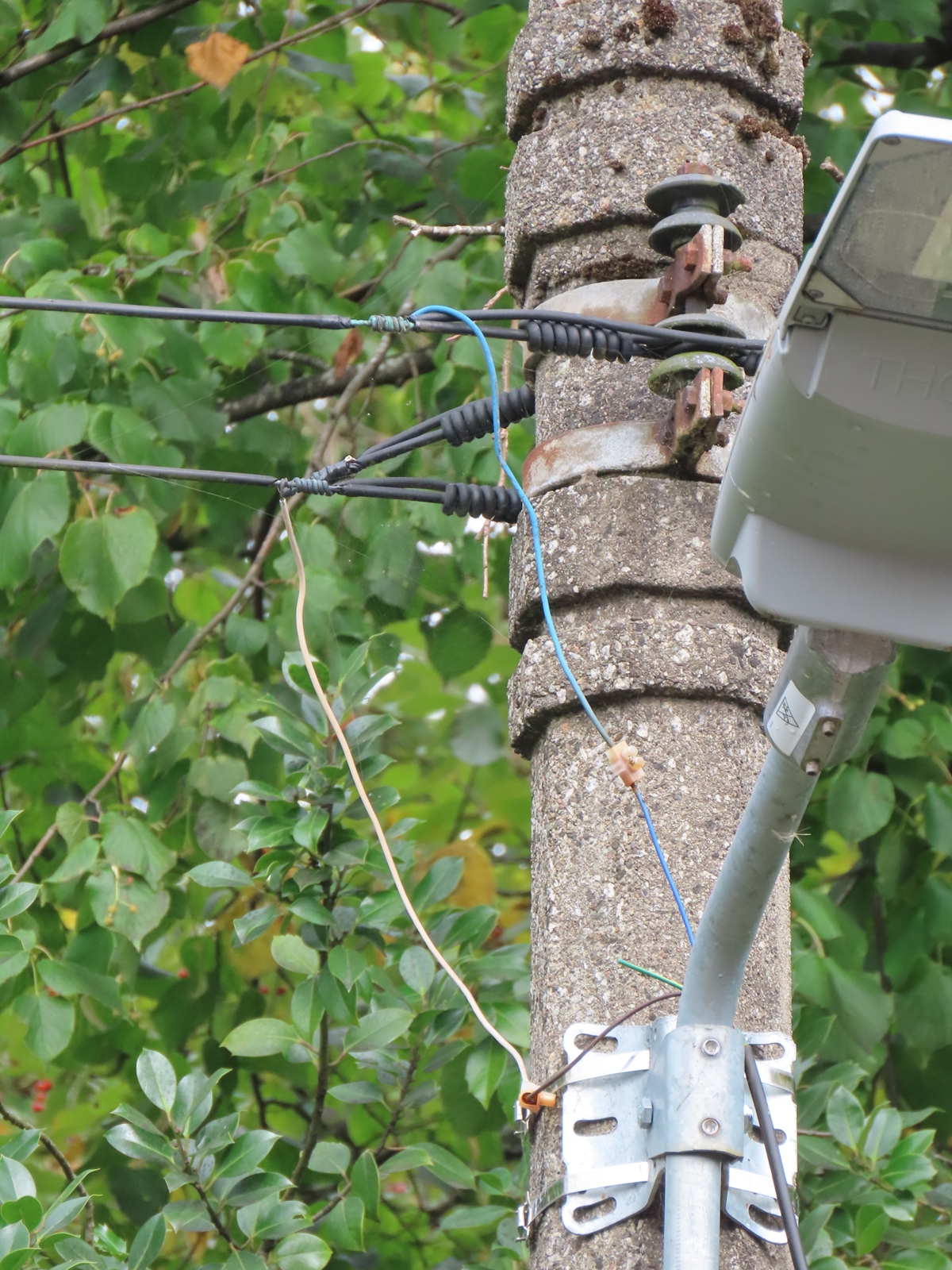
A close-up of the connection for the new lantern - again, a rather dubious wiring setup!
An Alpha 4 was fitted to the next column, and may still have been in nightly operation.
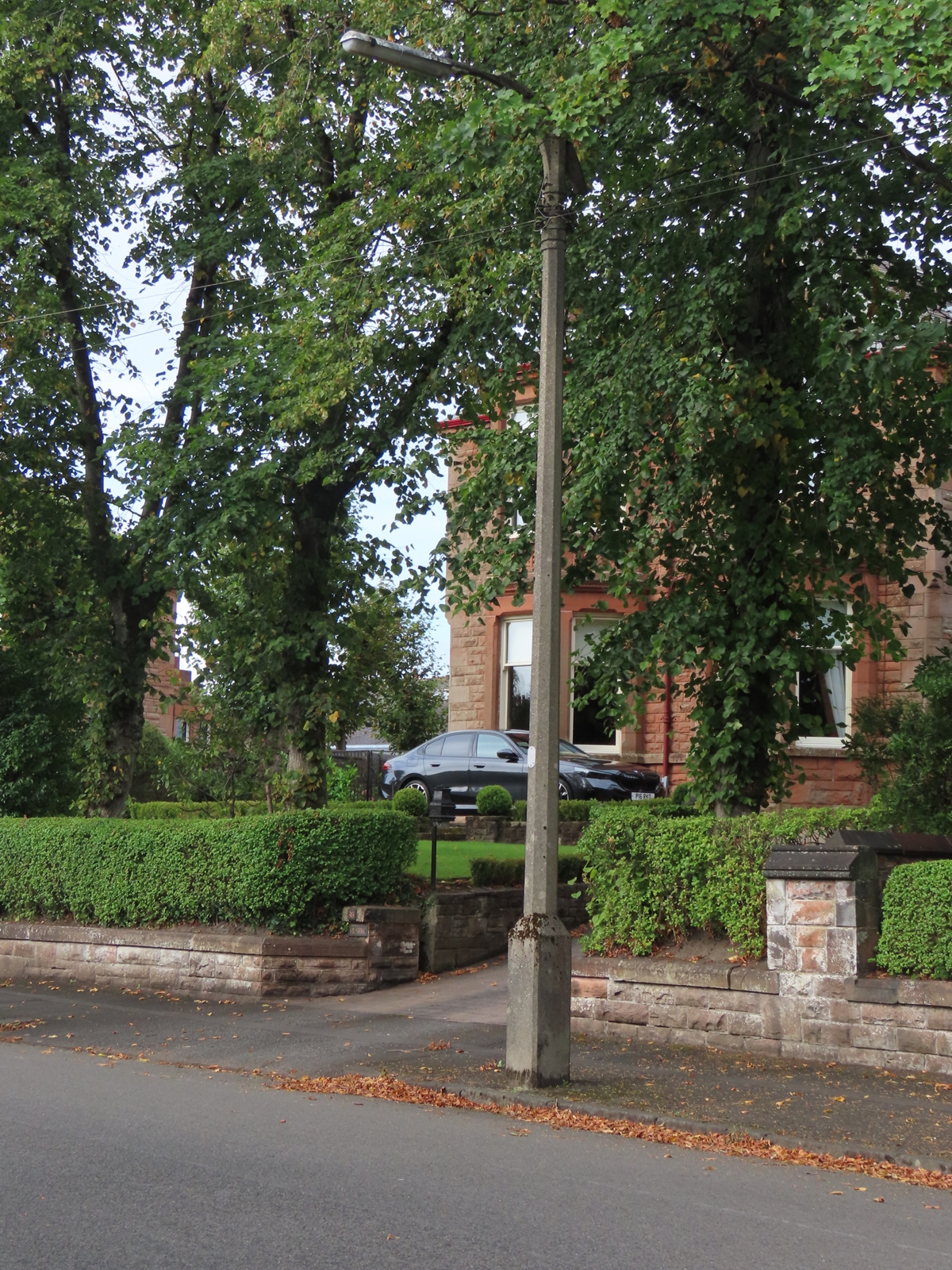
Then again, going on its condition, maybe not..!
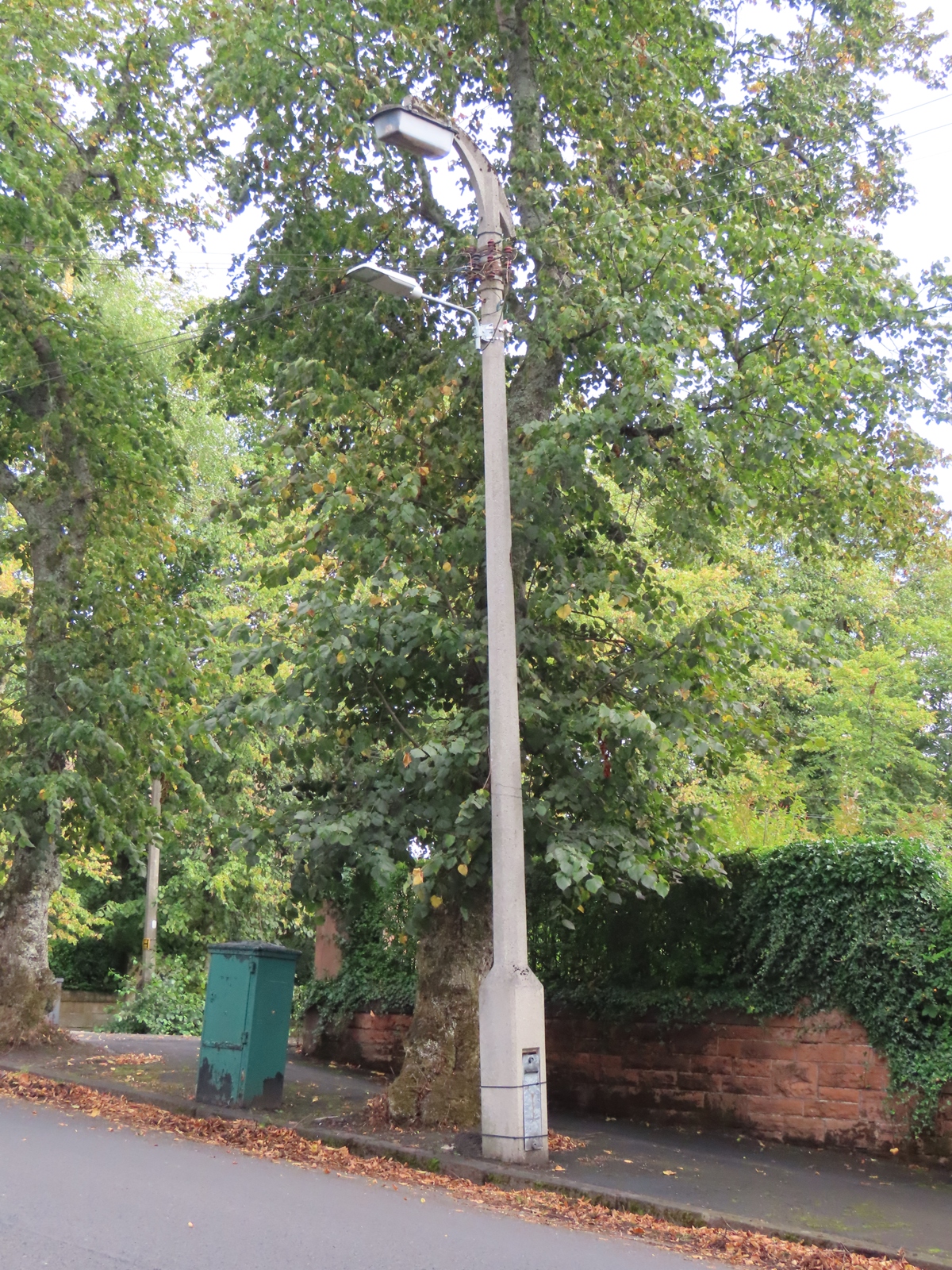
Returning to Sherbrooke Avenue, a green feeder pillar was positioned alongside this column - this is likely to be the master switching point for this part of the estate.
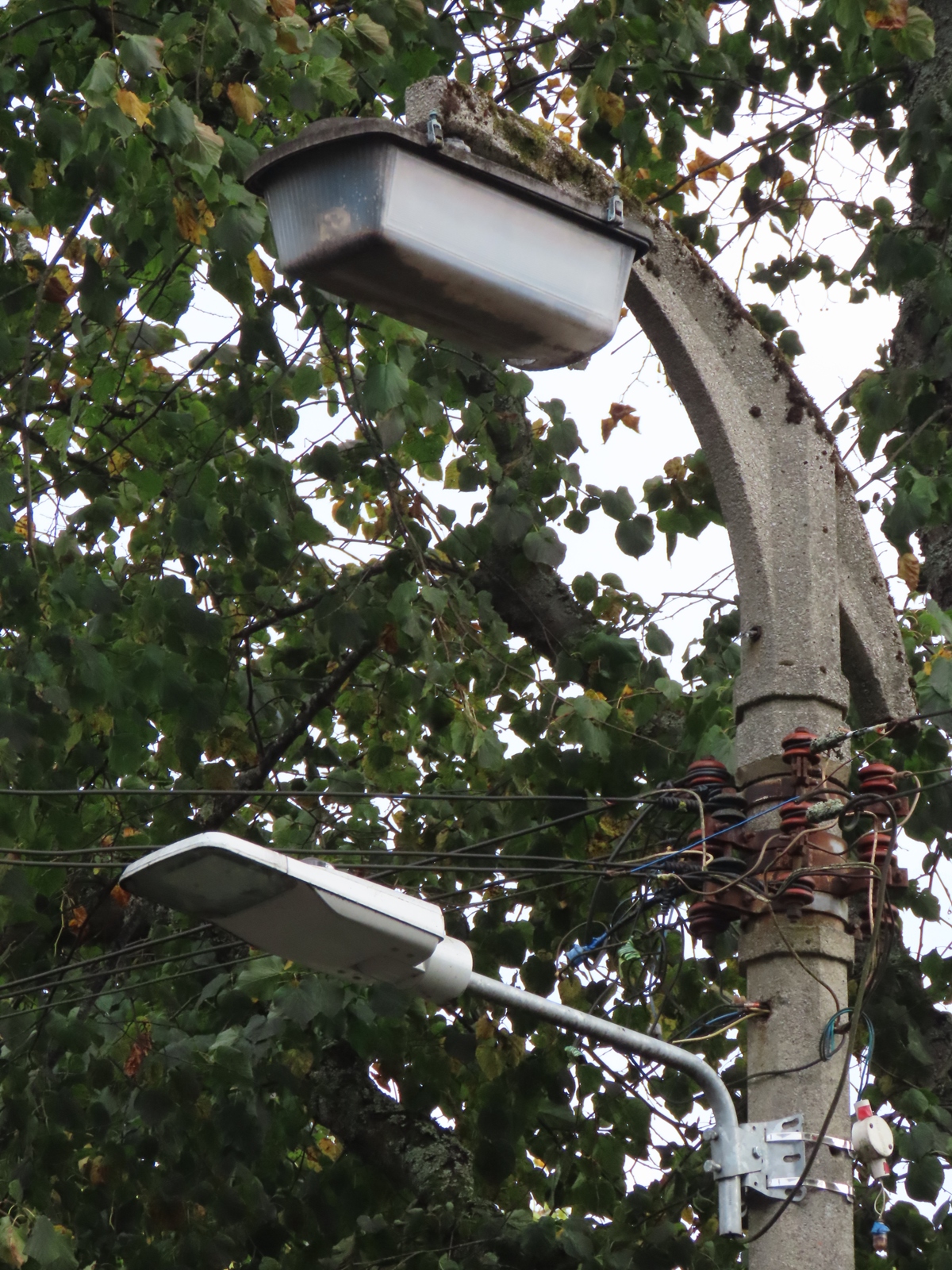
Numerous overhead conductors terminate on this column.
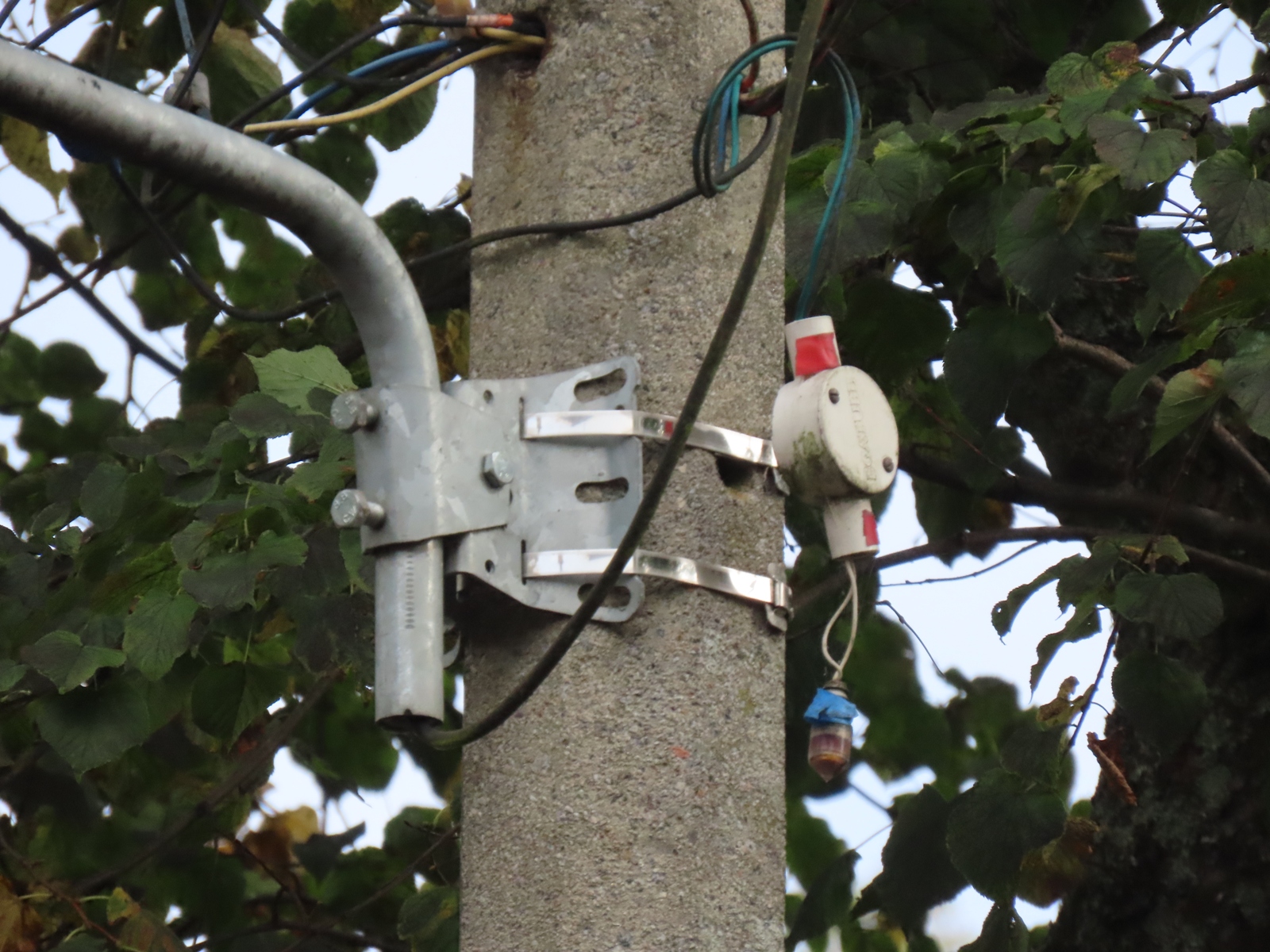
A (seemingly) now abandoned two-part photocell detector emerges from a PVC conduit through box. The system was probably designed originally for a mechanical time switch to be installed within the feeder pillar, and with the photocell now appearing to be redundant, there may be a modern digital time switch installed in the pillar instead.
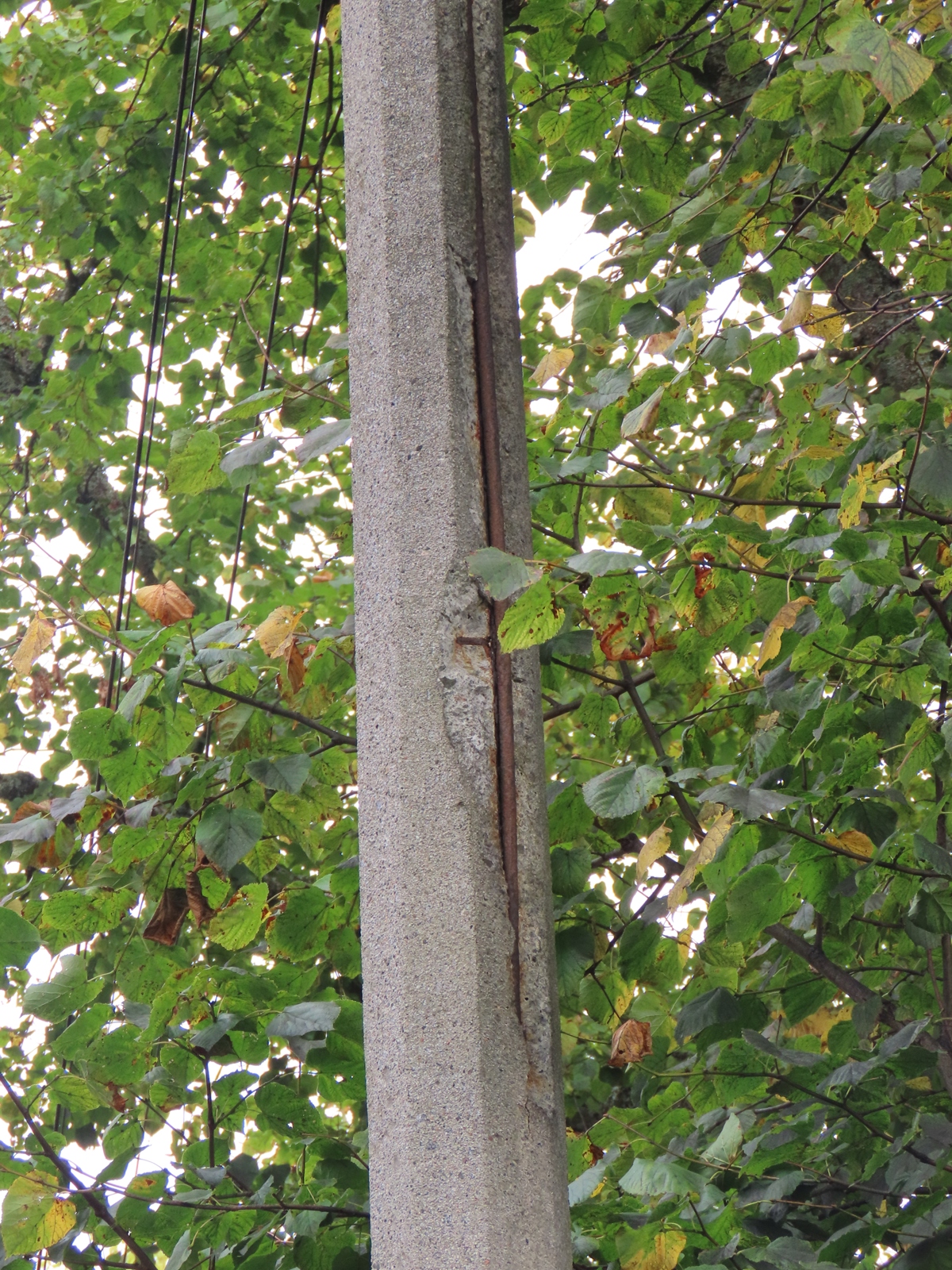
The column itself is in poor structural condition, with a large vertical piece of the concrete having broken away, revealing some of the internal steelwork.
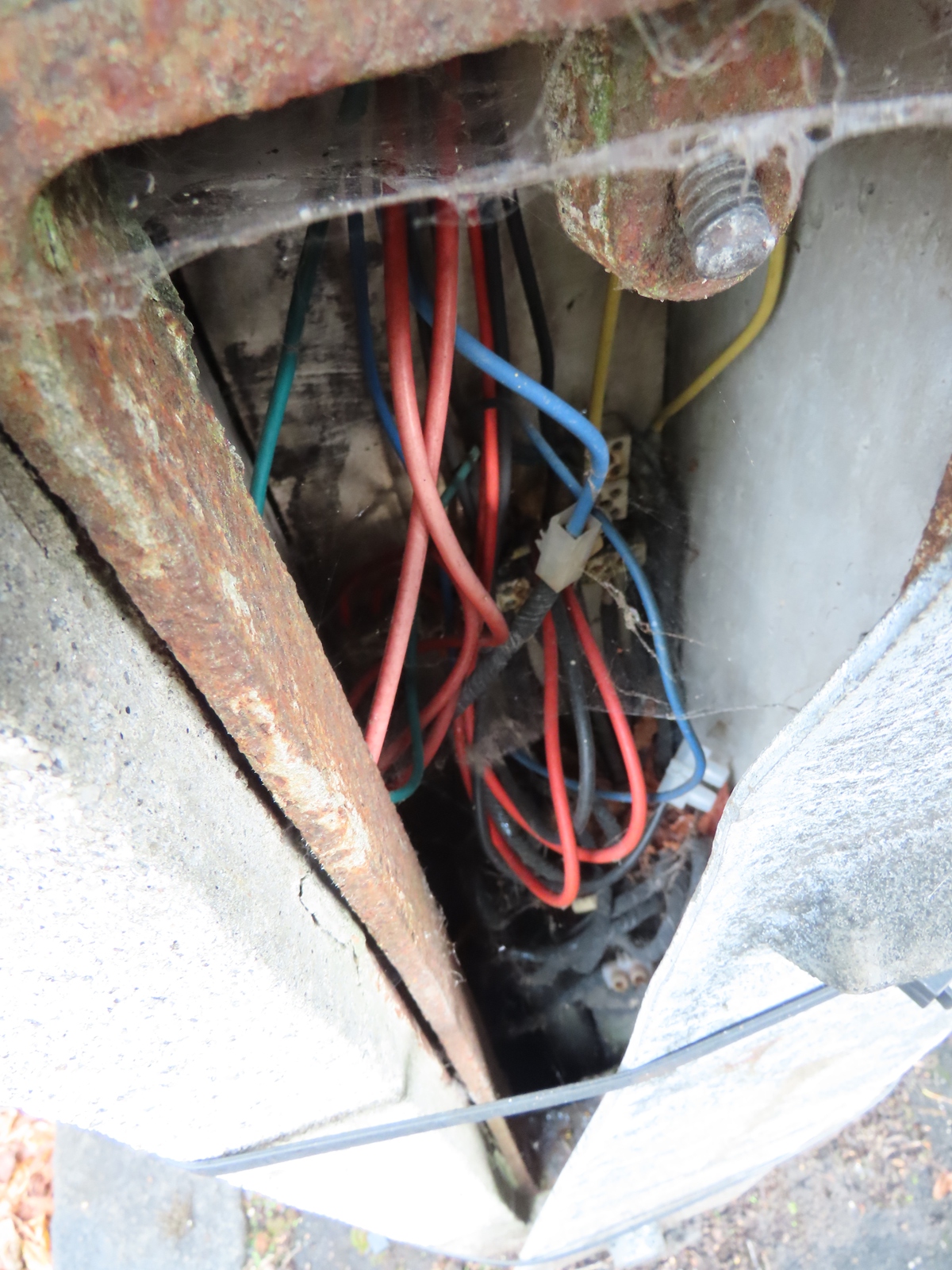
This column also featured a base compartment. The door was loose, so I had a nosey inside, and rather wished that I hadn't, given the advanced state of decay of the VIR supply cabling (the black conductors towards the bottom of the base compartment). Just as well that this supply was (hopefully) not live during the day!
This bowlless Z9465 was a little further down the hill.
A lamp was still present in the lantern. This was a relatively locally-made product; having been manufactured at the since-demolished Philips factory in Hamilton.
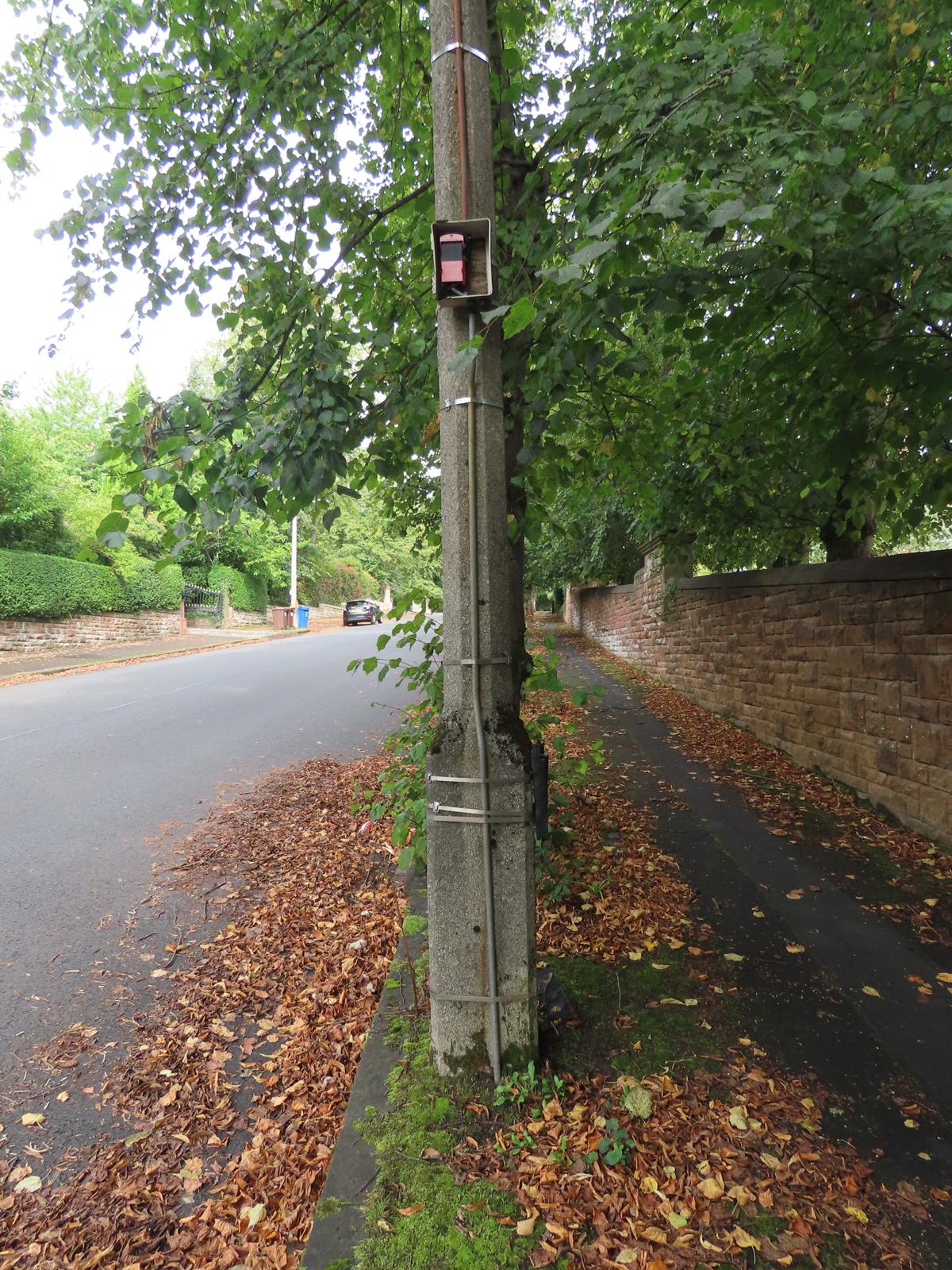
A length of conduit was strapped to the shaft of the next column.
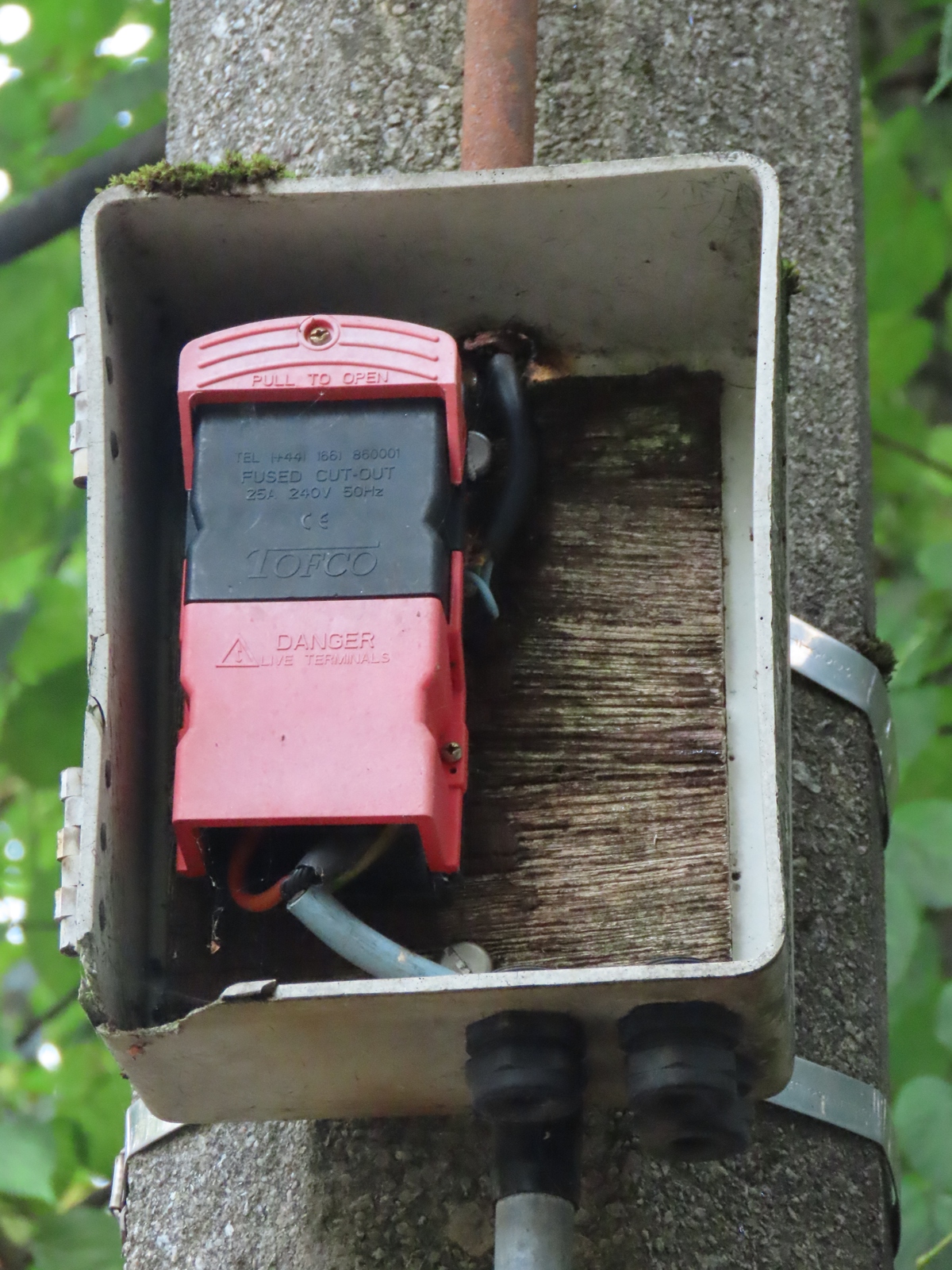
The lidless fuse box here revealed a Tofco cut-out...IP2X, anybody..?
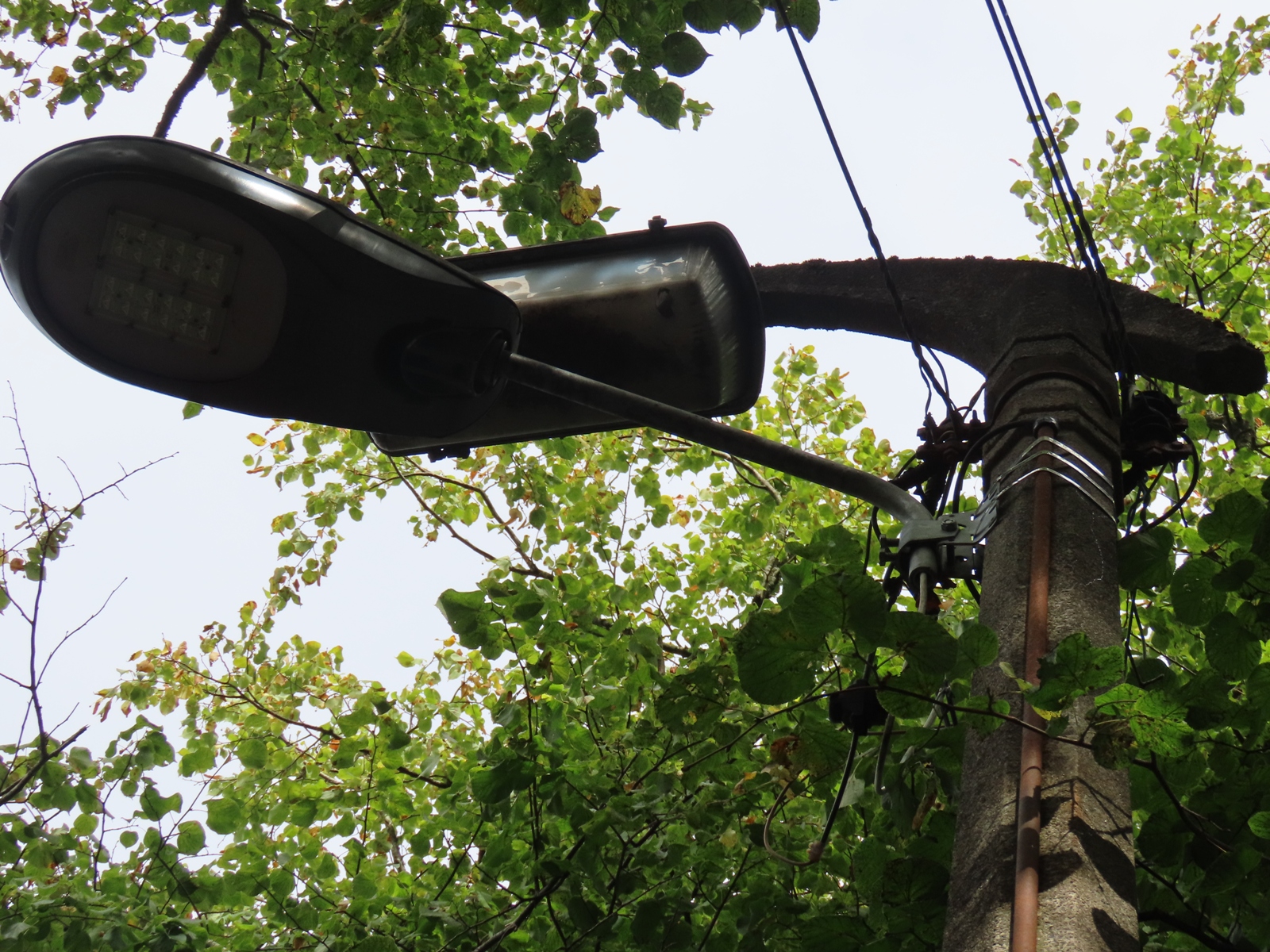
The replacement lantern here was a WRTL Arc that had been converted to run an LED gear tray.
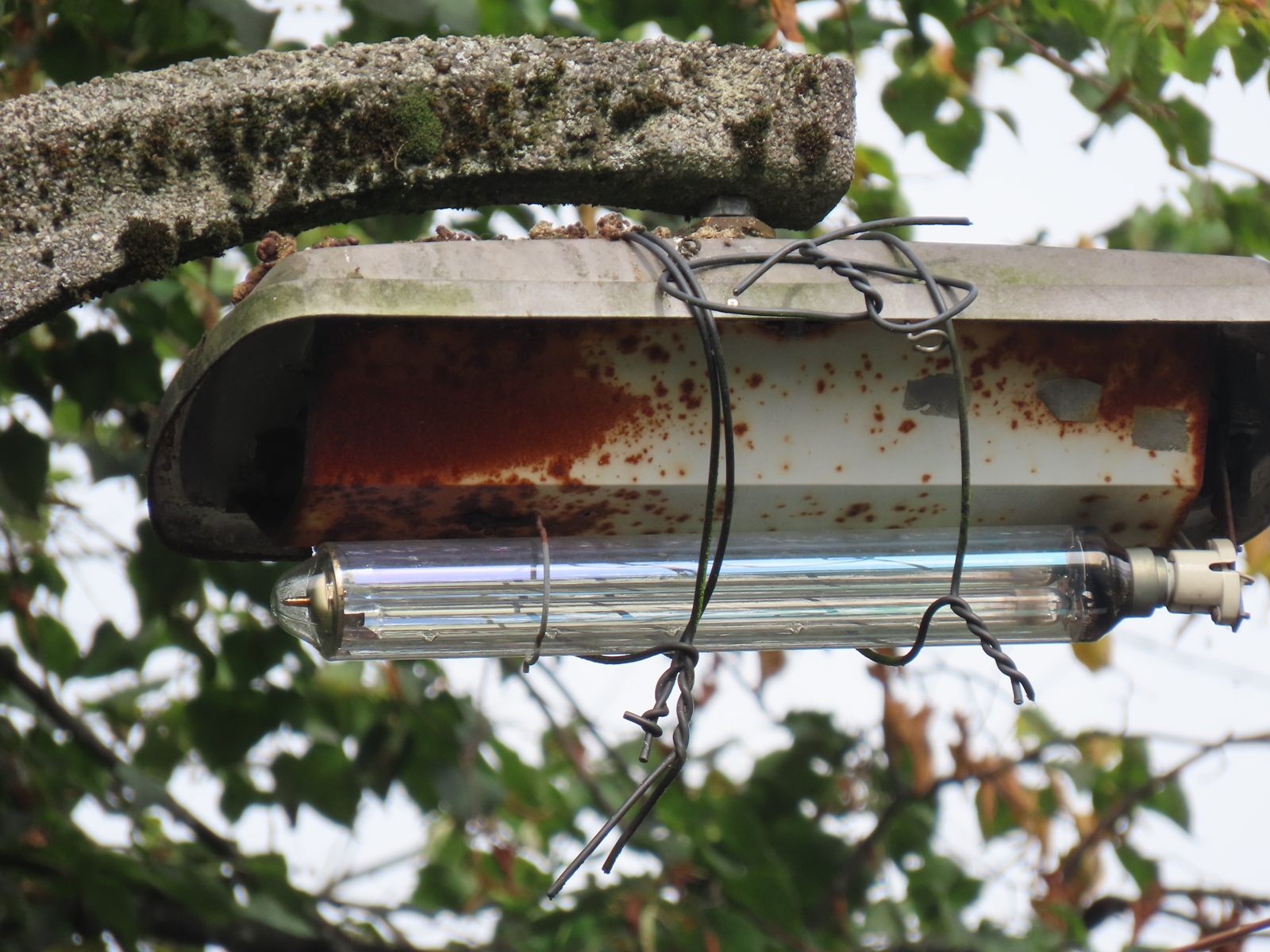
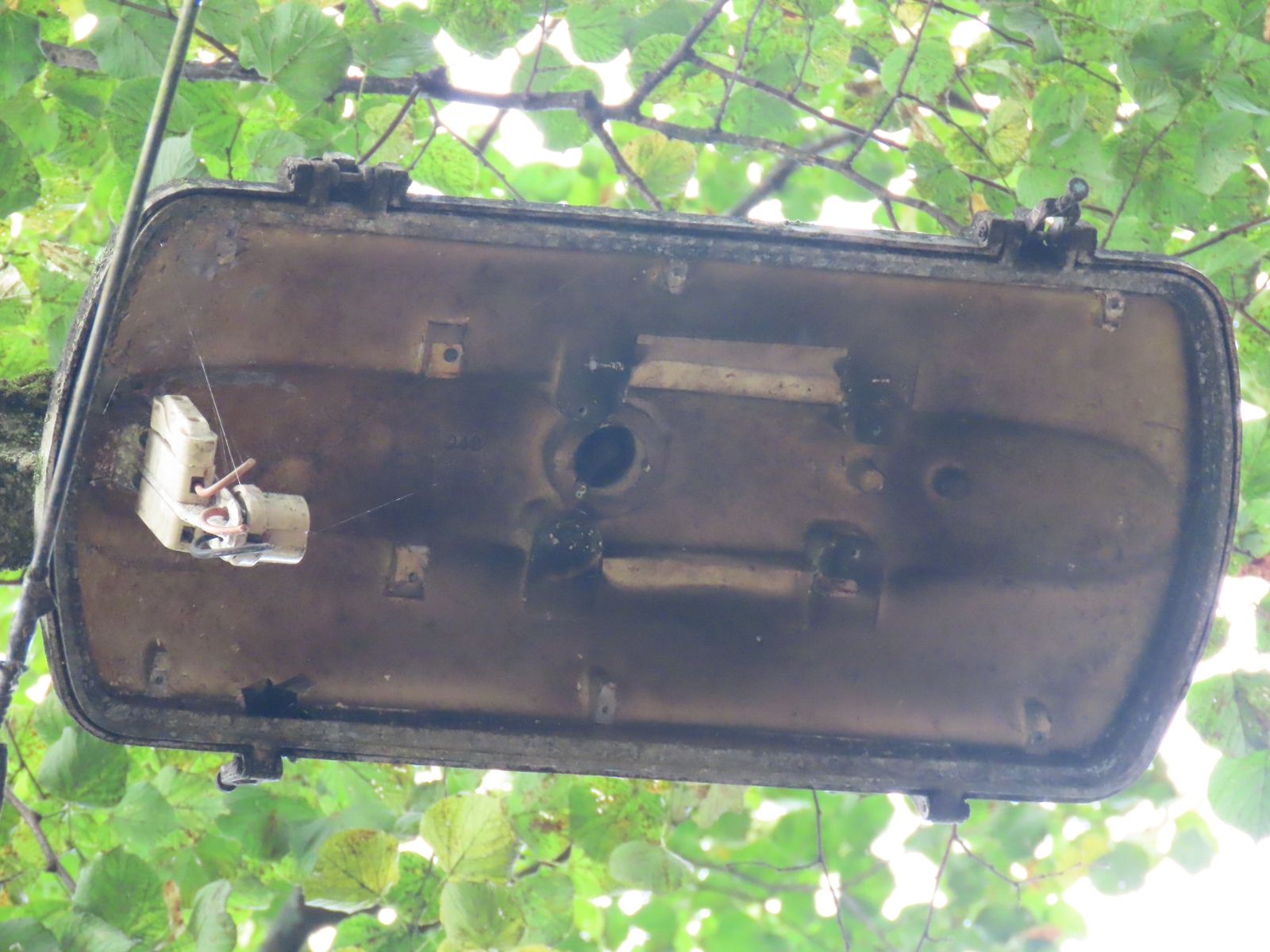
Another stripped old lantern existed here.
With the lantern's interior now being visible (and the place where the ballast once existed being obvious), we can now see that a porcelain in-line fuse is installed at the back of the lantern, by the lampholder, so the older lanterns would have had local protection after all - the modern ones probably do not, however.
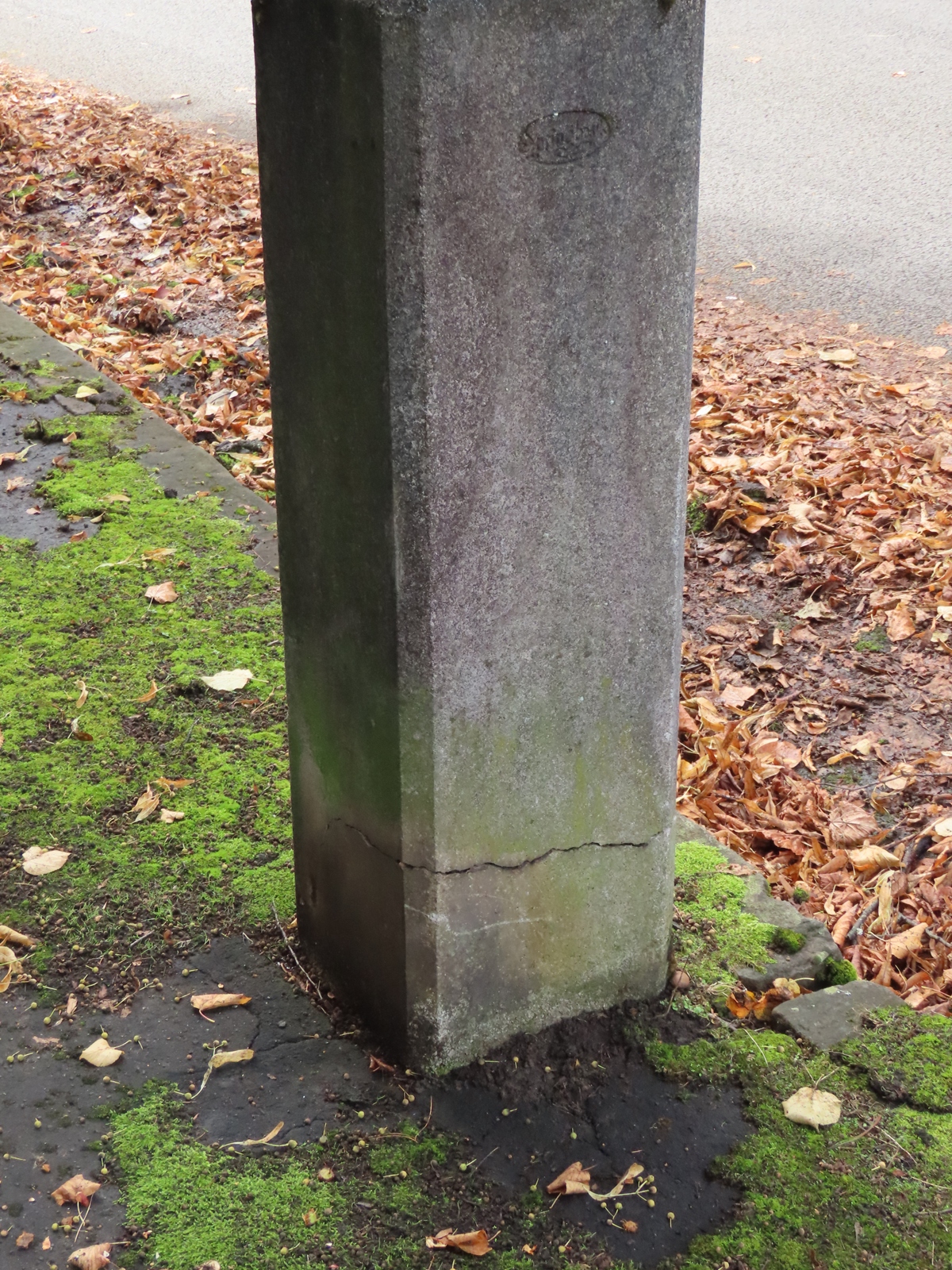
The column was cracked just above ground level.
The whole lantern was also missing from the next bracket.
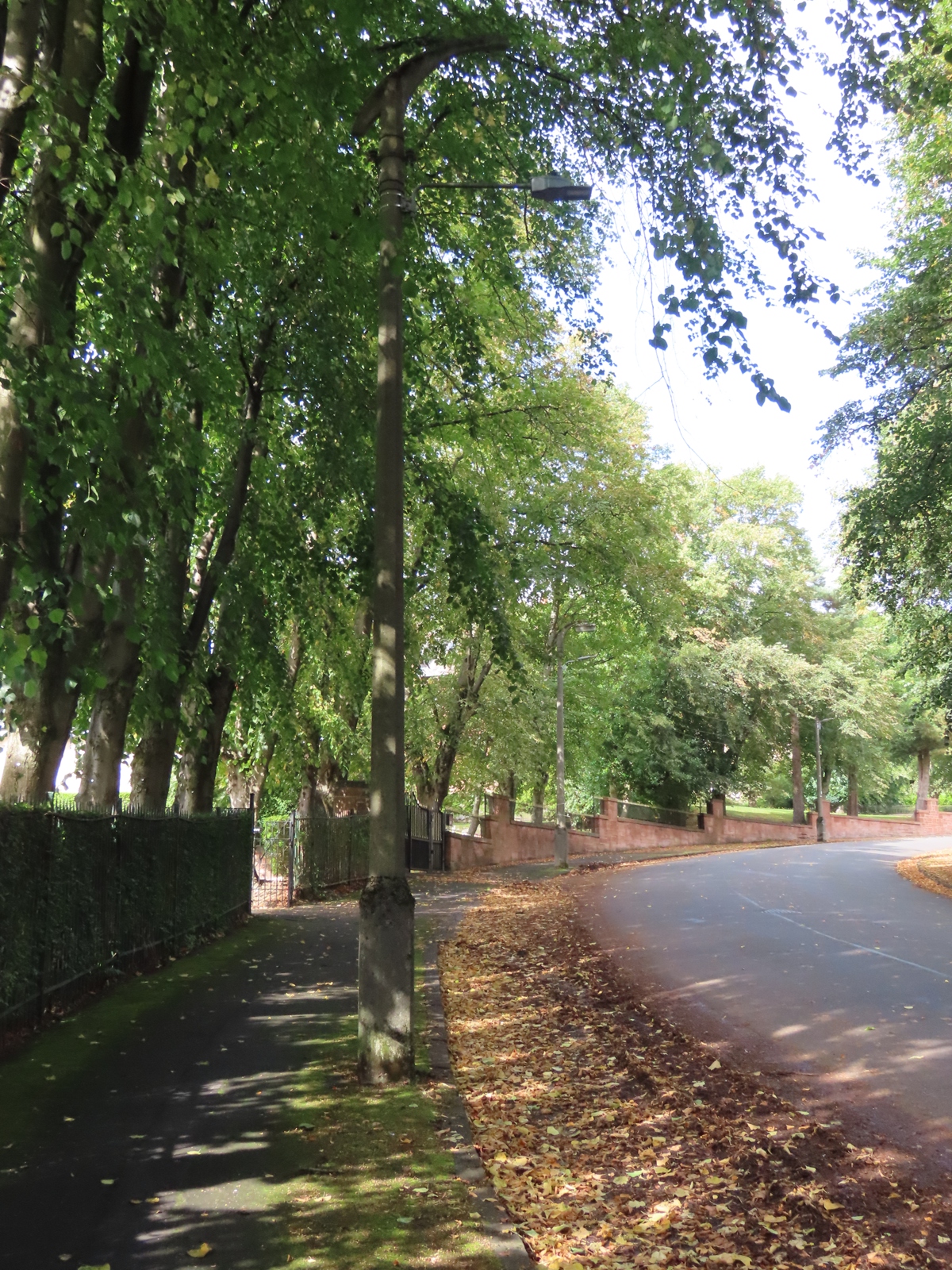
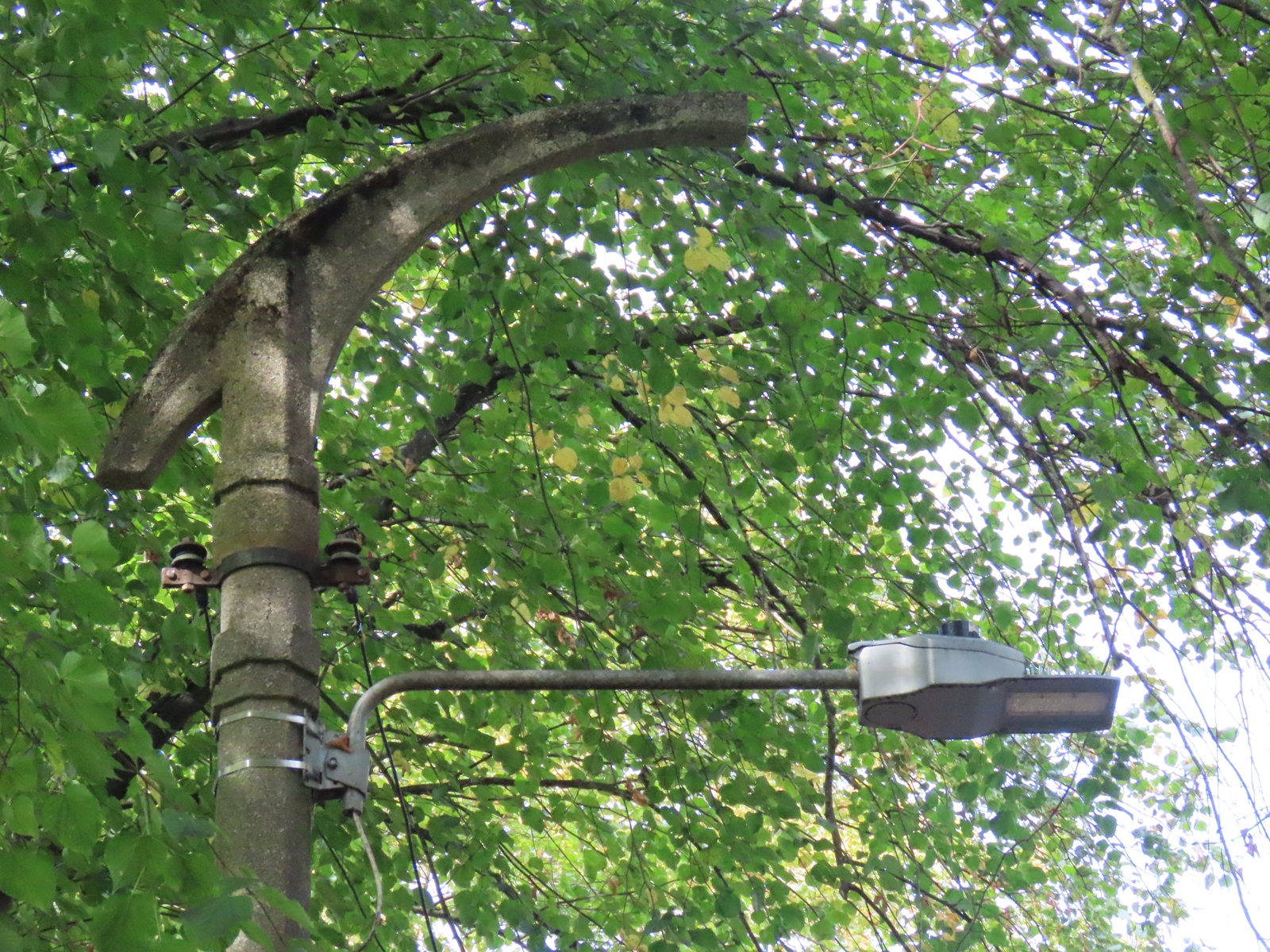
Next, was a case of "little and large".
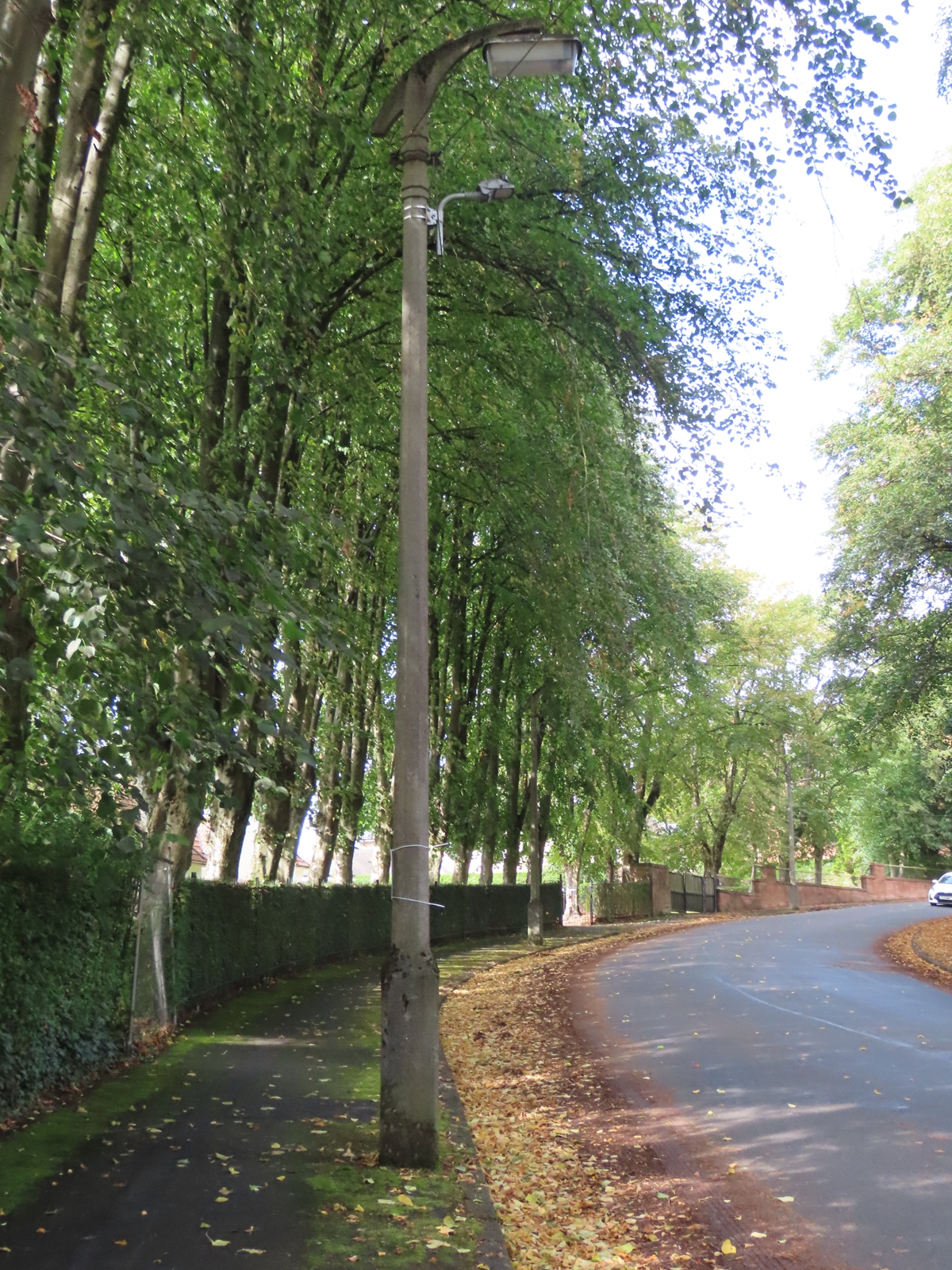
The diddy ASD Micro Highway Diamond replacement lantern looked rather daft with the Z9465 looming above it.
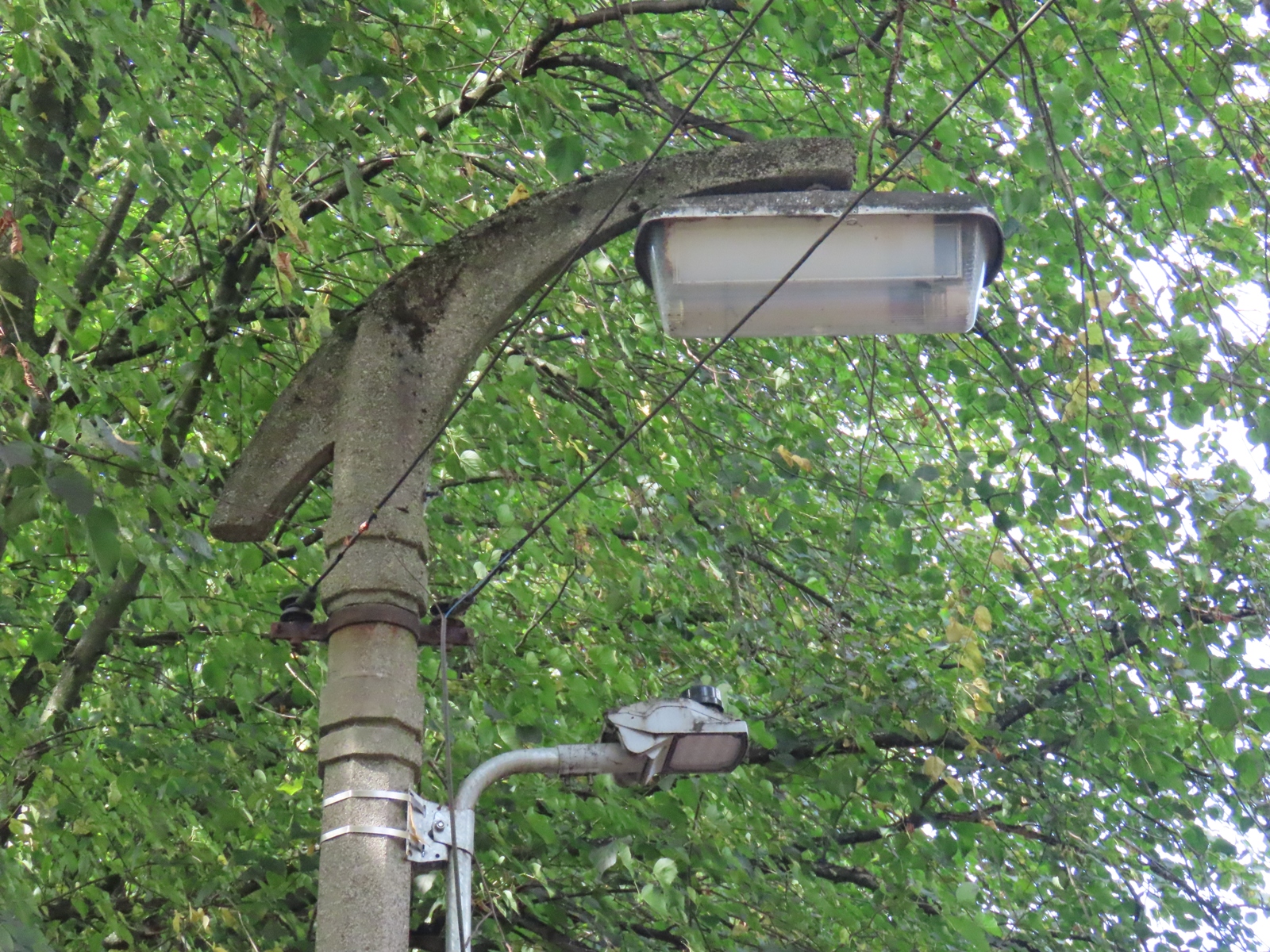
Although worn, the lamp would probably work if connected back up.
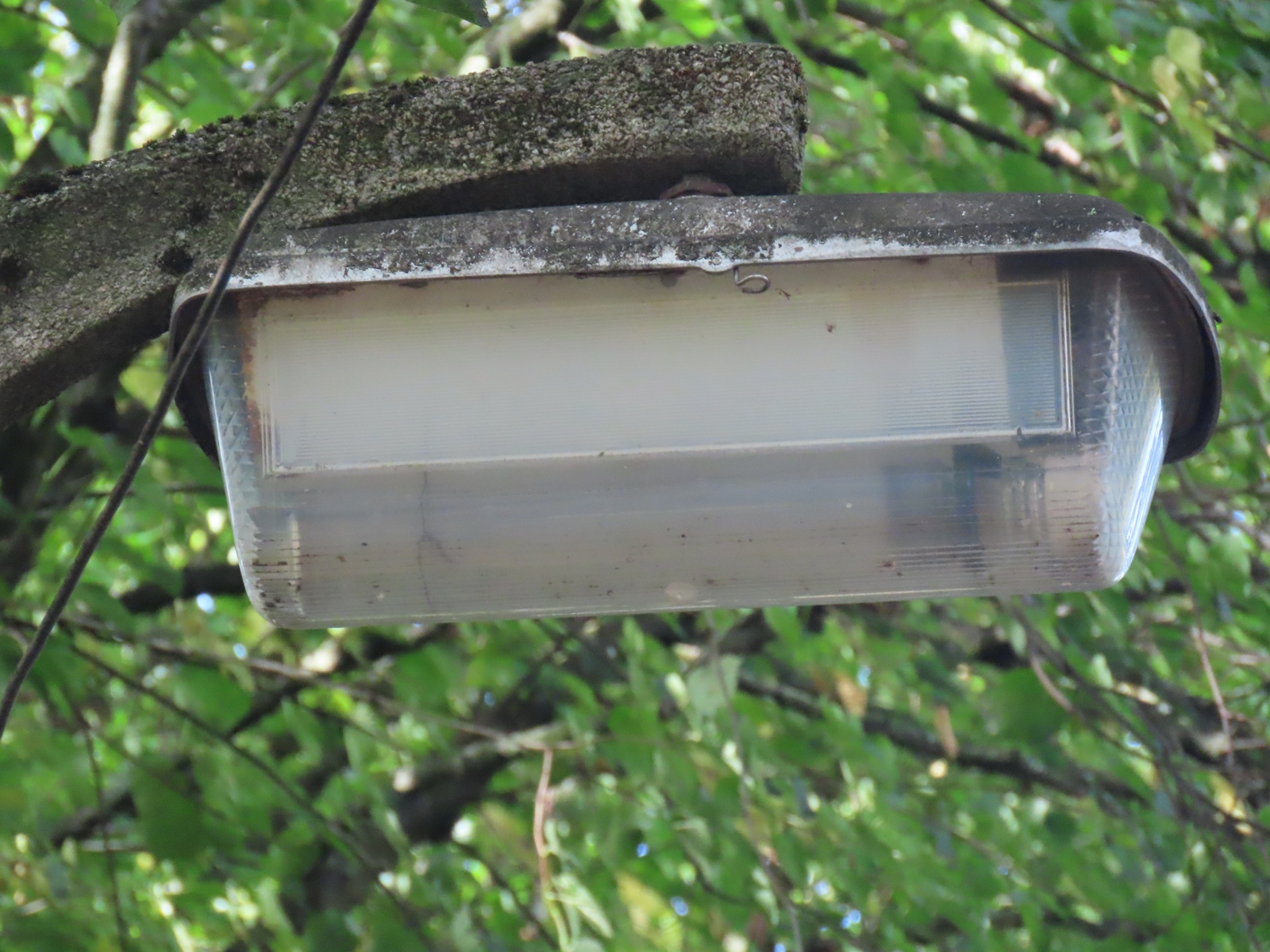
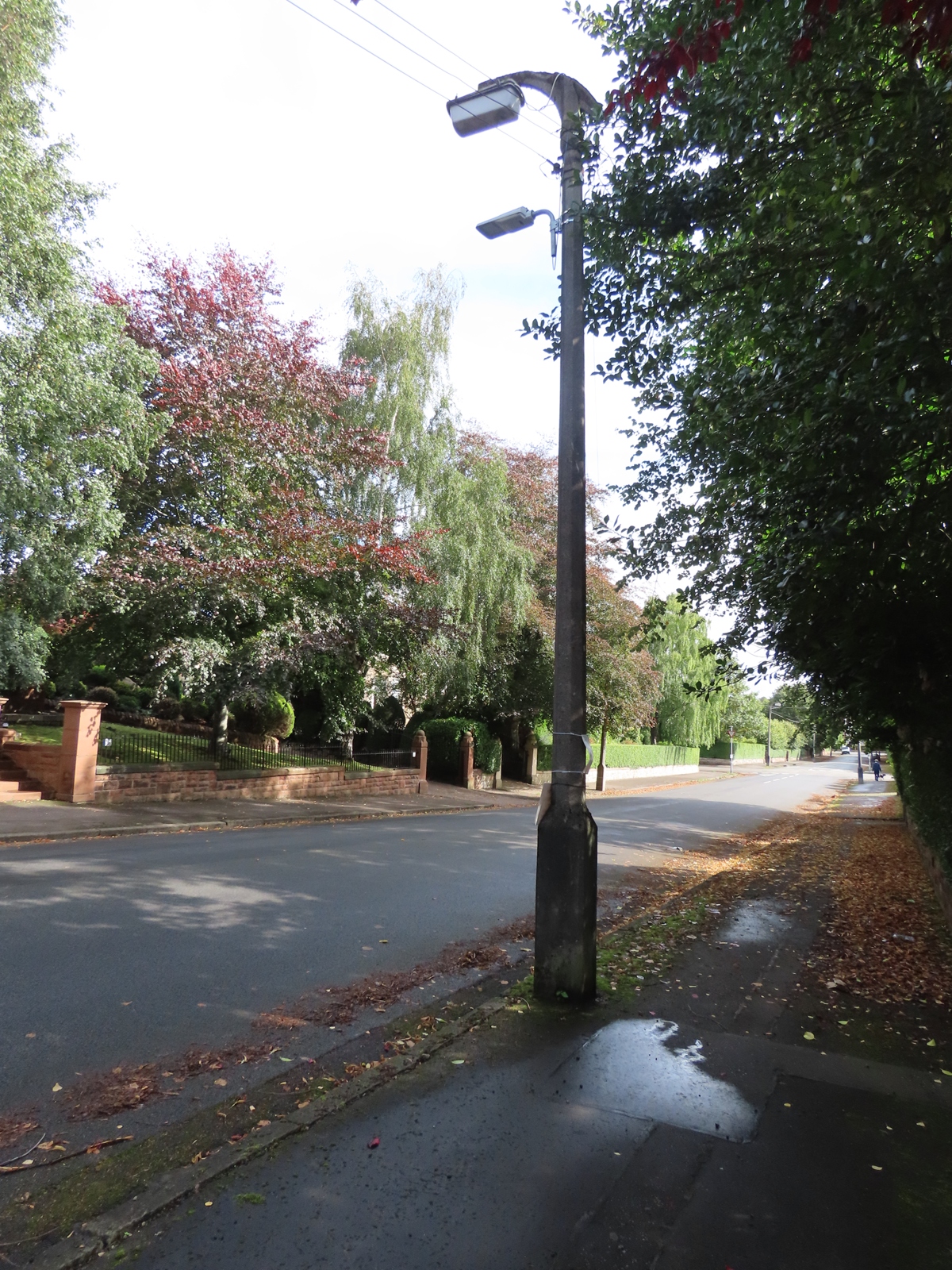
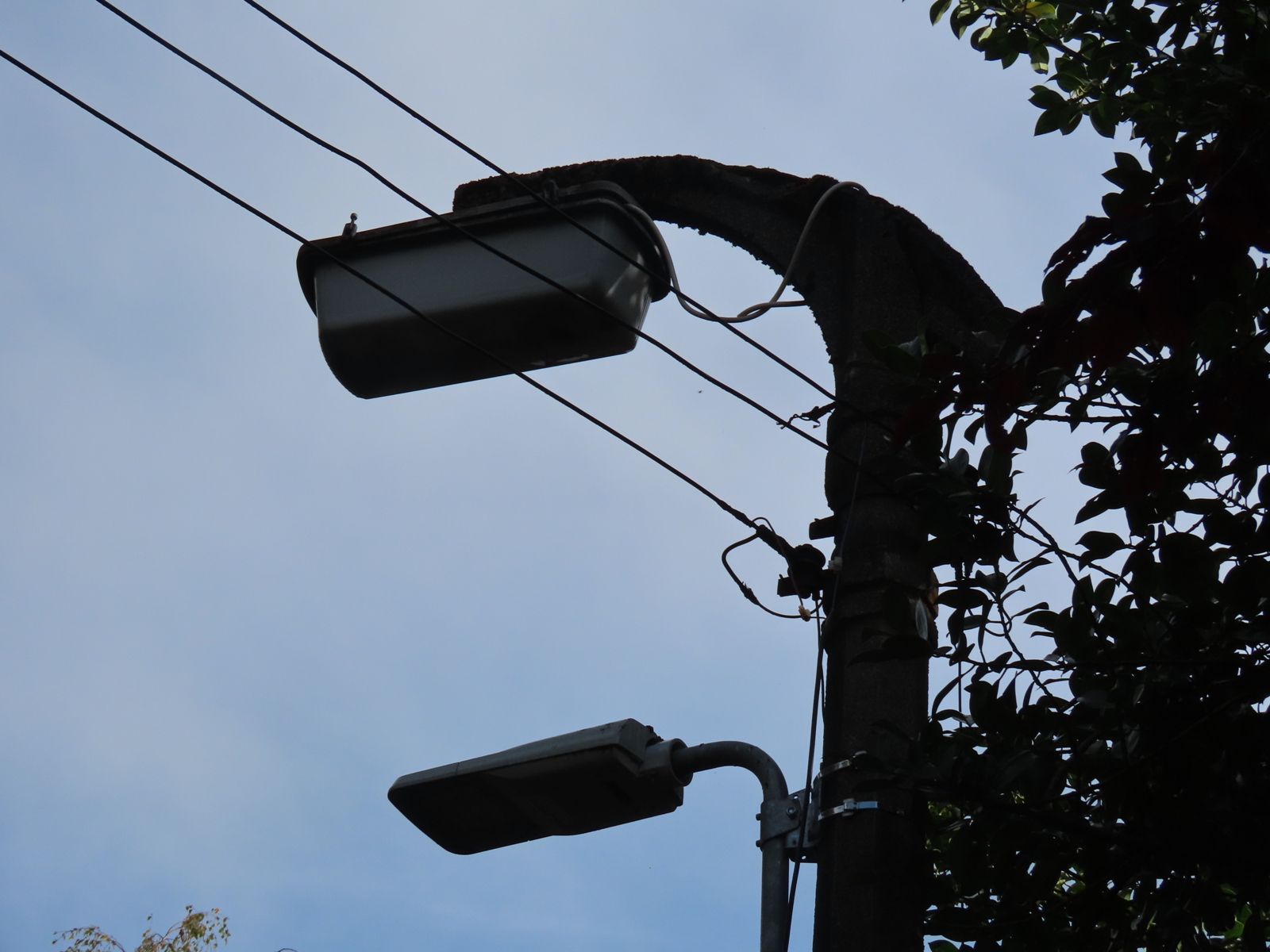
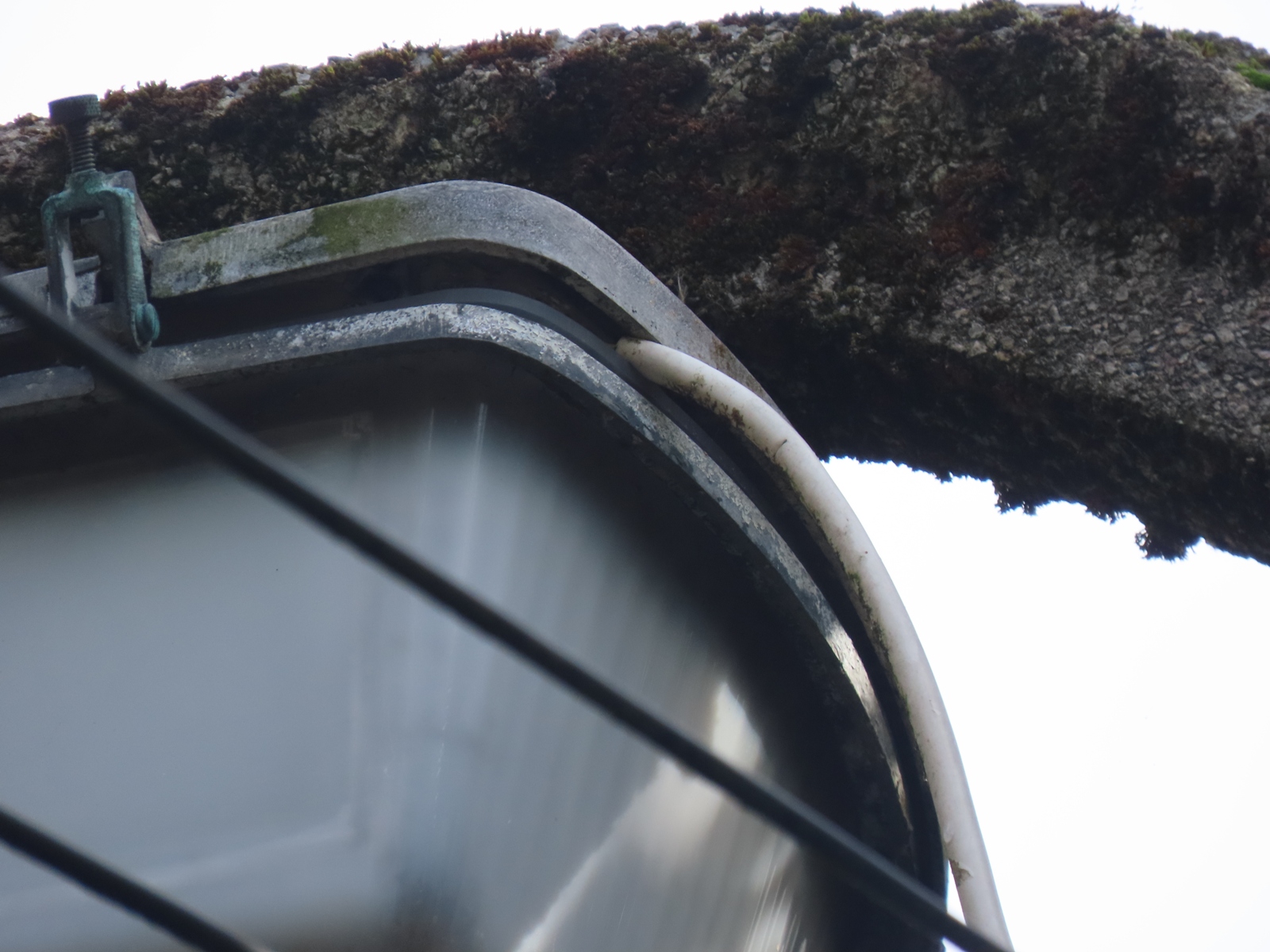
I assume that the cable within the bracket failed at some point, requiring this length of flex to be inserted through a narrow gap between the canopy and the bowl as a "temporary" means of restoring the supply.
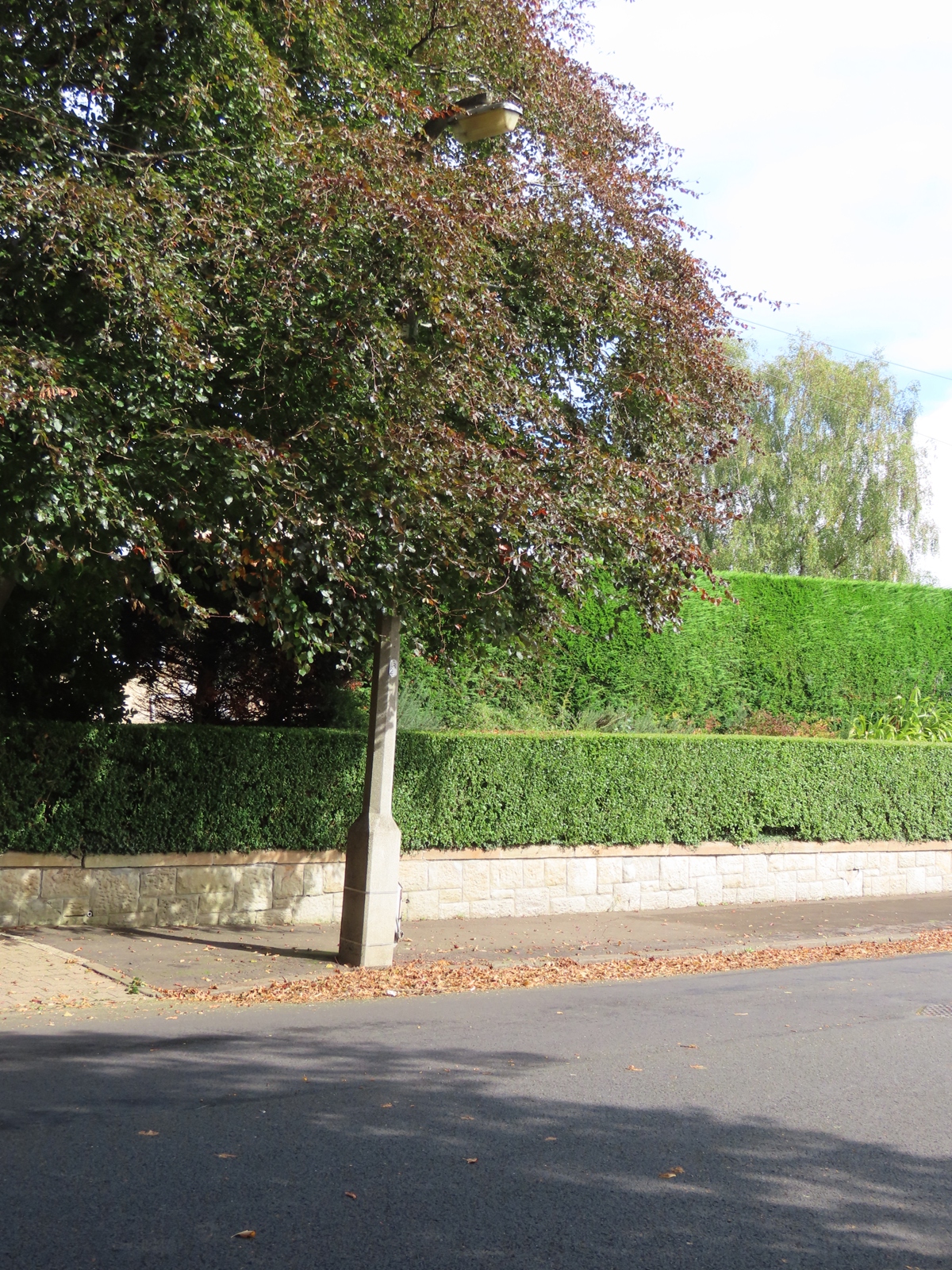
Despite the discoloured bowl, this Z9465 had quite a clean canopy.
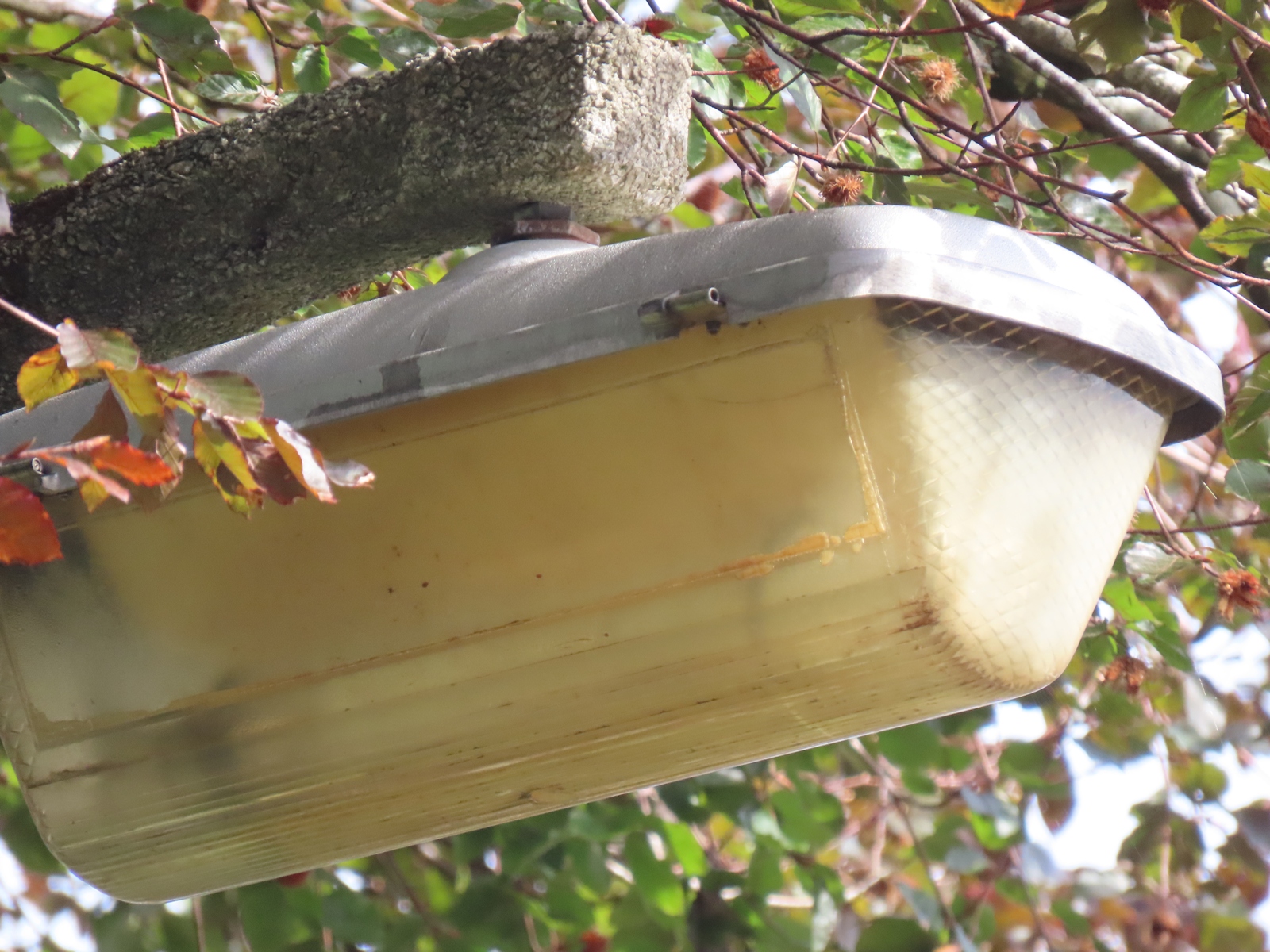
This column also featured an underground supply that then terminated into a miniature pillar, and onward through a conduit system.
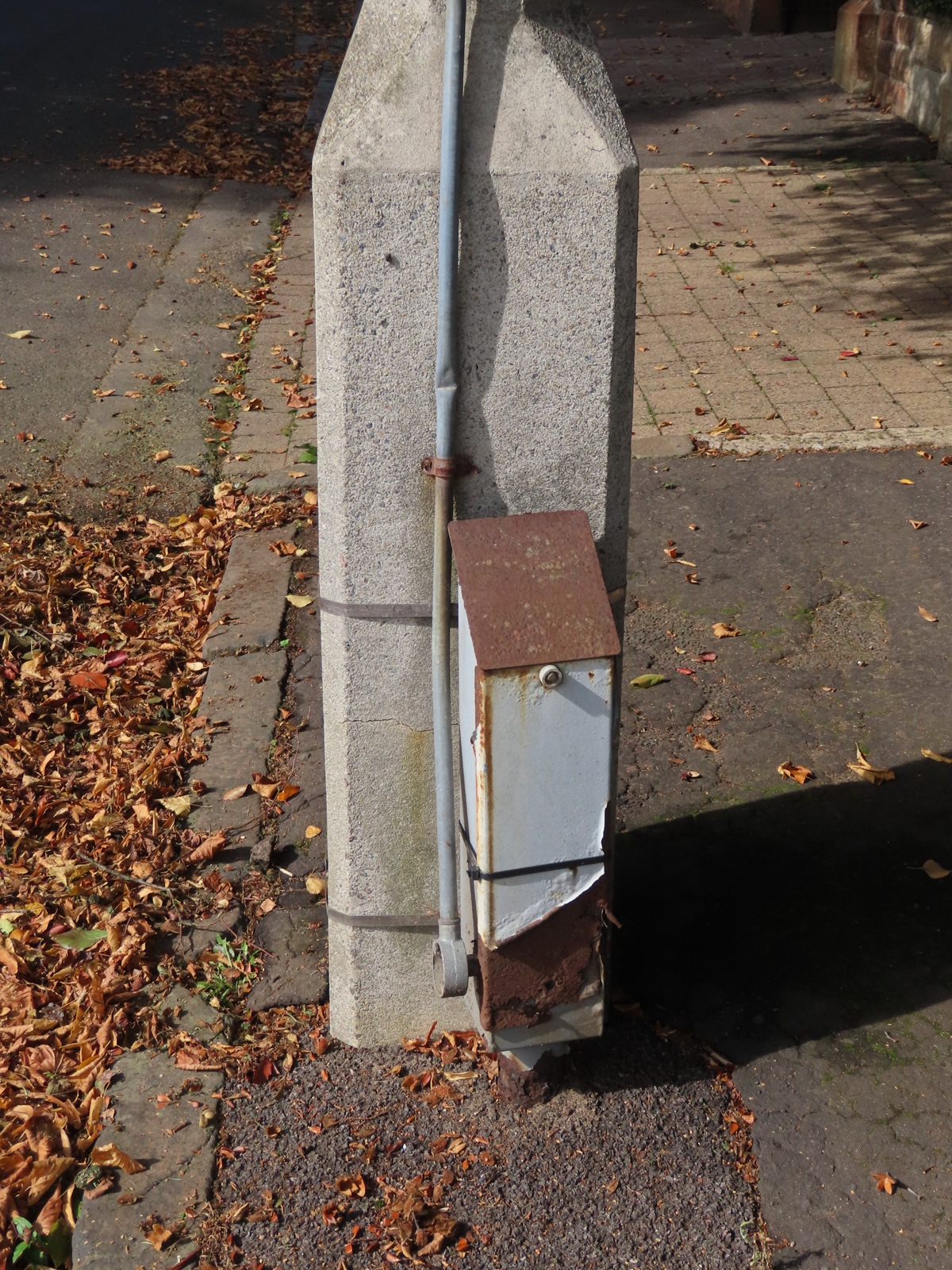
Back onto Albert Drive, and another change of column / bracket type - Avenue 3Ds return, but are now fitted with 'Arc 2' brackets instead.
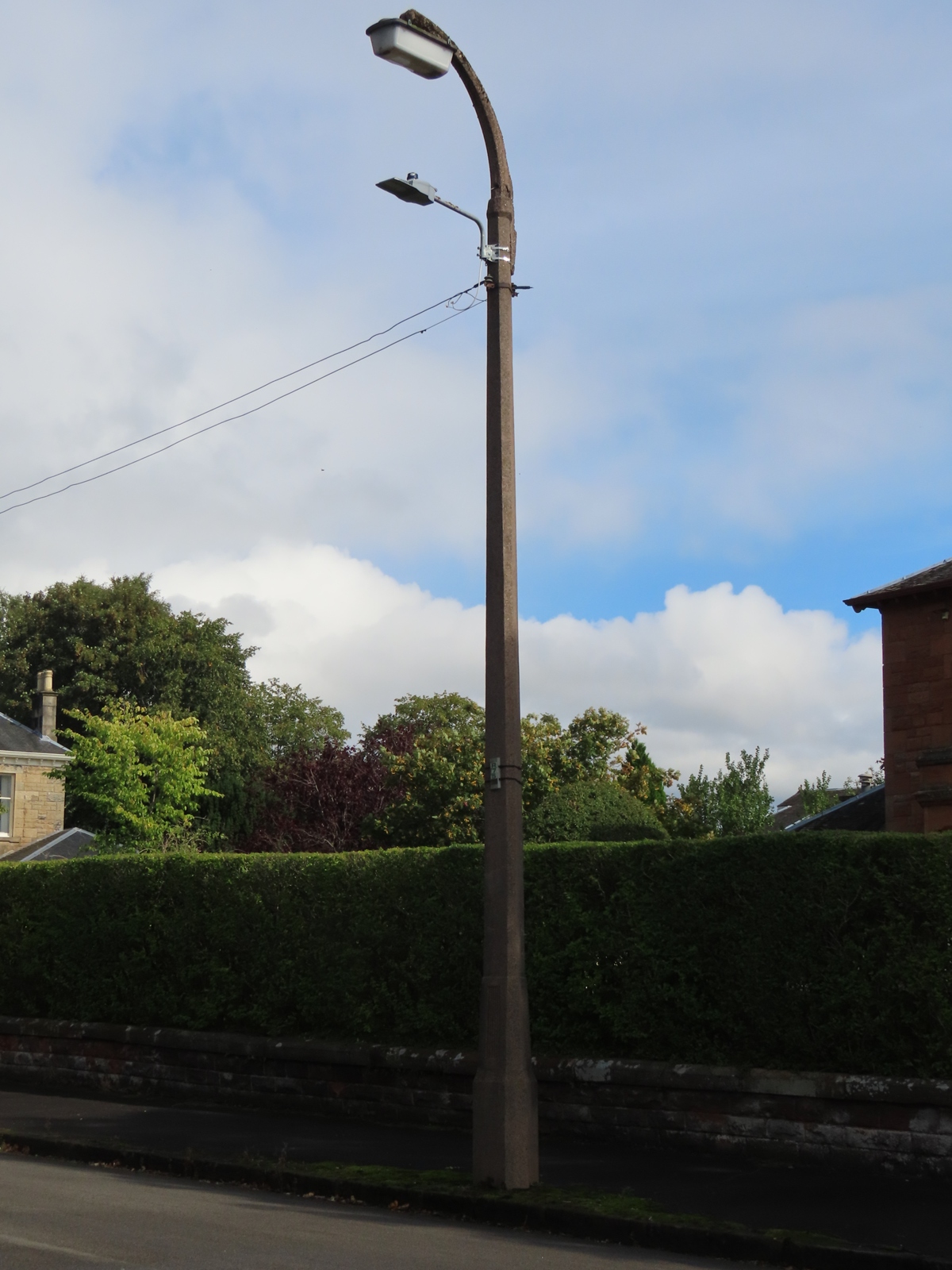
Sherbrooke Avenue continues on the other side of the crossroads.
The bracket radius here appears to be touching the lantern.
Looking back the other way.
This Z9465 seems to be another that could still be in working order.
As seems to be this one.
Moving across to Terregles Crescent, two 20 ft (6 m) tubular steel columns supporting ELECO HW-745s were to be seen.
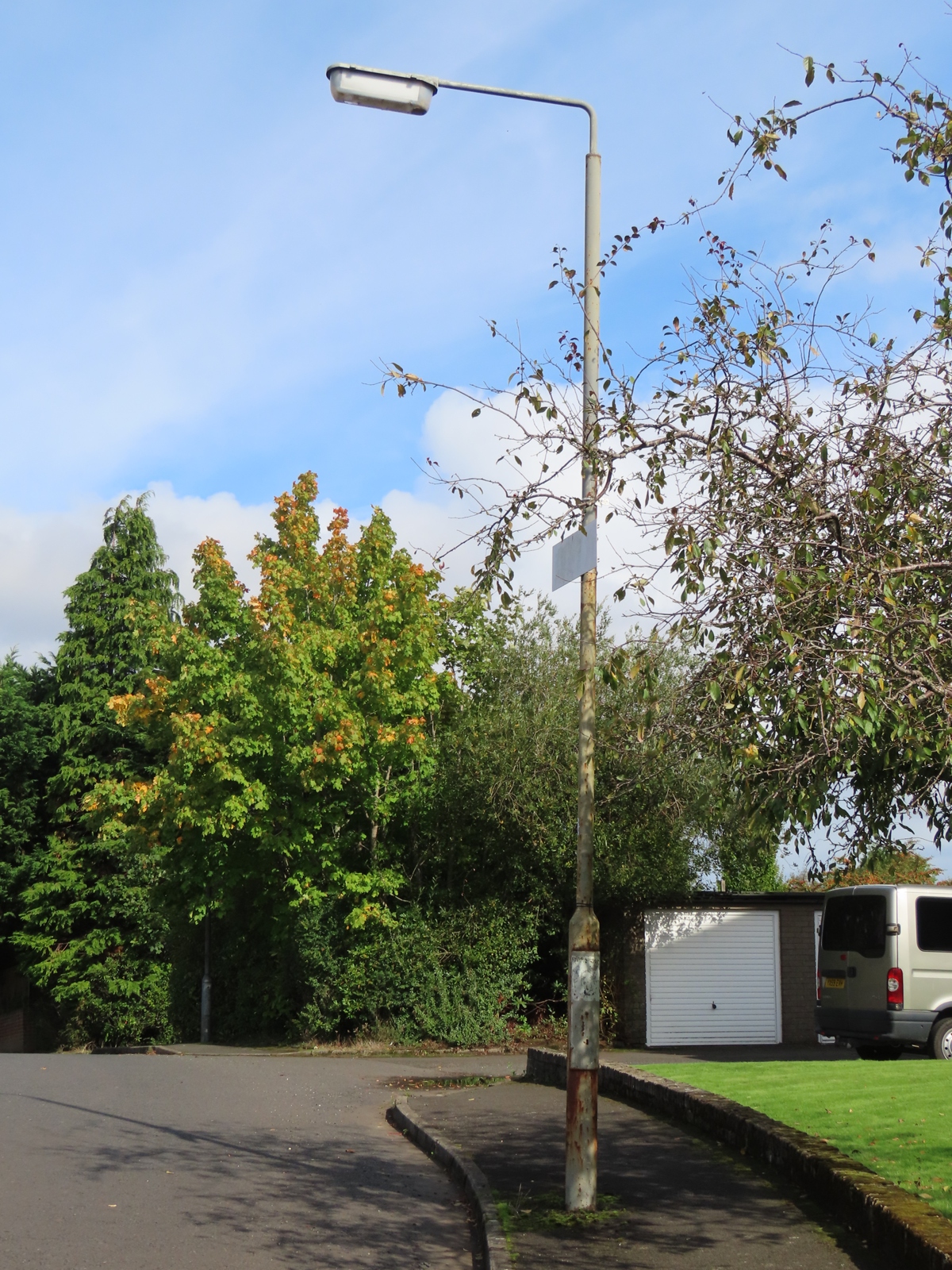
Although intended as 90 Watt lanterns too, the shorter mounting height here sees the lanterns fitted with 55 Watt lamps instead.
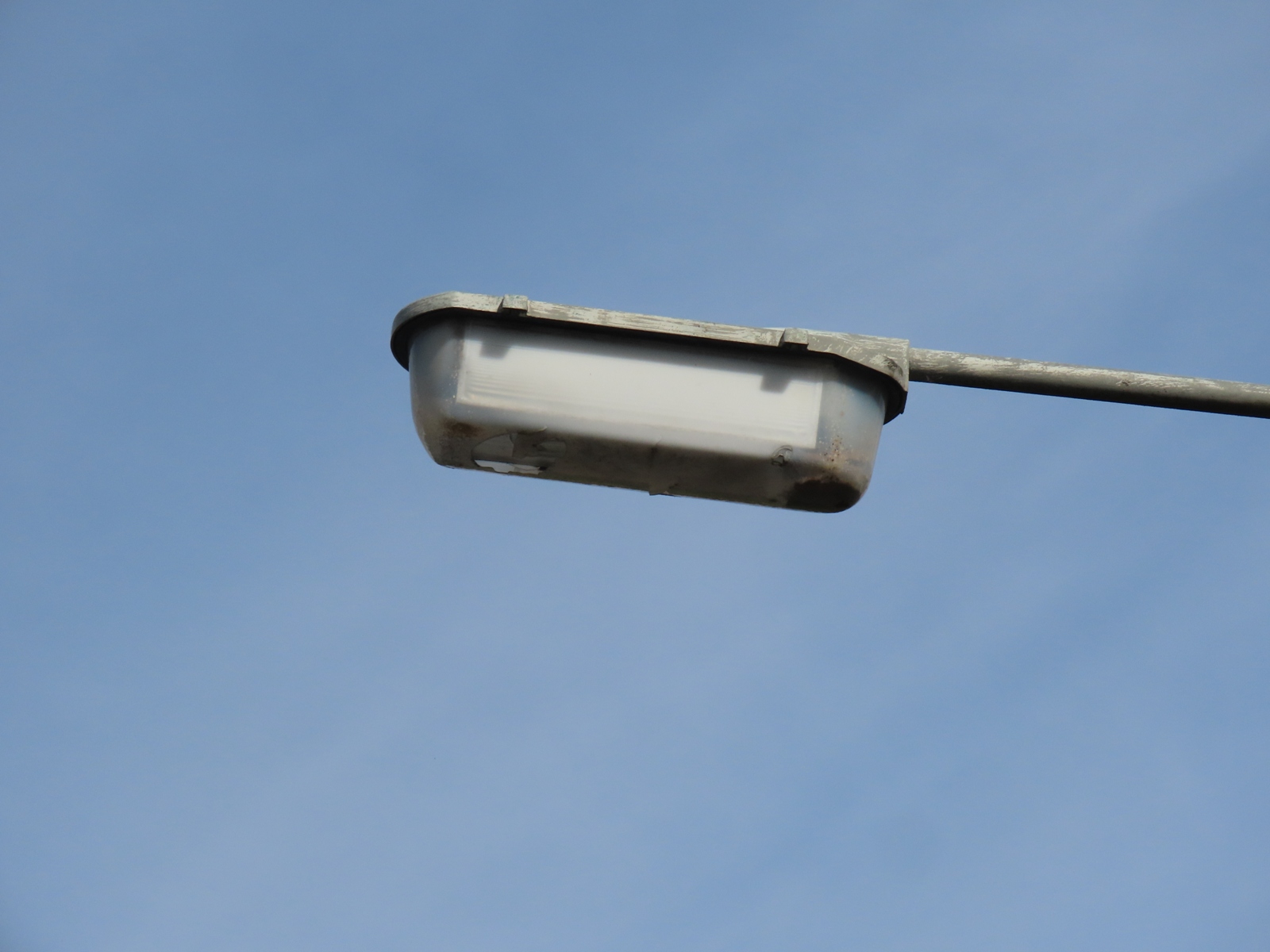
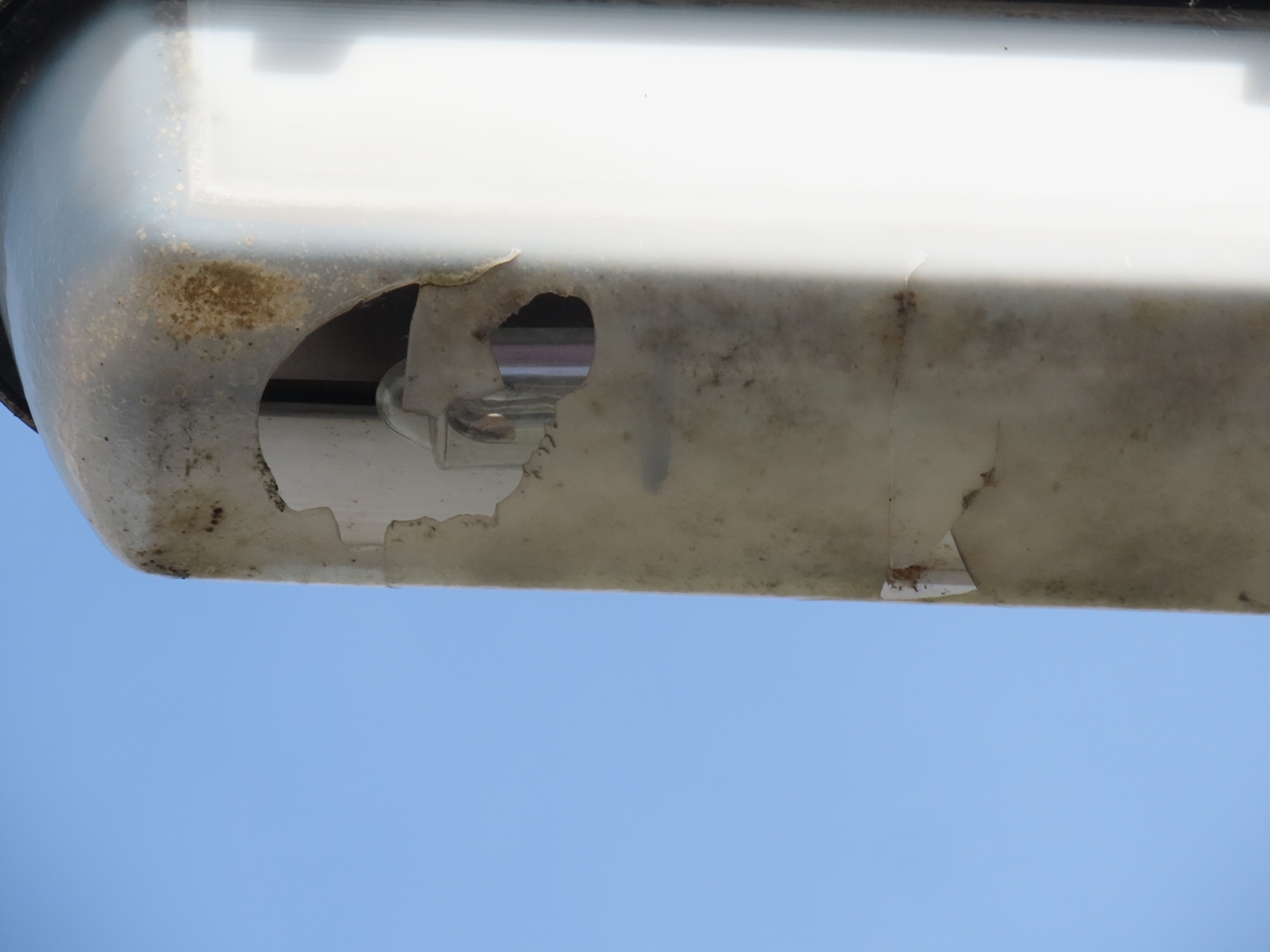
A break in the bowl's underside confirms that the smaller lamps are employed.
The second example is a short walk further along the road.
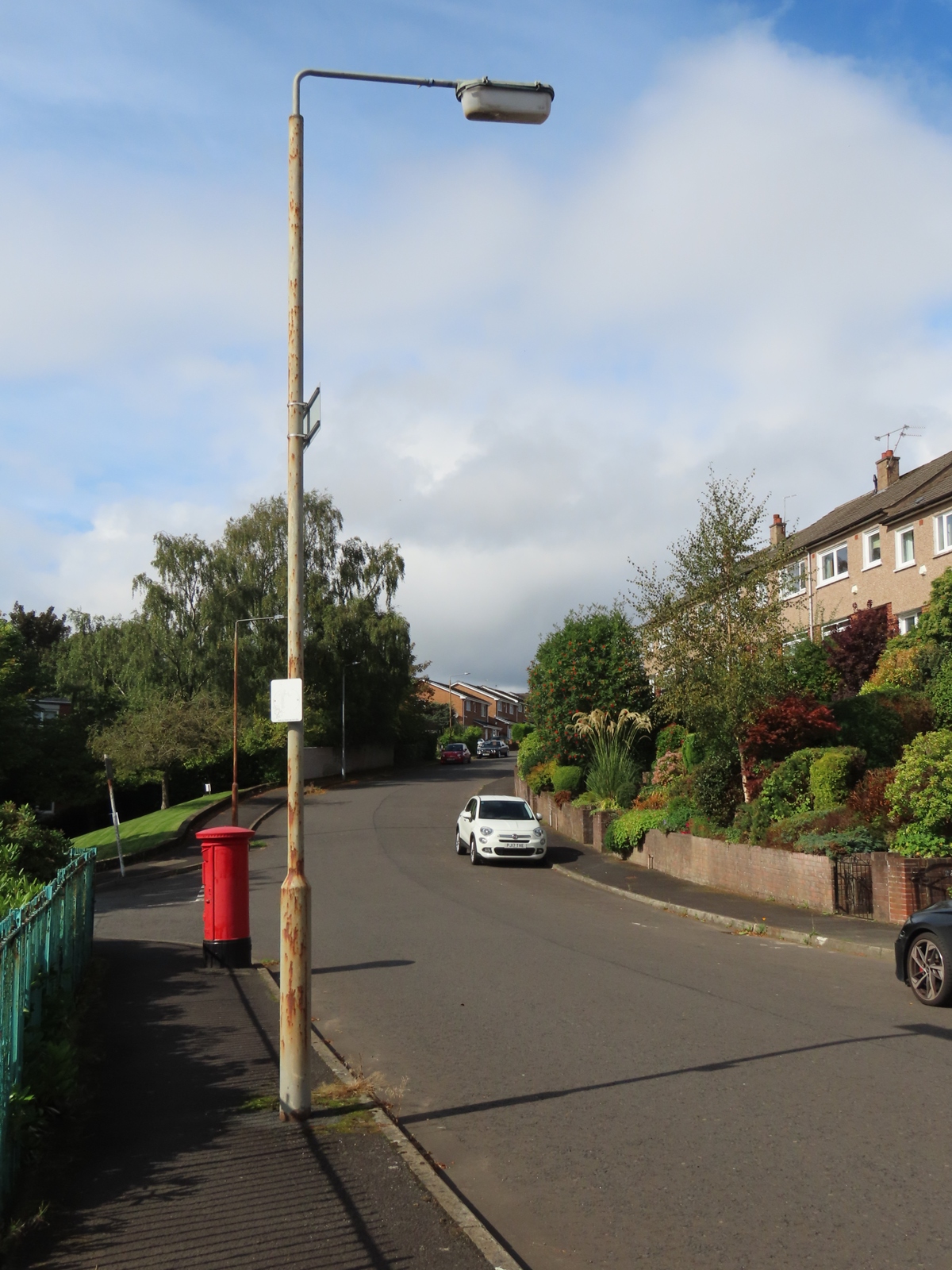
The bracket is in somewhat better condition than the rest of the column is.
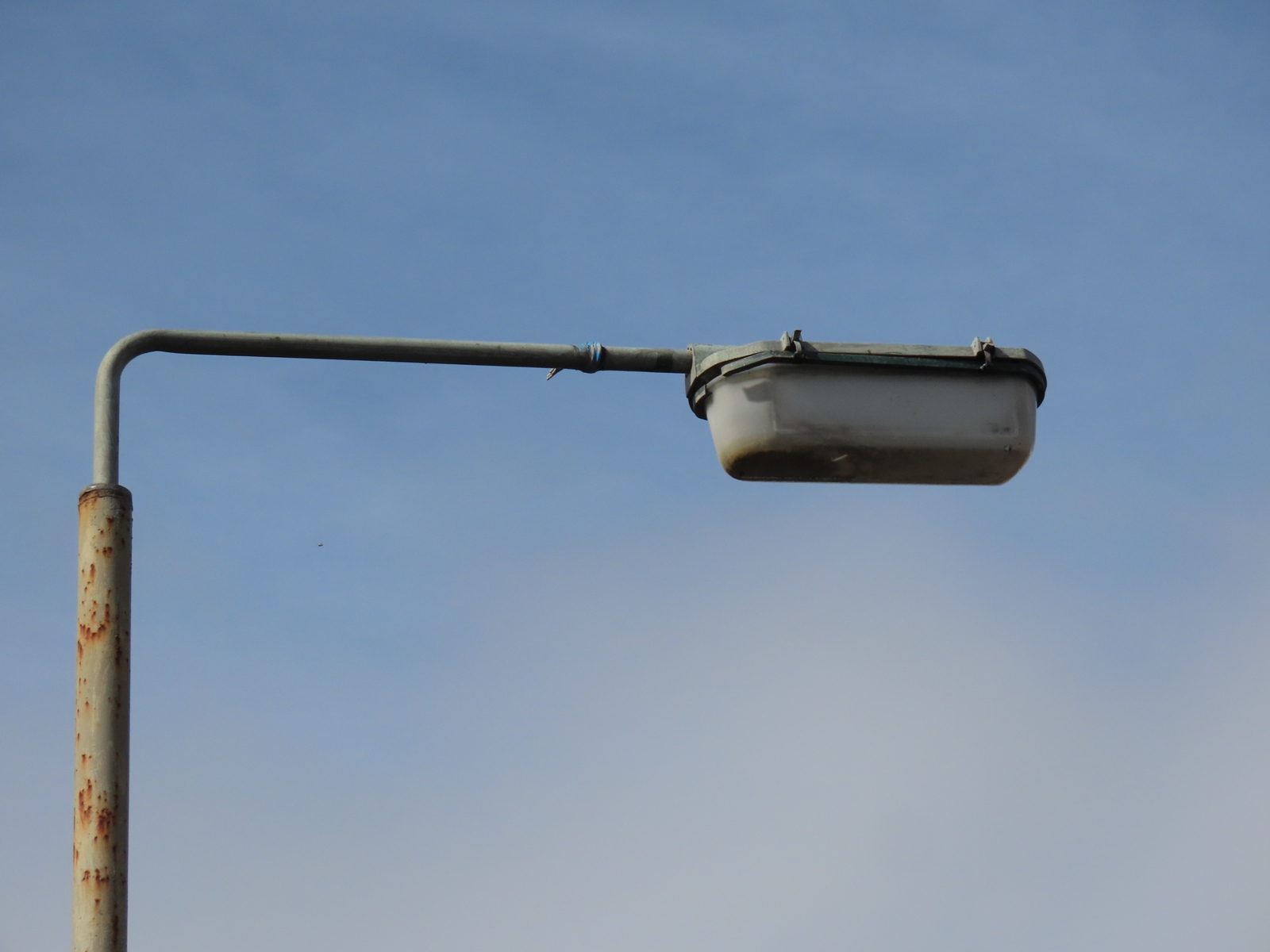
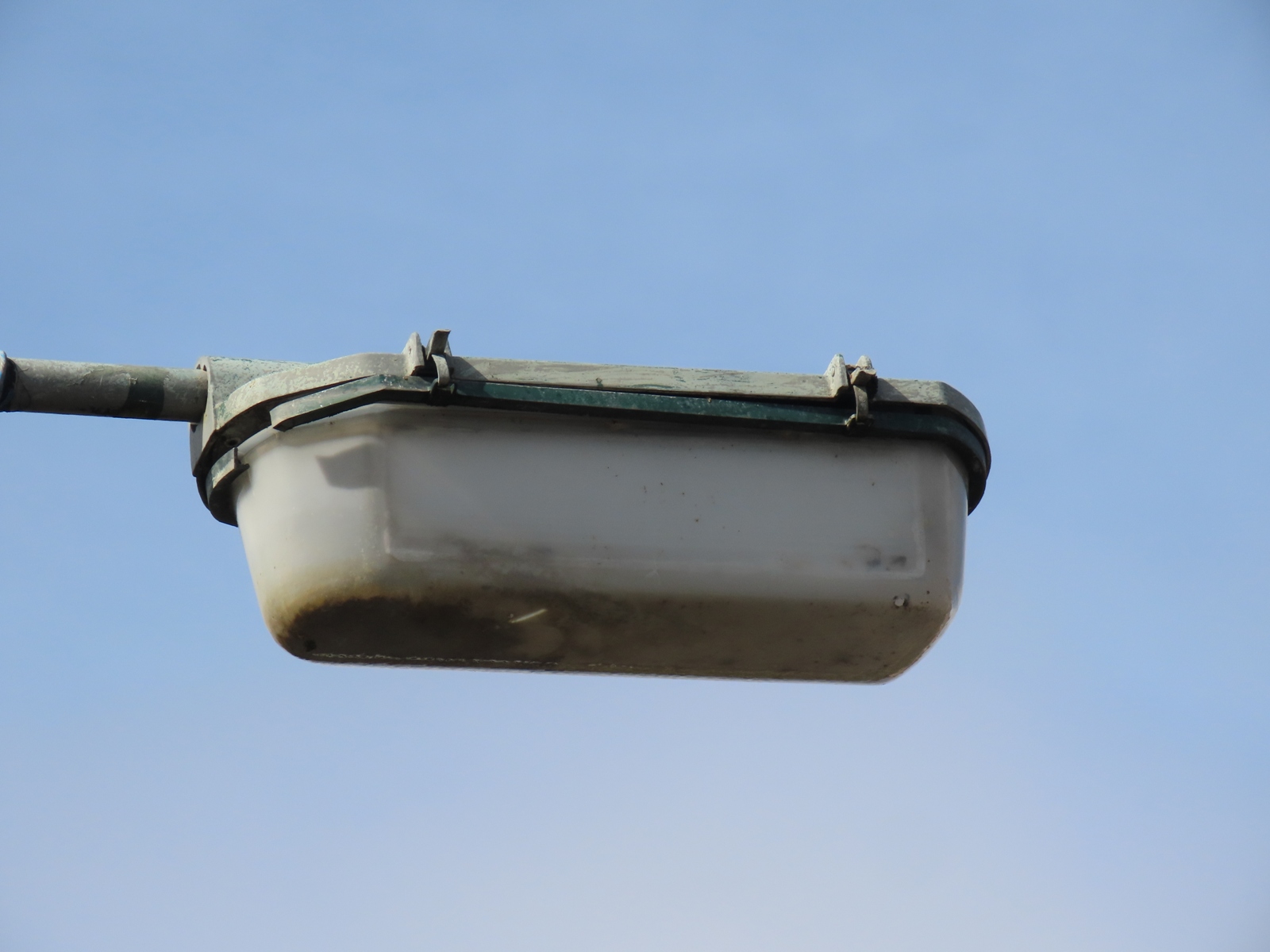
The bowl support ring has split, preventing the frame from being secured correctly.
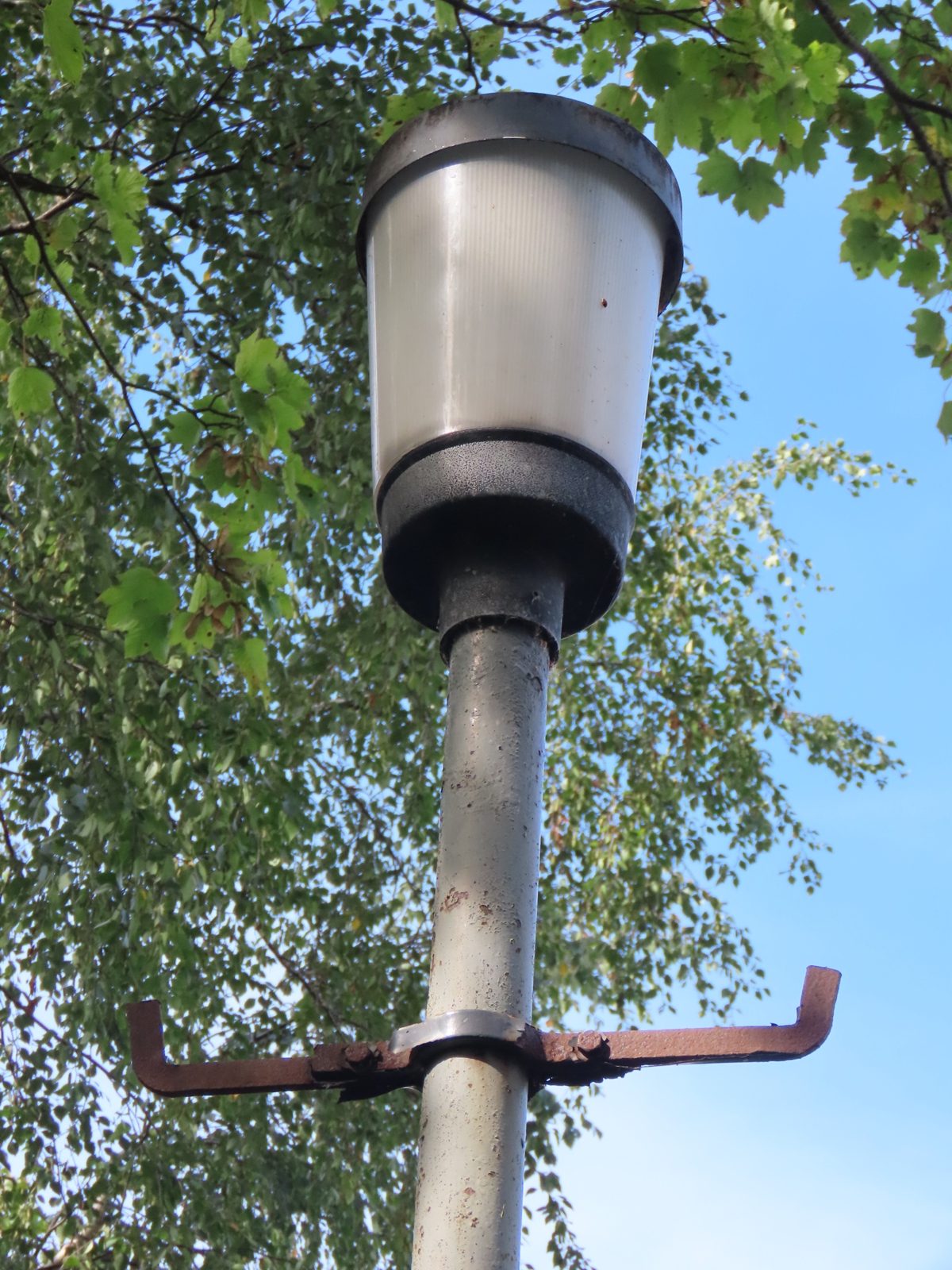
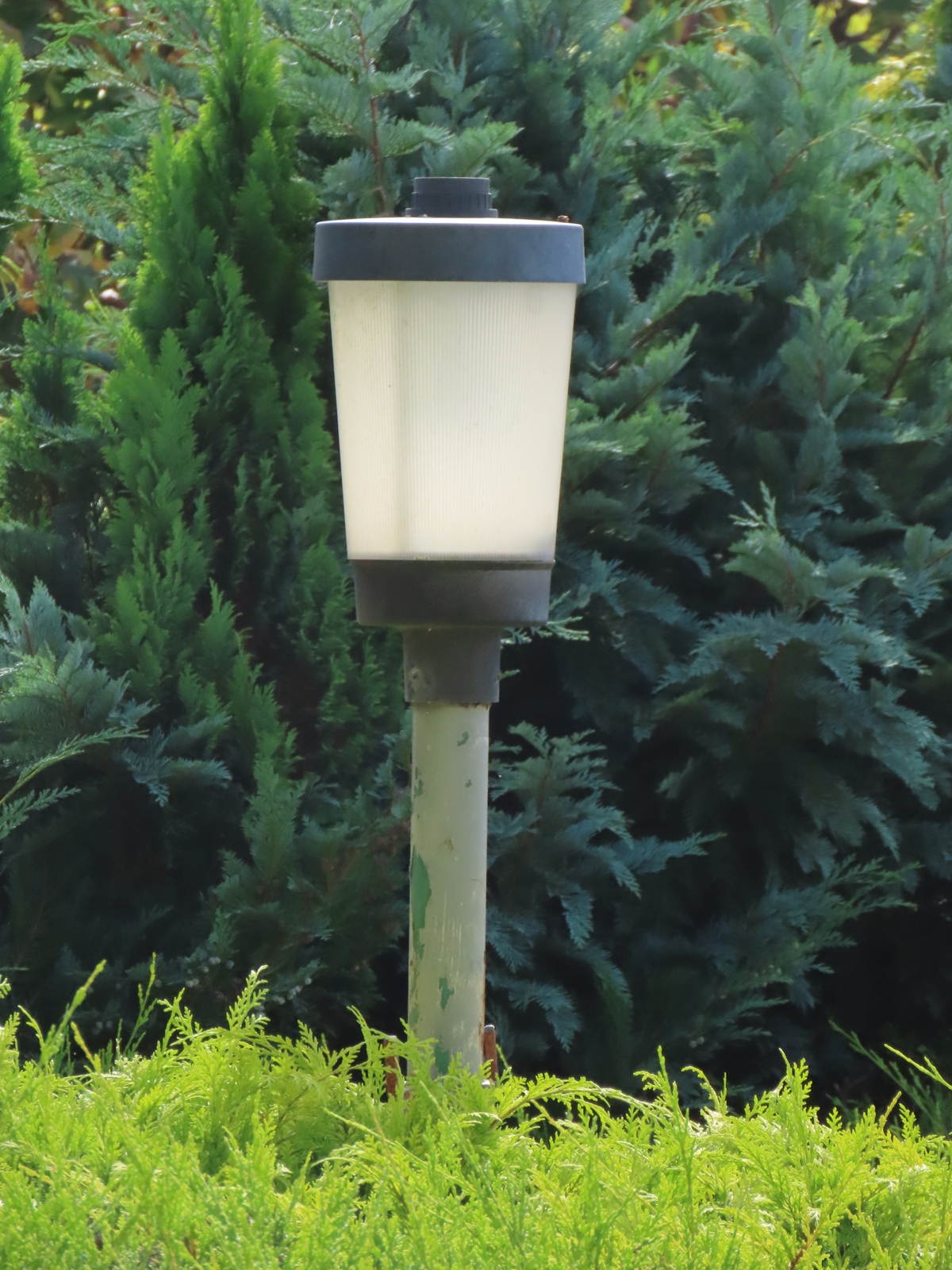
Two 15 ft (5 m) columns, both of which supported Thorn Gamma 6s, were nearby as well.
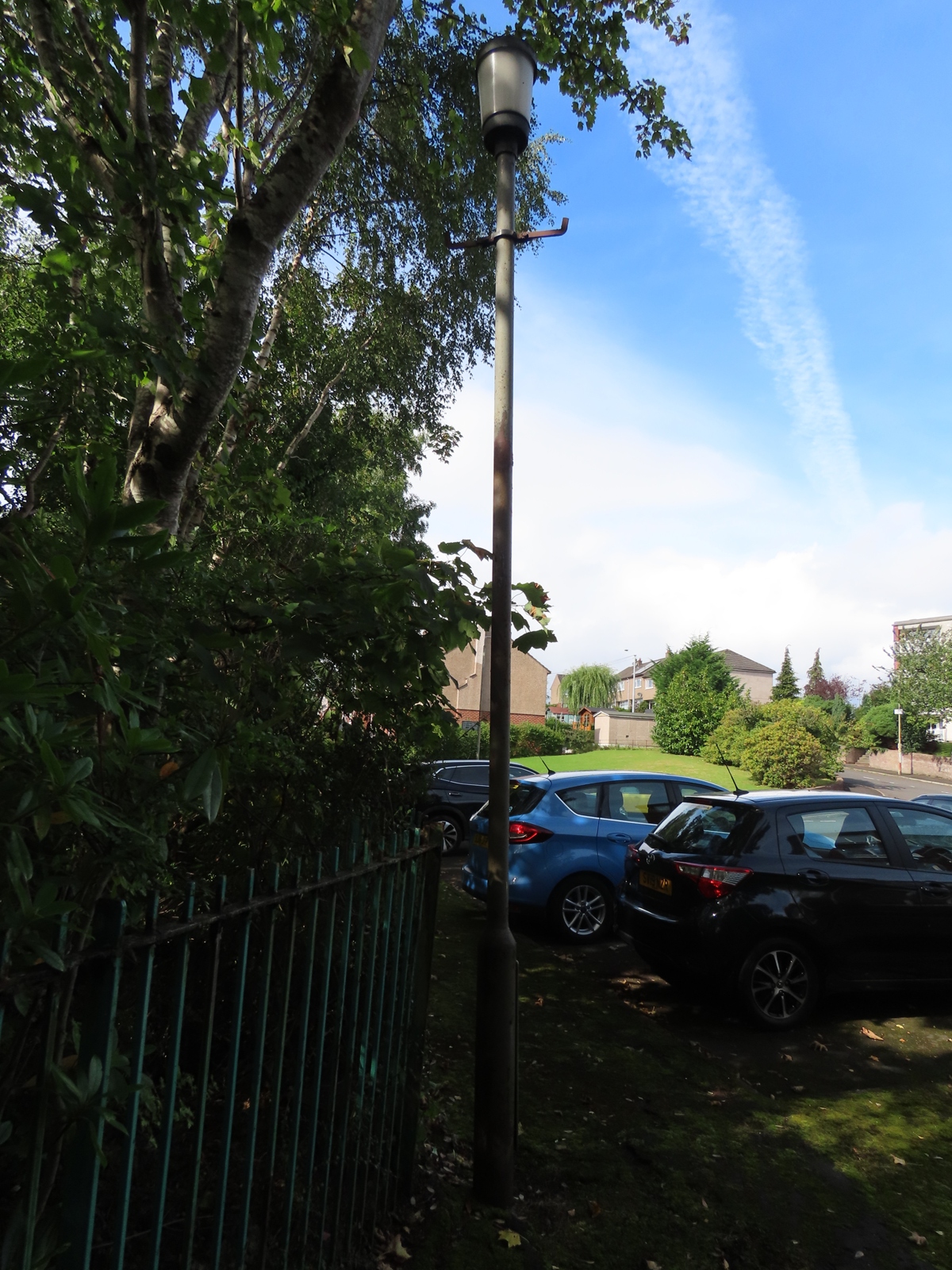
Some rudimentary ladder bars are affixed to the column, to provide a greater surface area to ladders propped against the column during maintenance.
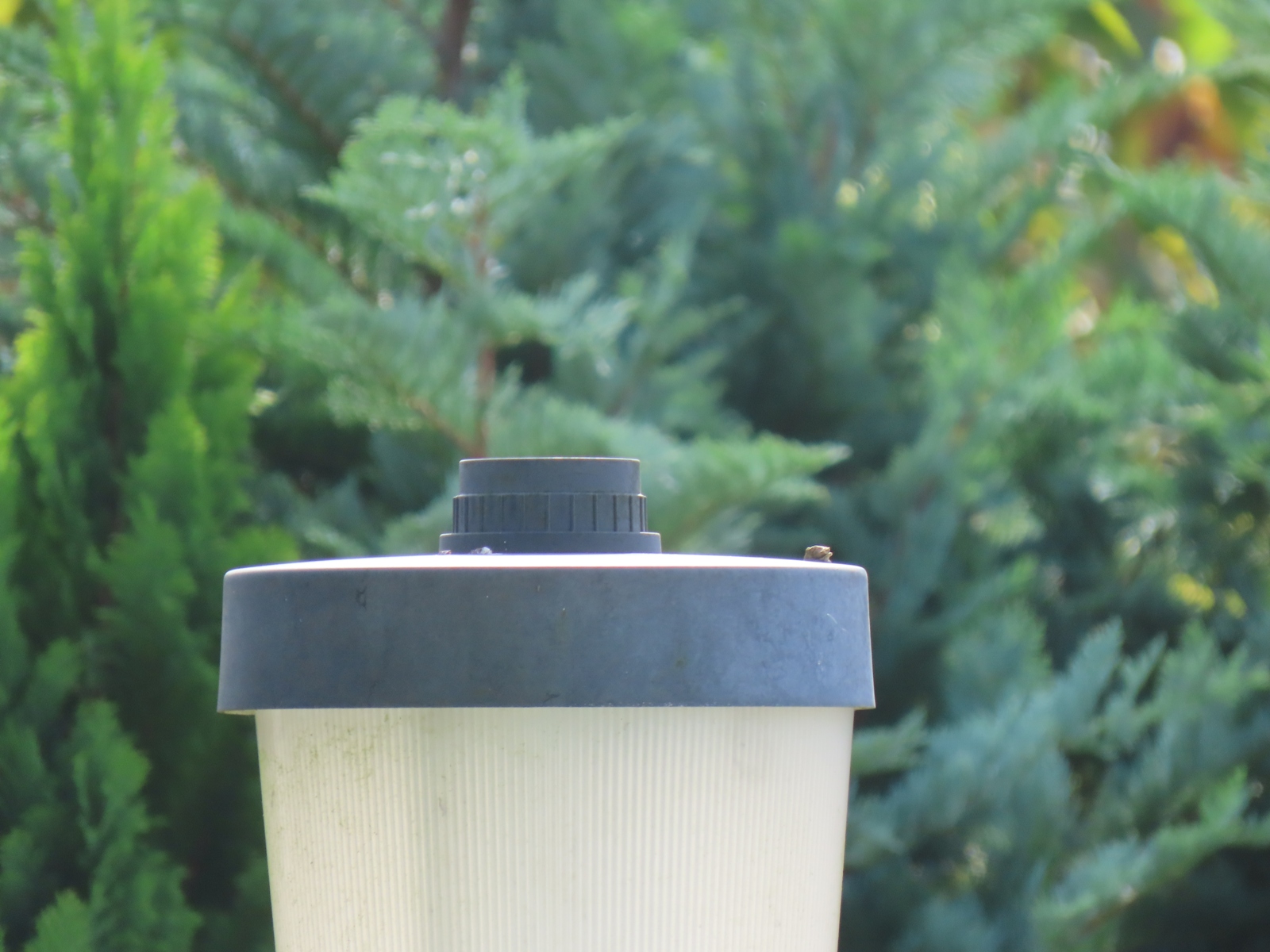
The second was attached to a column that emerged from the centre of a well-established conifer hedge.
This is the type without a NEMA socket installed, meaning that the top cap that holds the canopy securely in place has a solid top.
Terregles Avenue is also home to some of the Springbank concrete columns.
A brief diversion back onto Sherbrooke Avenue to photograph this bizarre top-entry V-Lux / Tamcourt then followed.
What is ordinarily the front of the lantern when configured for side-entry operation becomes the back on the top-entry model.
The area where a side-entry bracket would be attached is marked by four bolts.
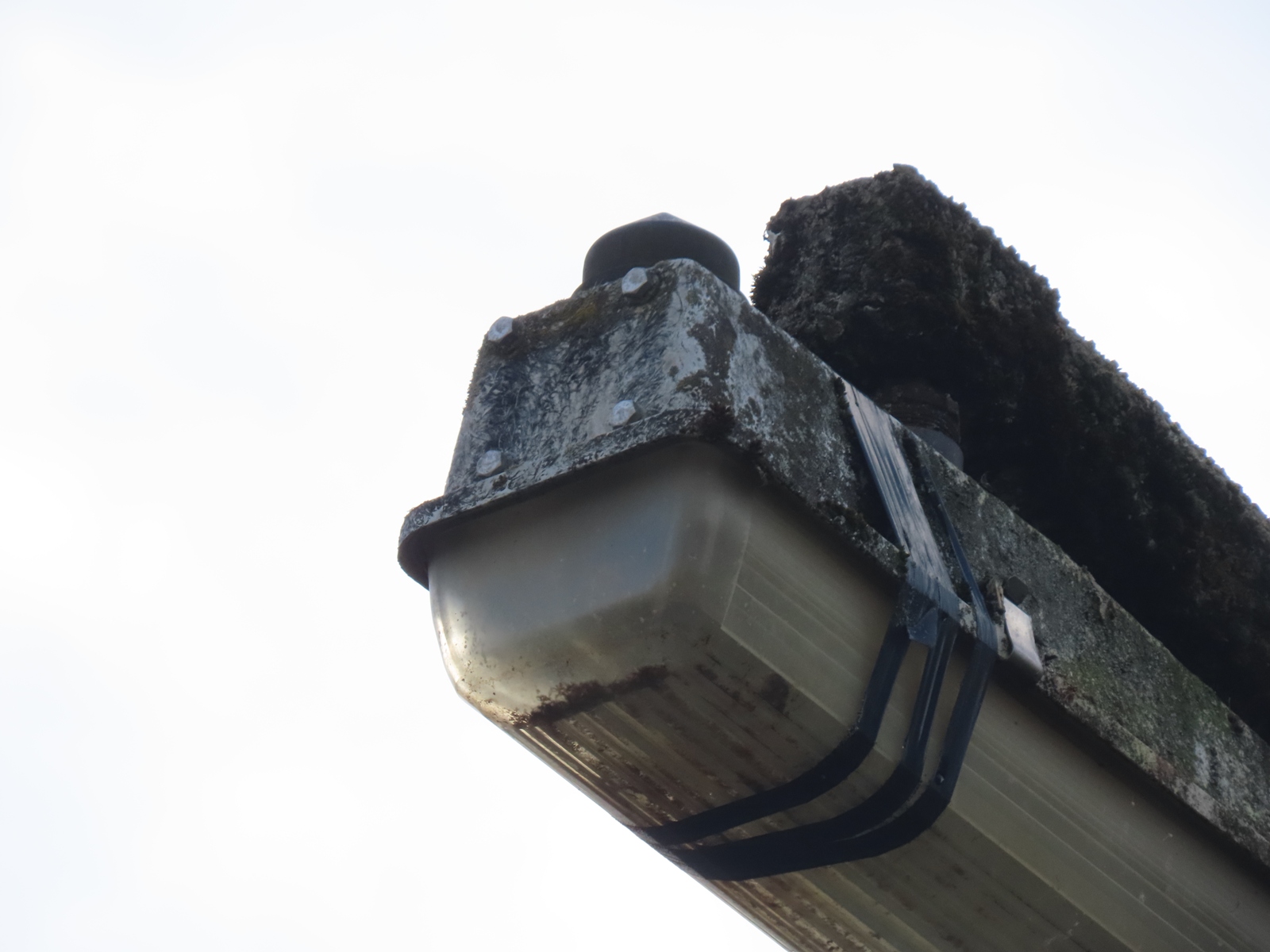
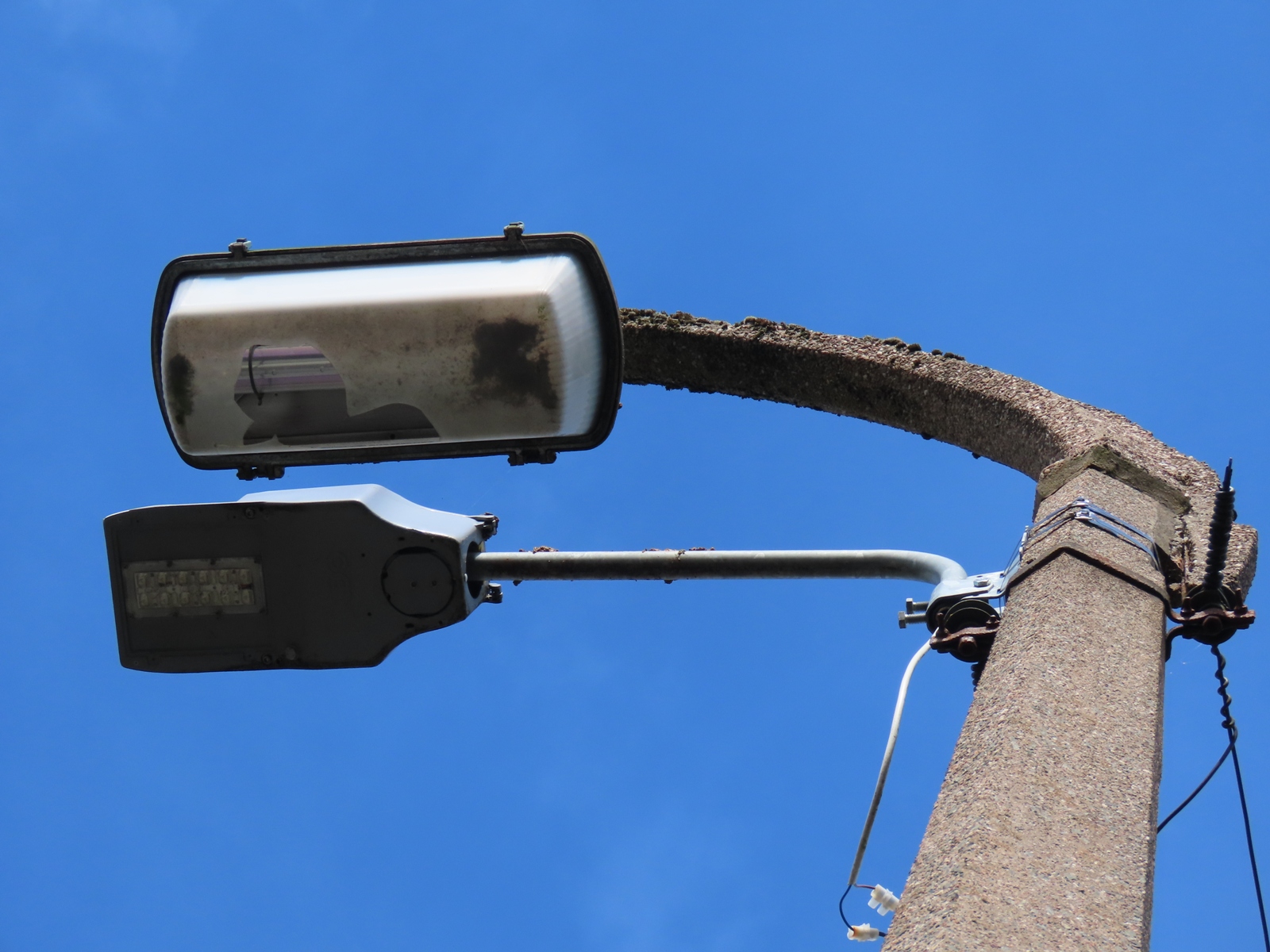
Two very different lantern eras appear side-by-side on Albert Drive, thanks to the perspective of this image.
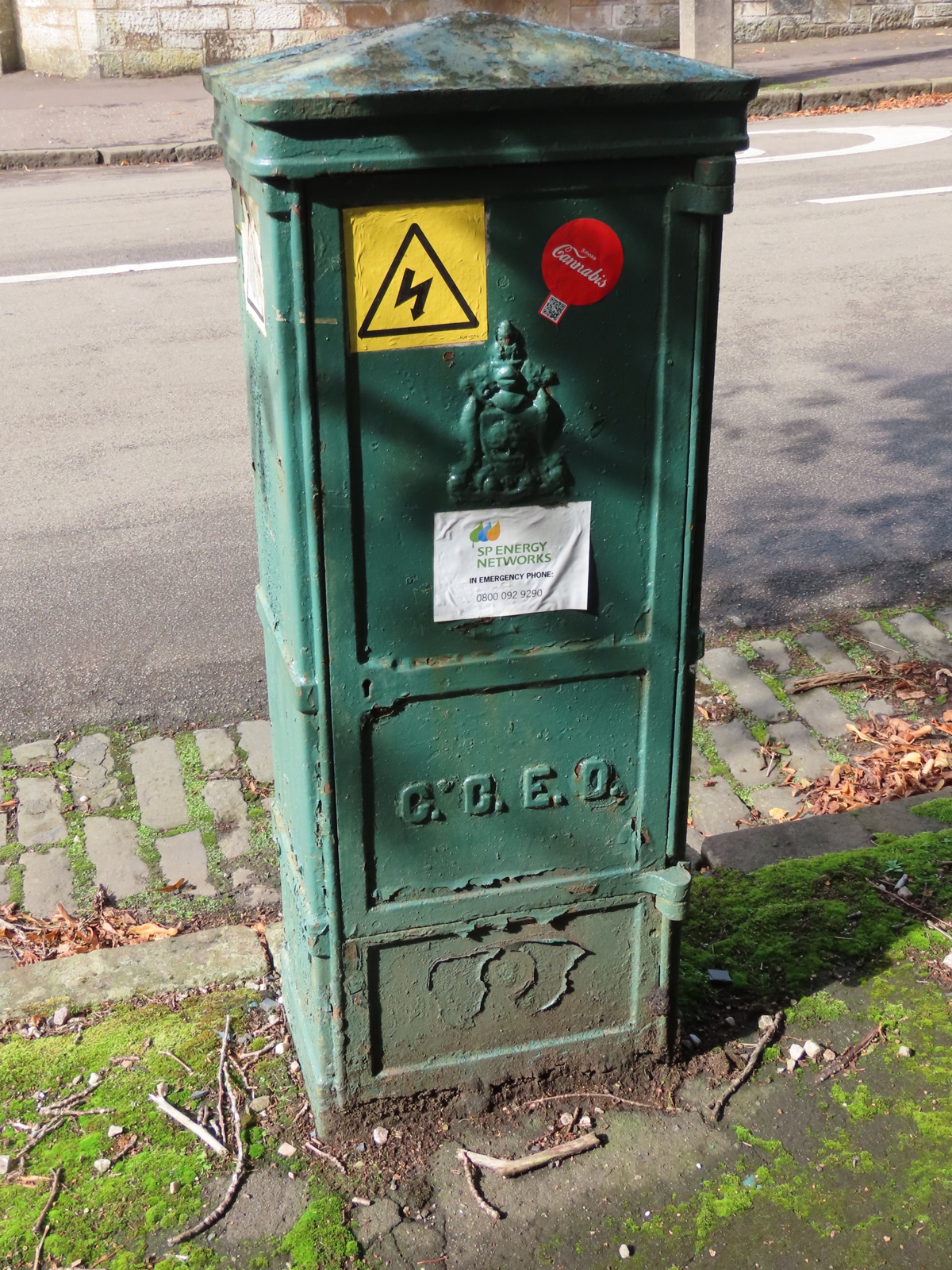
Another feeder pillar was positioned nearby; this carries the initials of the old Glasgow Corporation Electricity Department.
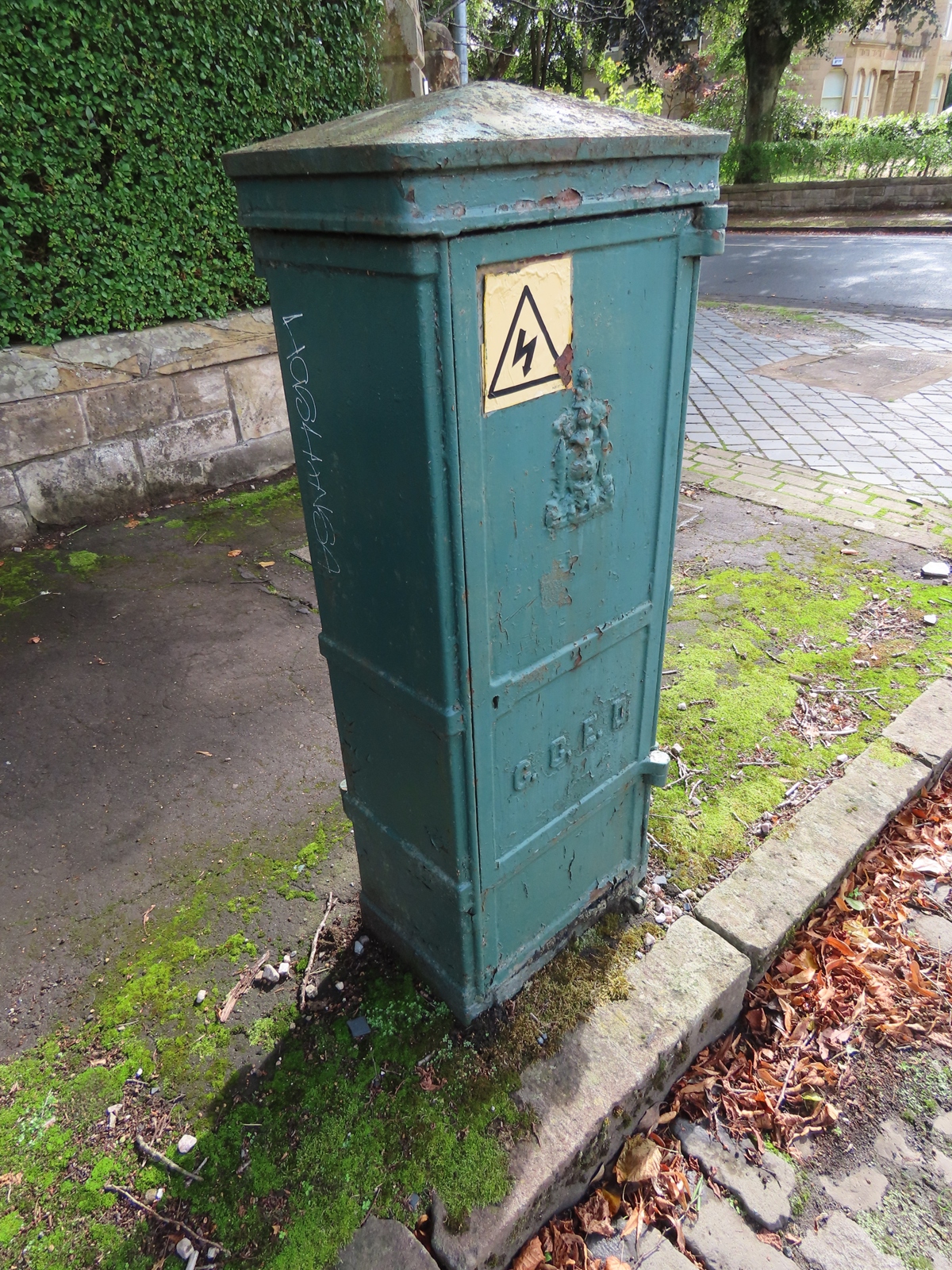
The pillar is double-sided, with an access door on both long sides.
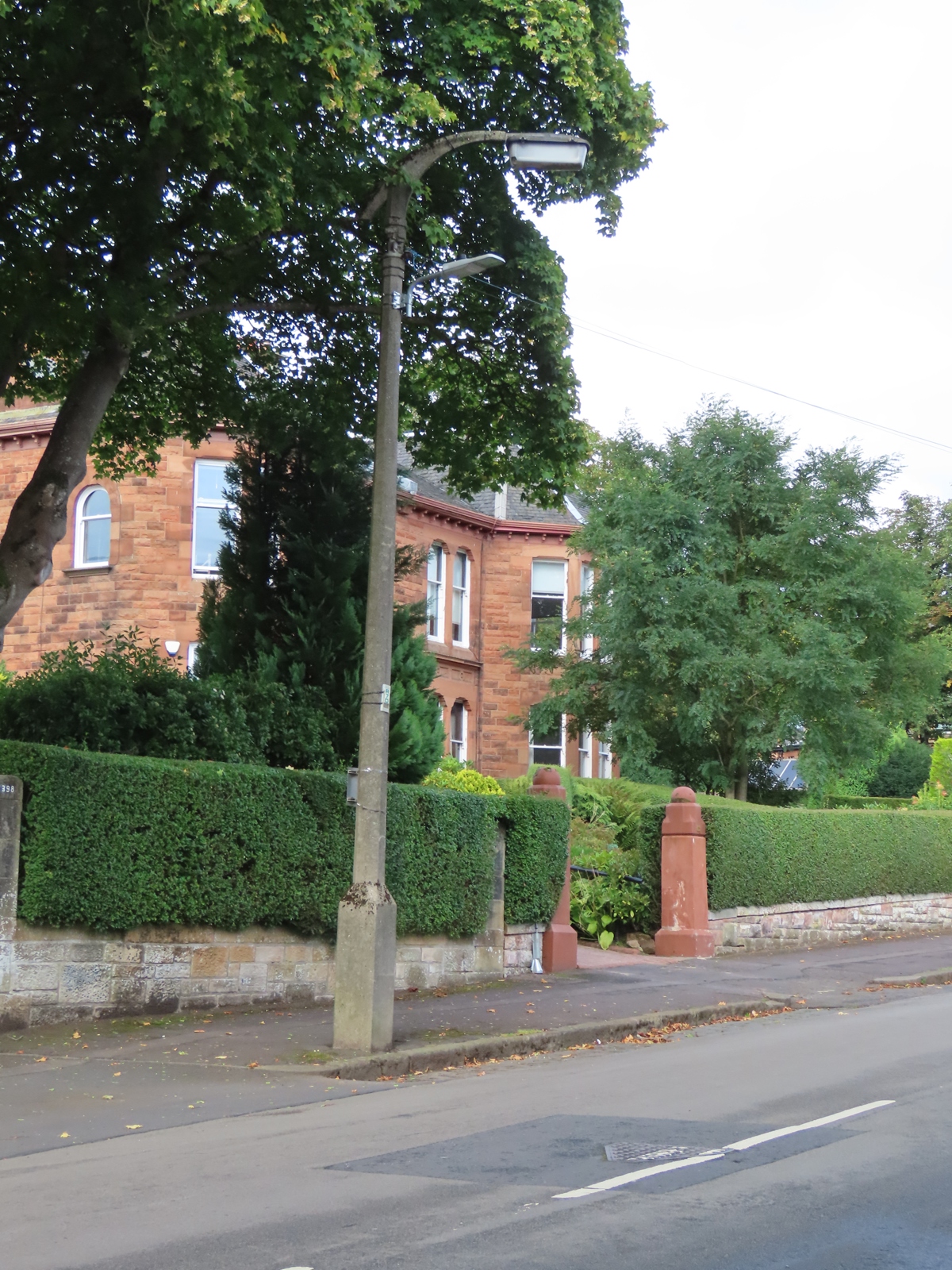
This was another intentional side-entry Springbank installation.
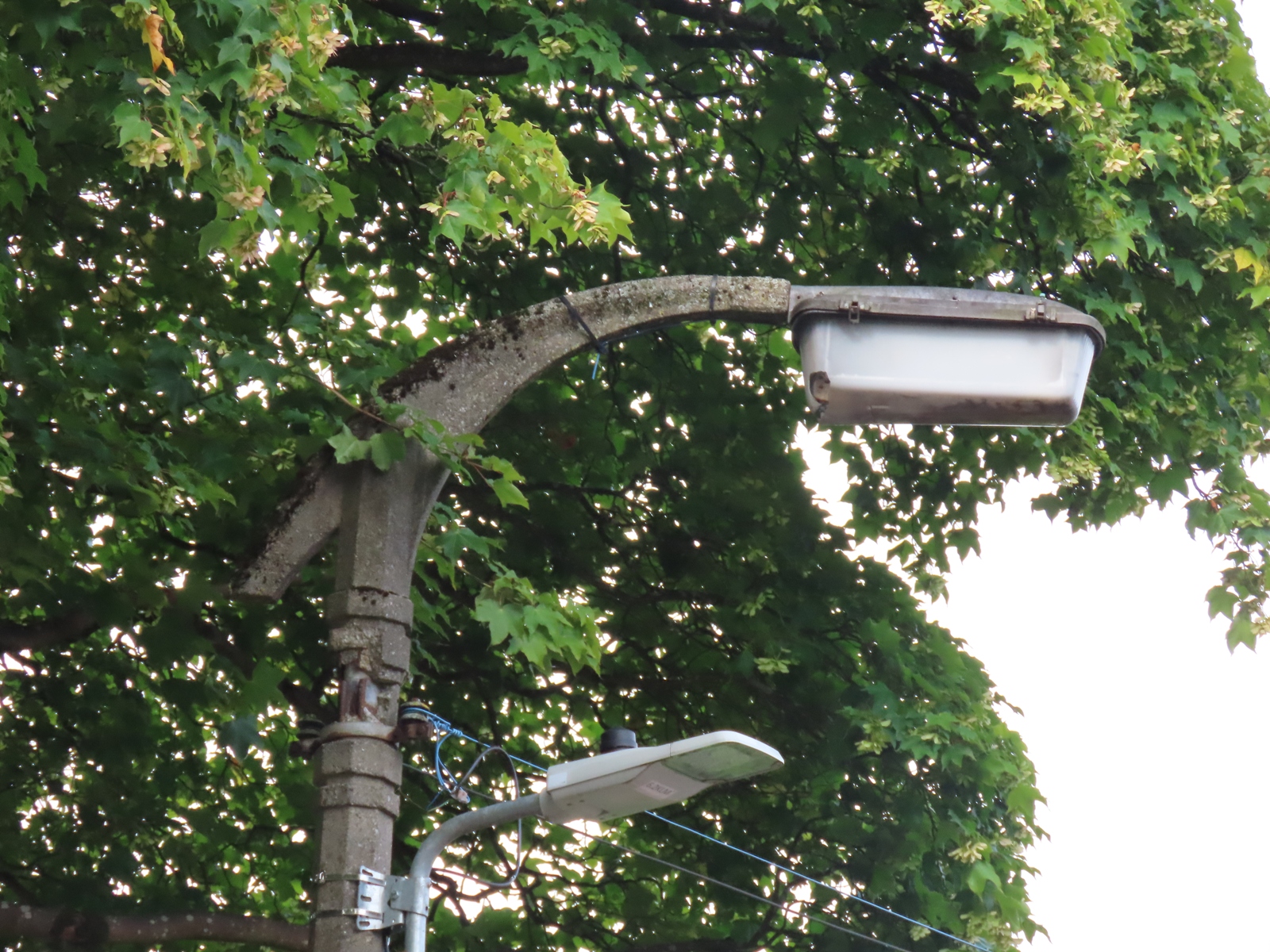
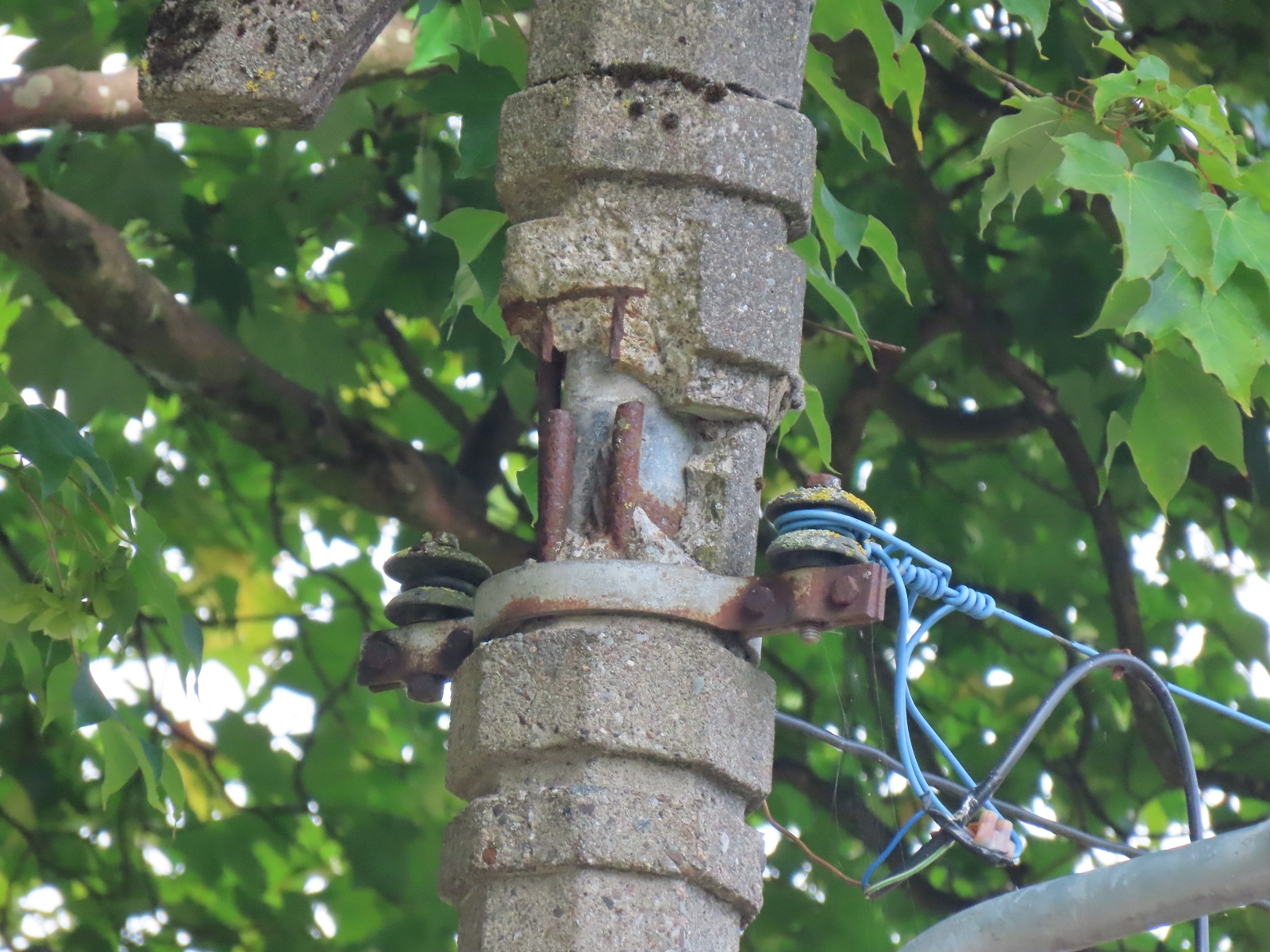
More structural (and electrical) horrors existed with this column.
The Isaro was fitted directly to the bracket of the next installation to be pictured.
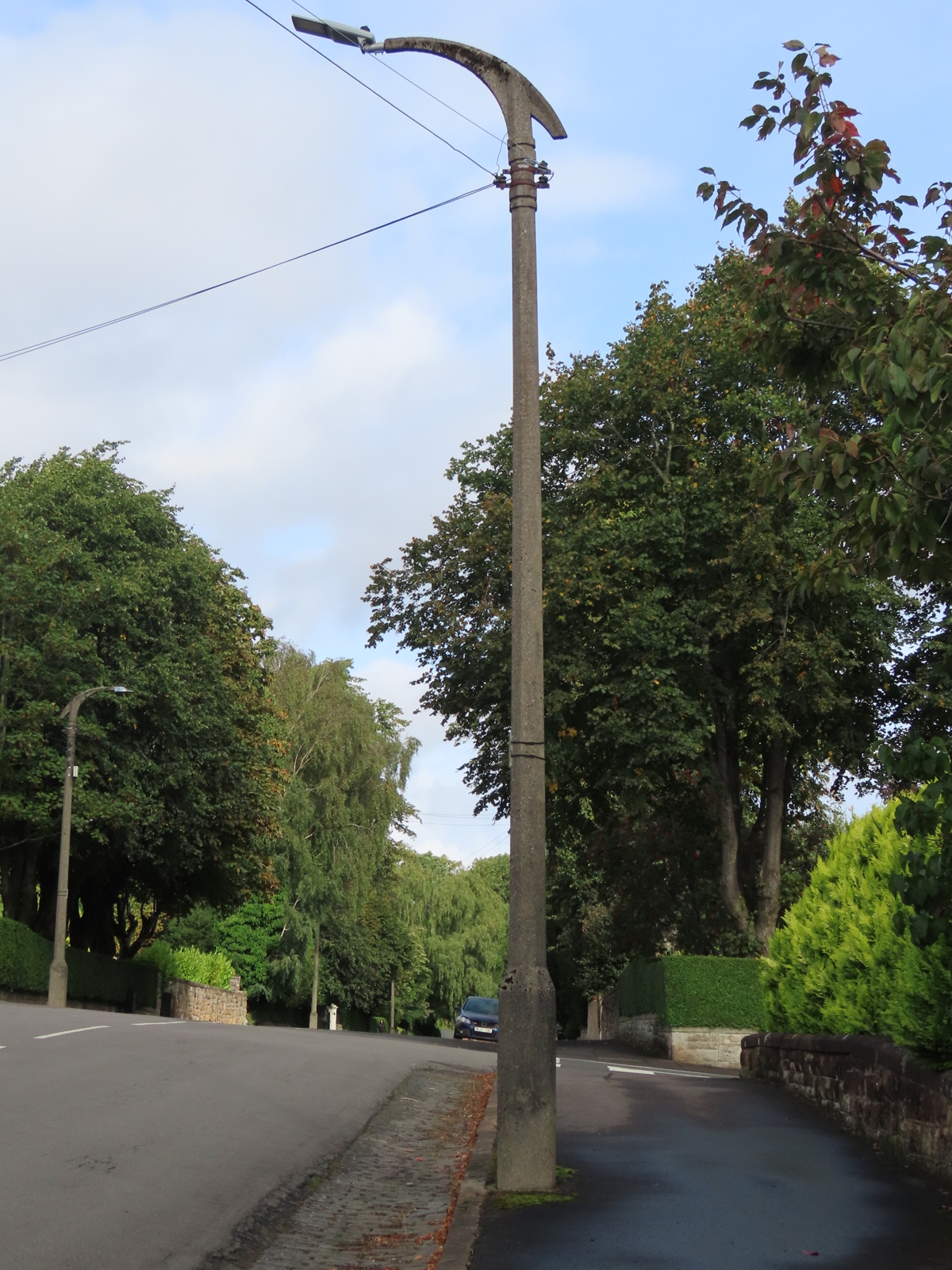
The upward tilt of the new lantern seems excessive.
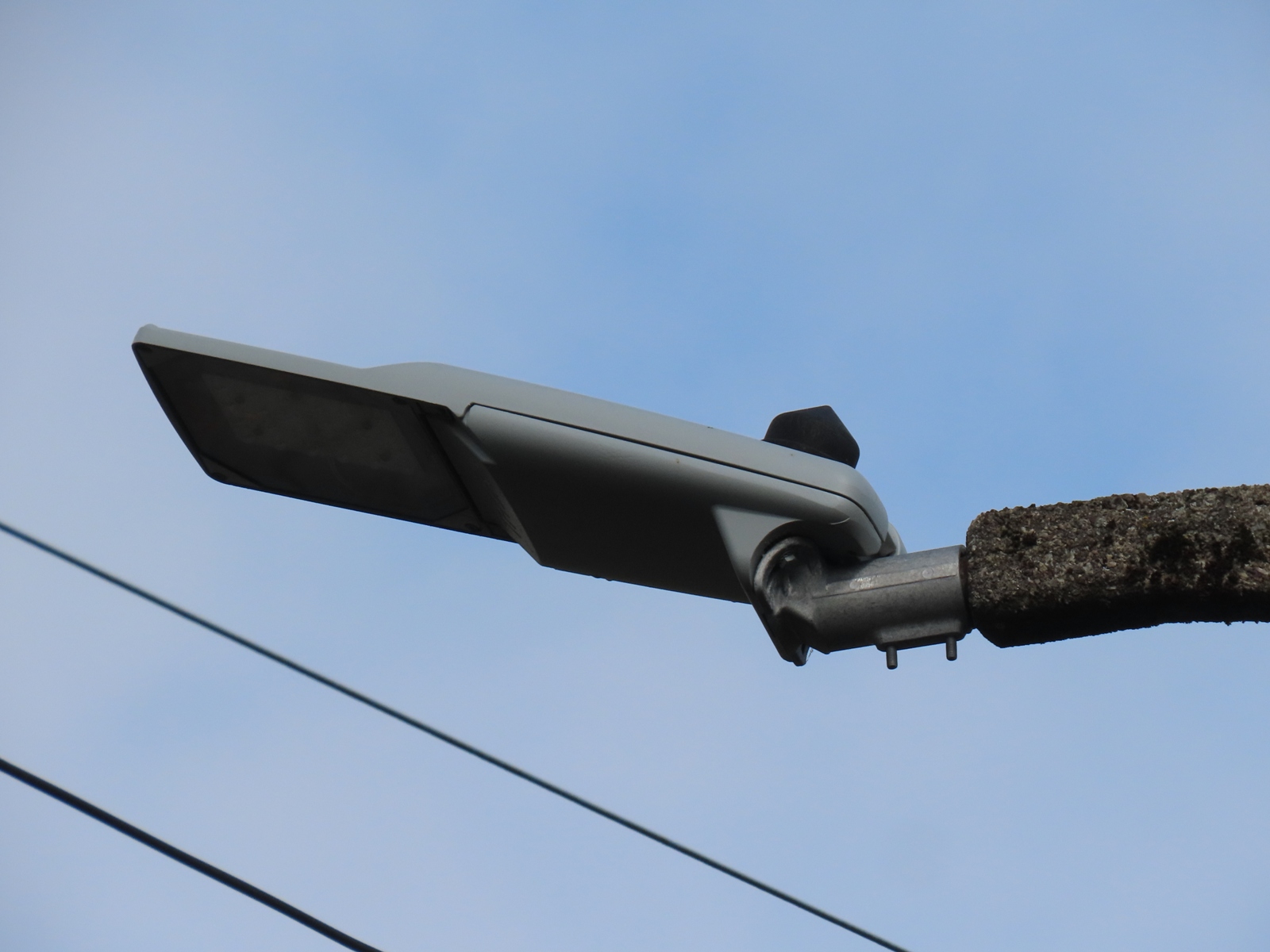
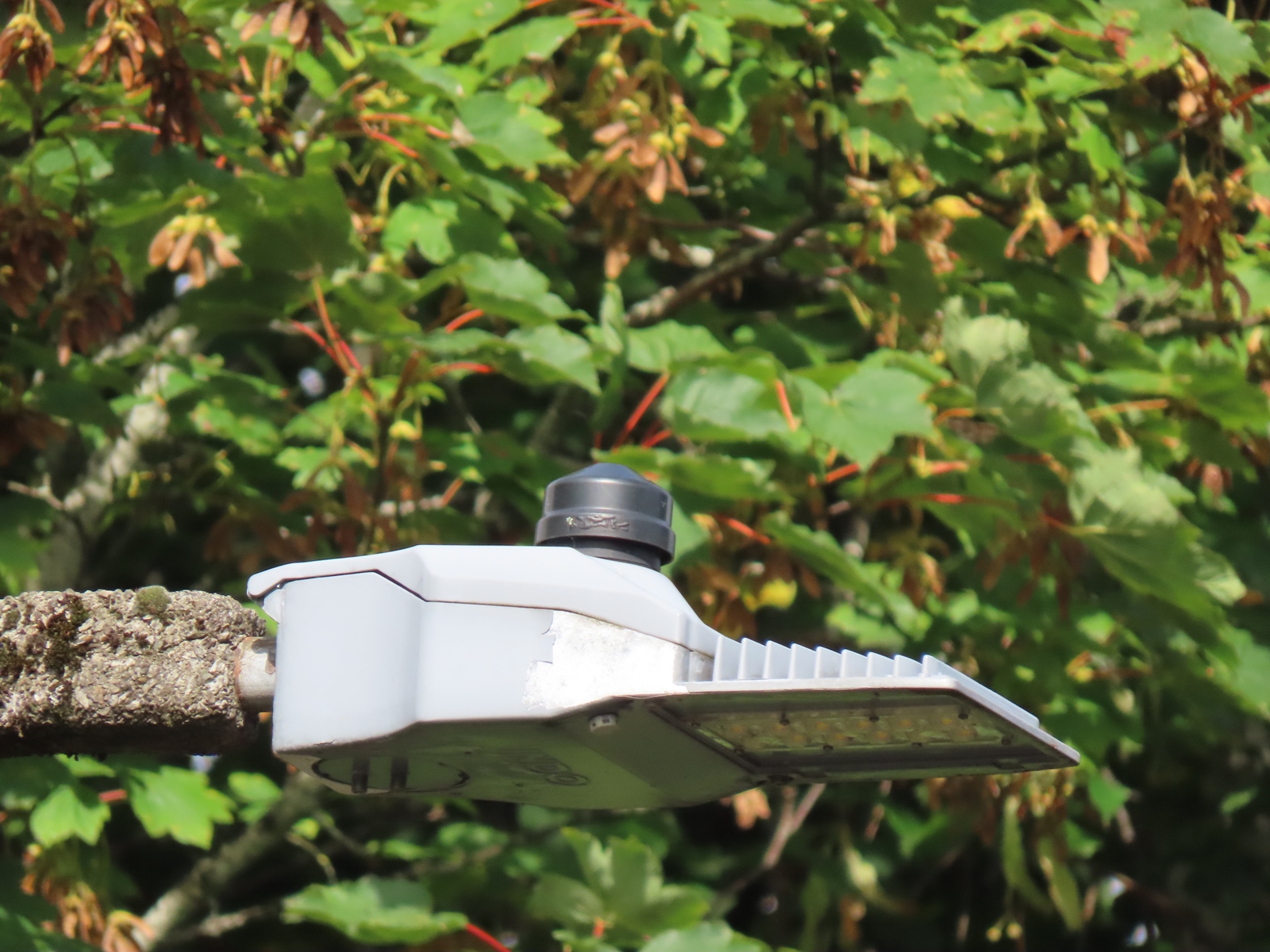
The INDO SiCURA fitted to the next bracket was positioned far more sensibly.
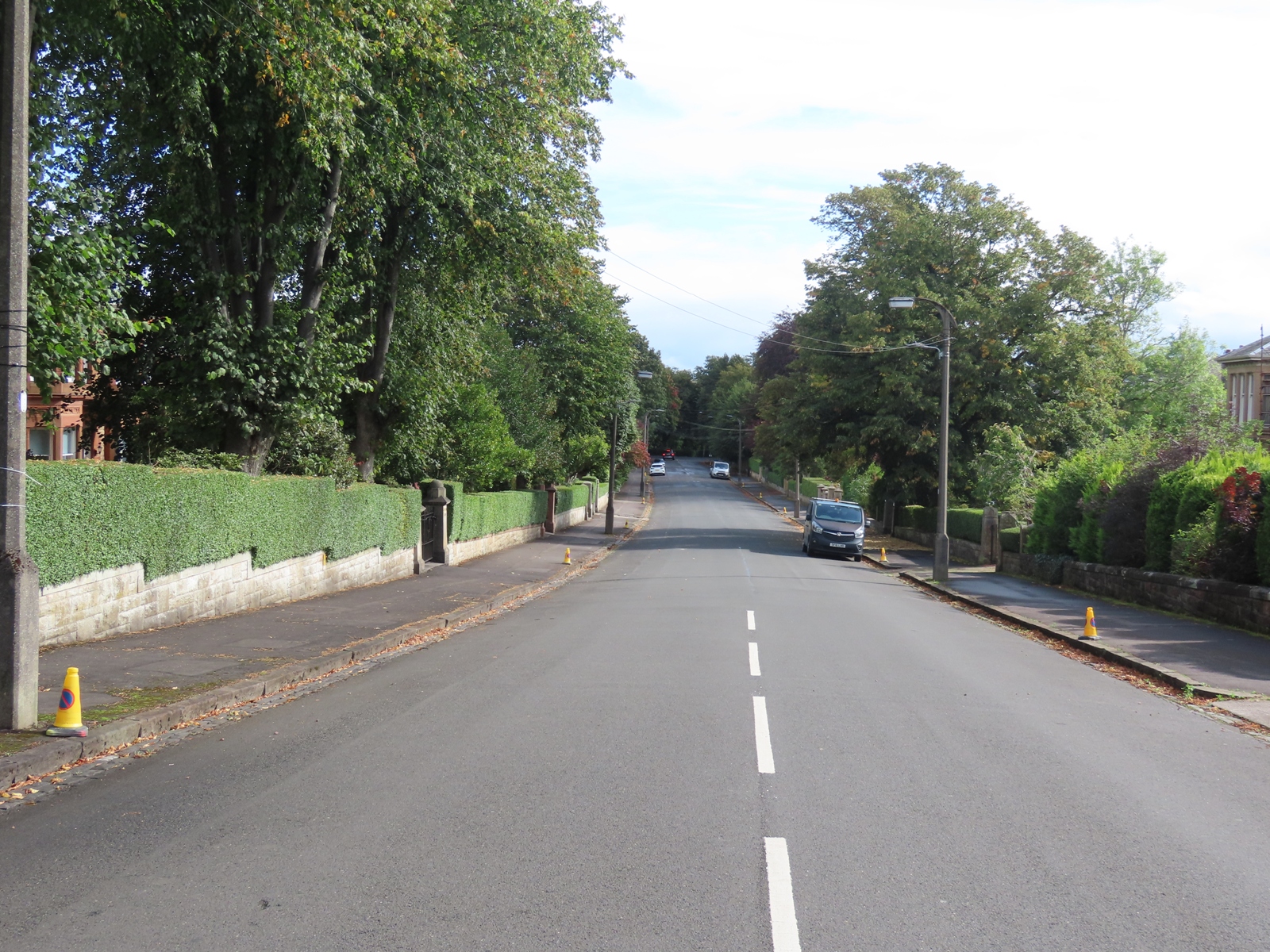
A quick glance down this part of Sutherland Avenue reveals more side-entry Springbanks.
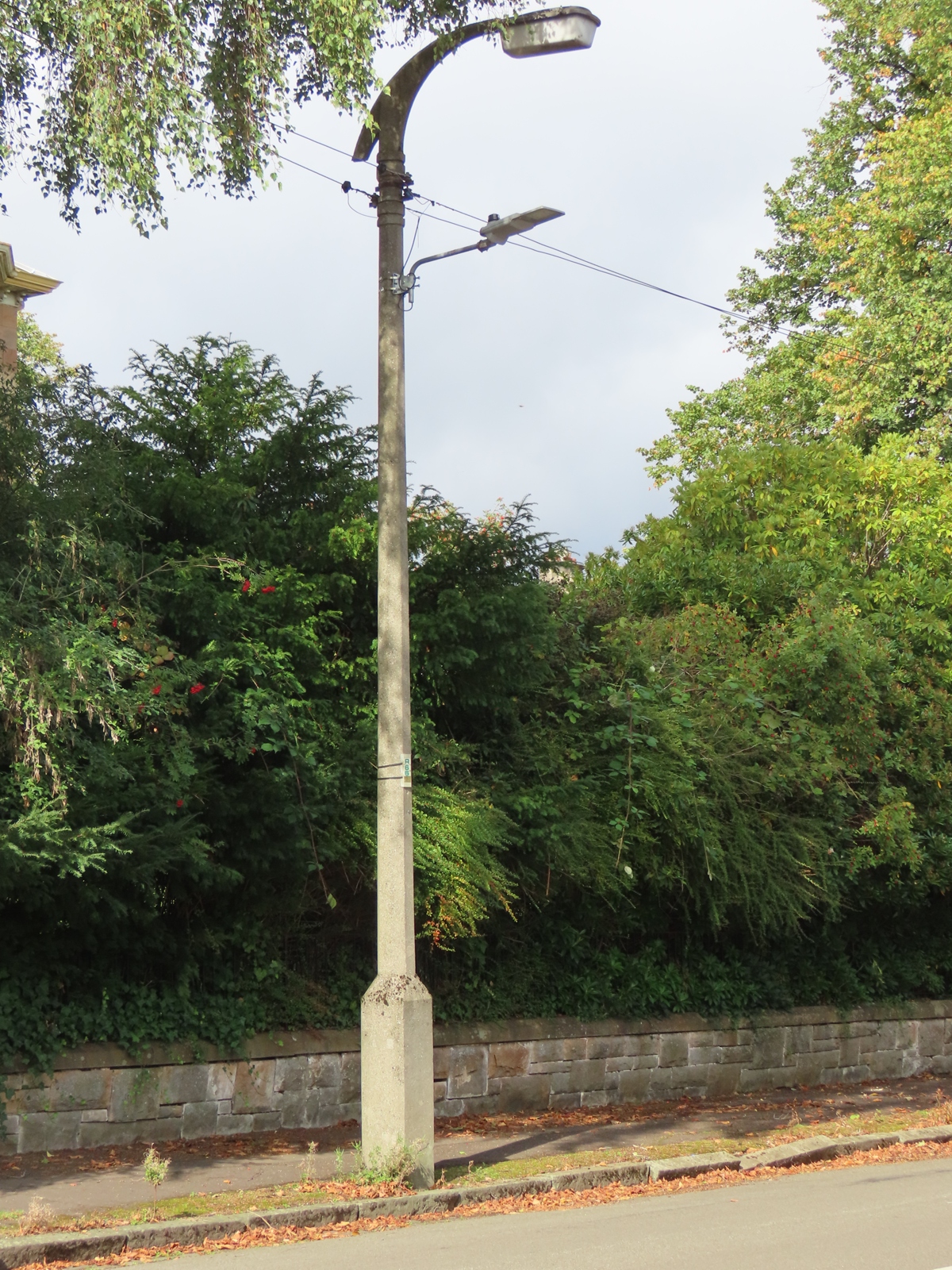
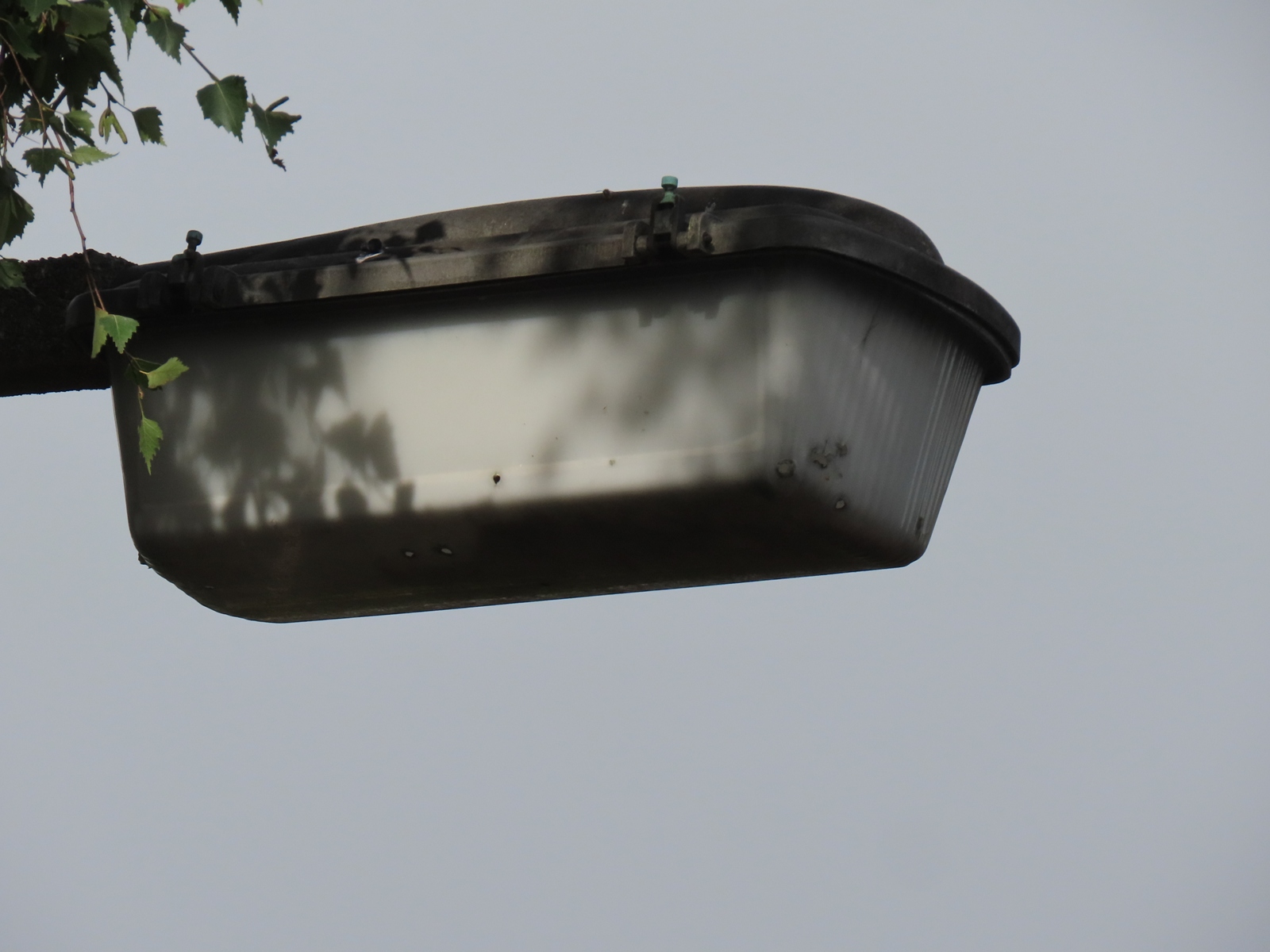
Back onto Dalziel Drive for the final time.
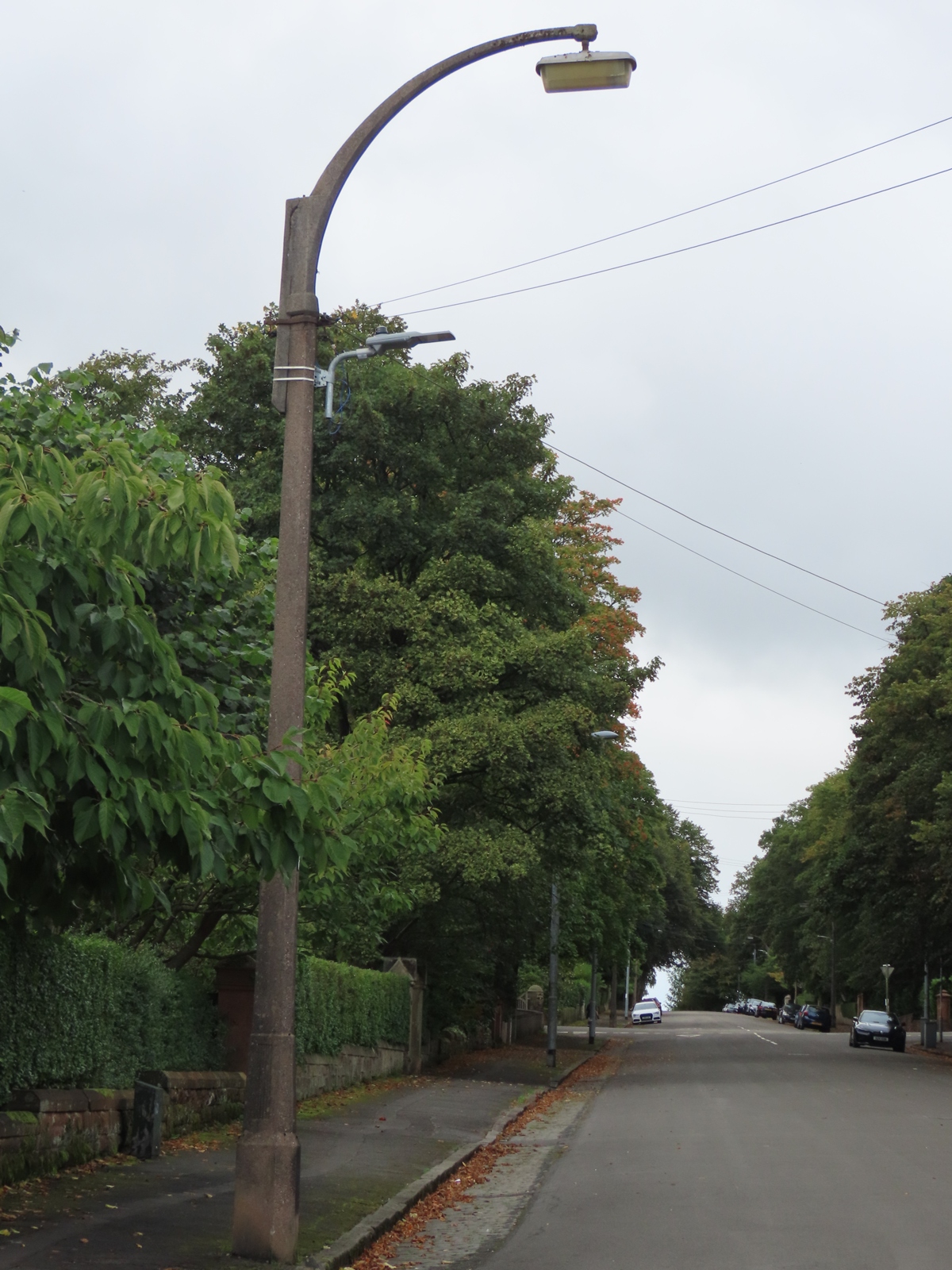
The concrete surrounding the top-entry connector had cracked here.
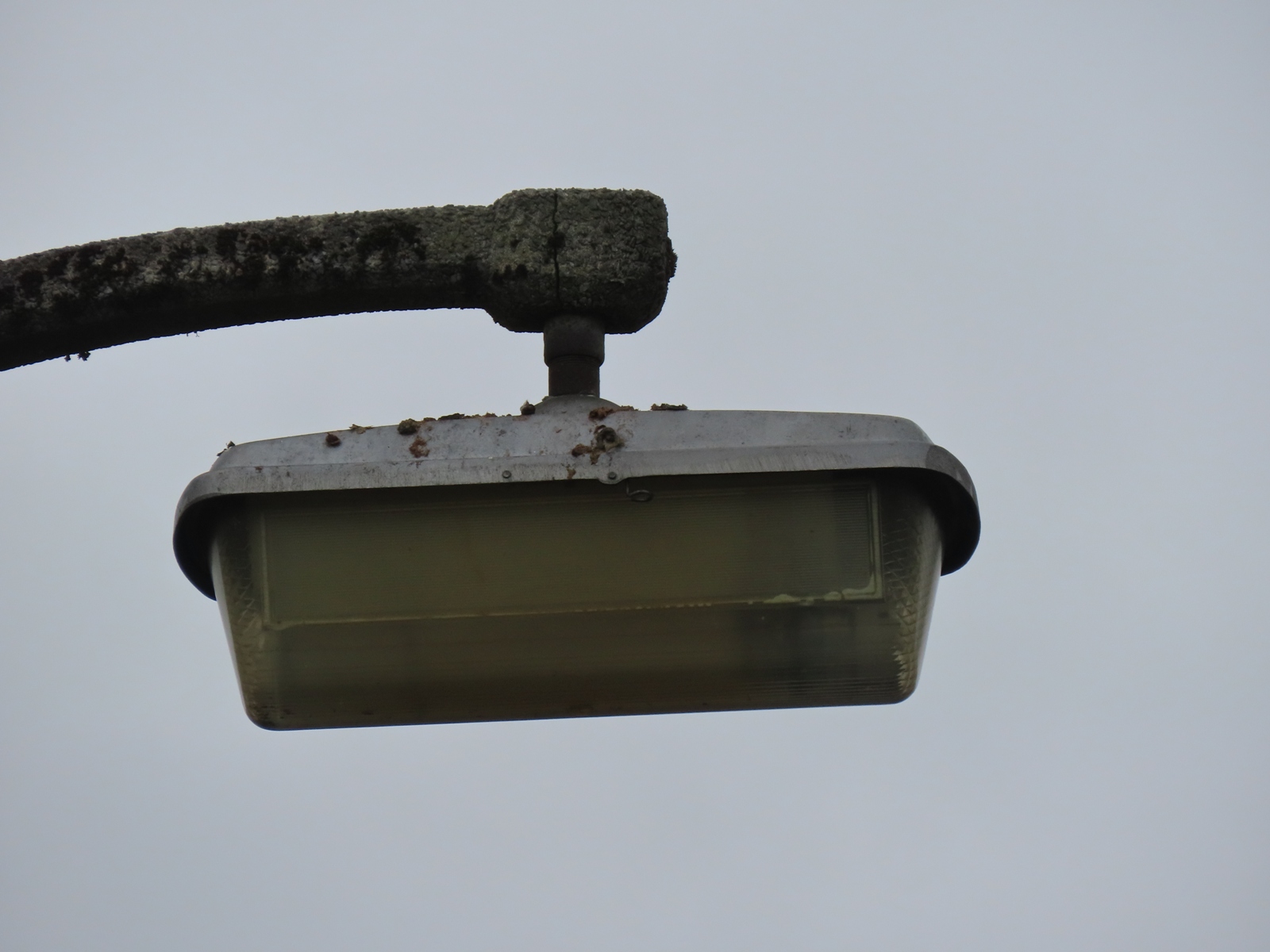
Another empty lantern, and another tiny replacement lantern.
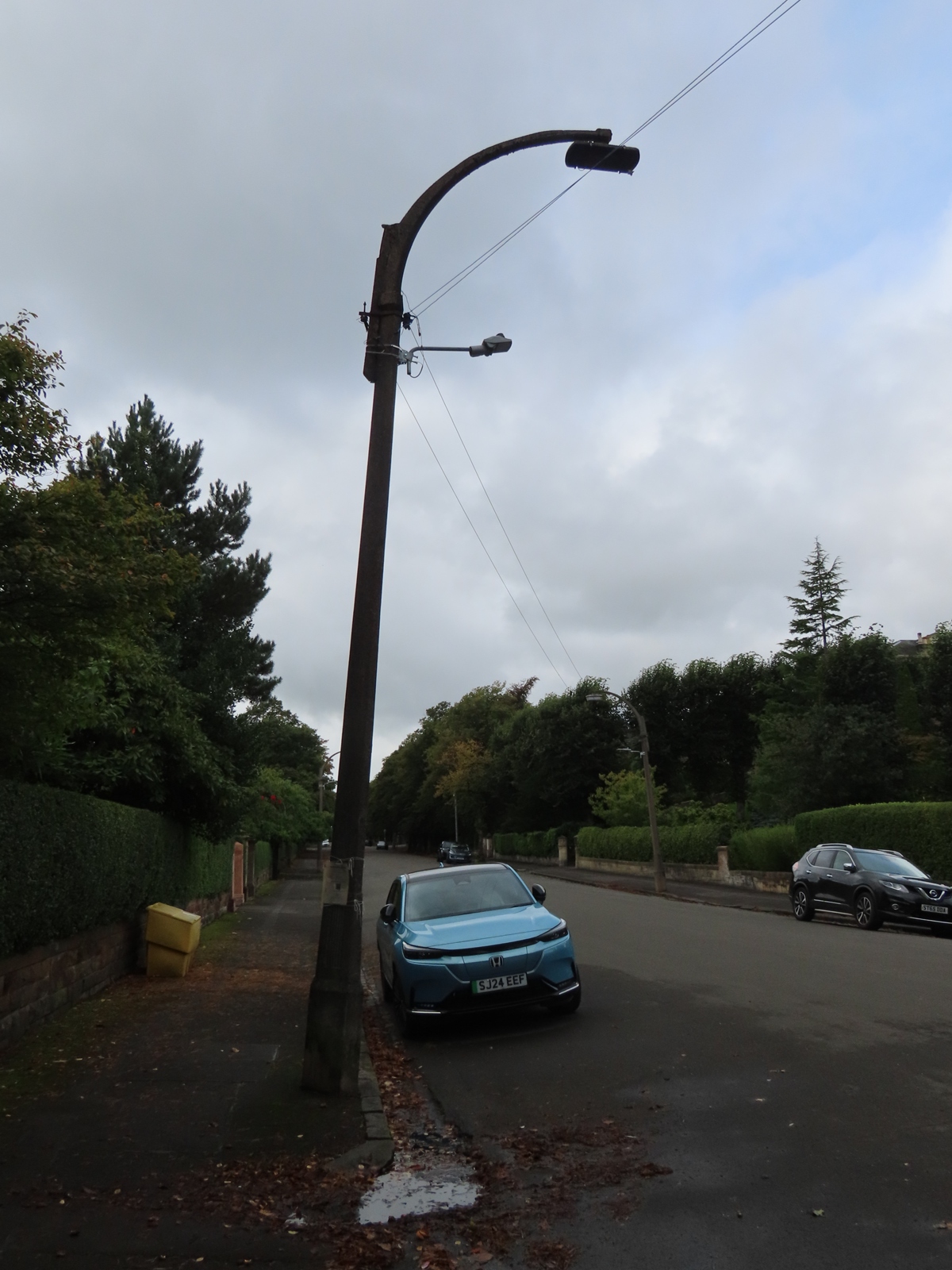
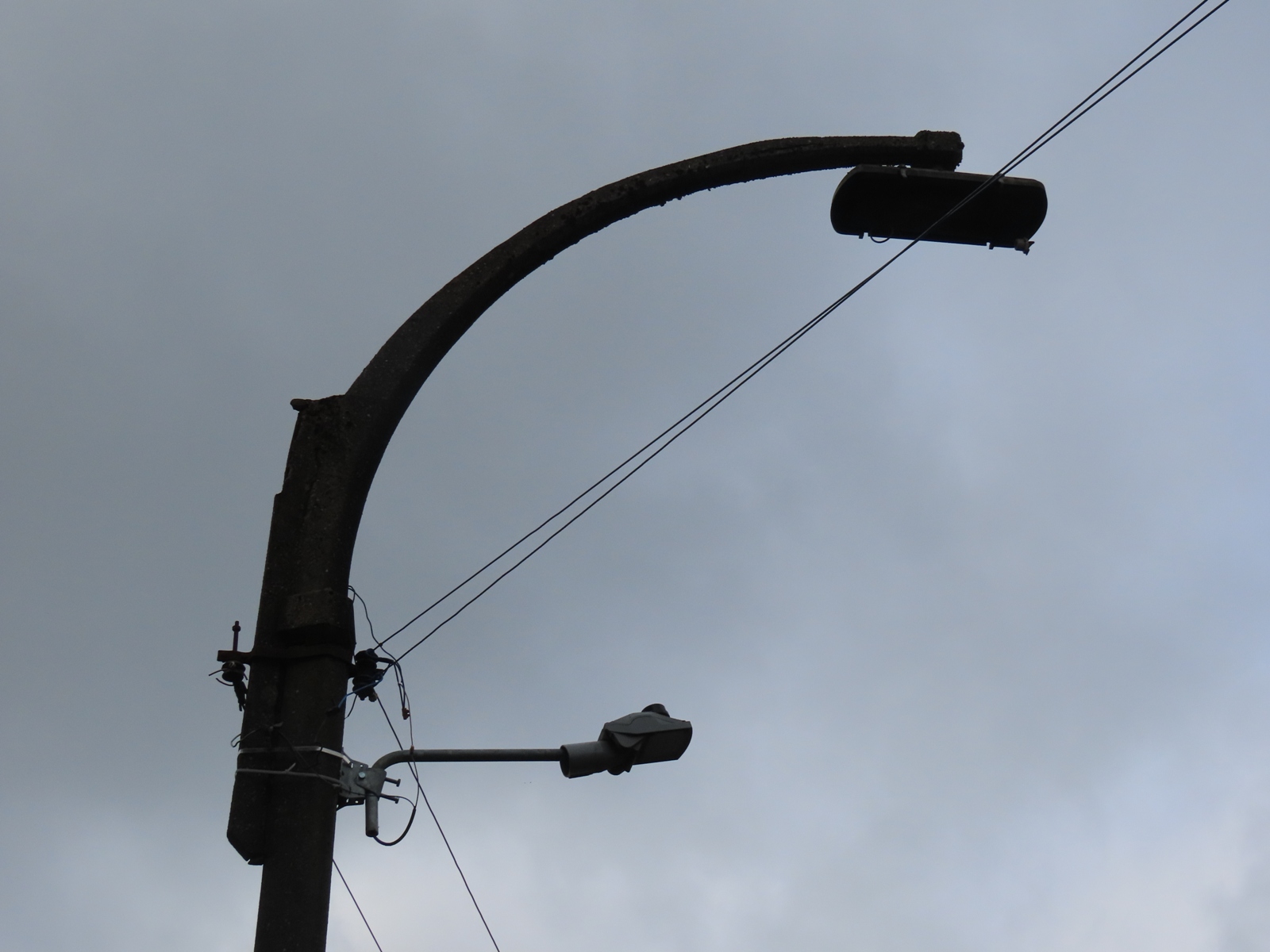
This would have been a Z9461 originally, before its bowl and lamp were discarded.
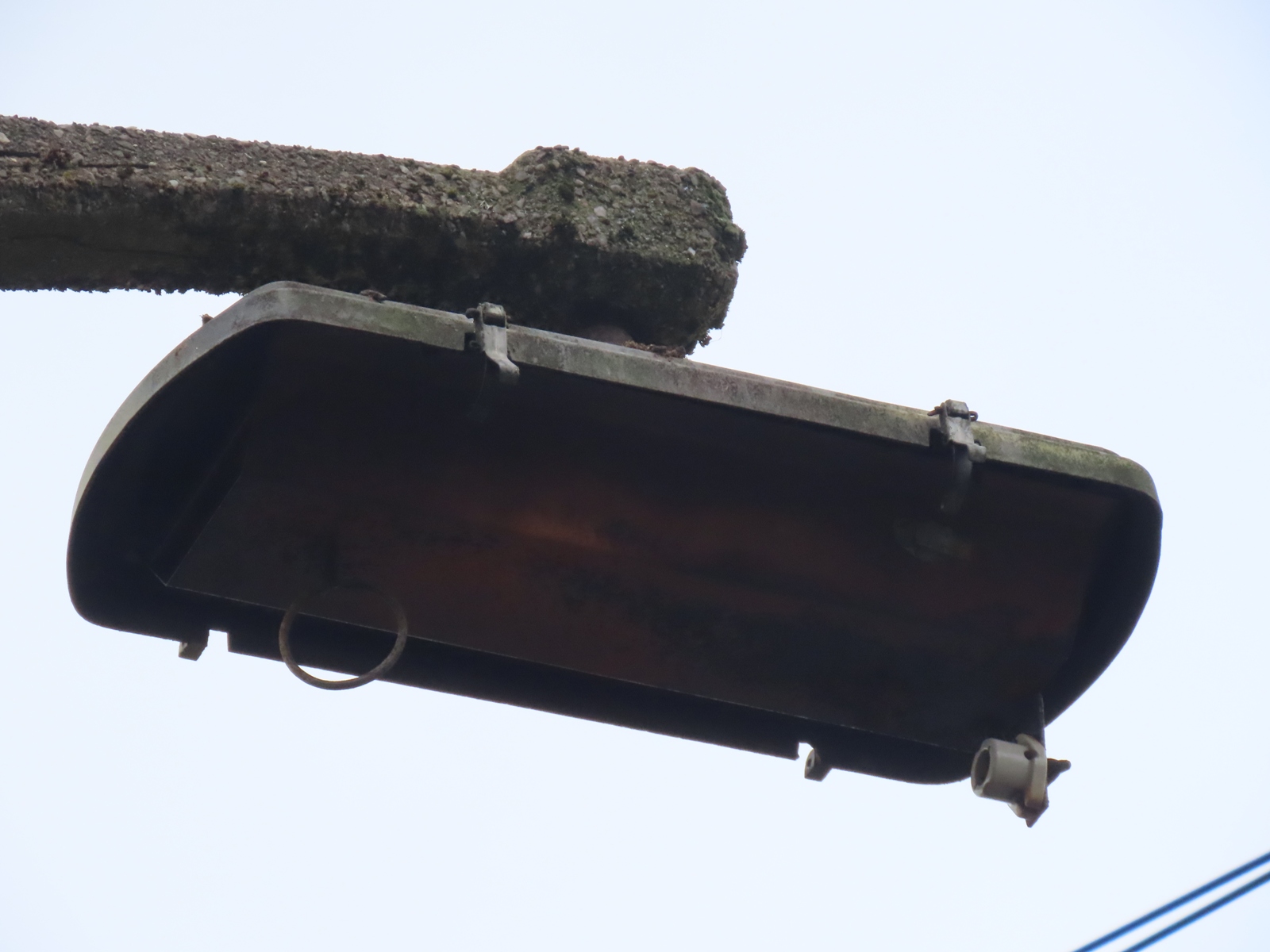
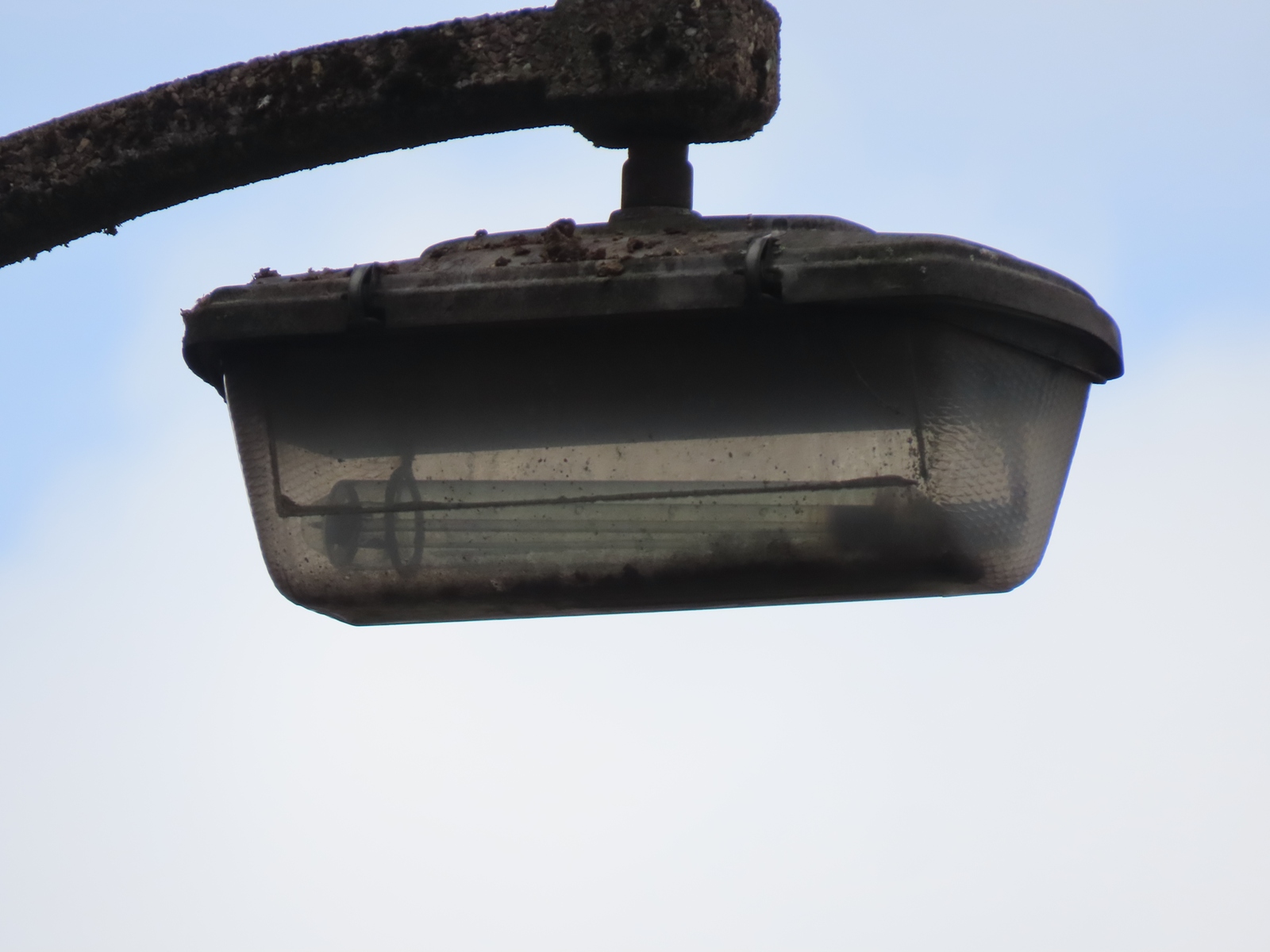
The side refractor panels were missing from this example.
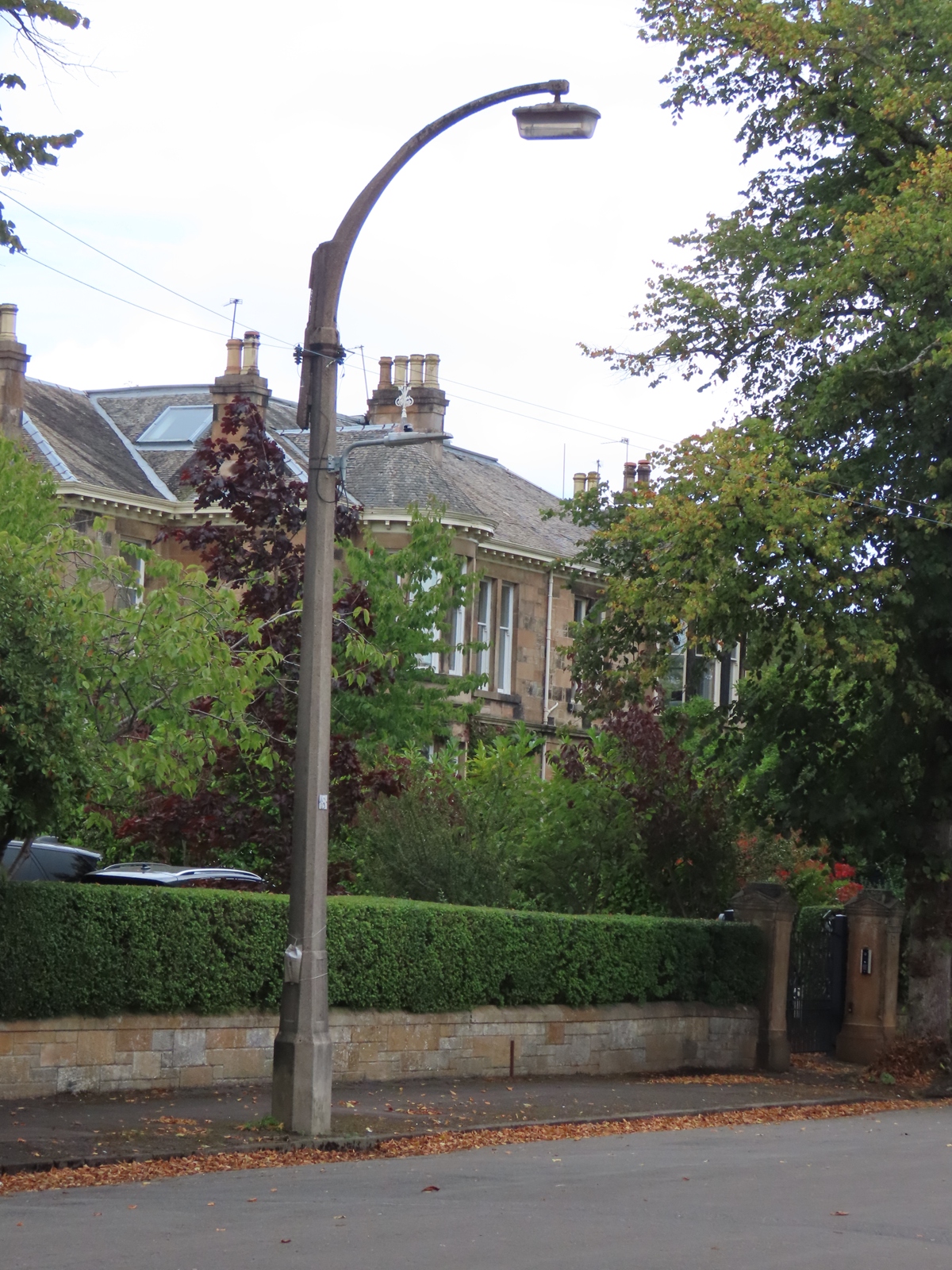
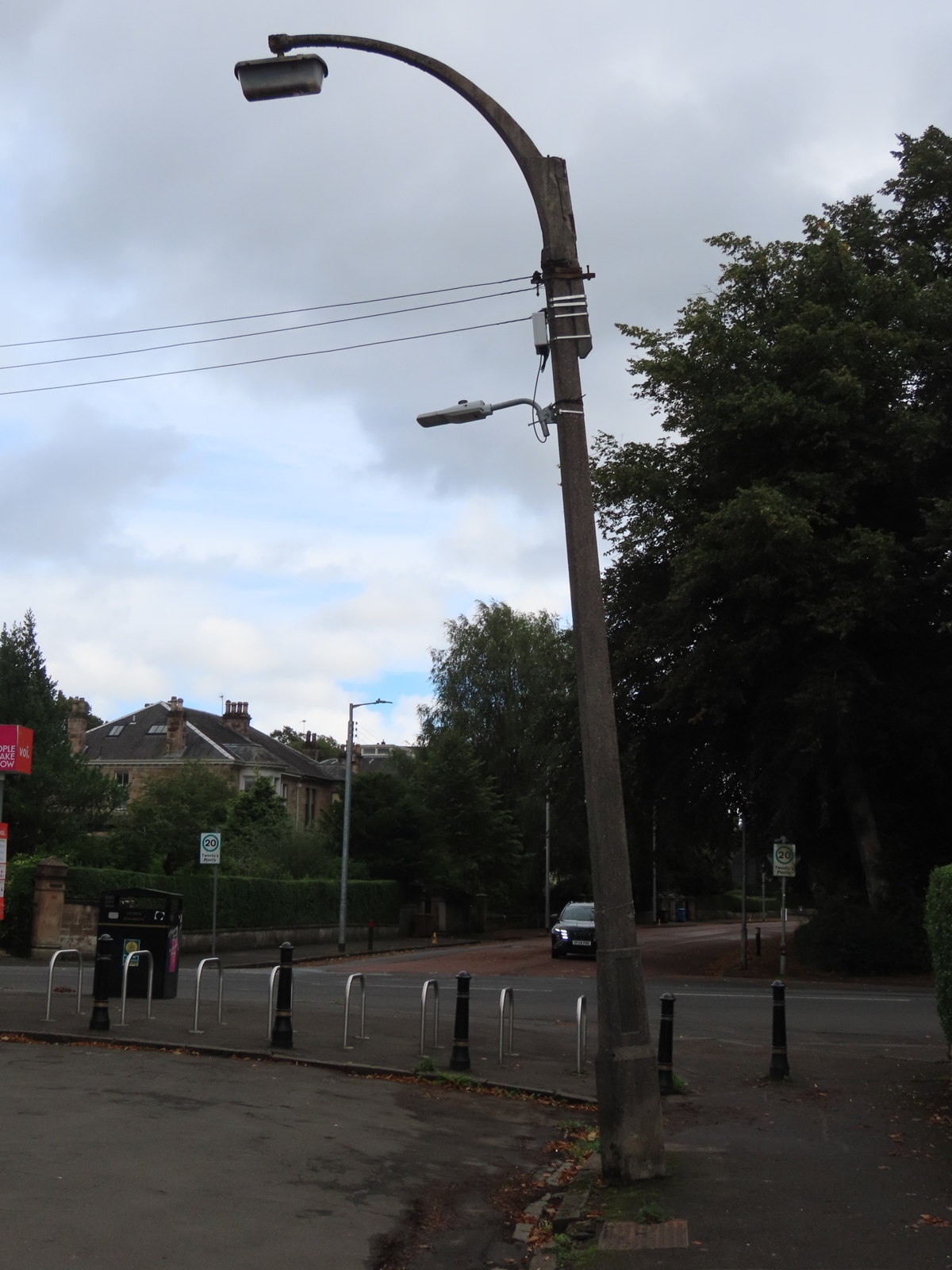
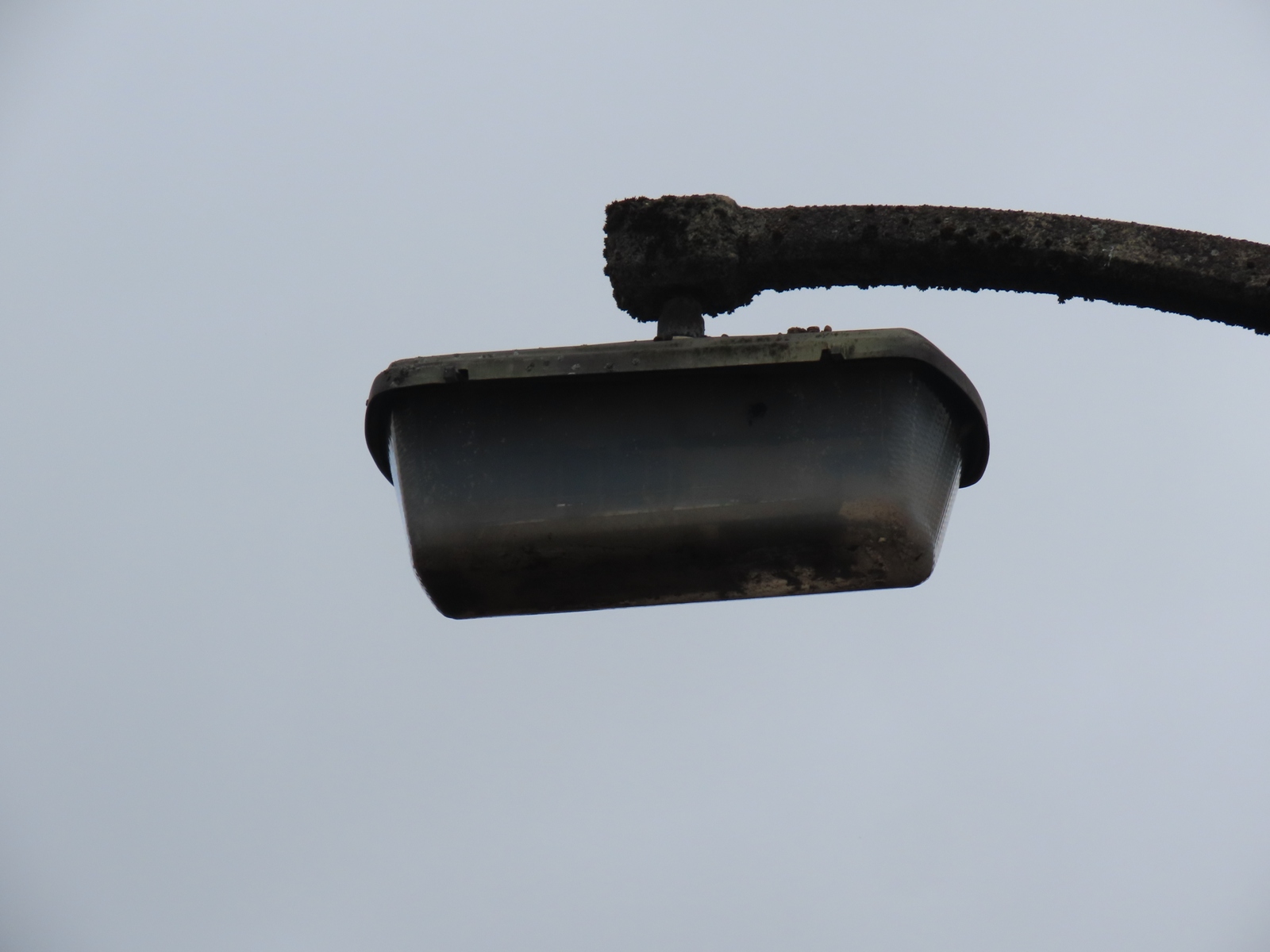
Finally, the last column to be pictured is reached! This is at the junction of Saint Andrew's Drive, and the column is leaning forwards.
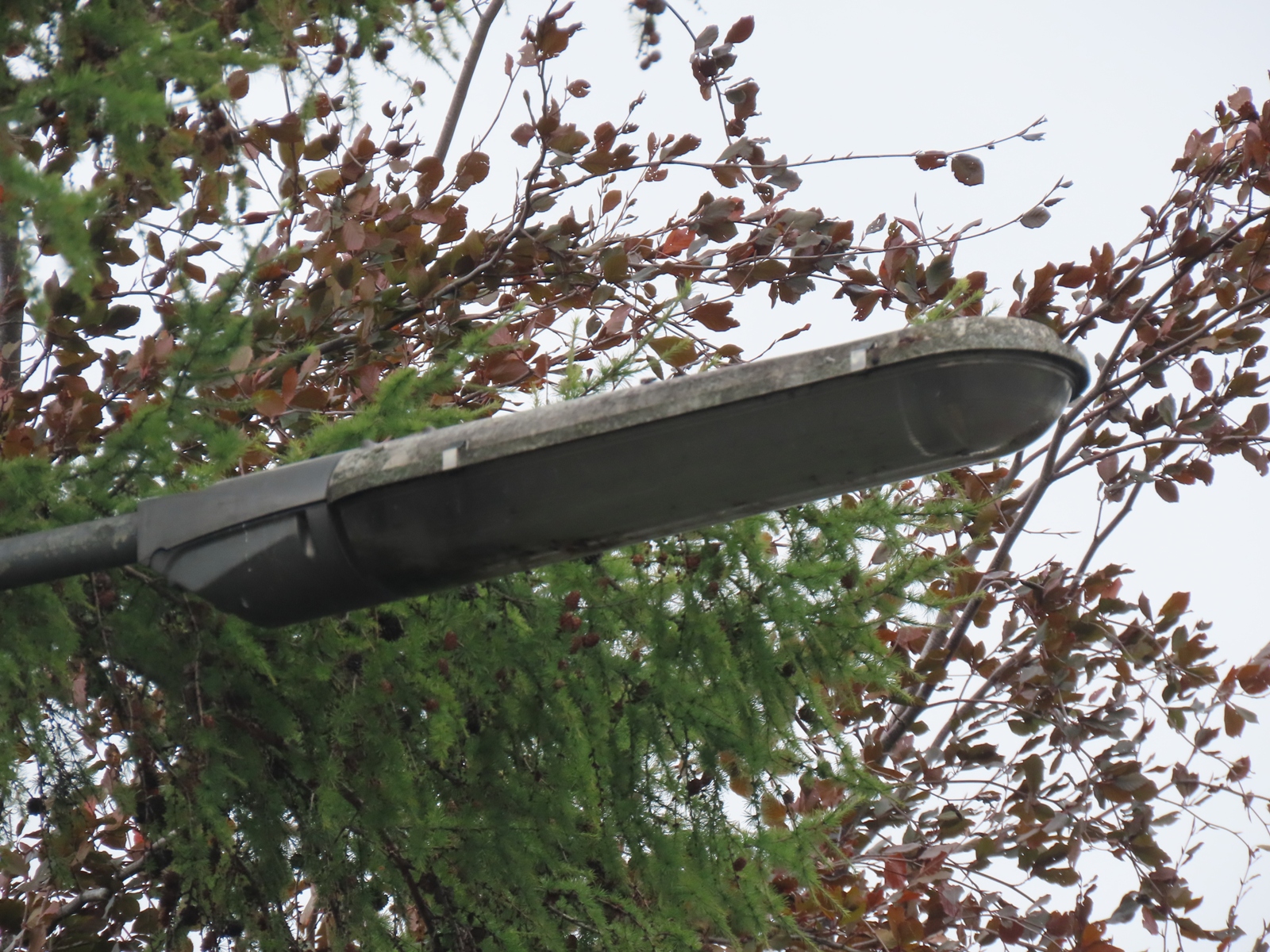
Just for completeness (when in Rome...or Glasgow, at least!), this sheet steel column on Saint Andrew's Road itself supported an earlier incarnation of the Philips MA 50 135 Watt SOX lantern; instead of the lamp control gear being installed within the lantern body itself, on this version, it is installed in the separate rear casting.
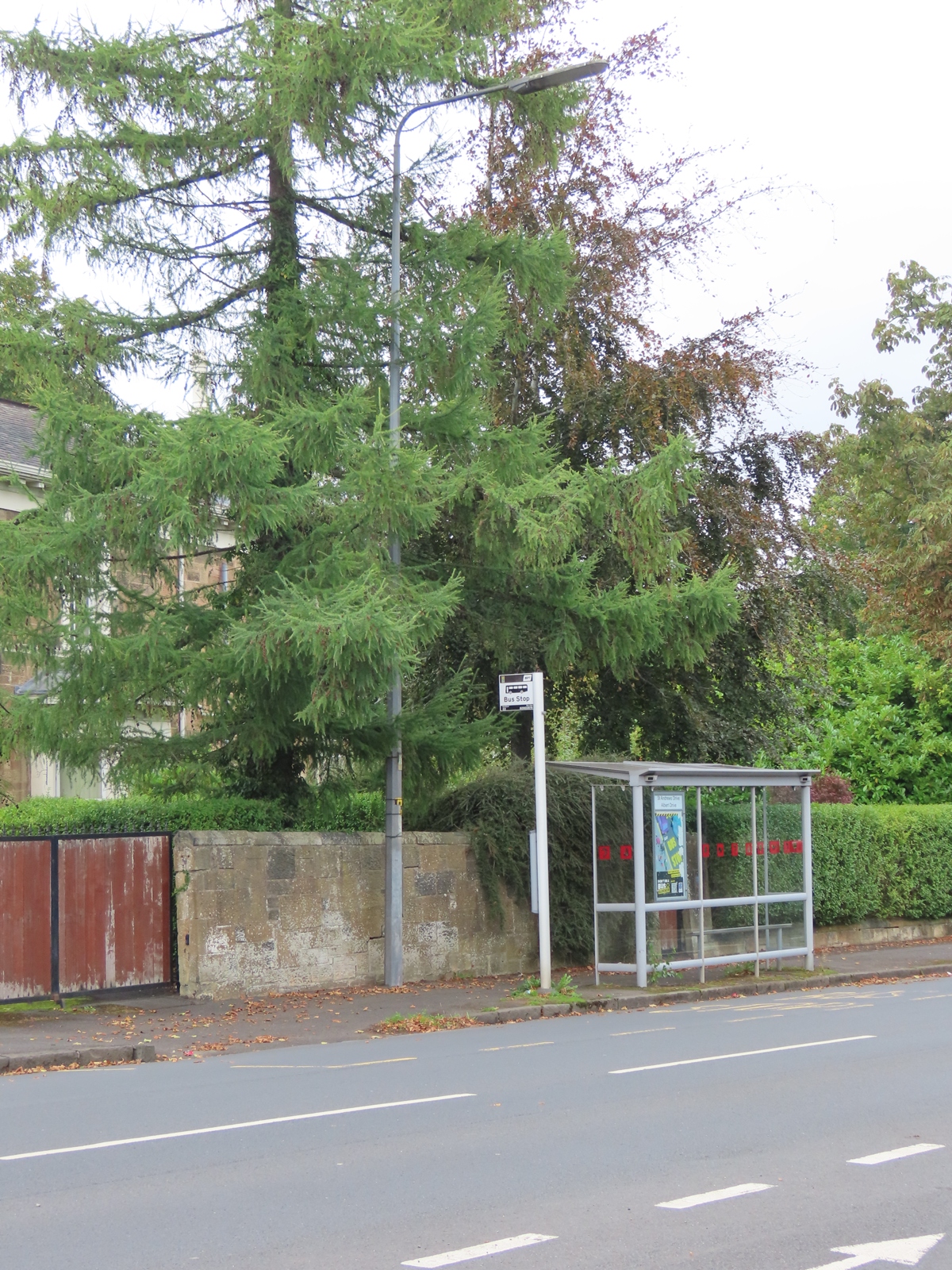
This too has no photocell fitted.
CLICK HERE TO MAKE A MONETARY DONATION
© 2002 - English Street Lights Online