Carlisle Railway Station, Court Square Brow, Currock, Carlisle, Cumberland, Cumbria Installed around the open parts of the station are a number of GEC Z8526 lanterns, for 250 - 400 Watt MBF (mercury vapour), SON (high pressure sodium) or MBI (metal halide) lamps, likely to date from the late 1970s or early 1980s. These lanterns have the lamp control gear installed remotely, though the equivalent gear-in-head lantern, the Z8536, appears in smaller numbers too, at locations where installing separate control gear would be impractical. The third, and rarest, lantern to be seen at the station, is the Philips SGS 201, for 80 - 125 Watt MBF, 50 - 70 Watt SON, or 35 Watt SOX (low pressure sodium) lamps. These lanterns are likely to be of similar age to the Z8526s, although none may operate any longer, as the platform areas are now lit with TRT Aspect LED lanterns attached to Abacus base-hinged columns.
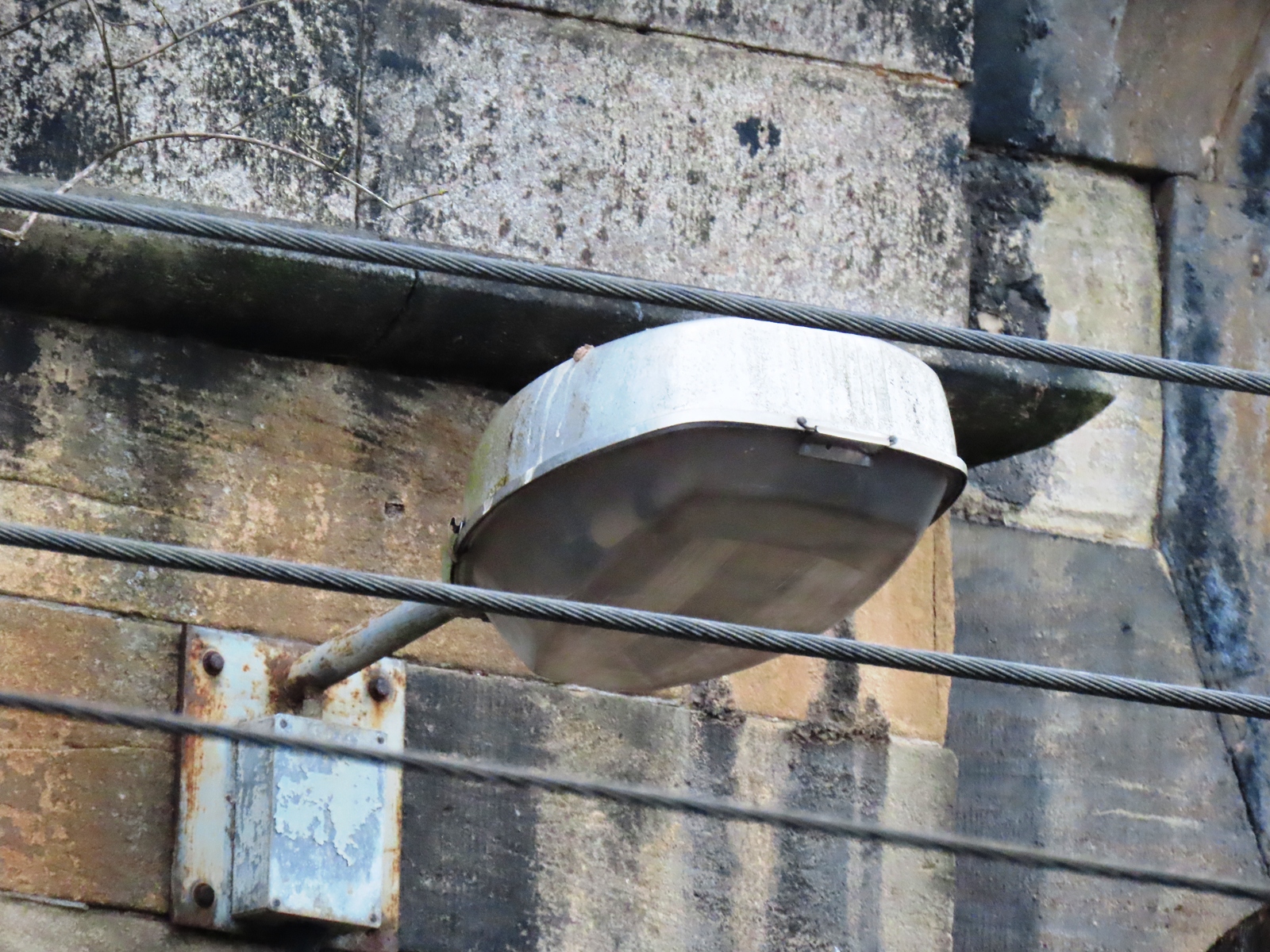
One of the Z8526s is seen attached to a wall bracket on the far side of the station. The enclosure that is fitted to the wall bracket is too small to contain the lamp control gear, and probably just features the supply cable's connection to the internal lantern cable; the enclosures housing the gear being situated at a lower height on the wall.
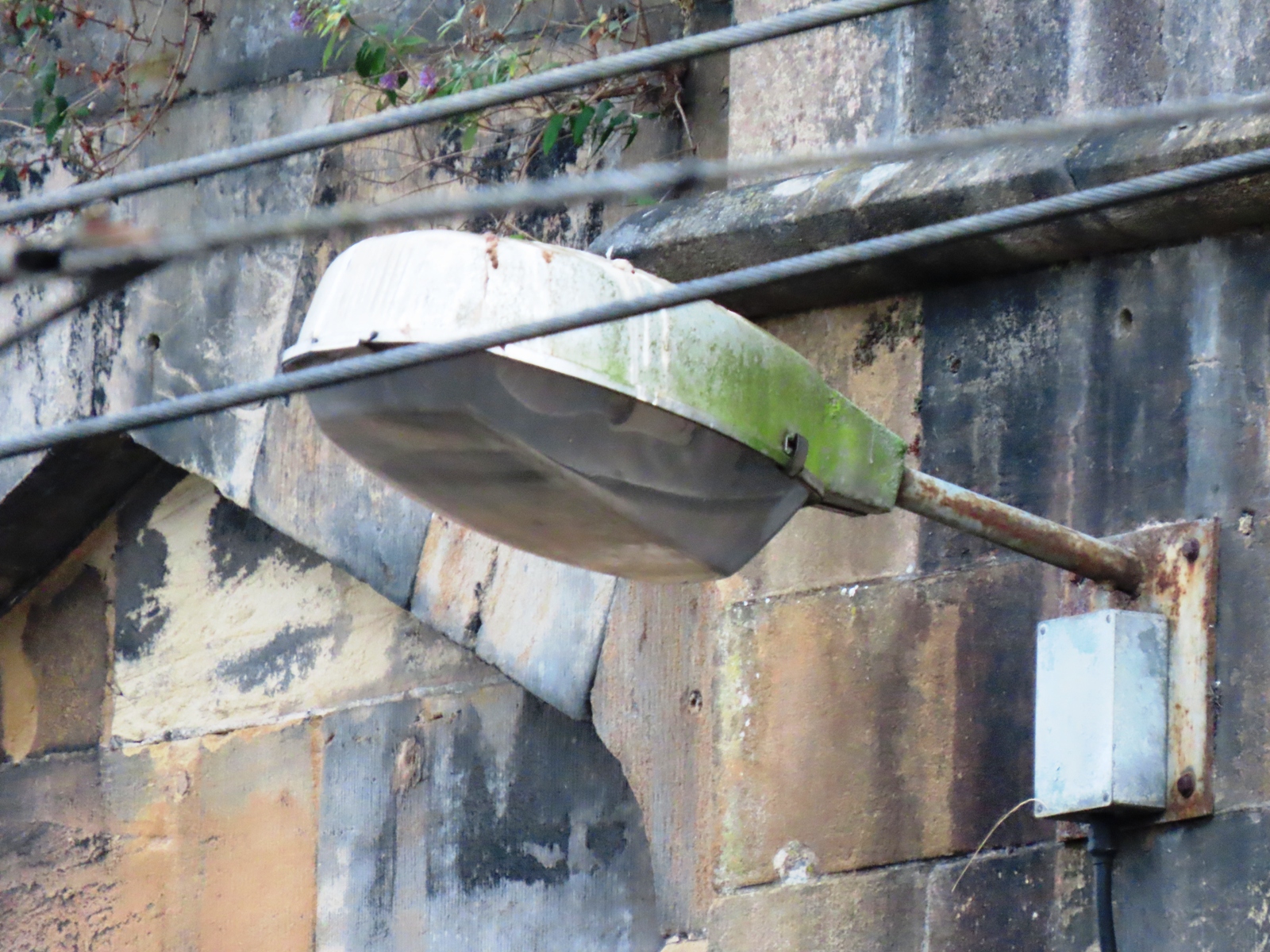
Another example, complete with an elliptical lamp of some repute, is seen further along the wall. The addition of greenery to the lantern's canopy suggests that these lanterns are not used routinely; if they were, the heat generated by the lamp would be sufficient to keep the moss growth at bay.
An older version of the Abacus base-hinged column is positioned at the end of the wall.
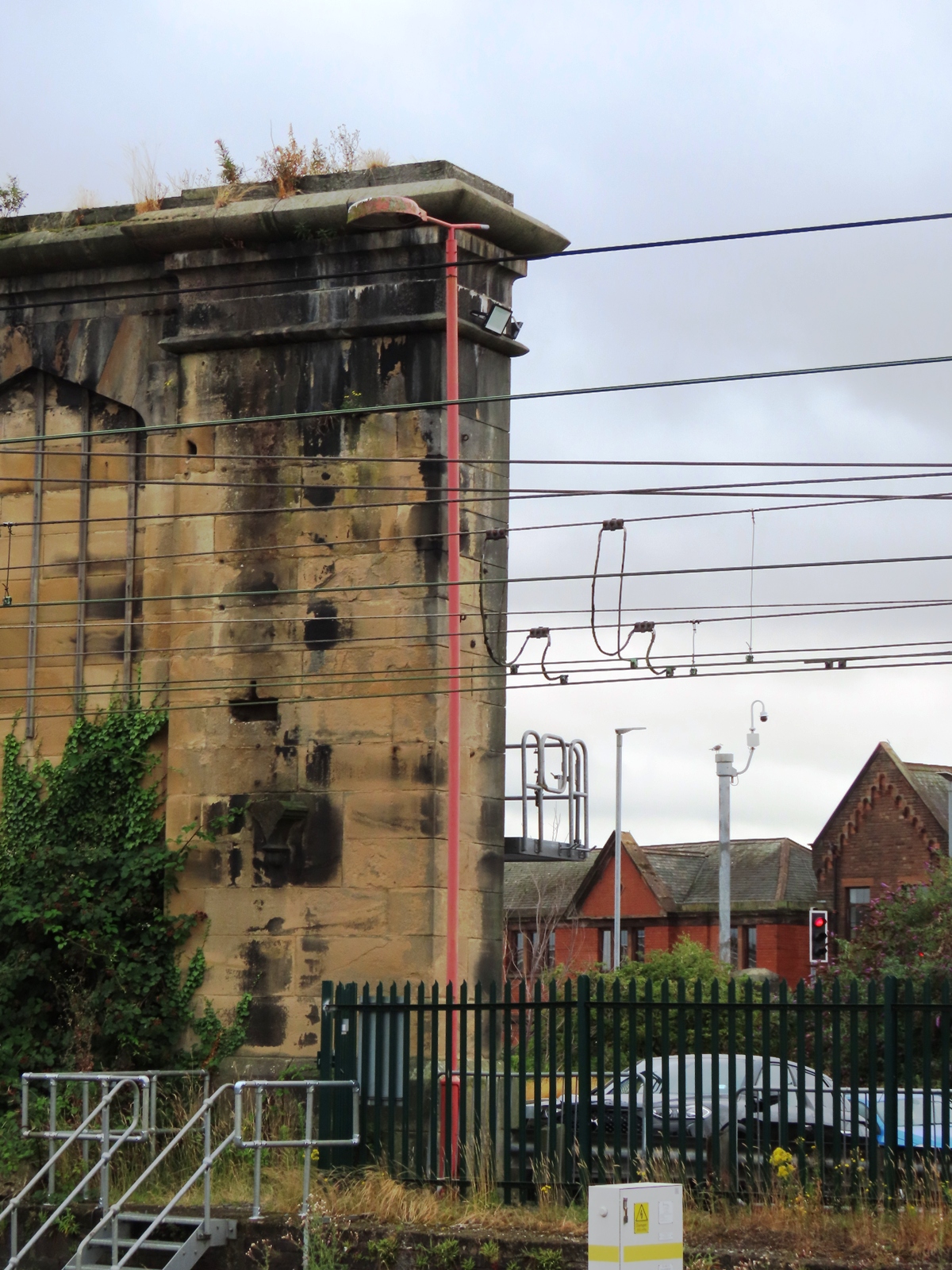
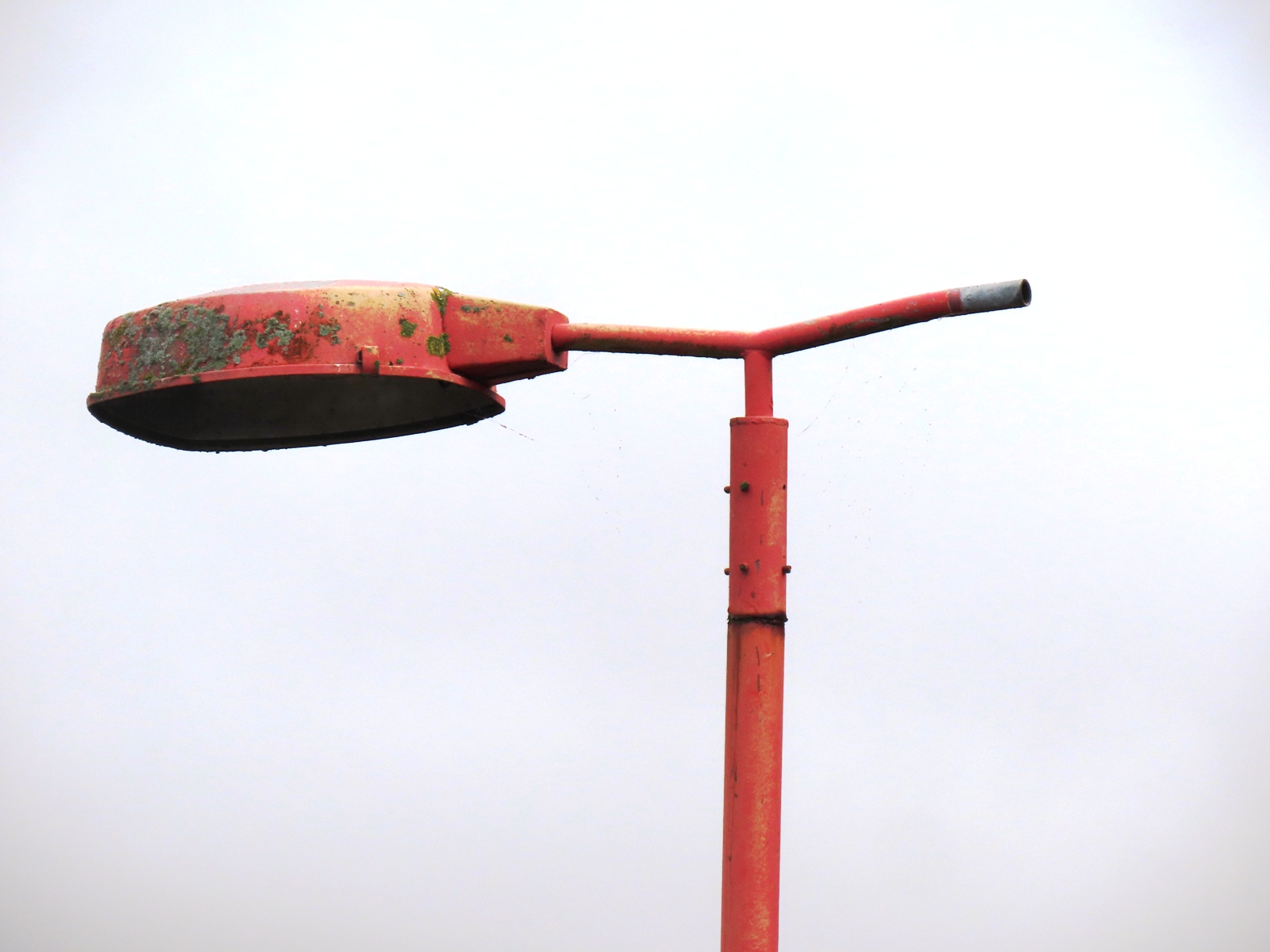
A twin bracket is employed here, although only one Z8526 now remains attached in the modern era. The lantern's metalwork is painted the same (faded) red as the rest of the structure is. The bowl is missing, though a lamp can, again, be glimpsed inside the lantern.
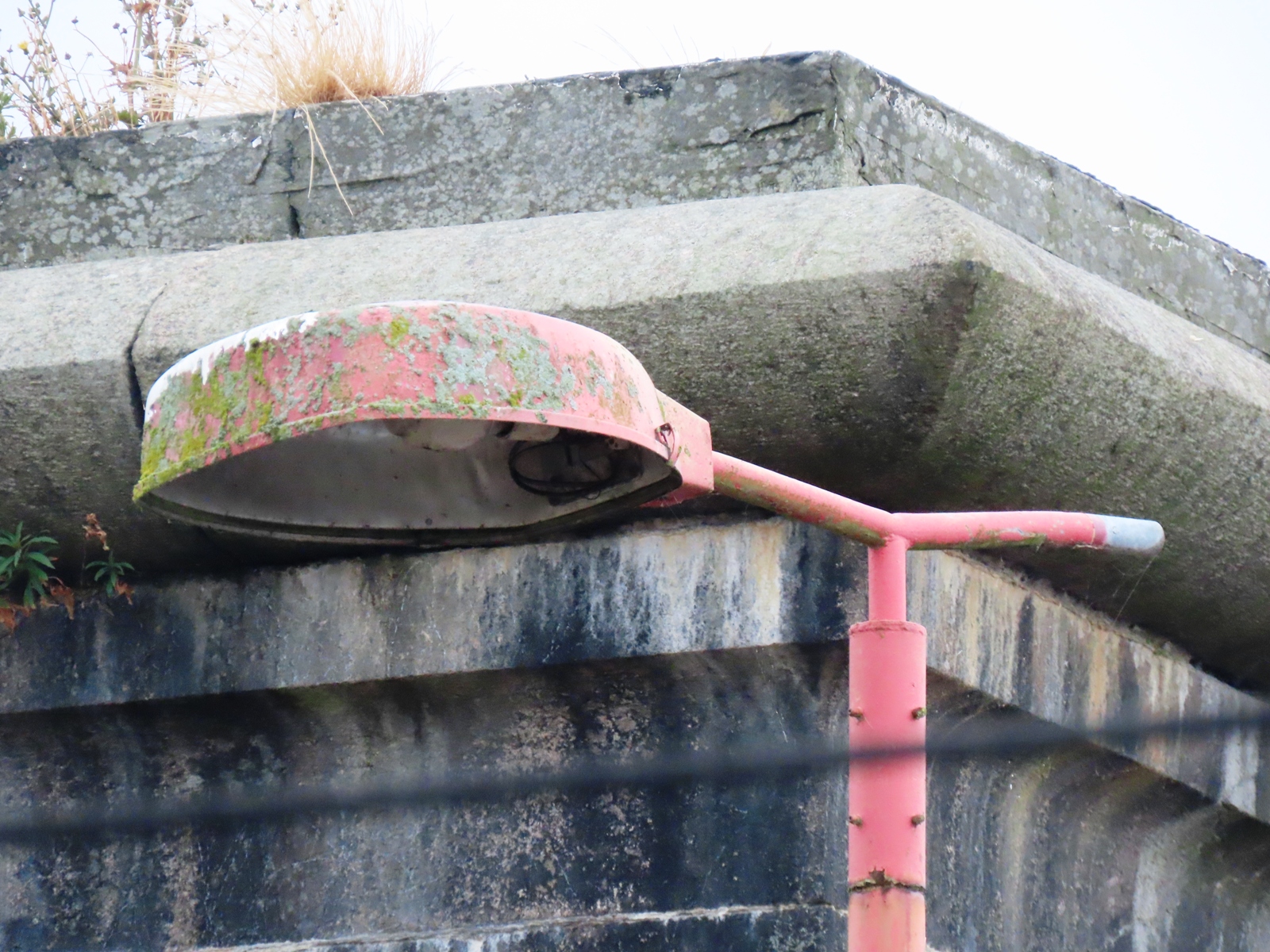
The same installation is seen from the convenient vantage point of the Victoria Viaduct at the western end of the station.
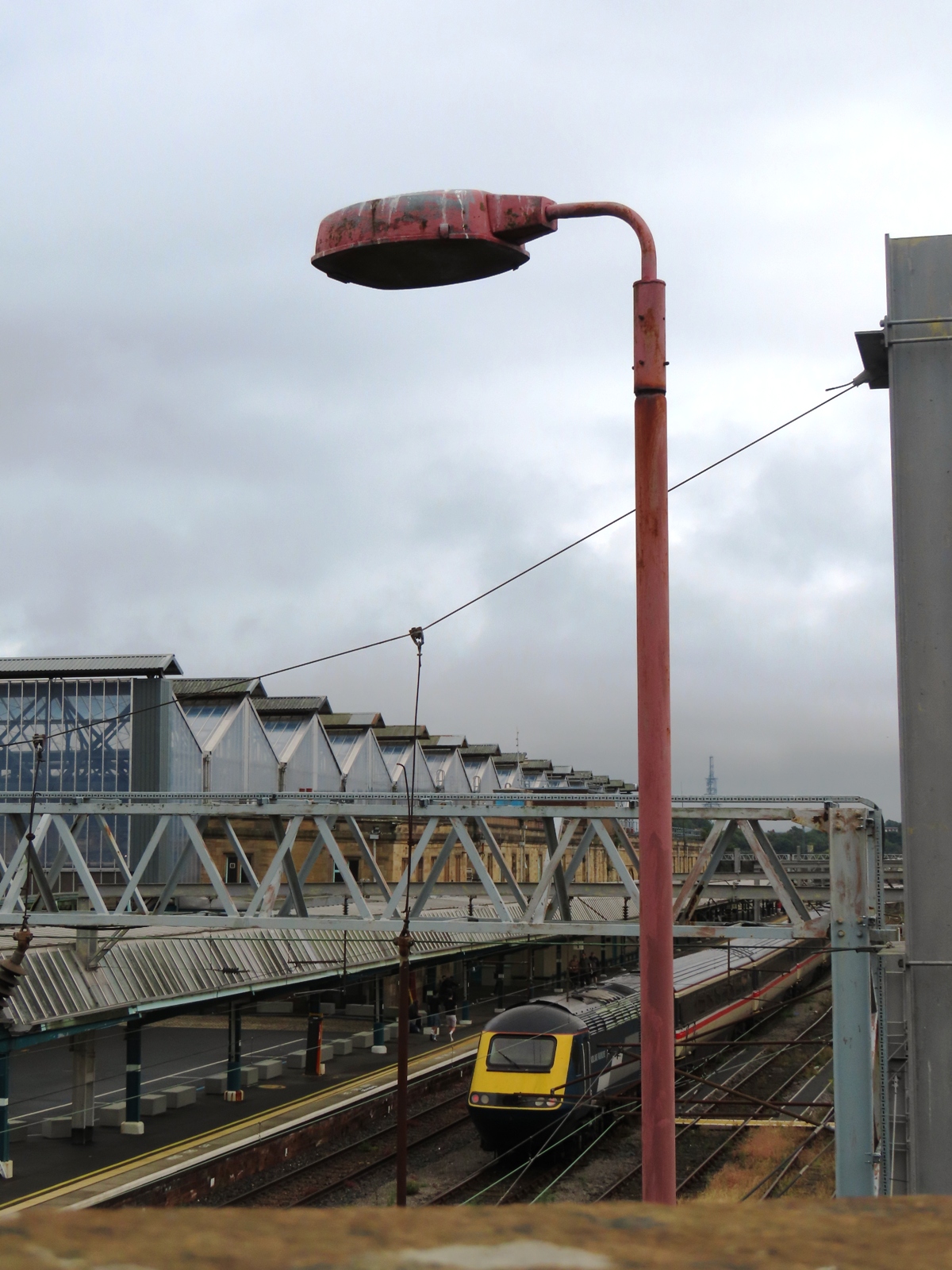
Also observed from the Viaduct was this single-armed example. My reason for being in Carlisle was due to my attending the 'Citadel Circle' Rail Tour, which used a classic InterCity 125 High Speed Train. During the lunch break, the train stabled in a siding alongside the station. Aside from the Midland Mainline livery applied to power car 43159 ('Rio Warrior'), the combination of the repainted Mk 3 coaches in InterCity 'Executive' livery and this lighting installation could (almost) convince someone that the picture was taken in the early 1980s.
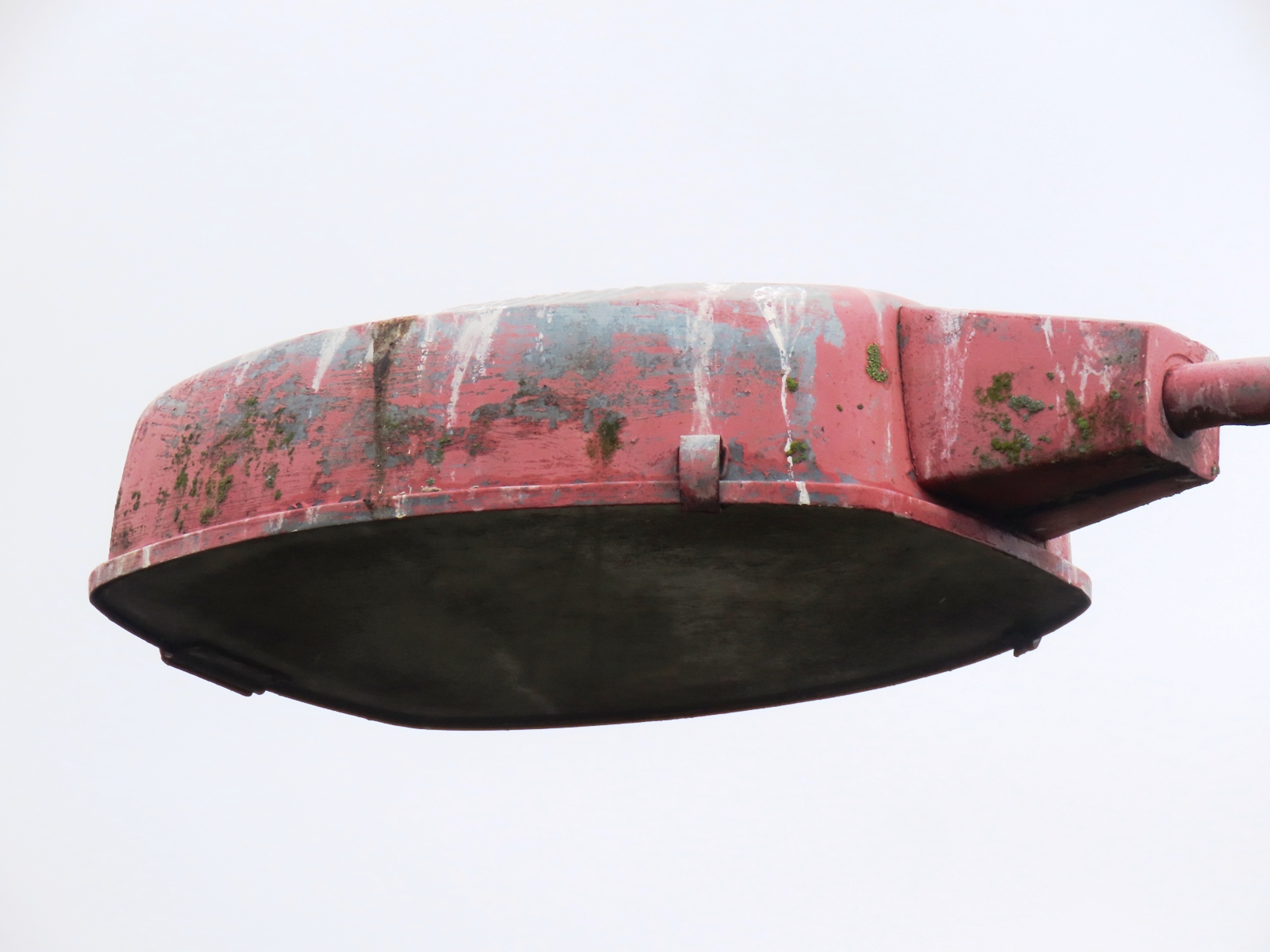
Unlike the other red Z8526, this example has a flat glass cover - the other one may have had the same originally, rather than a bowl; in this case, the lantern would be a Z8520 instead.
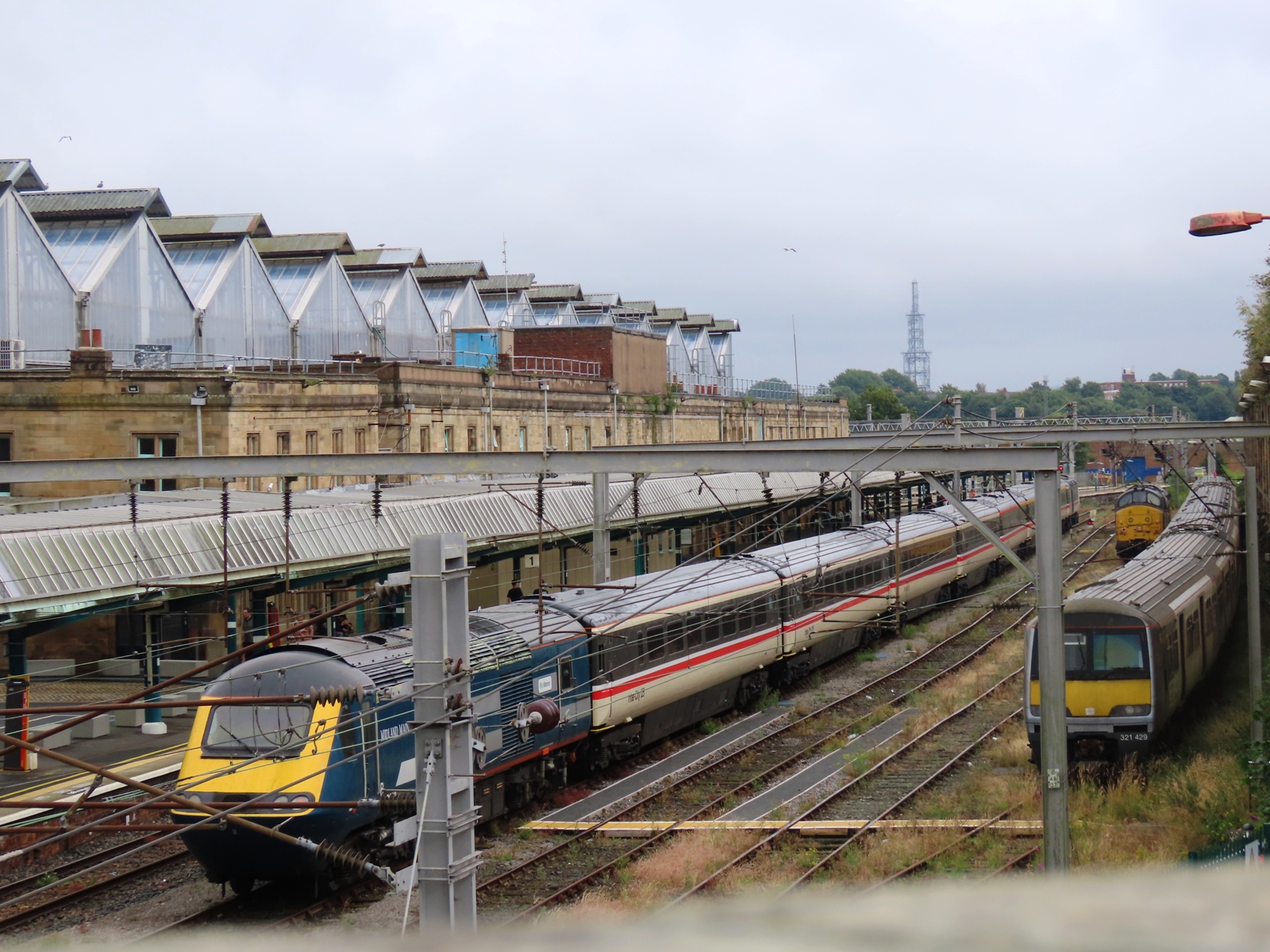
This more expanded view shows the numerous Z8526s installed along the wall, as well as the tour train, a Class 37 locomotive (37219 'Jonty Jarvis') and ex-Greater Anglia Class 321 321429. The structure visible on the horizon is Carlisle's Microwave Repeater Site (also known as the Harraby SHF Site); a 1960s' network node that connects Manchester to Scotland (Kirk o'Shotts) for television and telephony transmission.
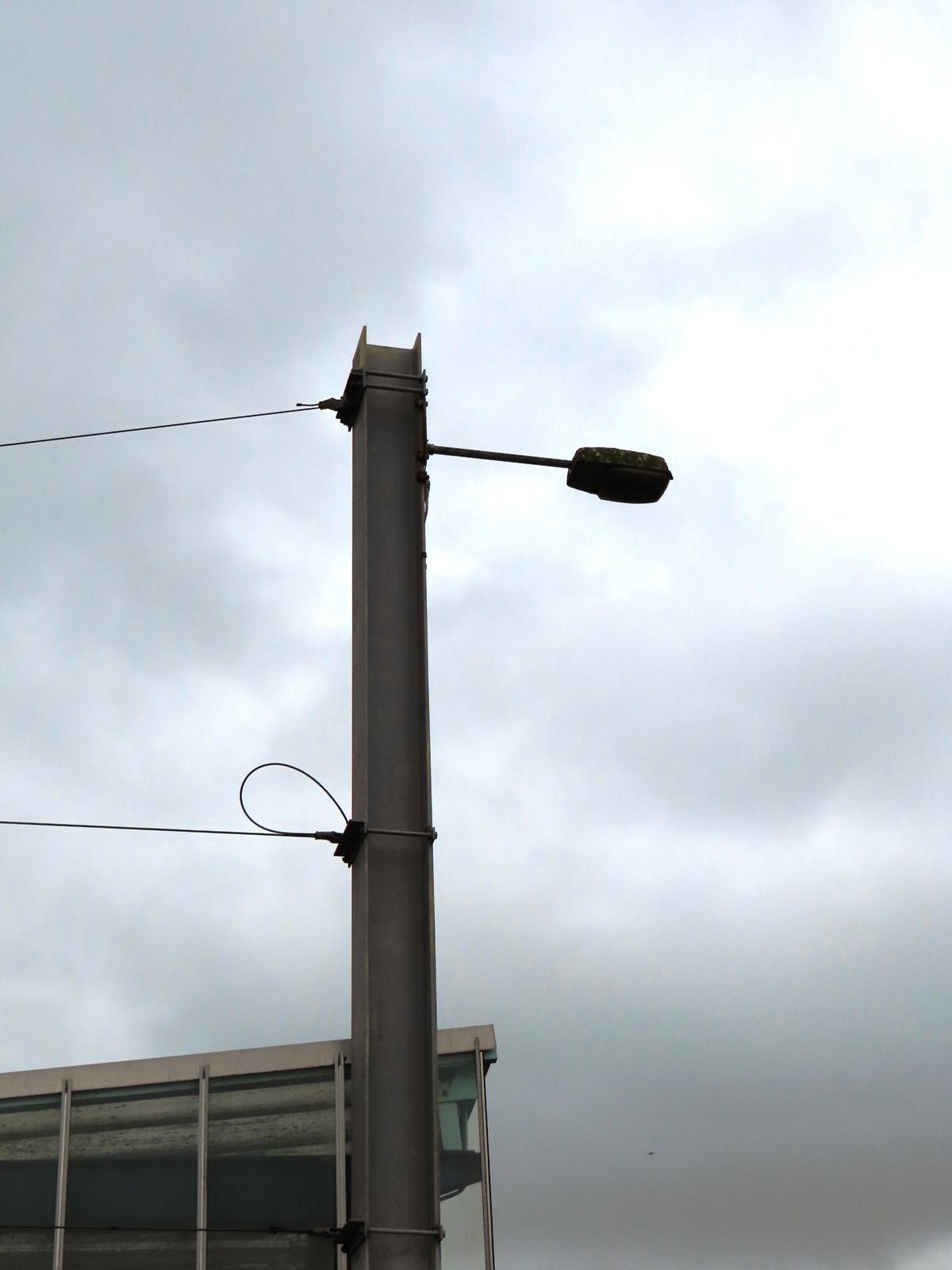
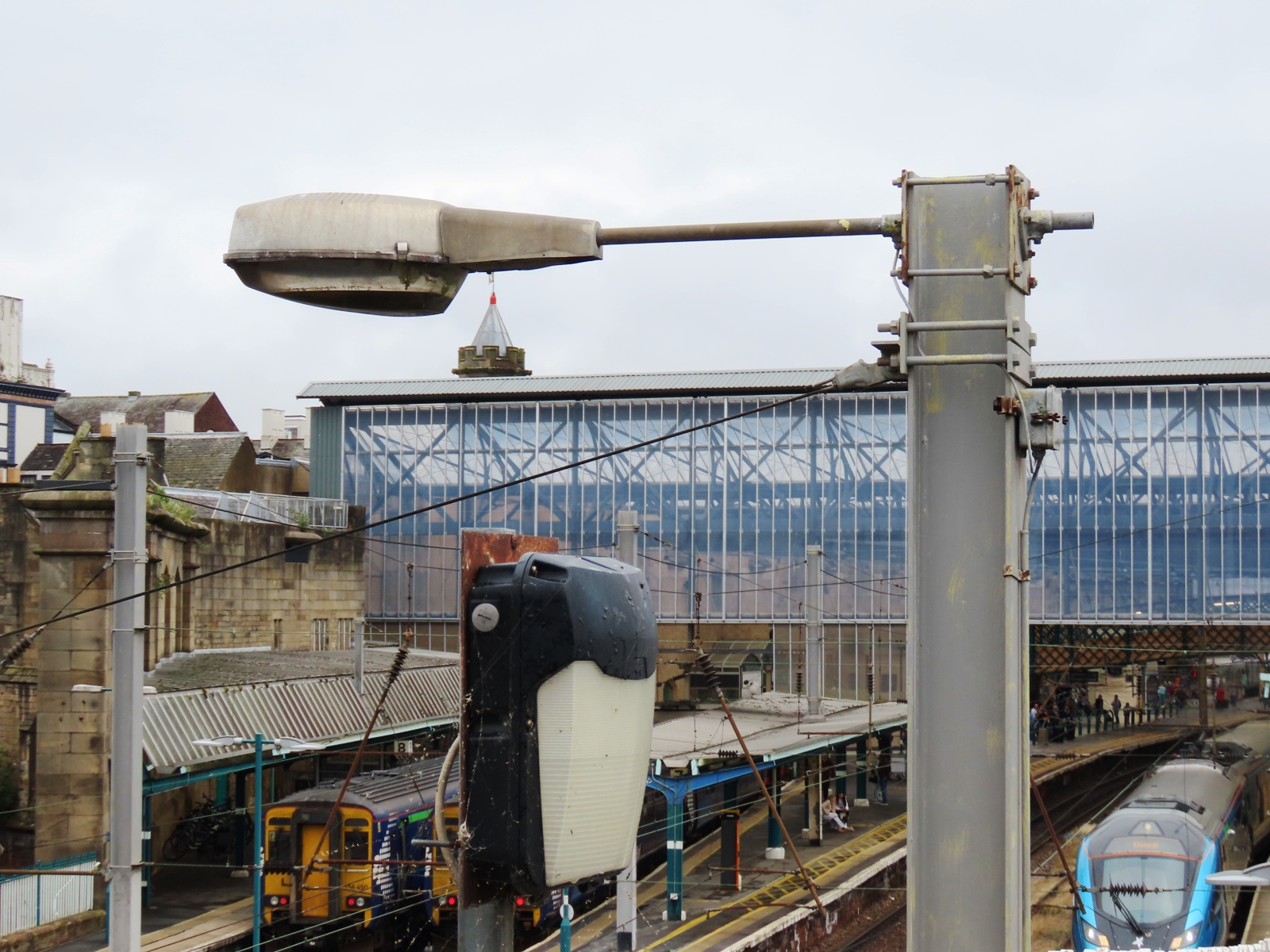
A single bracket supporting an XGS 201 is attached to the support post for the 25 kV overhead cabling employed primarily for West Coast Main Line services, though other trains also utilise these conductors.
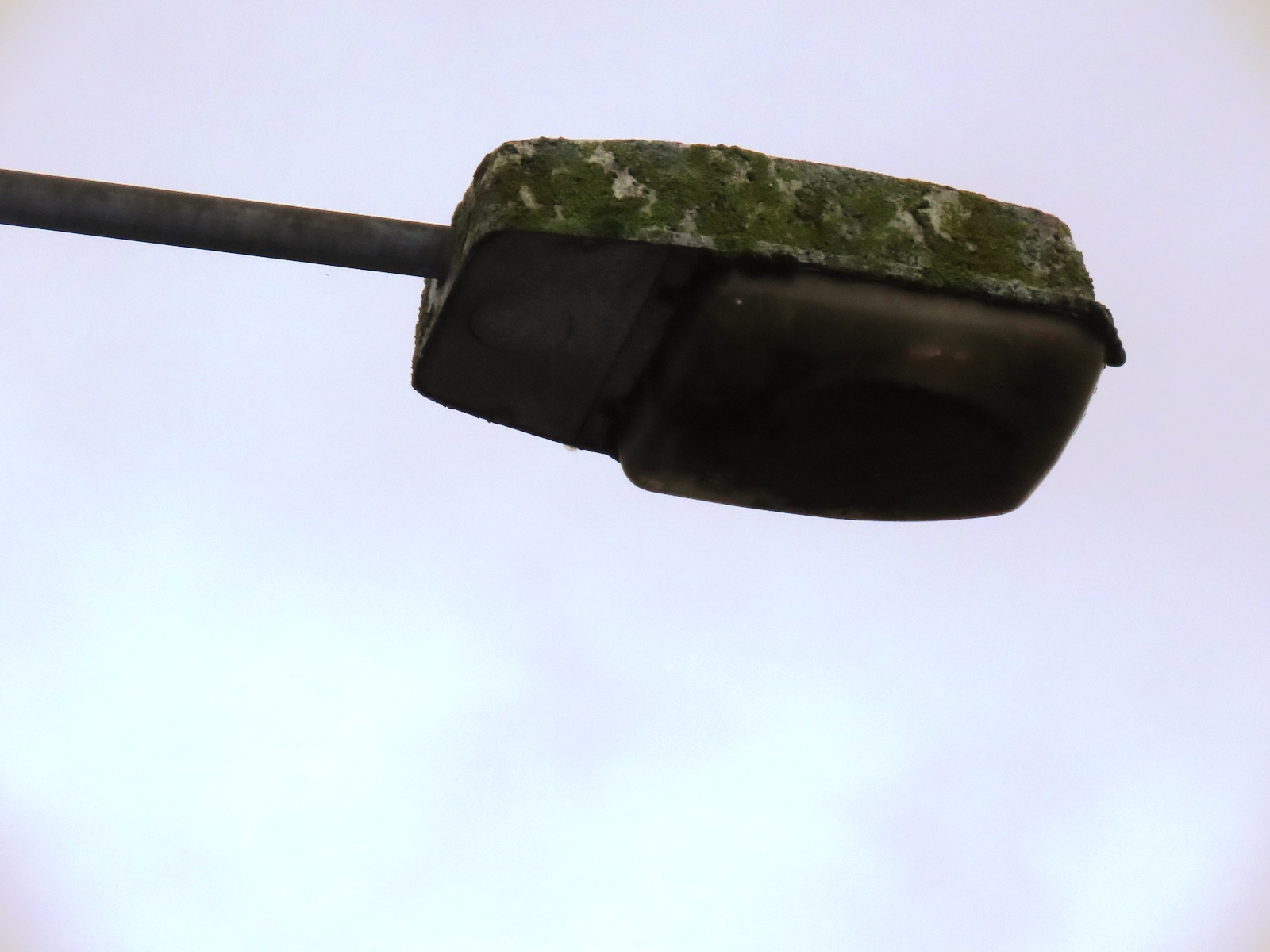
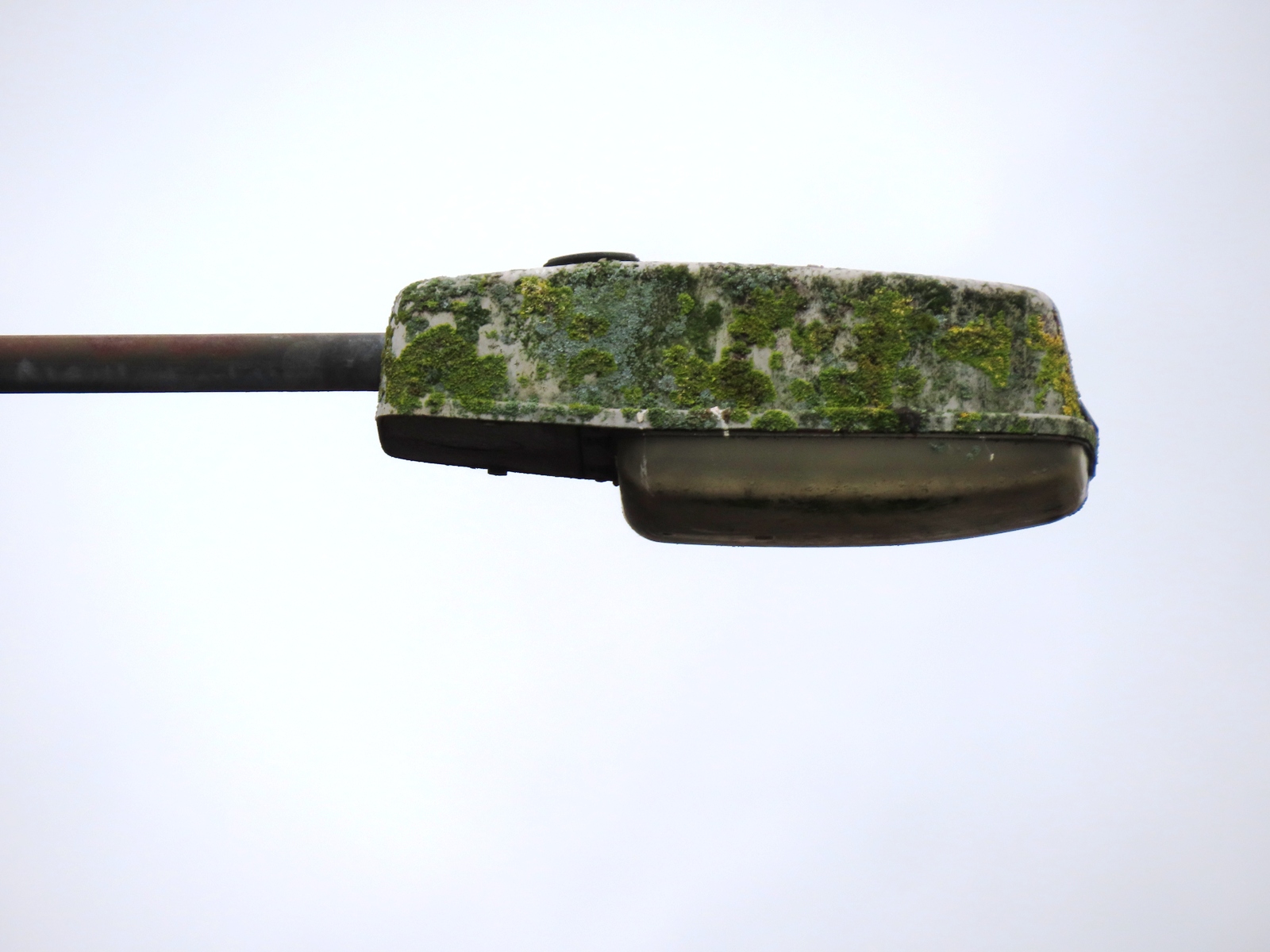
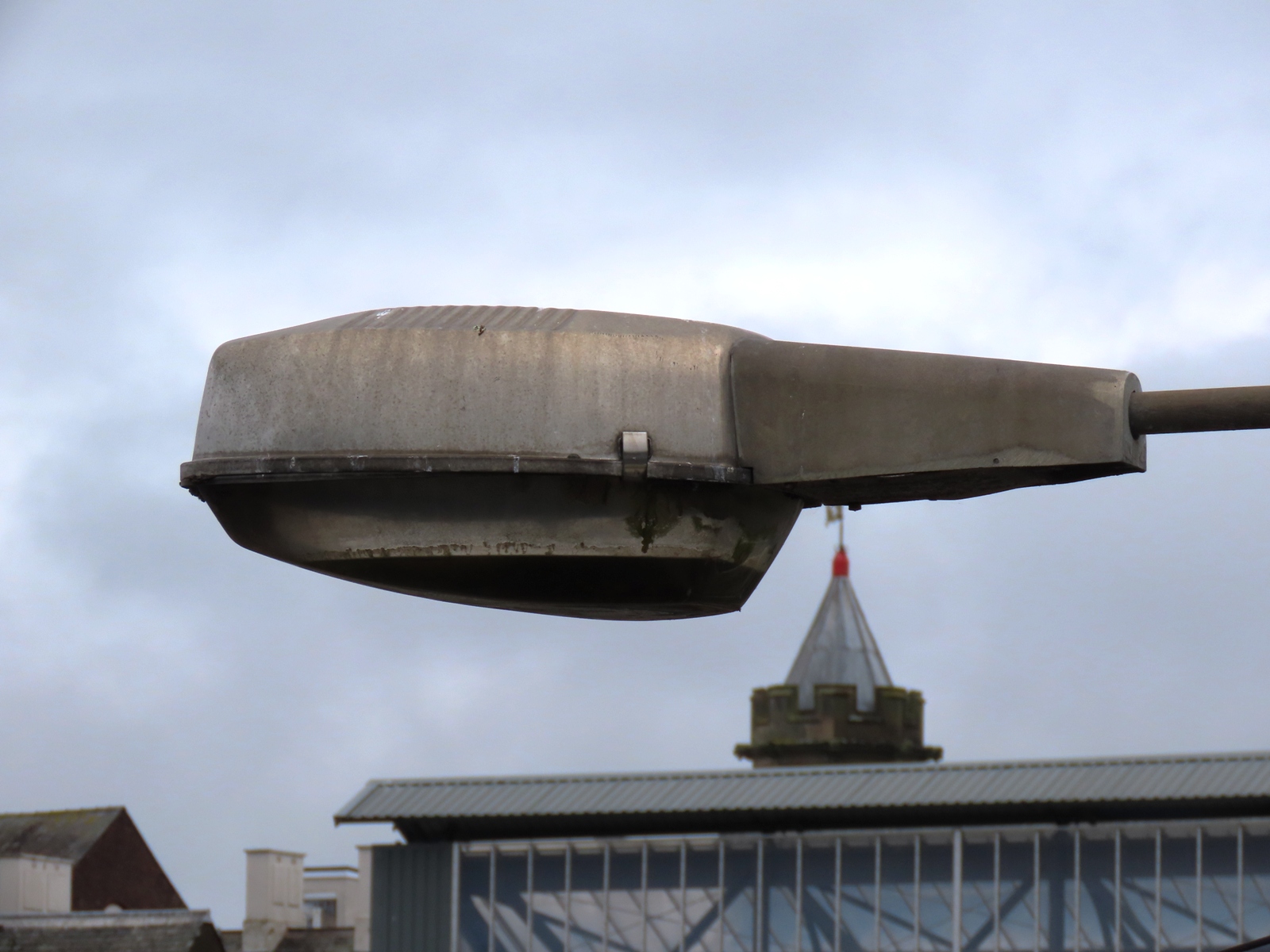
Heavy lichen and moss growth exists on the SGS's canopy
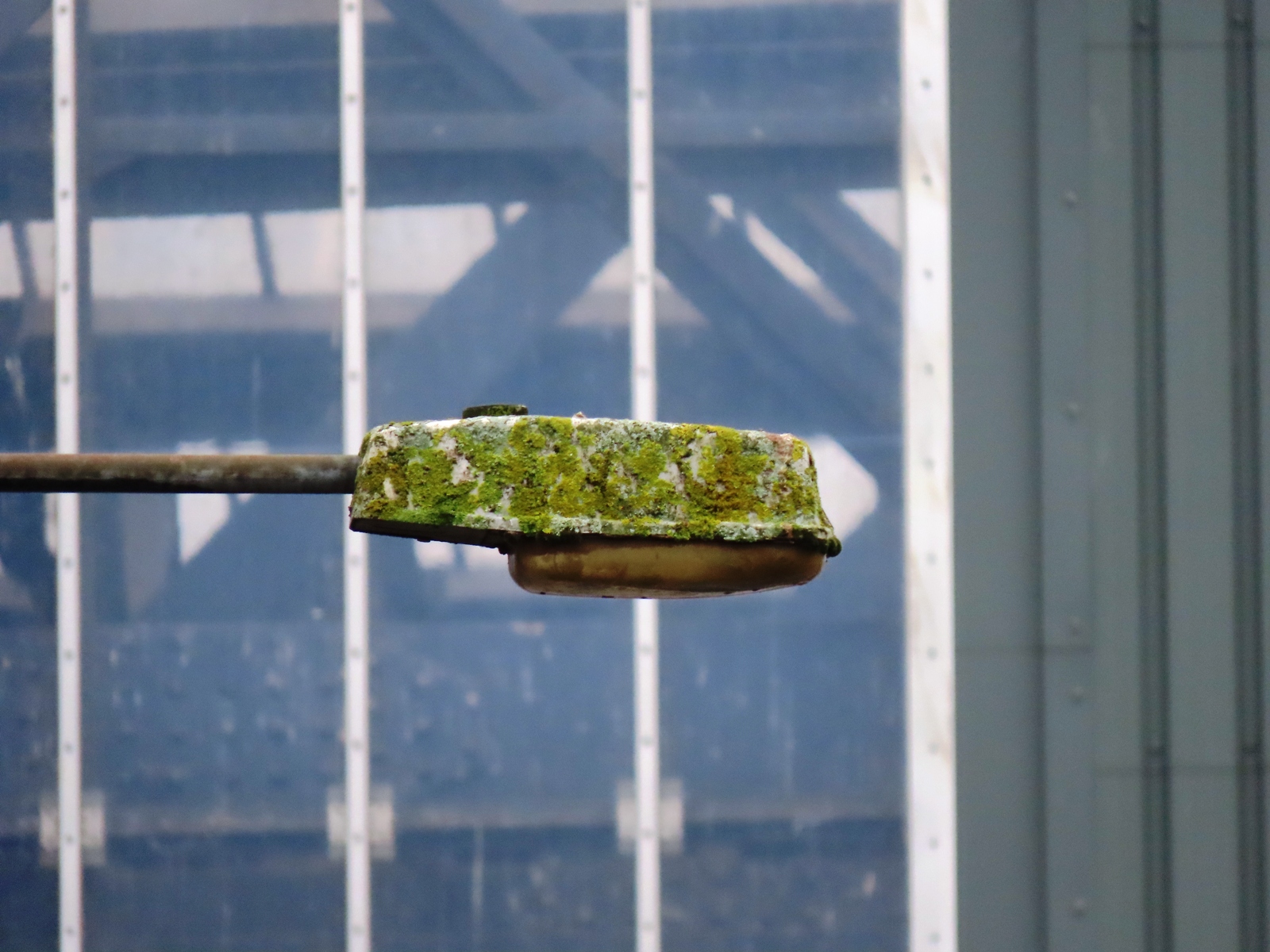
The lantern appears to be equipped with a NEMA photocell socket, though this is (either) wired out and capped, allowing the lantern to be switched remotely, or the photocell has been lost over time.
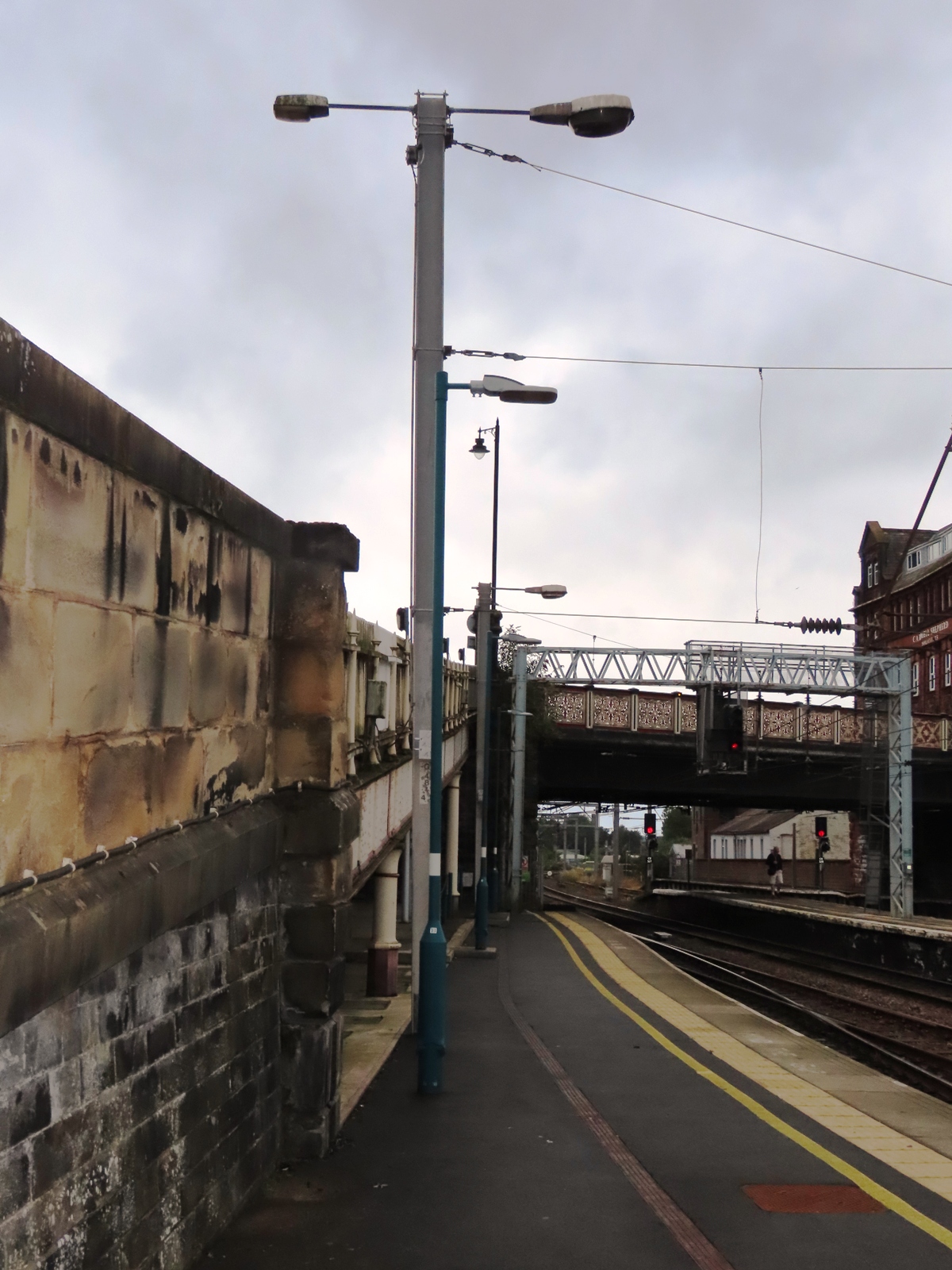
Another SGS 201 is seen on a neighbouring post, which it shares with a Z8536. One further Z8536 is visible beyond, with the newer lighting being installed at a lower height, to provide sufficient safety clearance from the high voltage overhead conductors.
Although the brackets are of equal length, the larger Z8536 creates a slightly unequal appearance.
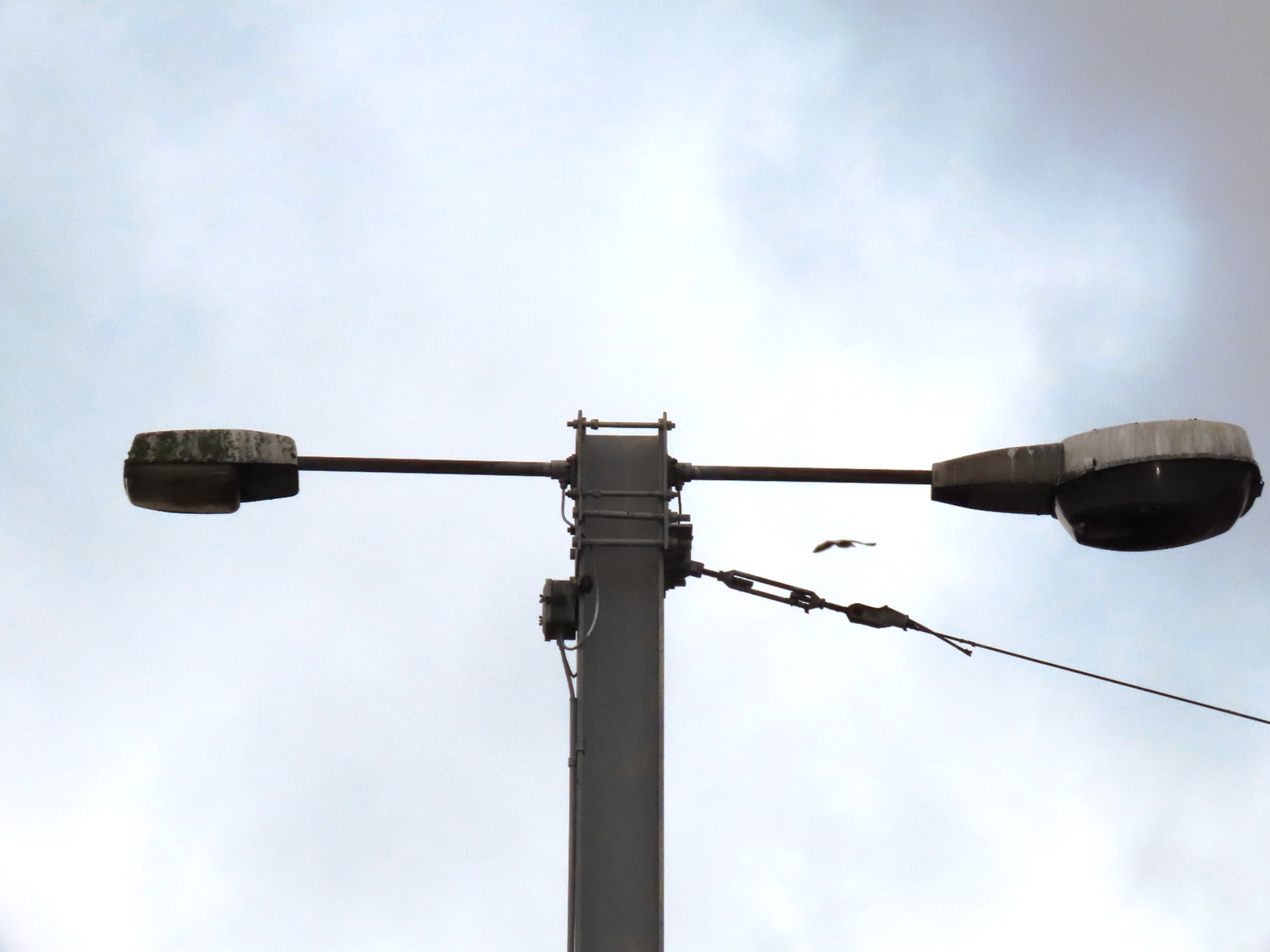
The same lanterns are seen from the other direction.
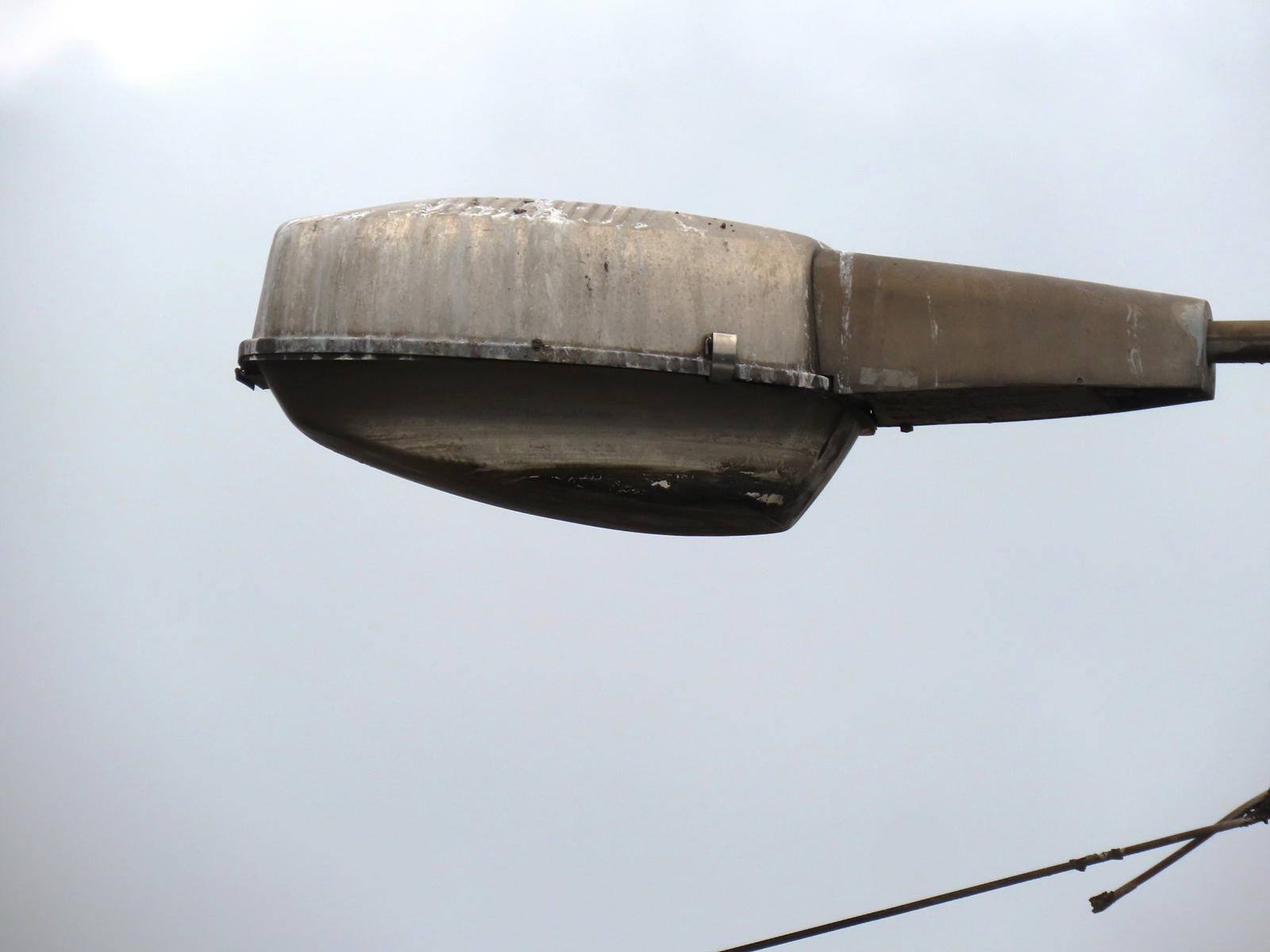
The Z8536's interior appears especially grubby, with water having accumulated in the bowl for many years.
This SGS 201 was also very green.
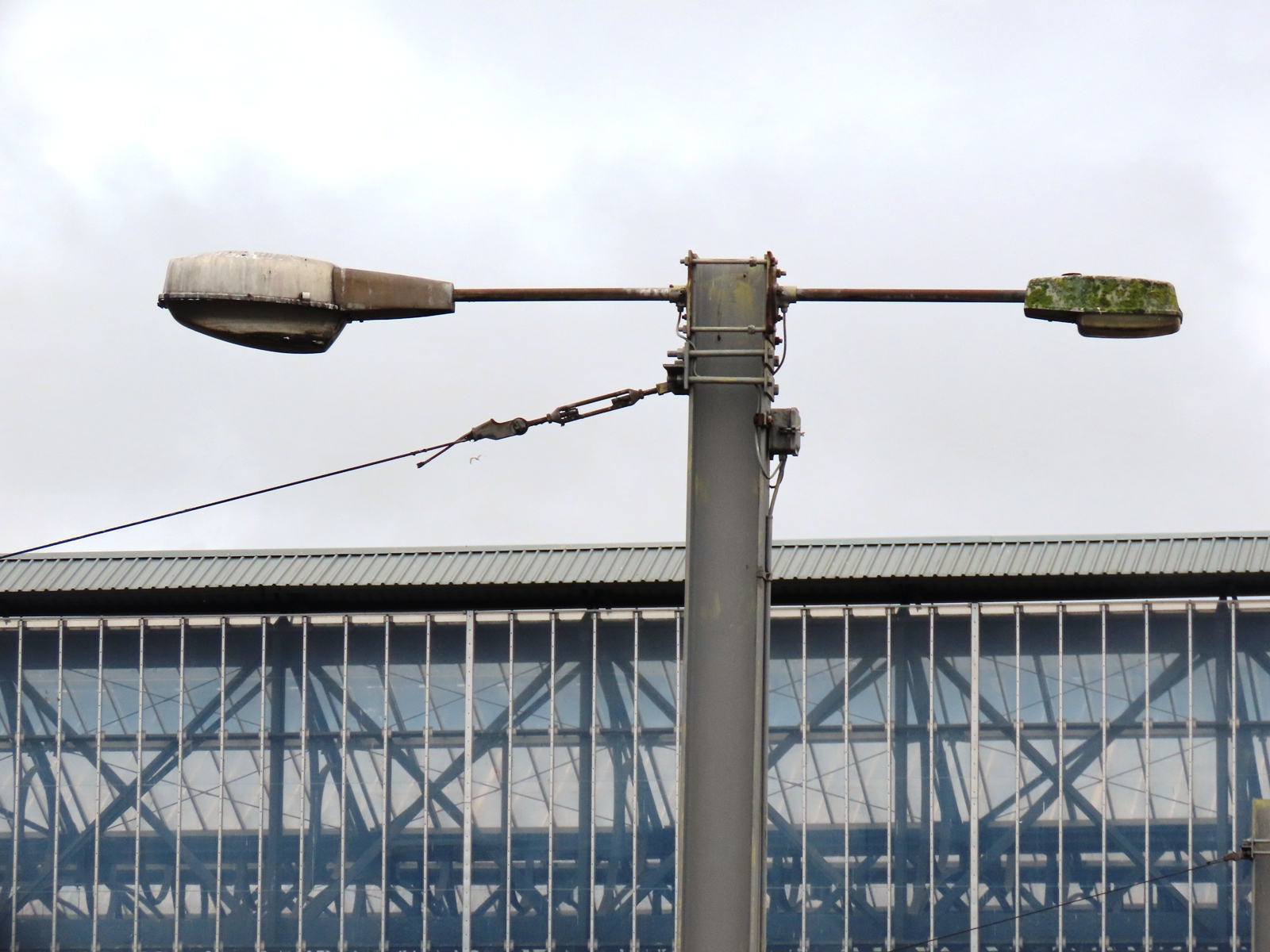
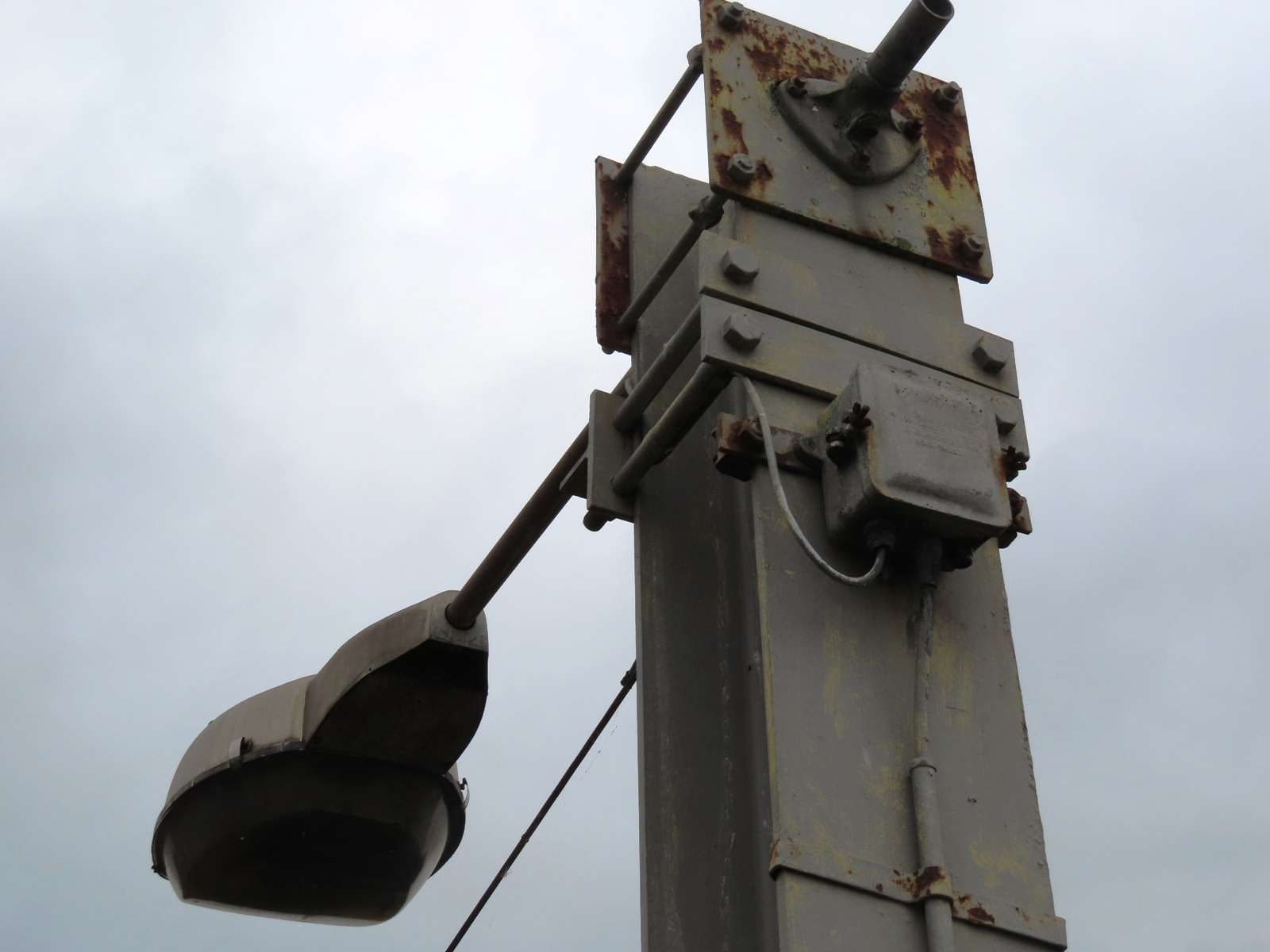
The second Z8536 is also seen from the Victoria Viaduct. The second bracket here has been cut right back and abandoned, probably because it would face towards the goods access ramp, and would have been positioned at a low enough height that it could have been struck by high-sided vehicles entering and exiting the station via this means.
A small pool of discoloured rainwater also exists in this lantern's bowl.
The supply cable passes up the pole, terminating in a small cast enclosure, before the individual lantern supply cables emerge from either side - the compression gland for the now-removed second bracket wiring is still in place.
For my pictures taken during the rail tour generally, click here, and for a video made during the day, click here.
CLICK HERE TO MAKE A MONETARY DONATION
© 2002 - English Street Lights Online